
Interactive Physics
Physics Simulation Software for the Classroom
Physics Experiments
Ready-made experiments that come with Interactive Physics, grouped by topic. Open any of them from the Physics Experiments library in Interactive Physics, run it, and change it.
211 experiments in 30 topics. Click a topic to show its experiments, and click a picture to see it larger.
 Acoustic (2)
Investigate how sound waves interact to produce audible phenomena like beats, and how volume and frequency shape the sounds we hear.
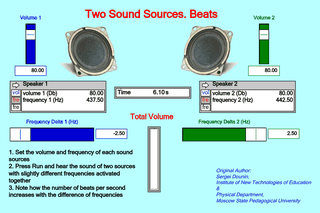
Sound Beats
Hear beats produced by interfering sound waves of close frequency
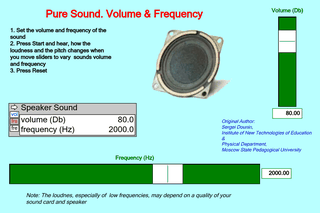
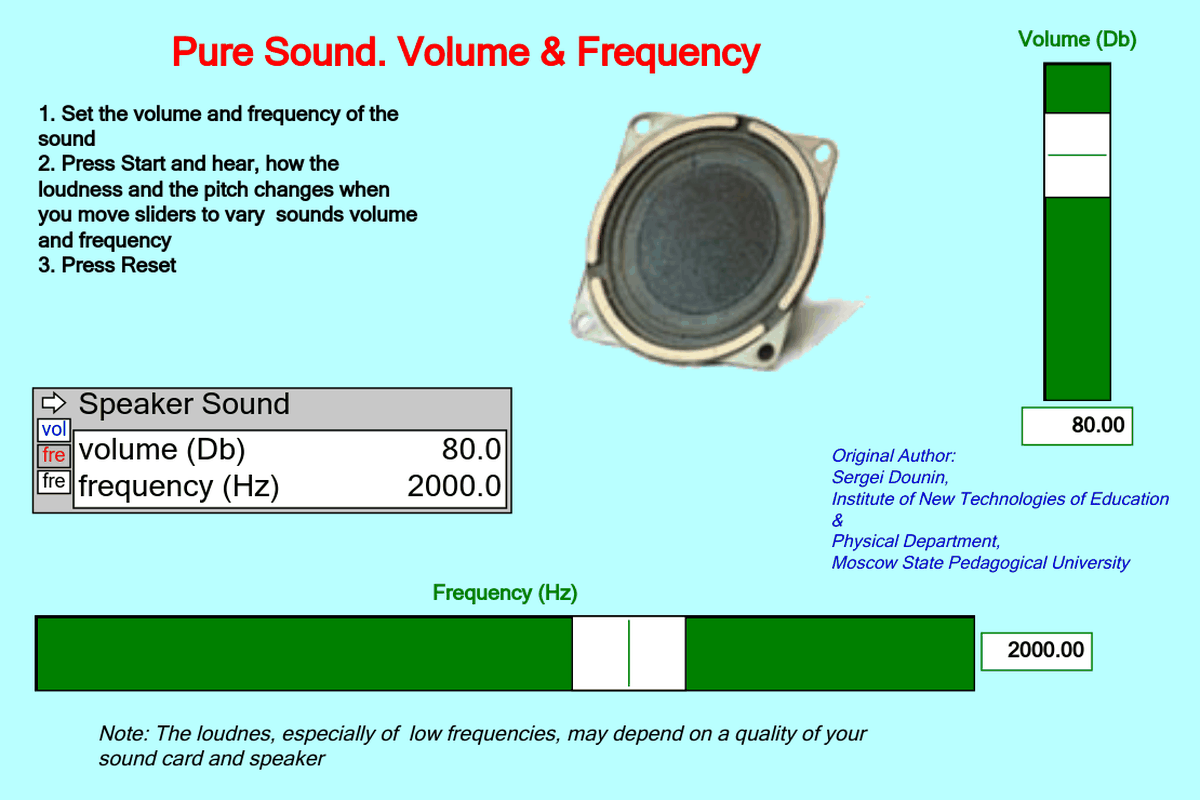
Sound Volume and Frequency
Explore how amplitude and frequency shape perceived sound
 Advanced (37)
Advanced simulations spanning accident reconstruction, cams, control systems, gears, machines, mechanisms, and statics. These models showcase what Interactive Physics can do in engineering and applied physics contexts.
Accident Reconstruction
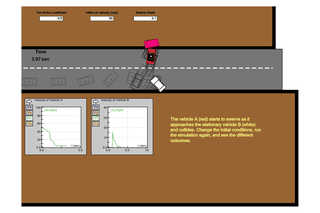
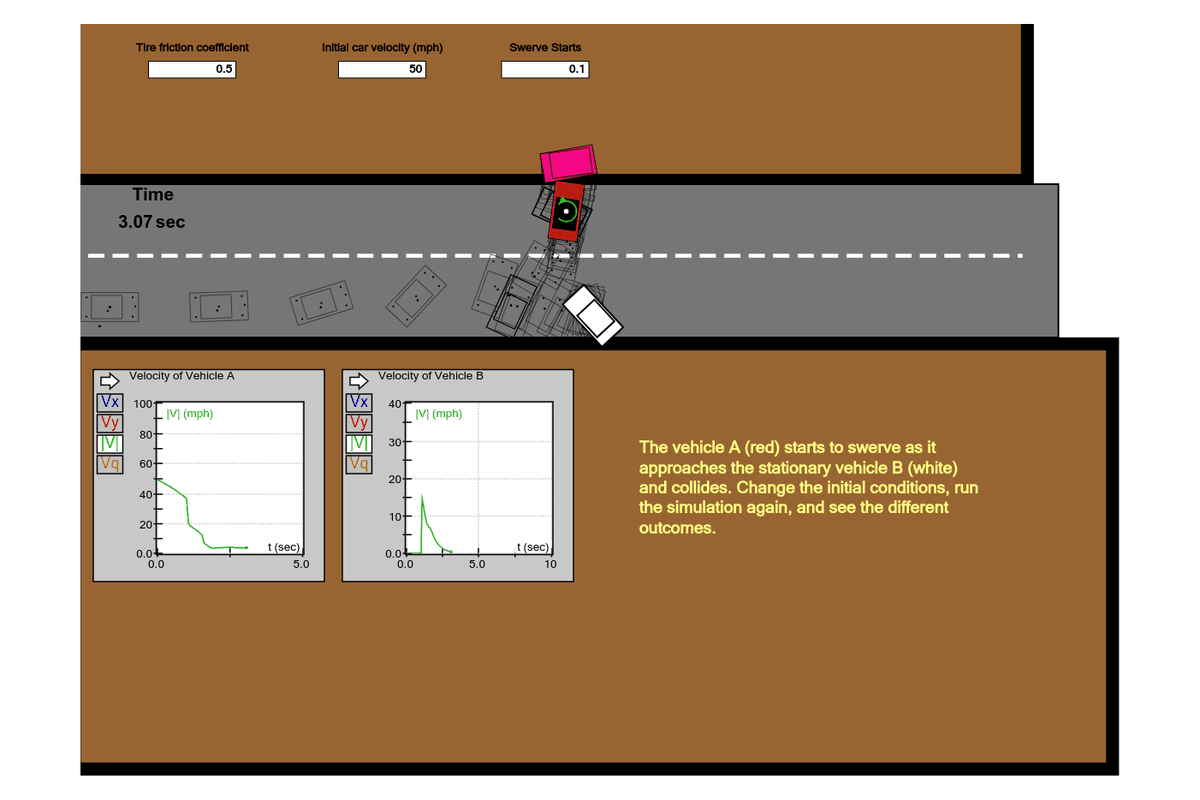
Auto Crash
Reconstruct a two-vehicle collision and measure impact forces
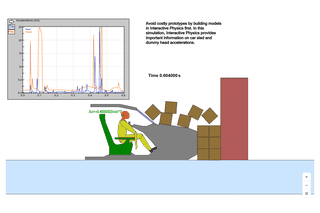
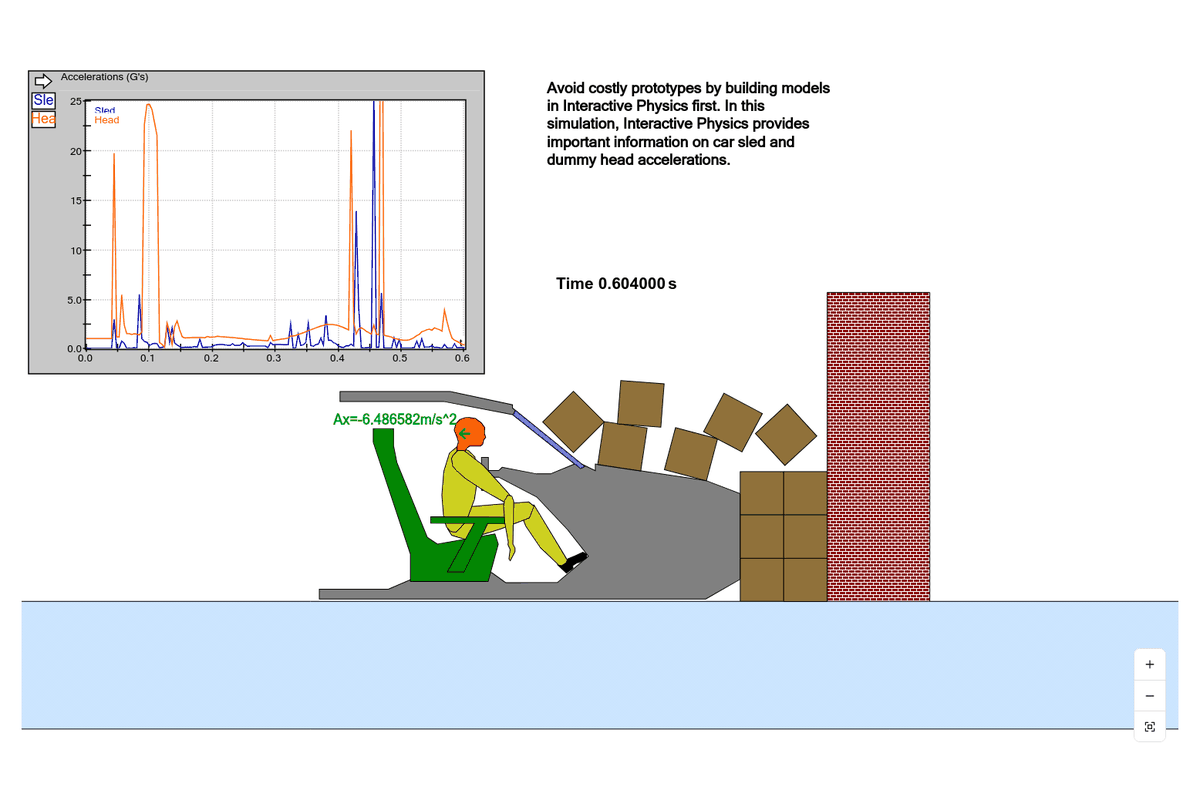
Crash Test
Simulate a controlled crash test with deformable barriers
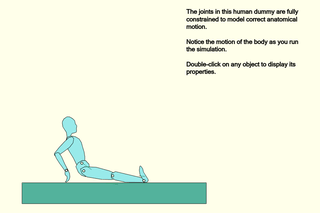
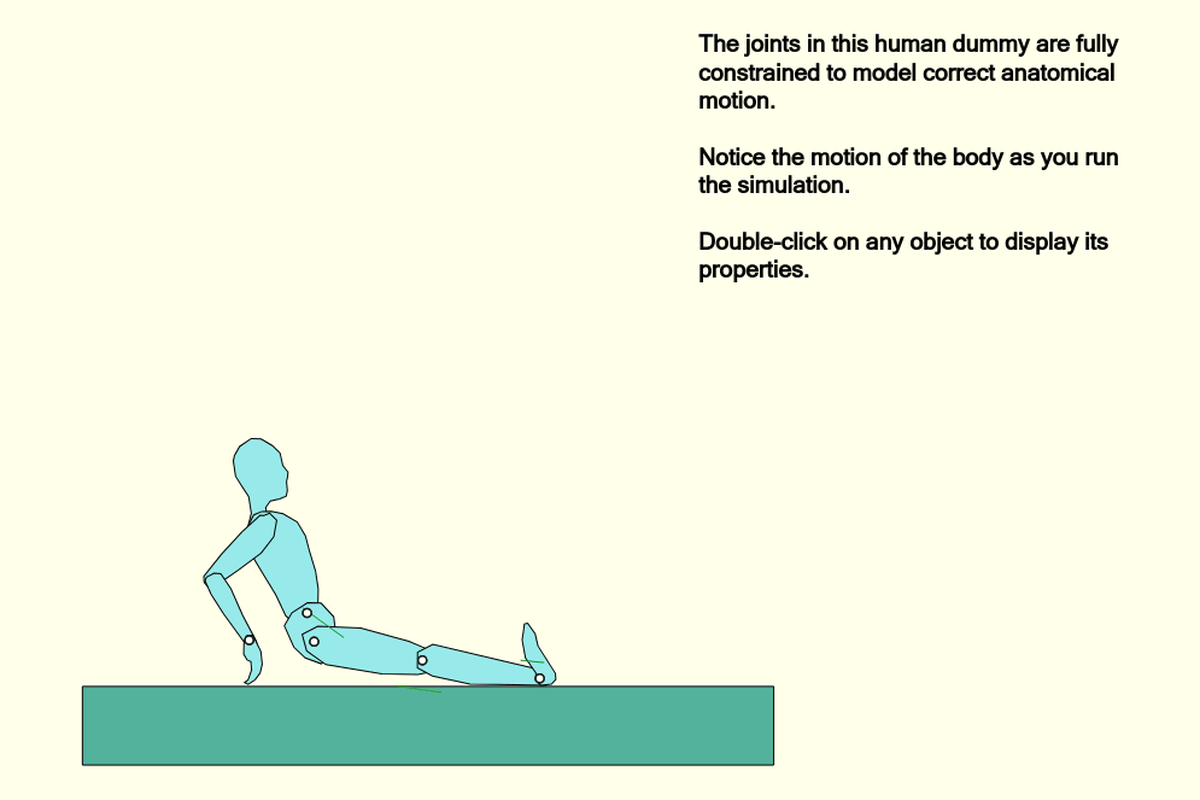
Human Falling
Study impact dynamics of a falling multi-segment human body
Cams
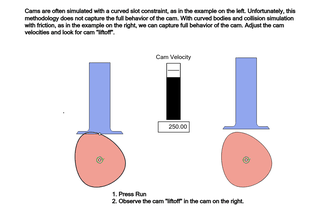
Cams
Watch cam-follower motion convert rotation to translation
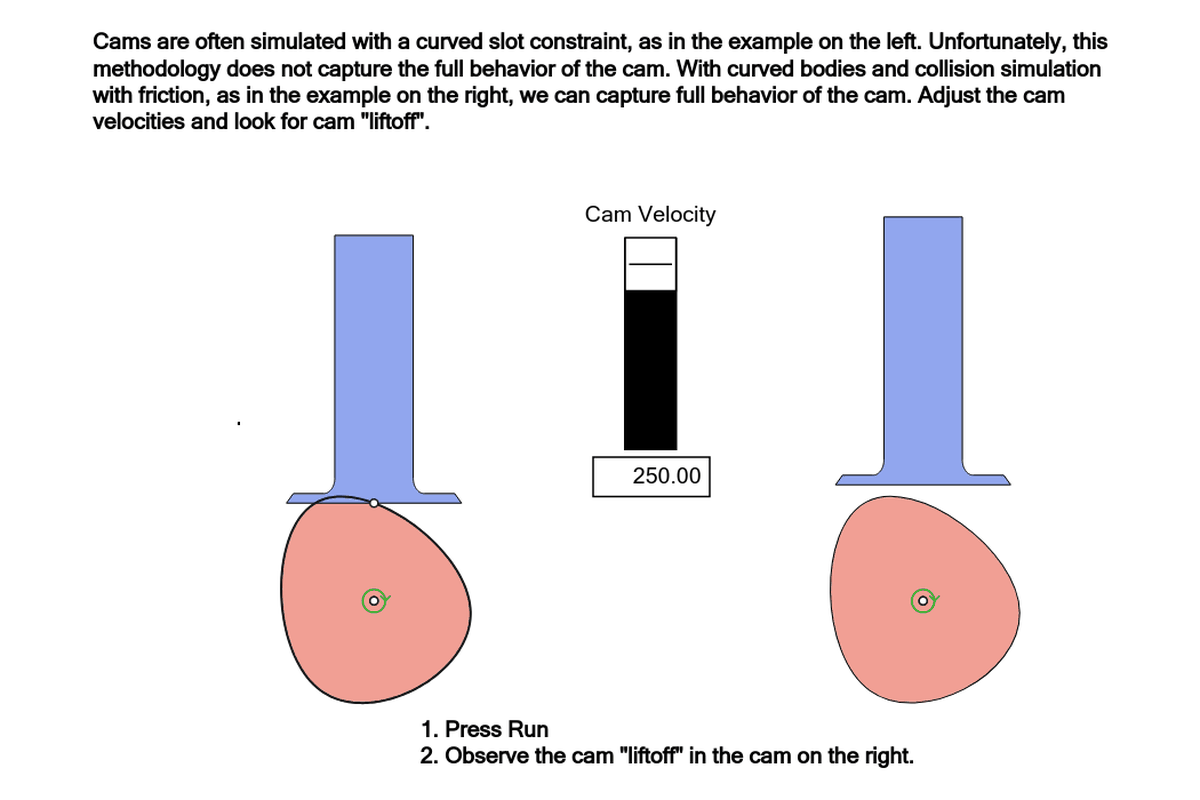
Controls
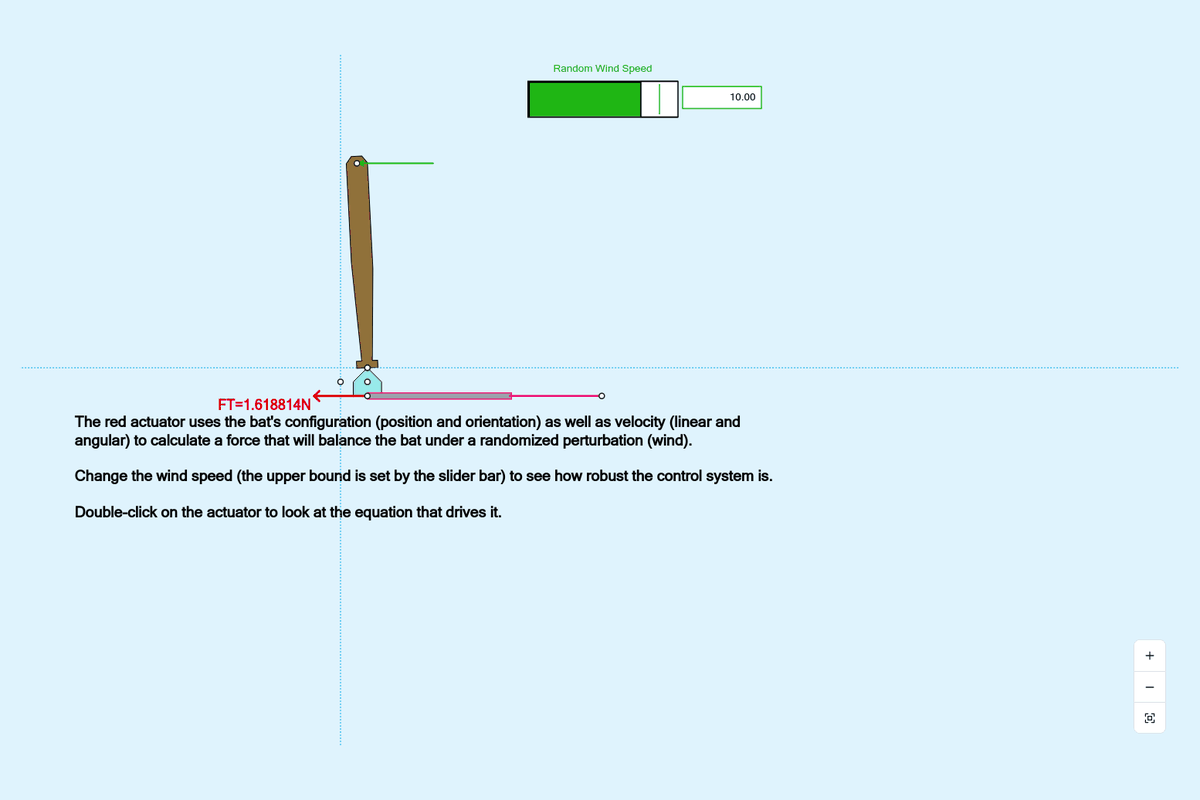
Balancing Bat
Active control balances an inverted bat on a moving cart
- Picture coming soon
Robot
Control-loop demo using a programmable multi-joint robot
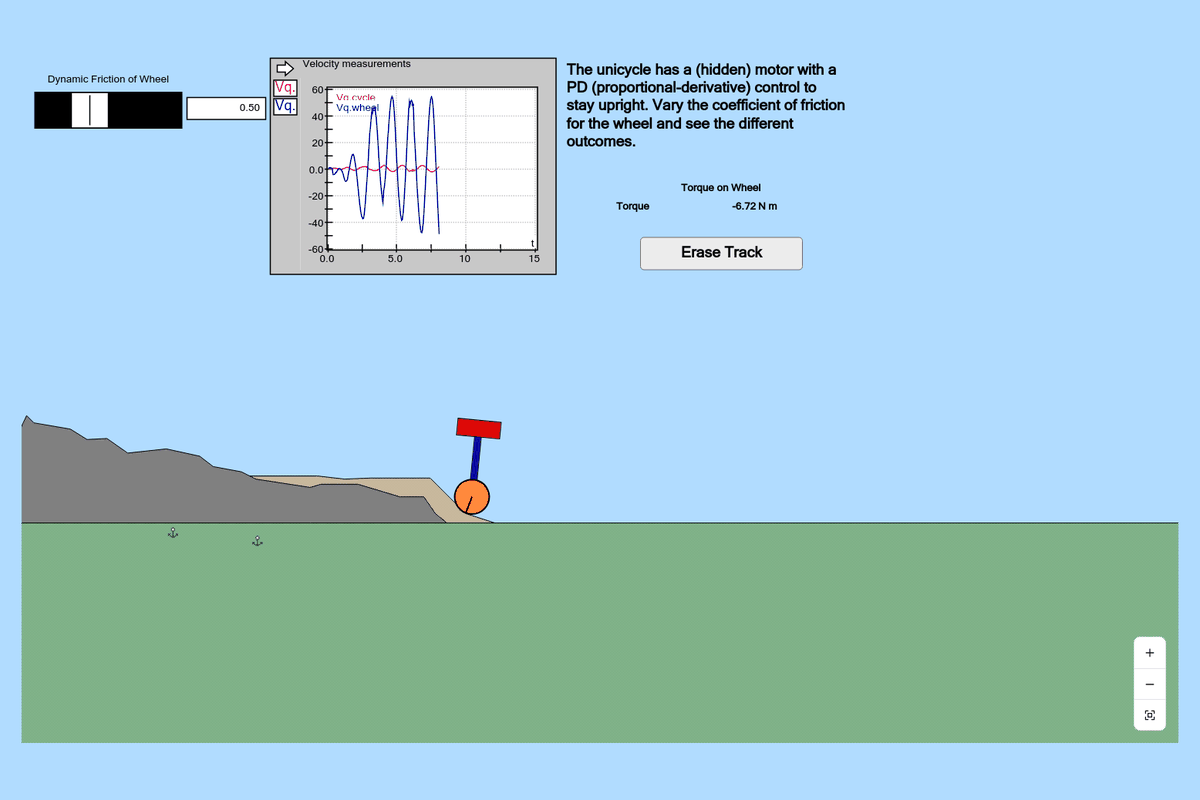
Unicycle
Self-balancing unicycle driven by a feedback controller
Gears
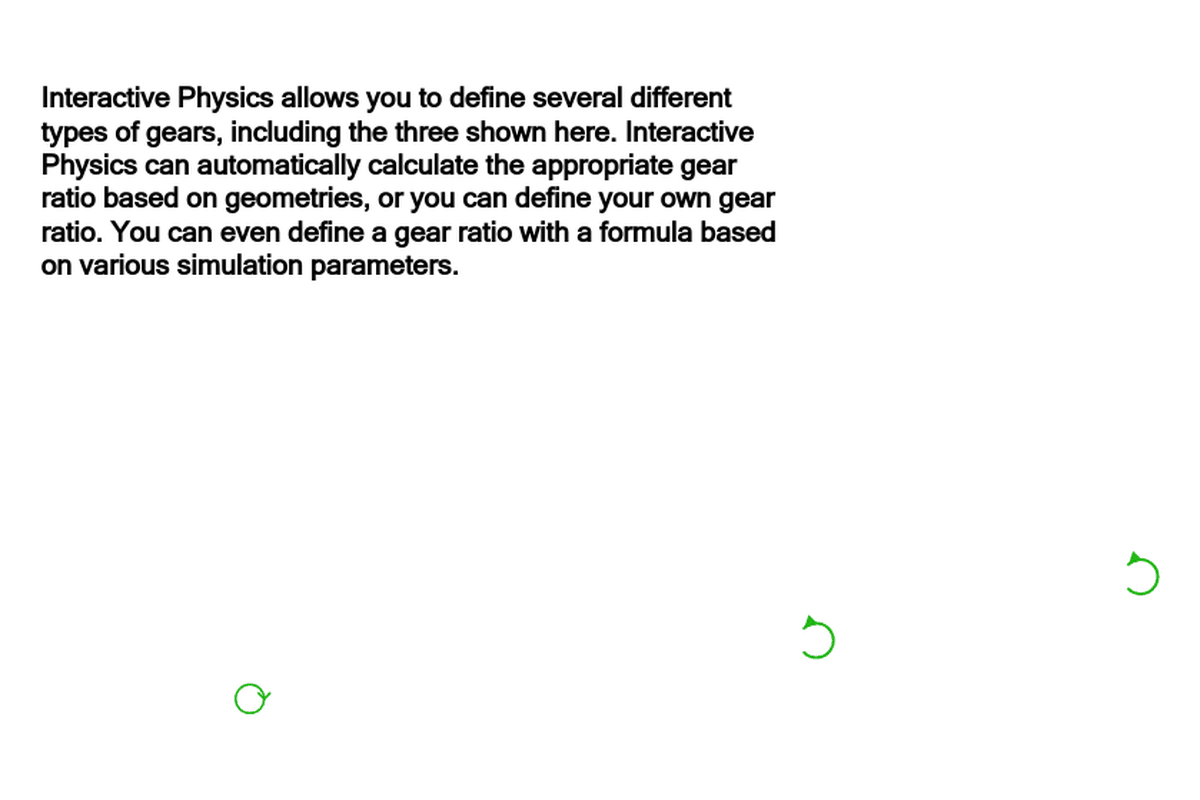
Gear Examples
Gallery of spur, internal, and compound gear meshes
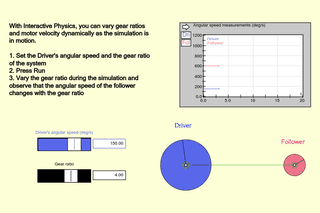
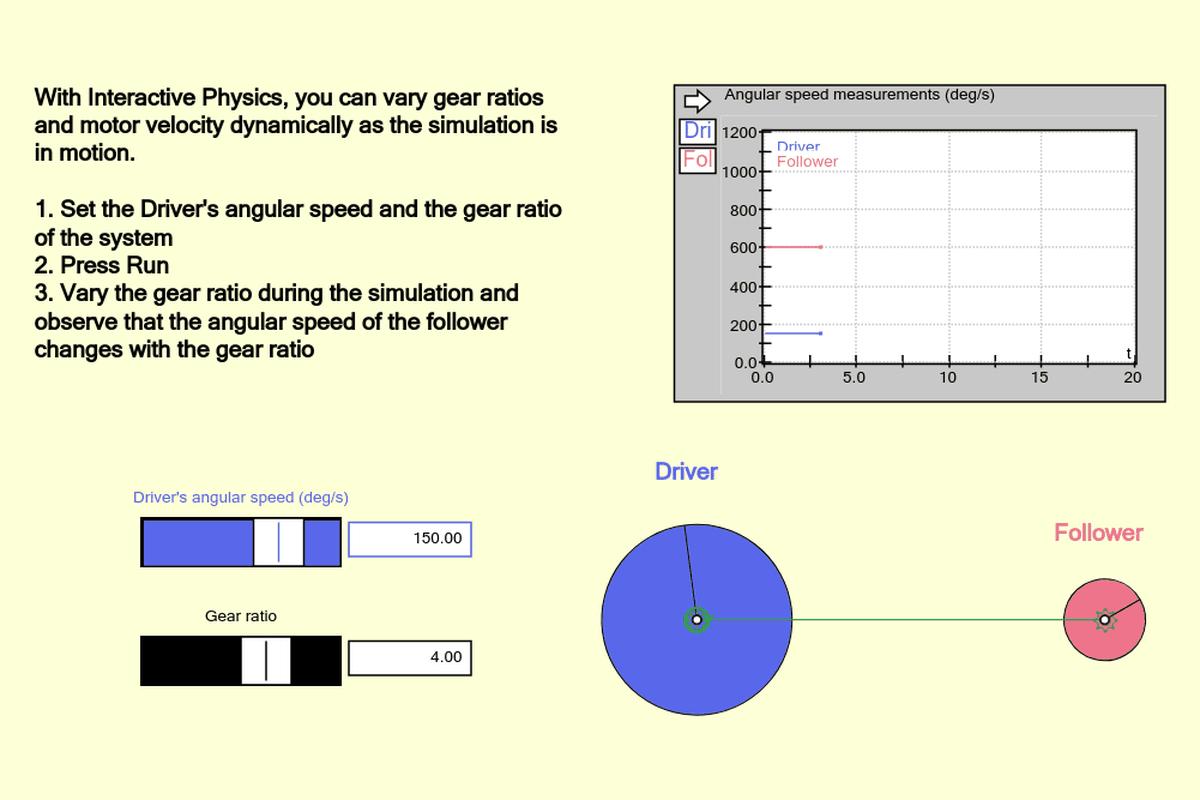
Gear Ratios
Compare output speeds for different gear-ratio combinations
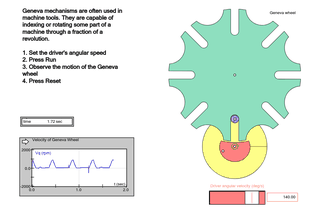
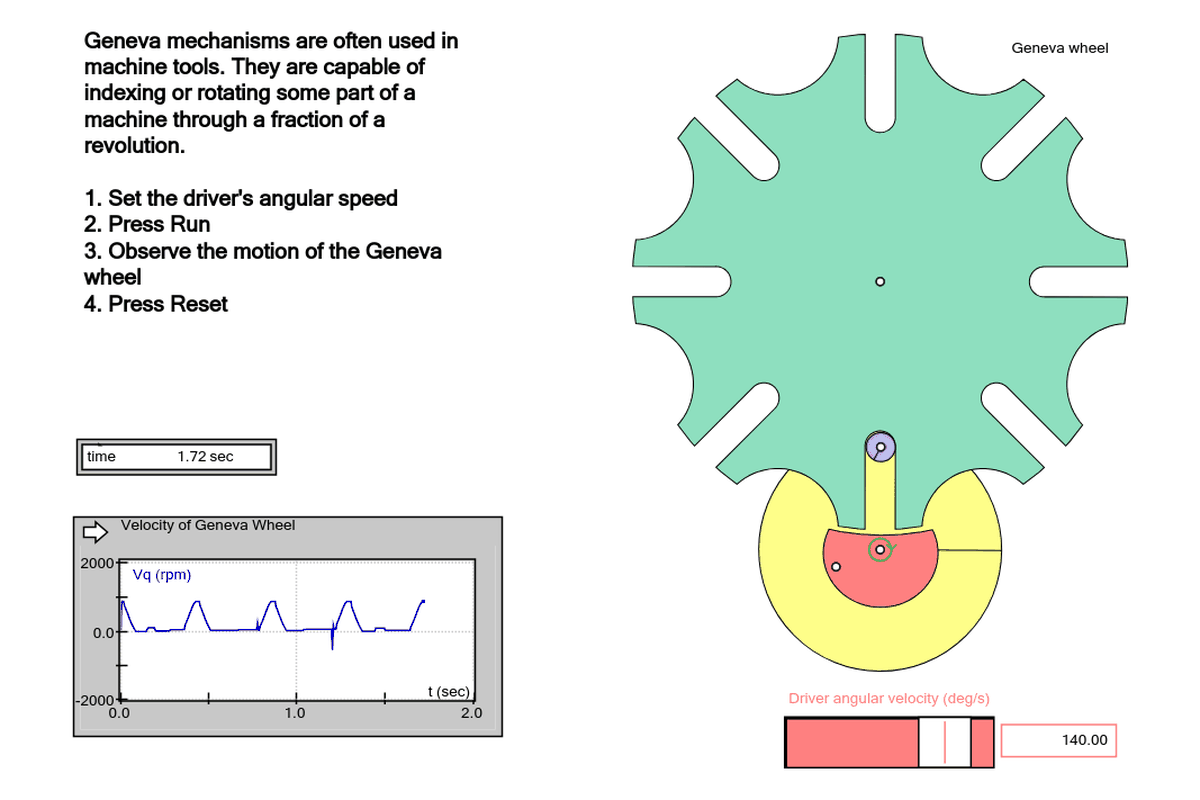
Geneva
Classic Geneva drive converting continuous rotation to indexed steps
Machines
Assembly
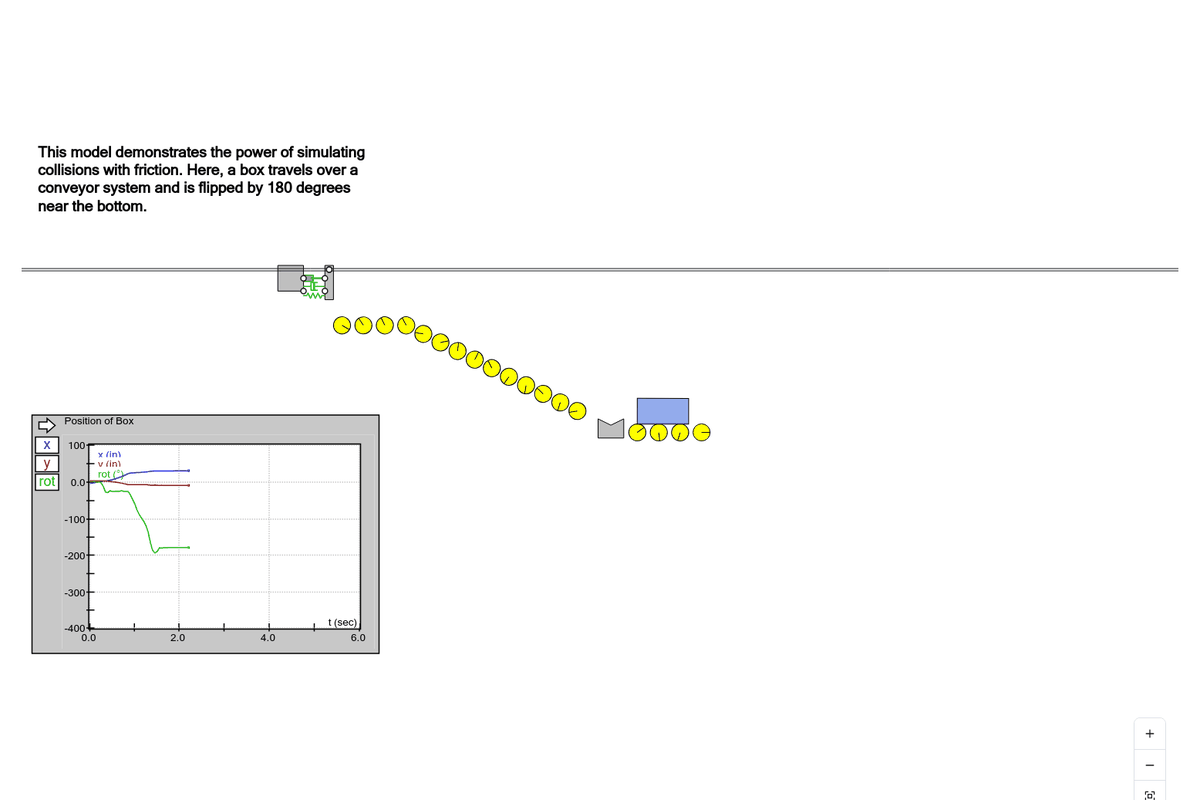
Conveyor-driven assembly line handling multiple parts
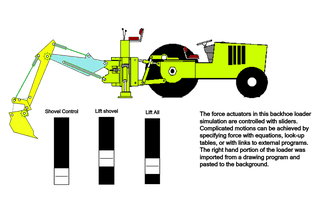
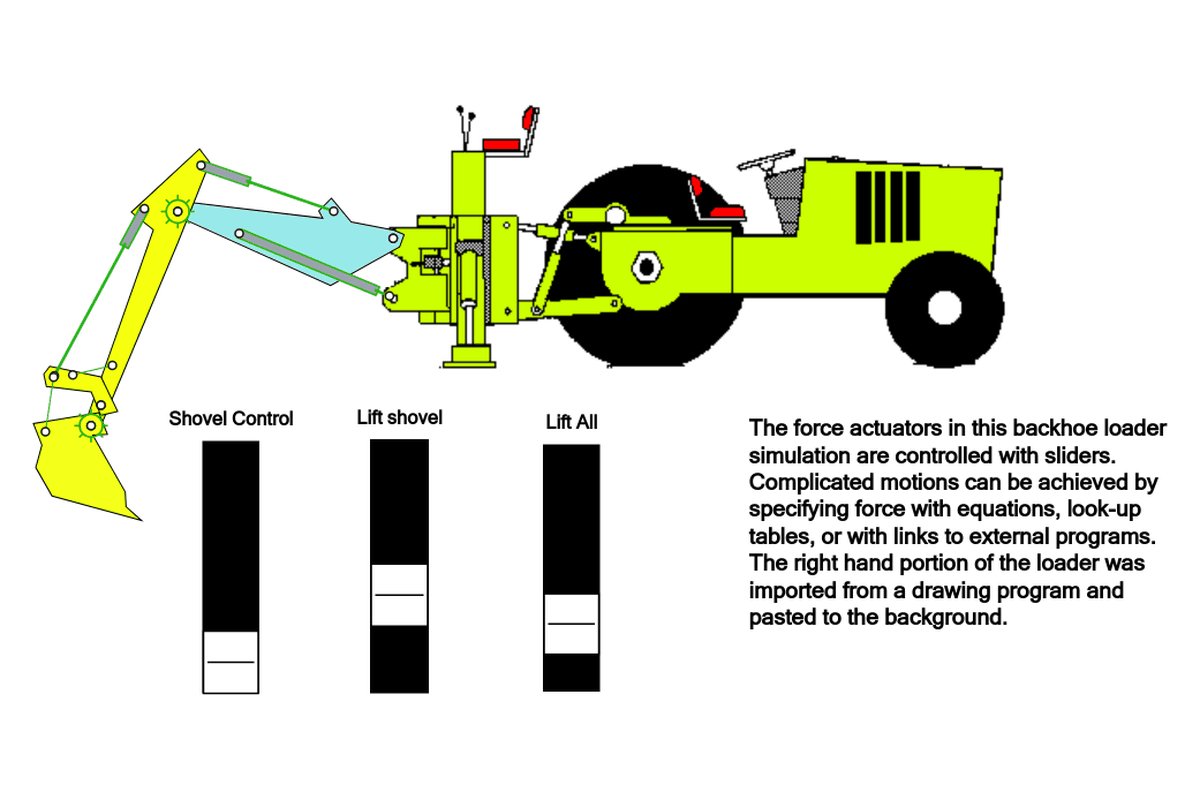
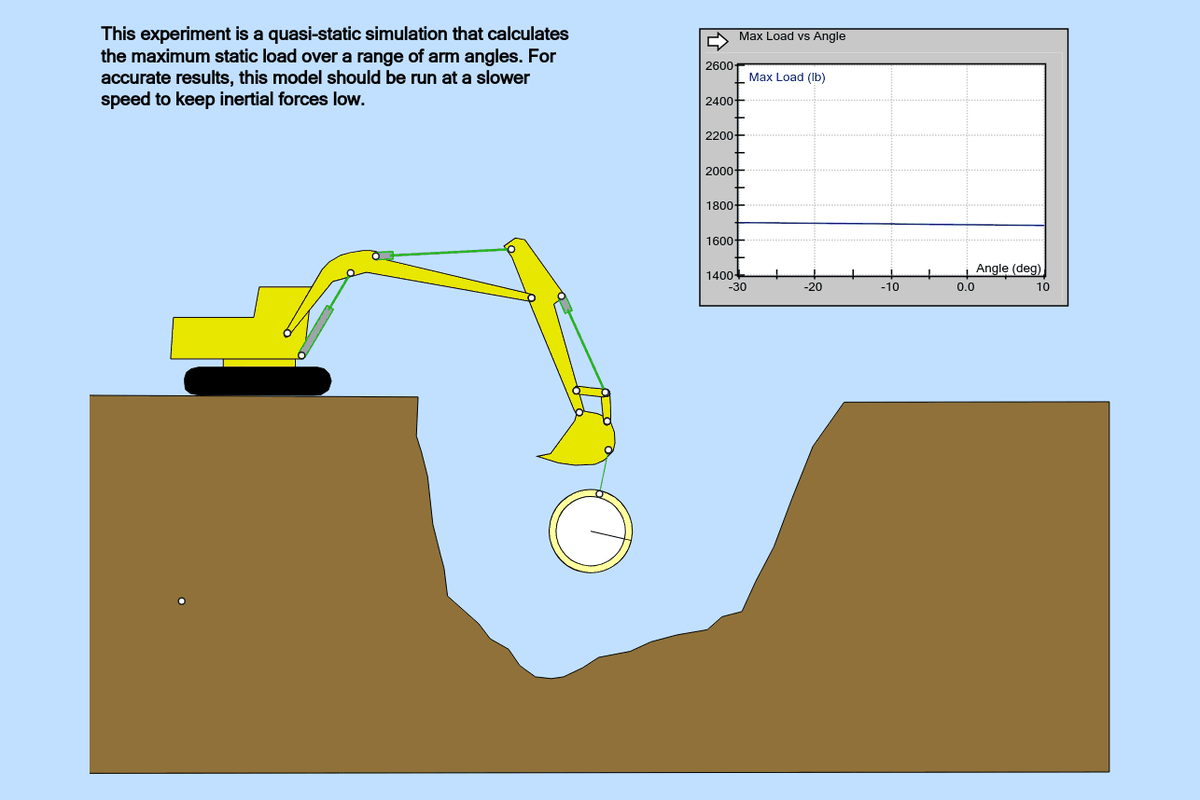
Backhoe
Articulated backhoe arm controlled by hydraulic actuators
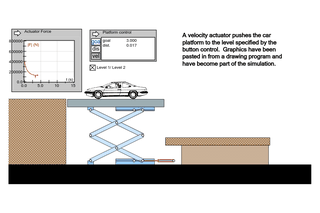
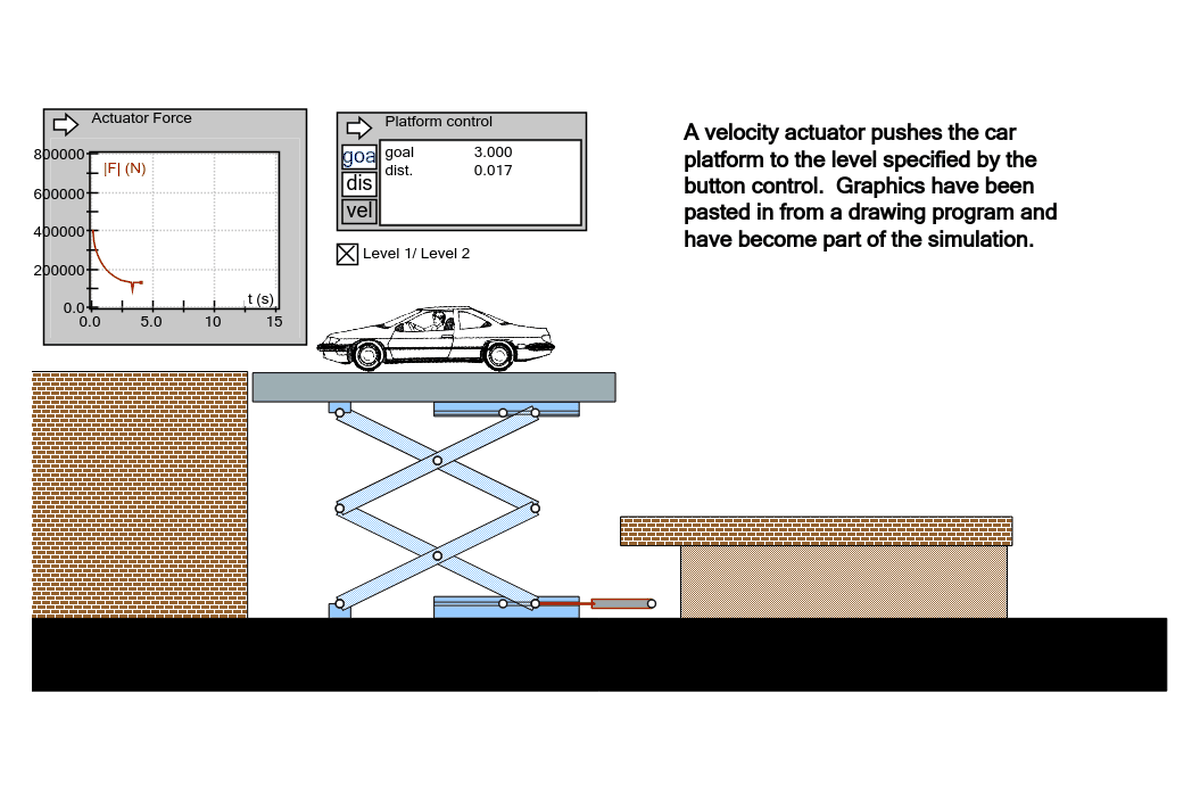
Car Platform
Scissor-lift car platform driven by a linear actuator
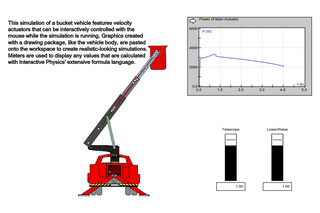
Cherry Picker
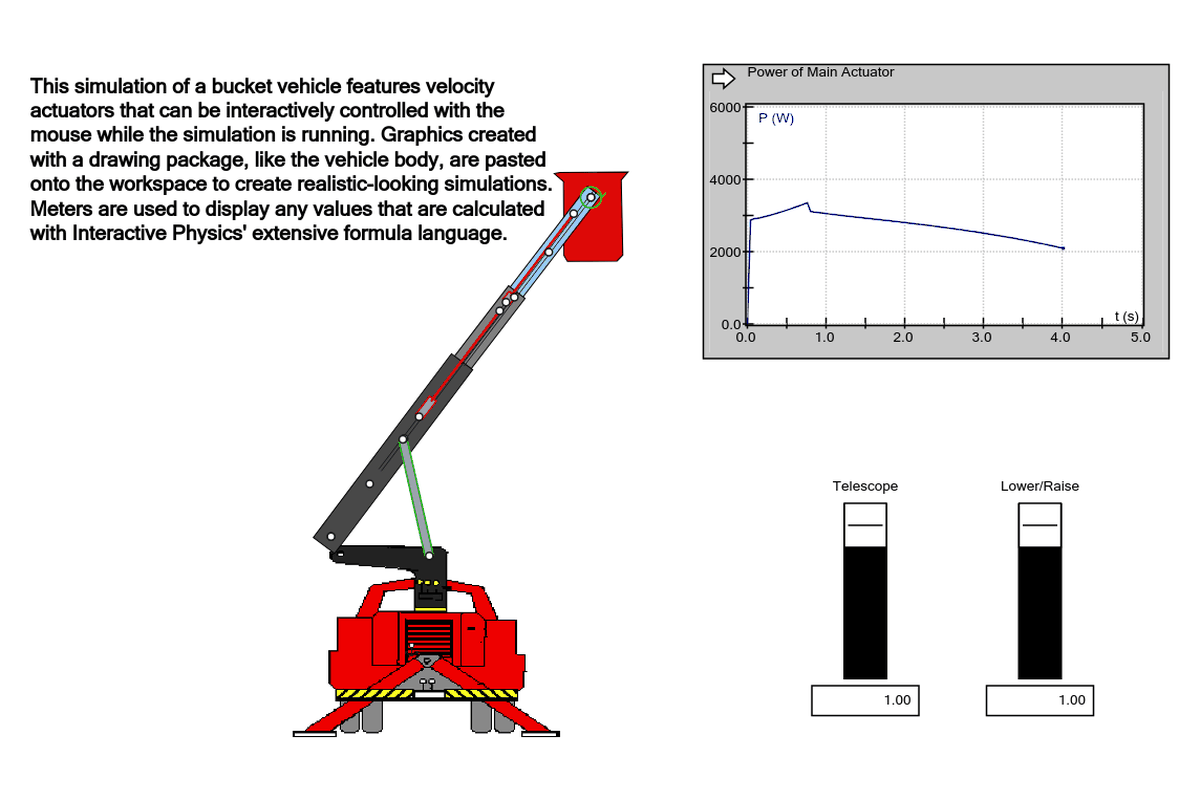
Telescoping cherry-picker boom with rotating basket
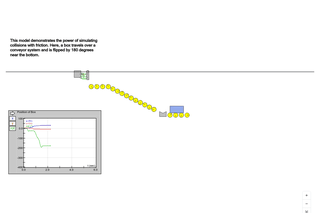
Conveyor
Belt conveyor transporting blocks along a line
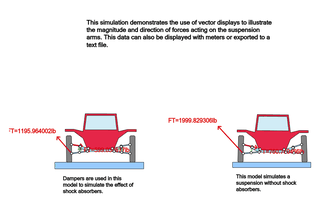
Dune Buggy
Suspension system of a dune buggy crossing rough terrain
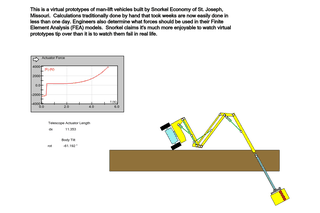
Man-lift
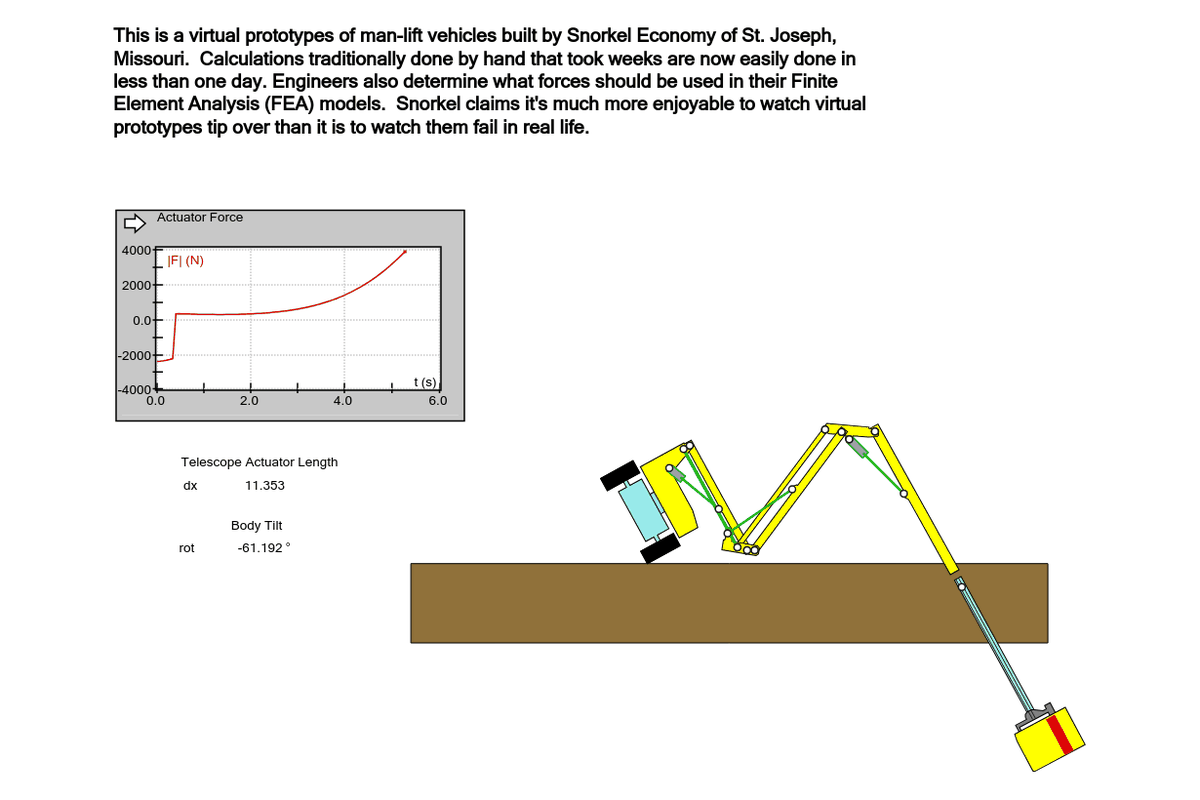
Articulated man-lift platform with multiple hinge joints
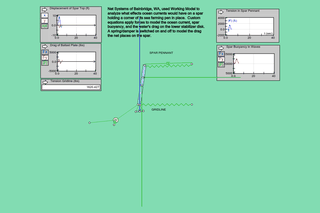
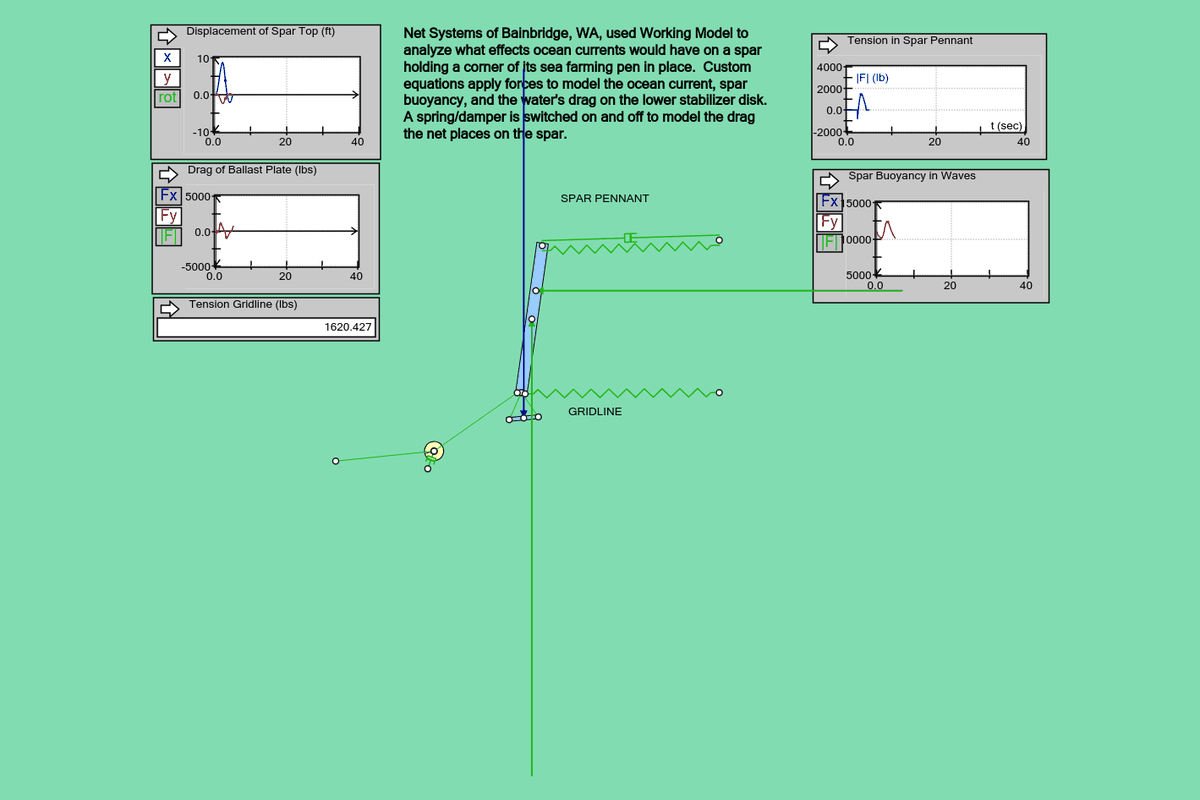
Ocean Pen
Floating aquaculture pen responding to wave motion
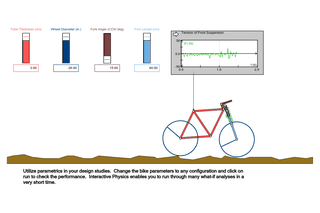
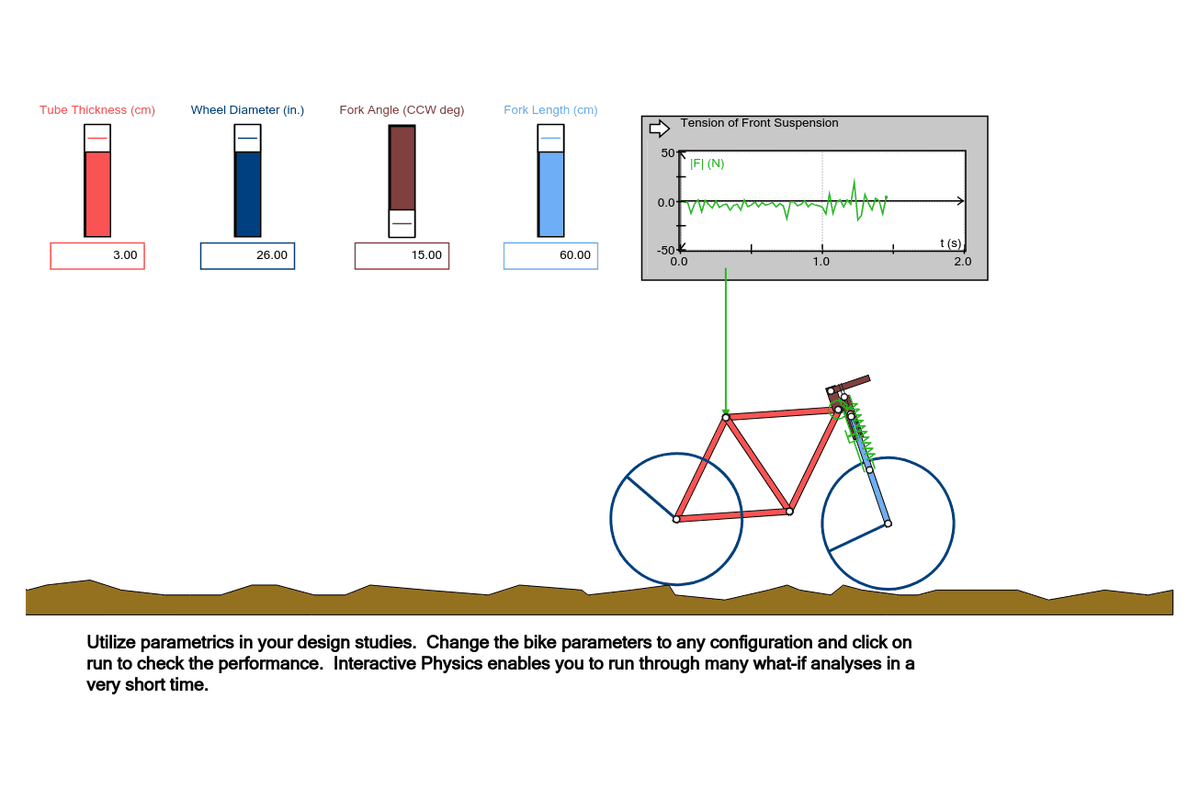
Parametric Bike
Bicycle whose frame geometry is driven by sliders
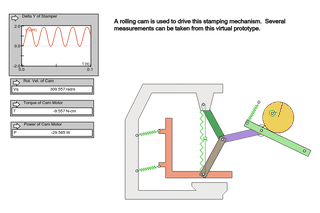
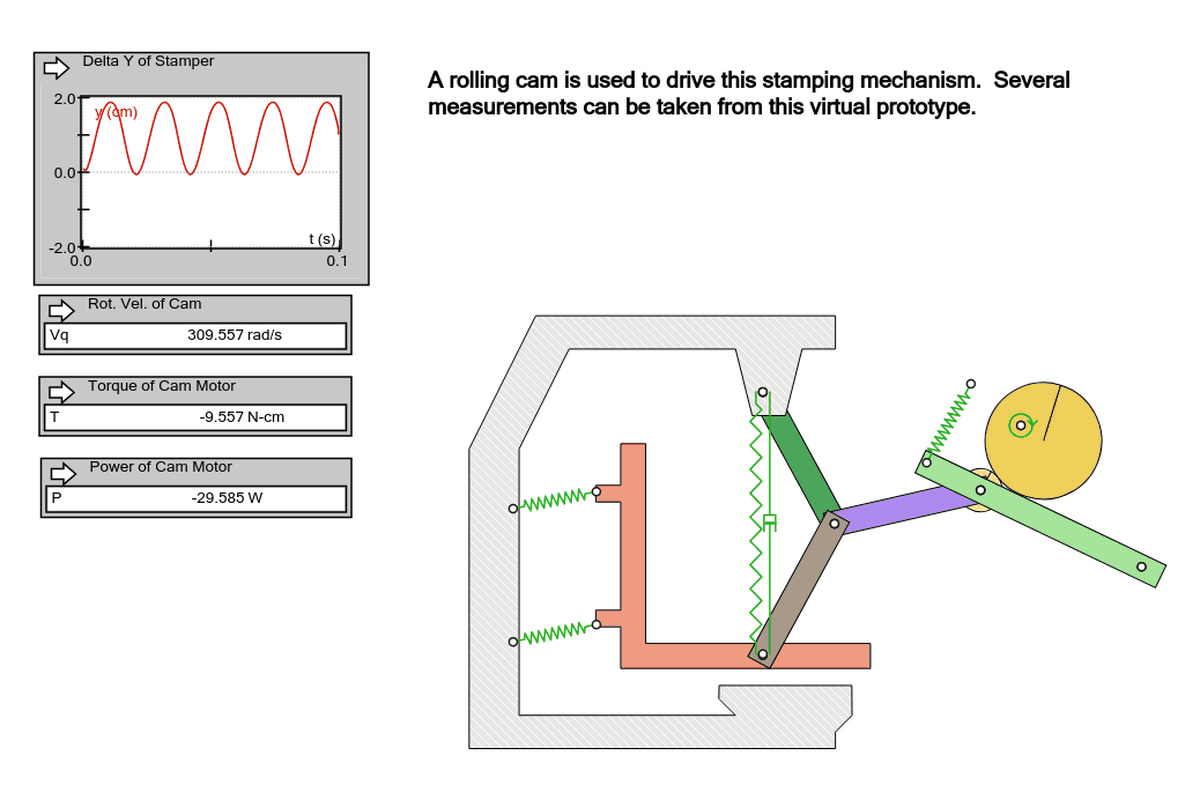
Stamper
Cam-actuated stamping machine producing repeated strokes
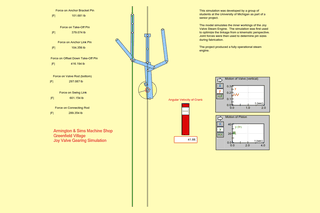
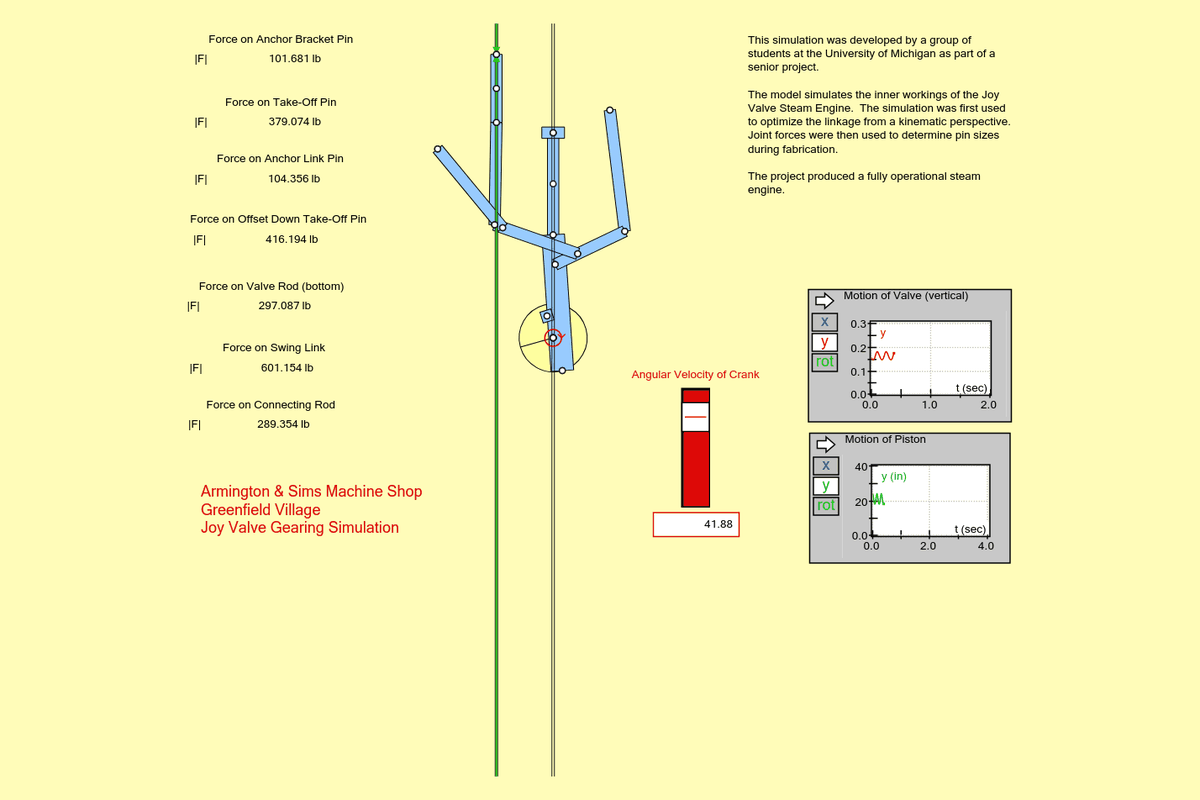
Steam Engine
Working model of a reciprocating steam-engine mechanism
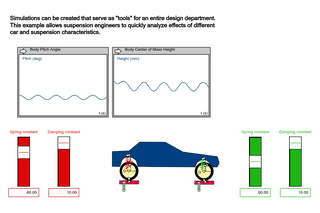
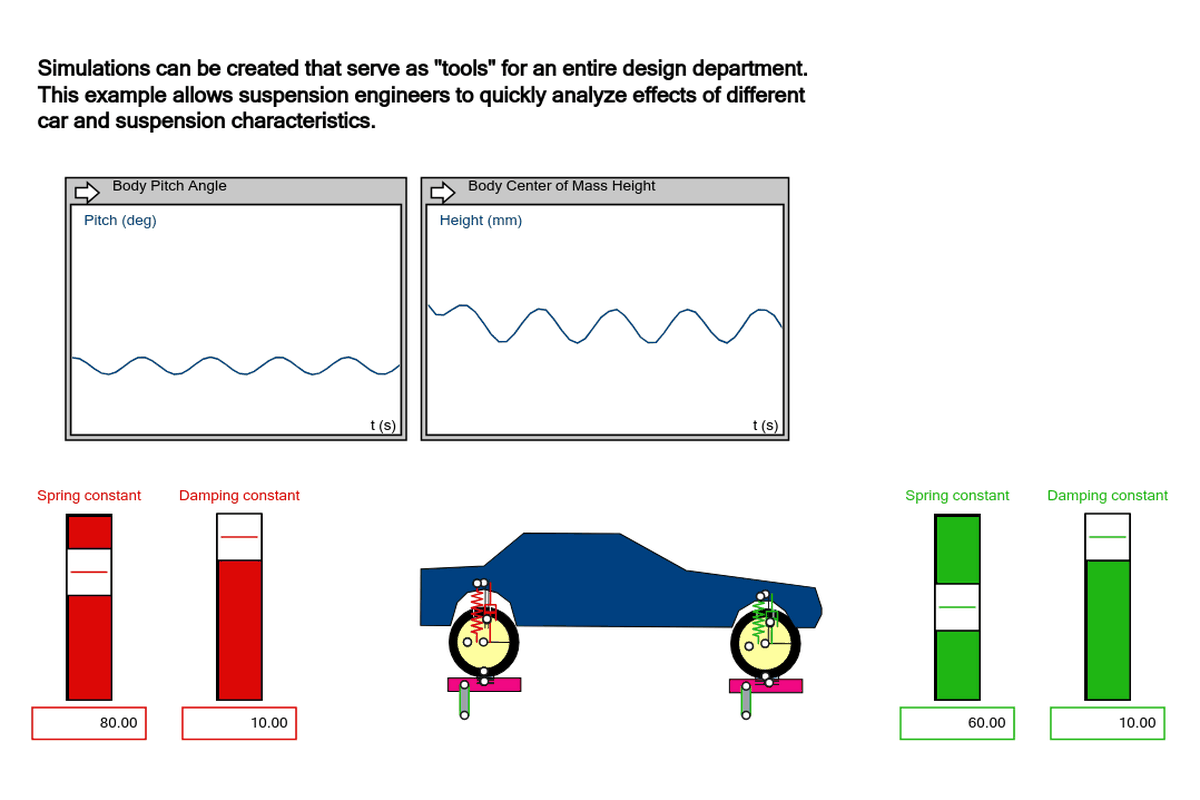
Suspension 1
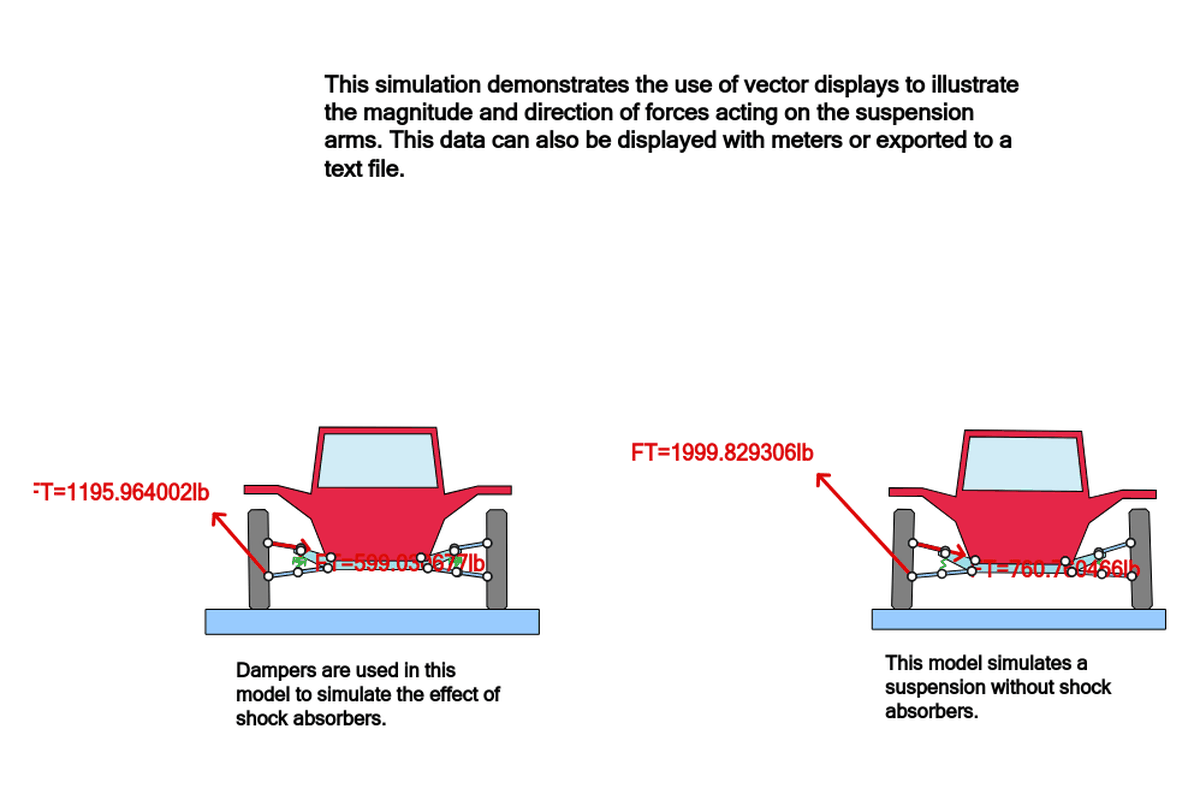
Independent-wheel vehicle suspension with spring and damper
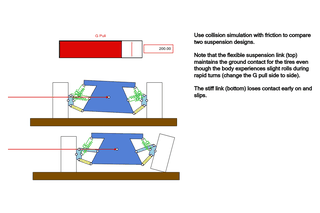
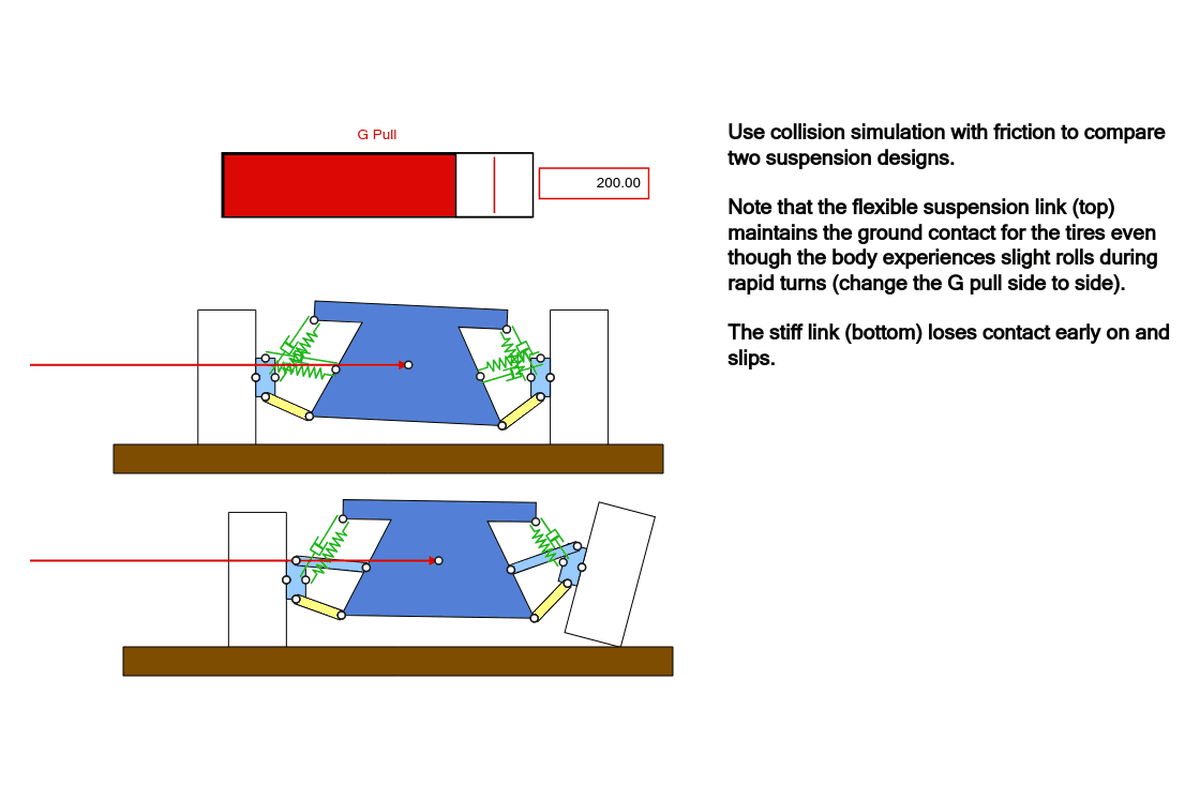
Suspension 2
Alternate suspension layout for comparison
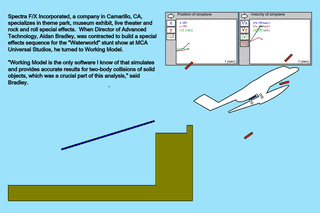
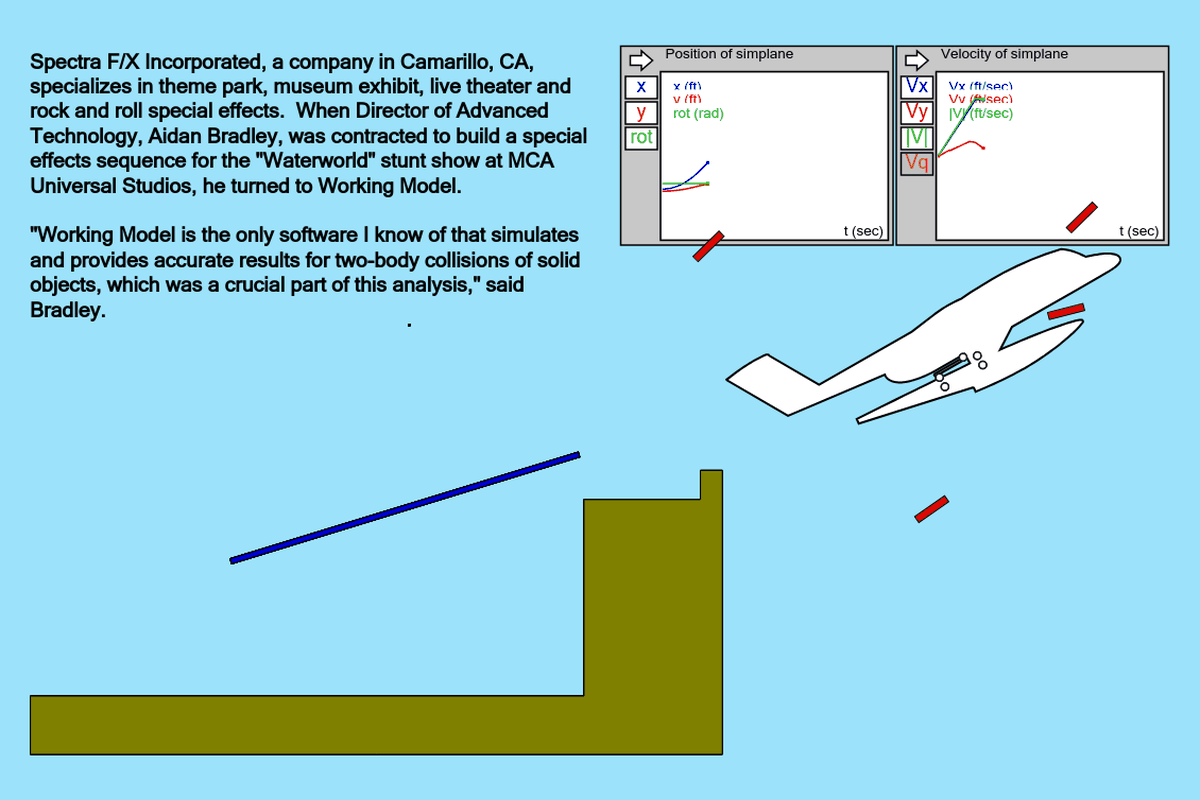
Waterworld
Water-driven machine with paddle wheels and gears
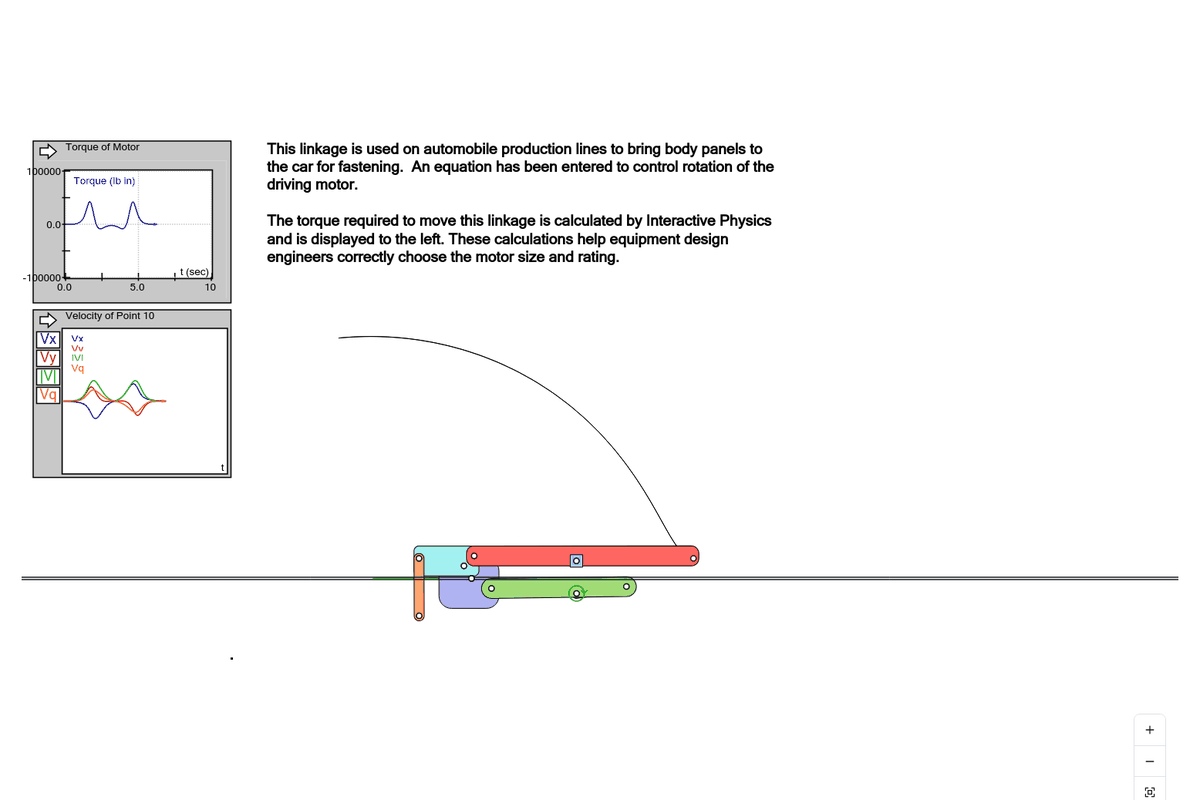
Mechanisms
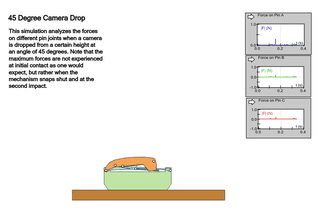
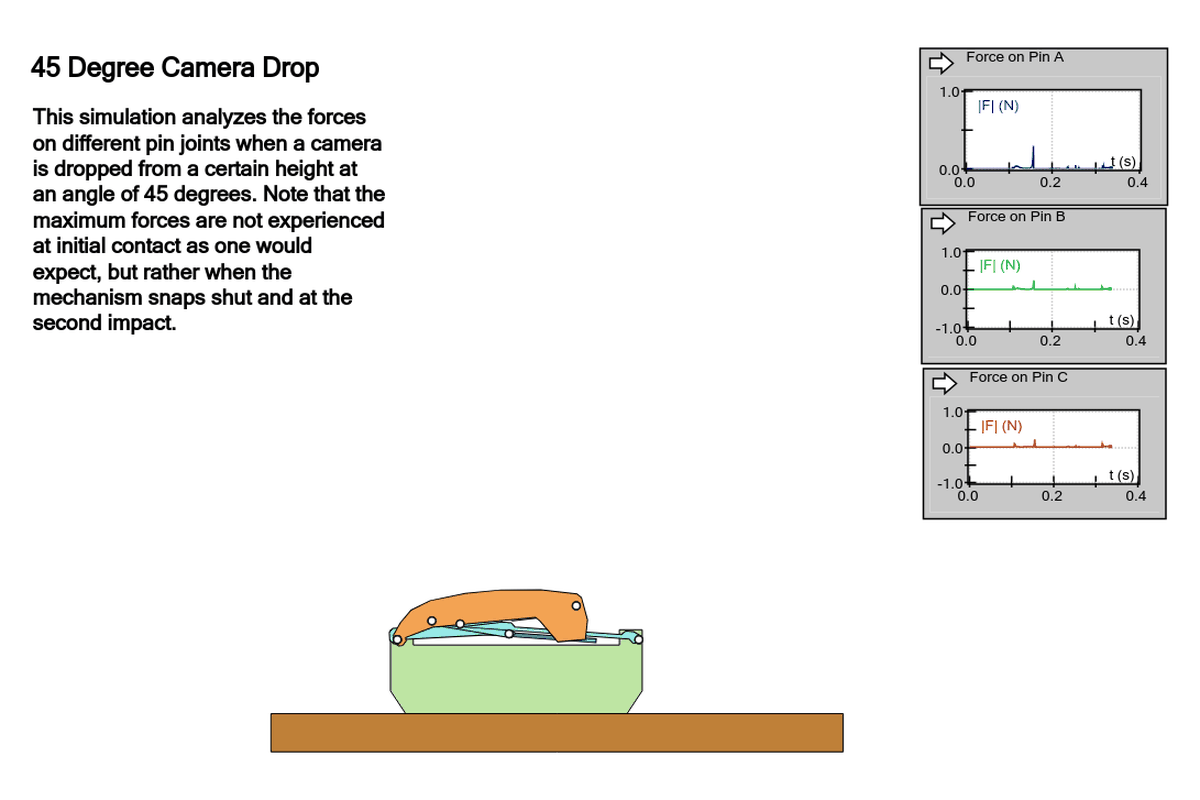
Camera Drop
Shock-absorbing mechanism protecting a dropped camera
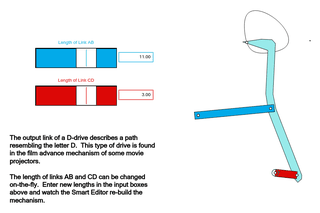
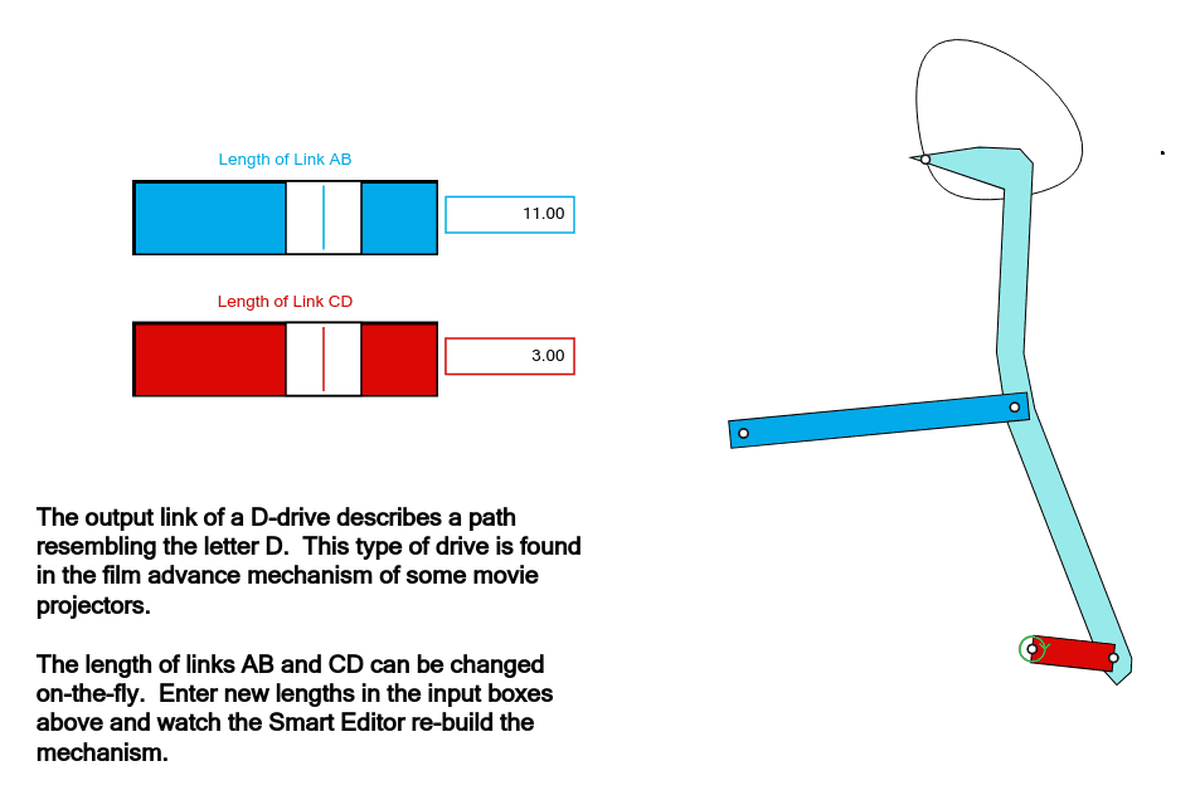
D-drive
D-shaped drive mechanism producing intermittent motion
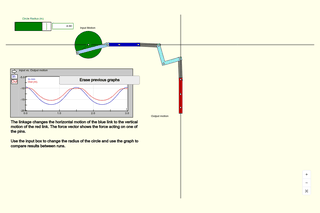
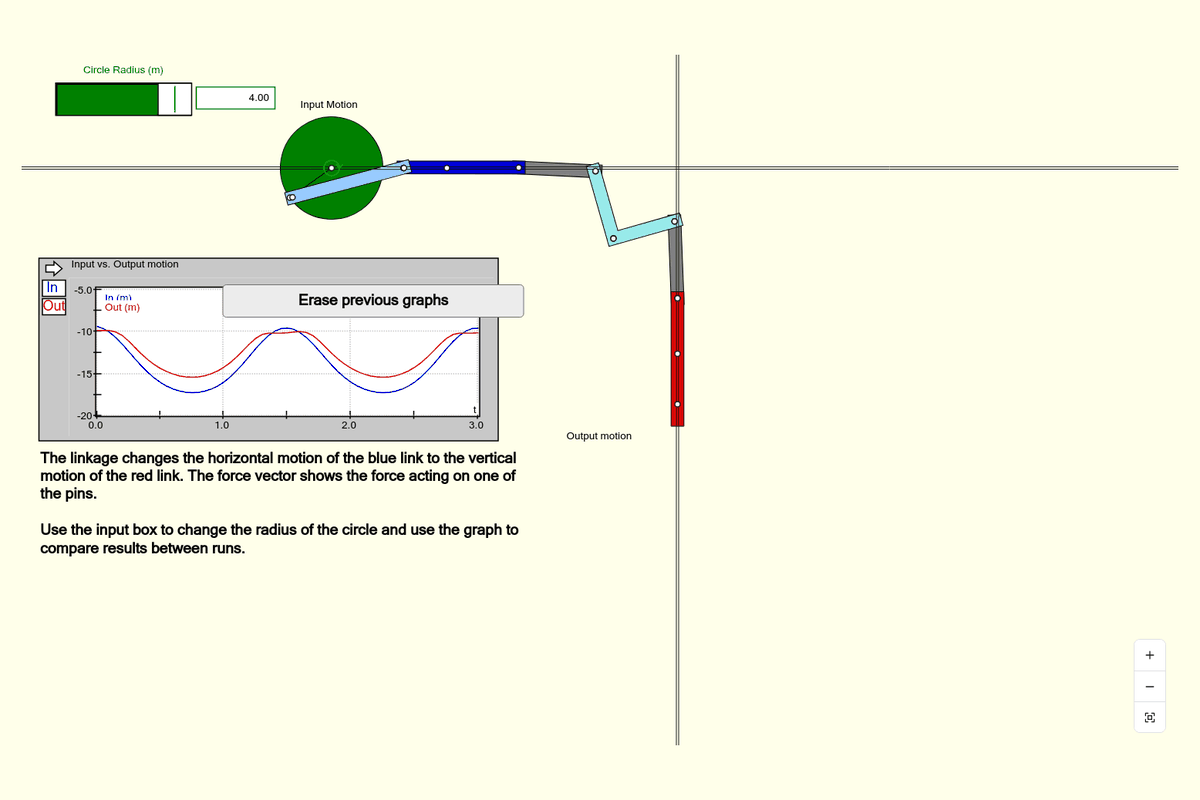
Direction Change
Mechanism that reverses motion direction at end of travel
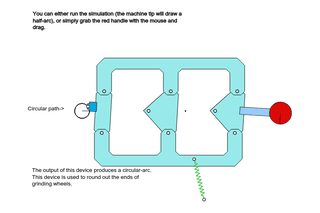
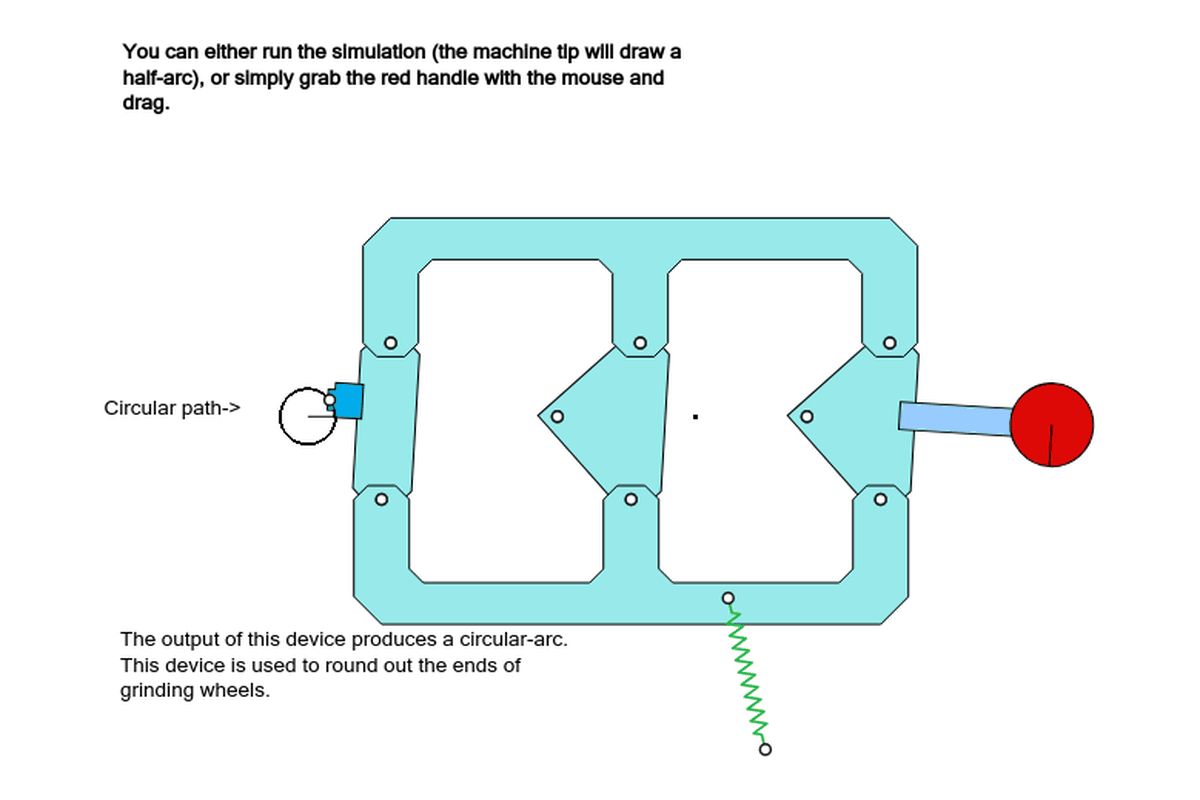
Grind Wheel
Belt-driven grinding wheel with pivoting rest
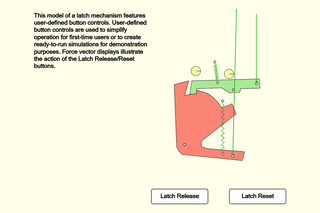
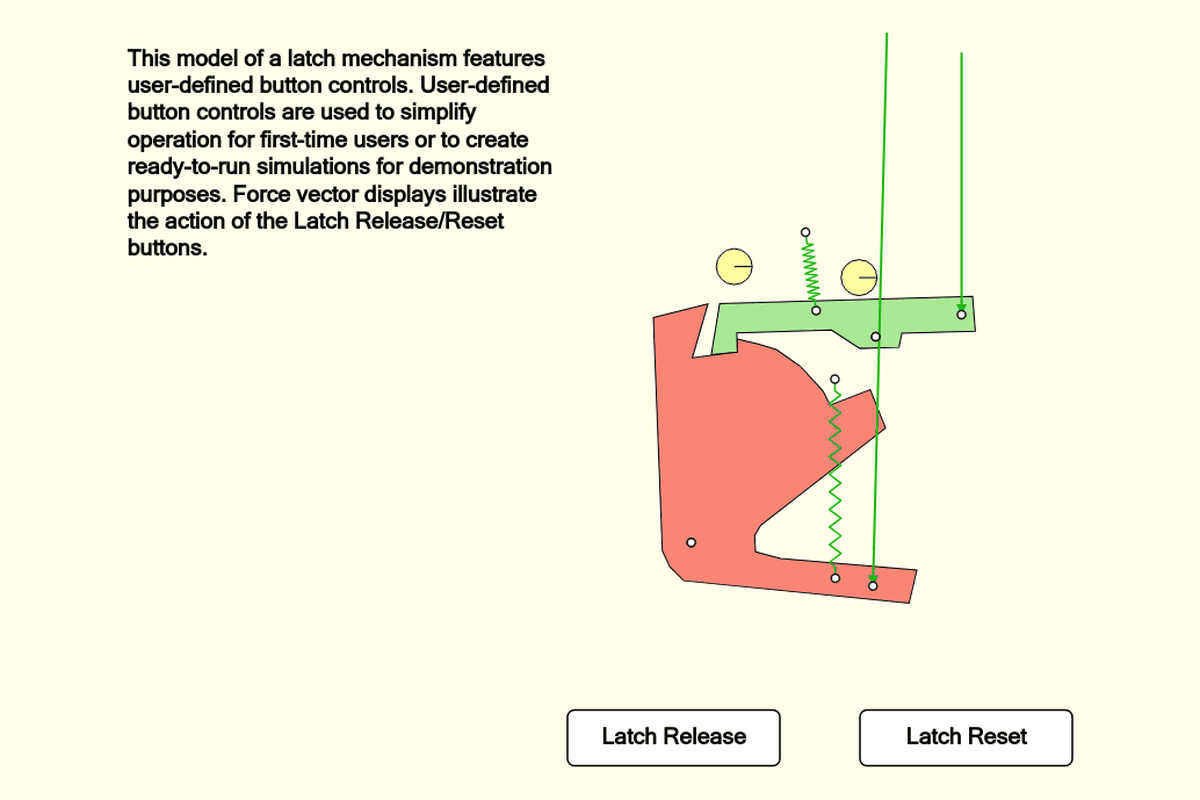
Latch
Spring-loaded latch engaging and releasing on a trigger
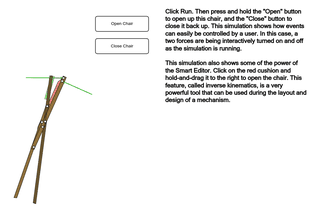
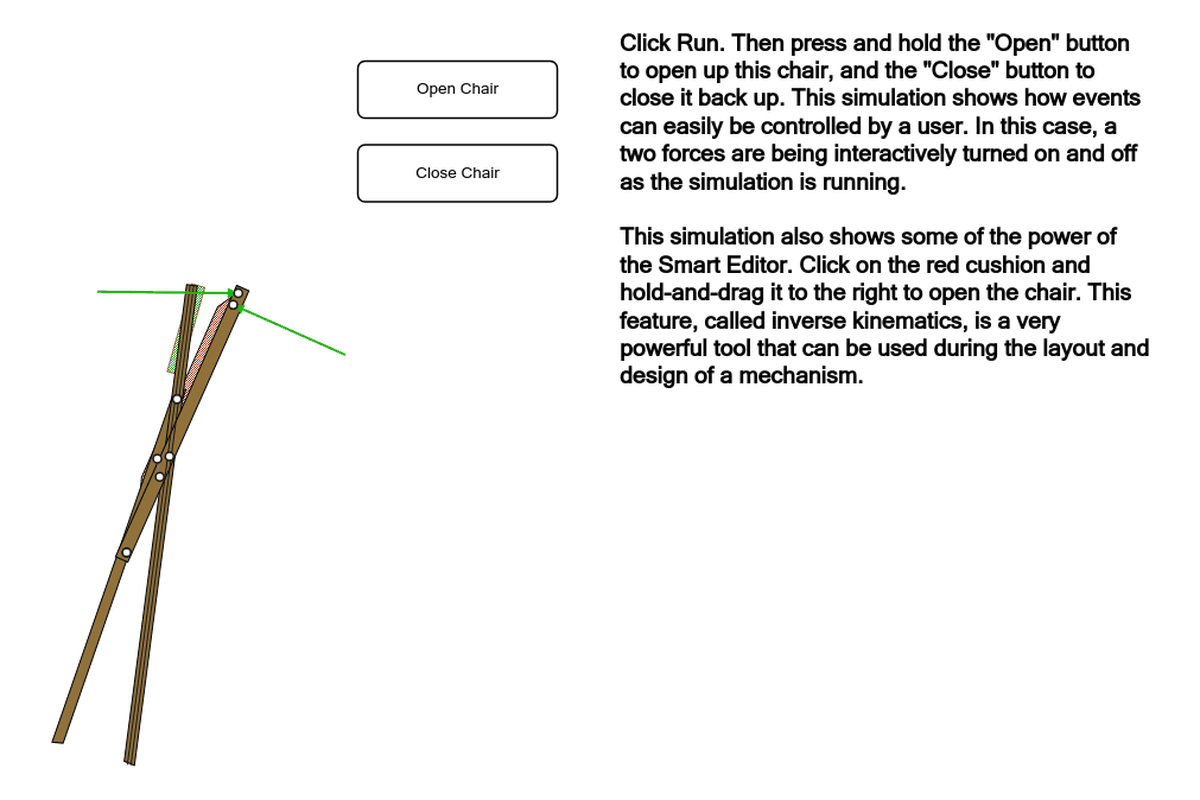
Open Close Chair
Folding chair mechanism opening and closing on command
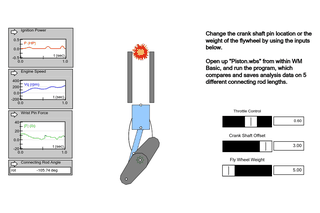
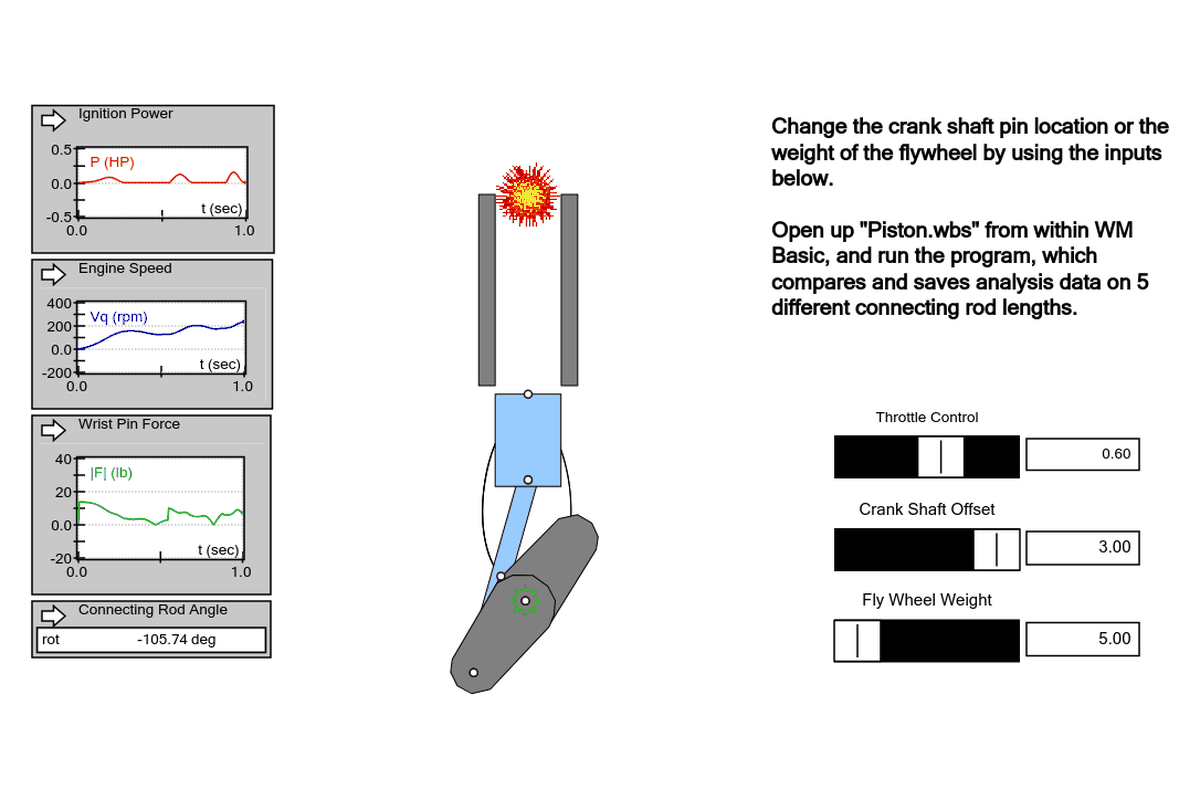
Piston
Slider-crank piston mechanism converting rotation to linear motion
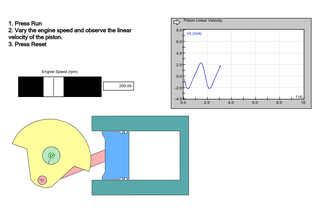
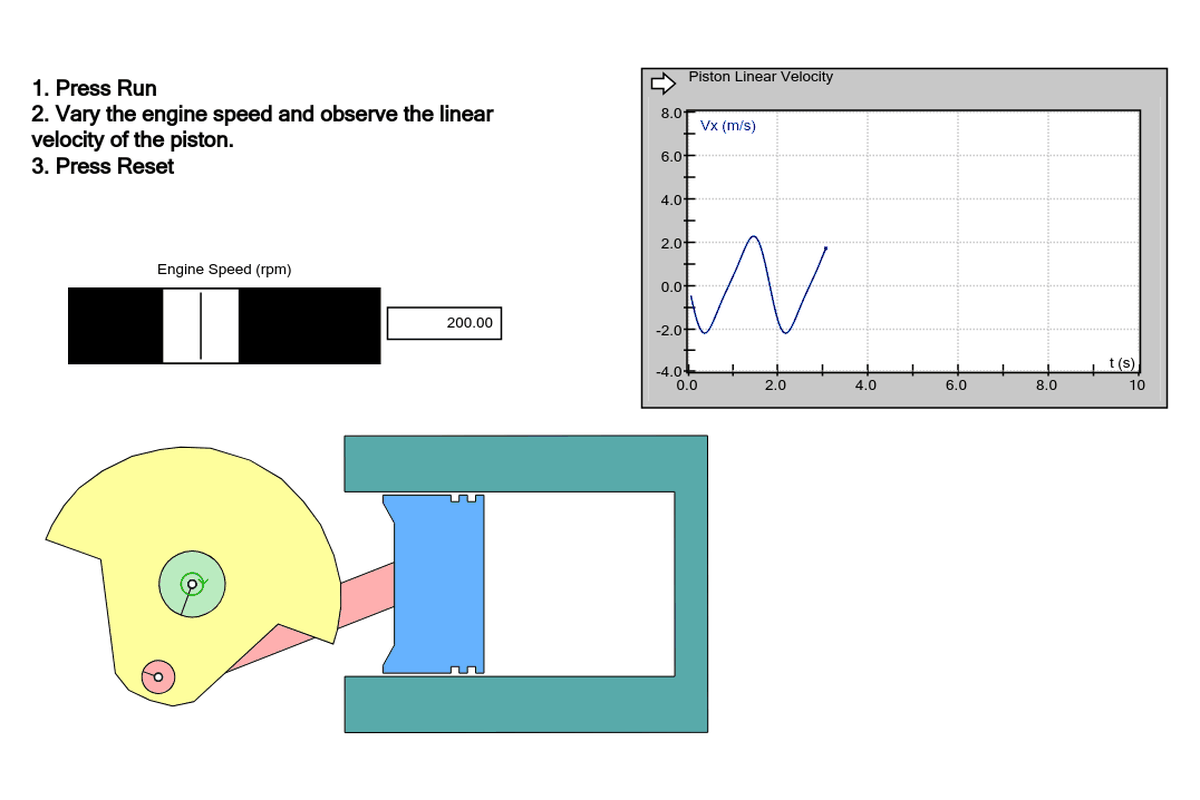
Piston 2
Alternate piston configuration for comparison
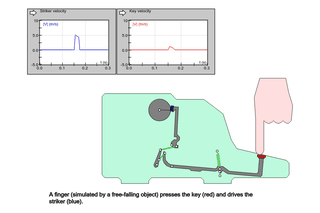
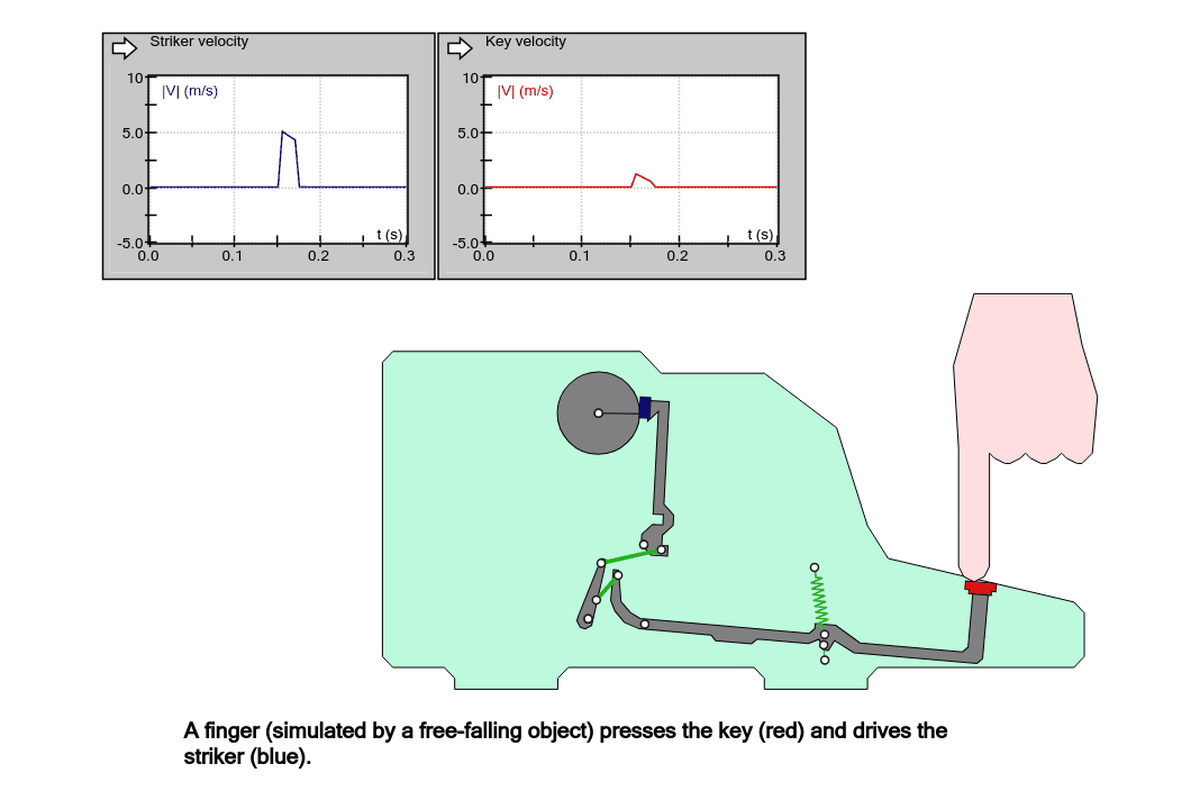
Typewriter
Typewriter keystroke mechanism with return spring
Statics
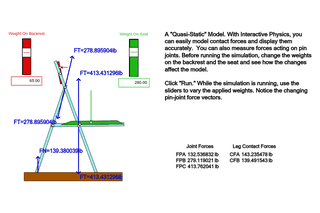
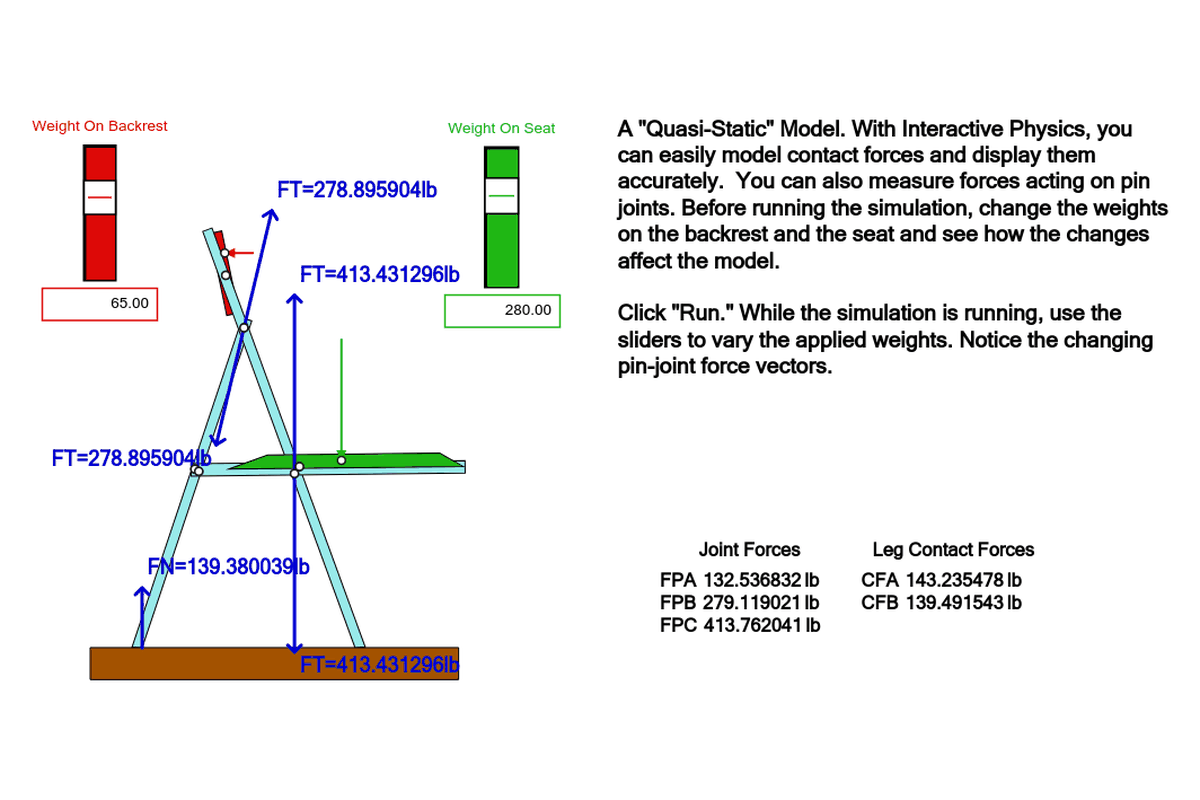
Chair Forces
Static analysis of forces and moments on a loaded chair
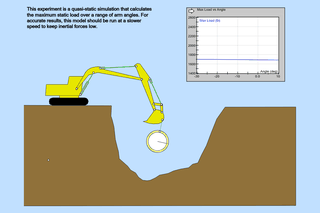
Crane
Cantilever crane supporting a suspended load
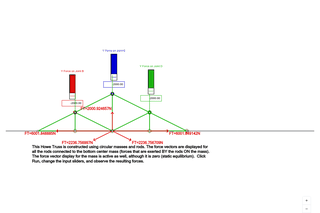
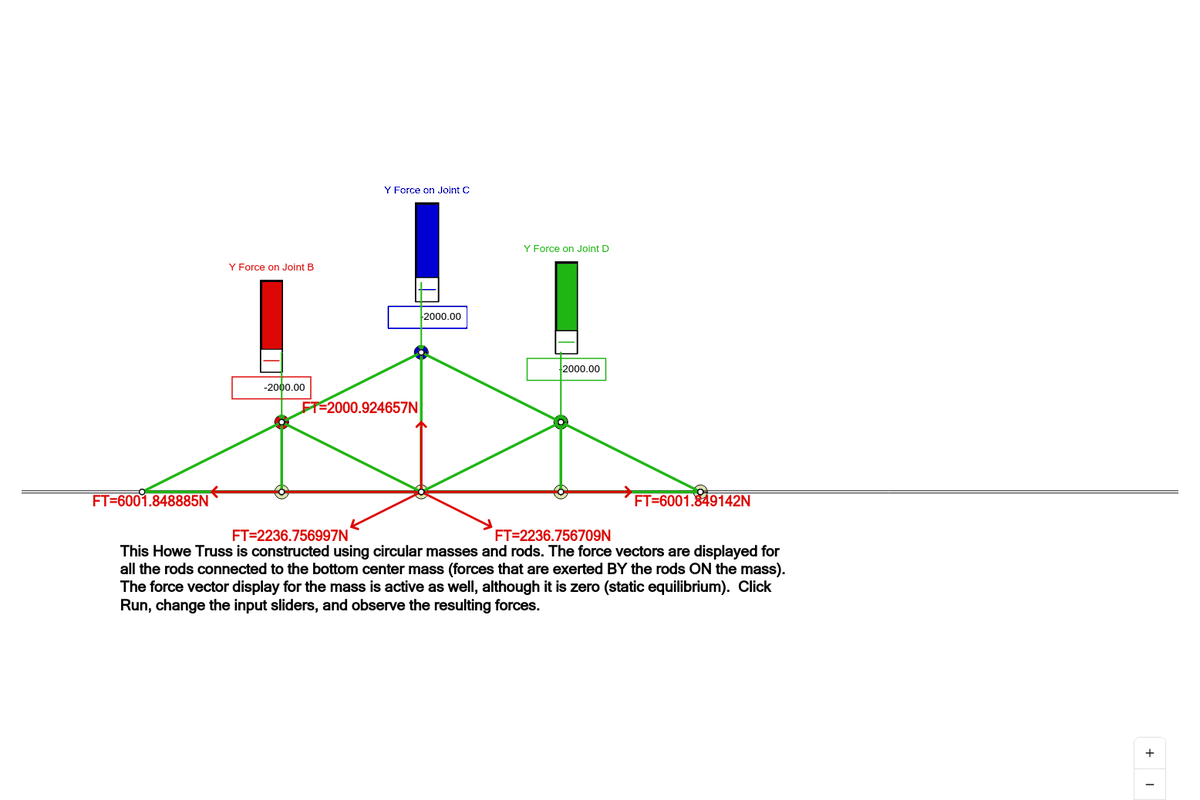
Howe Truss
Howe bridge-truss with member forces under load
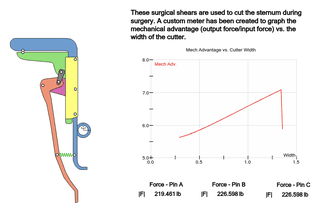
Surgical Shear
Mechanical-advantage analysis of a scissor-style surgical tool
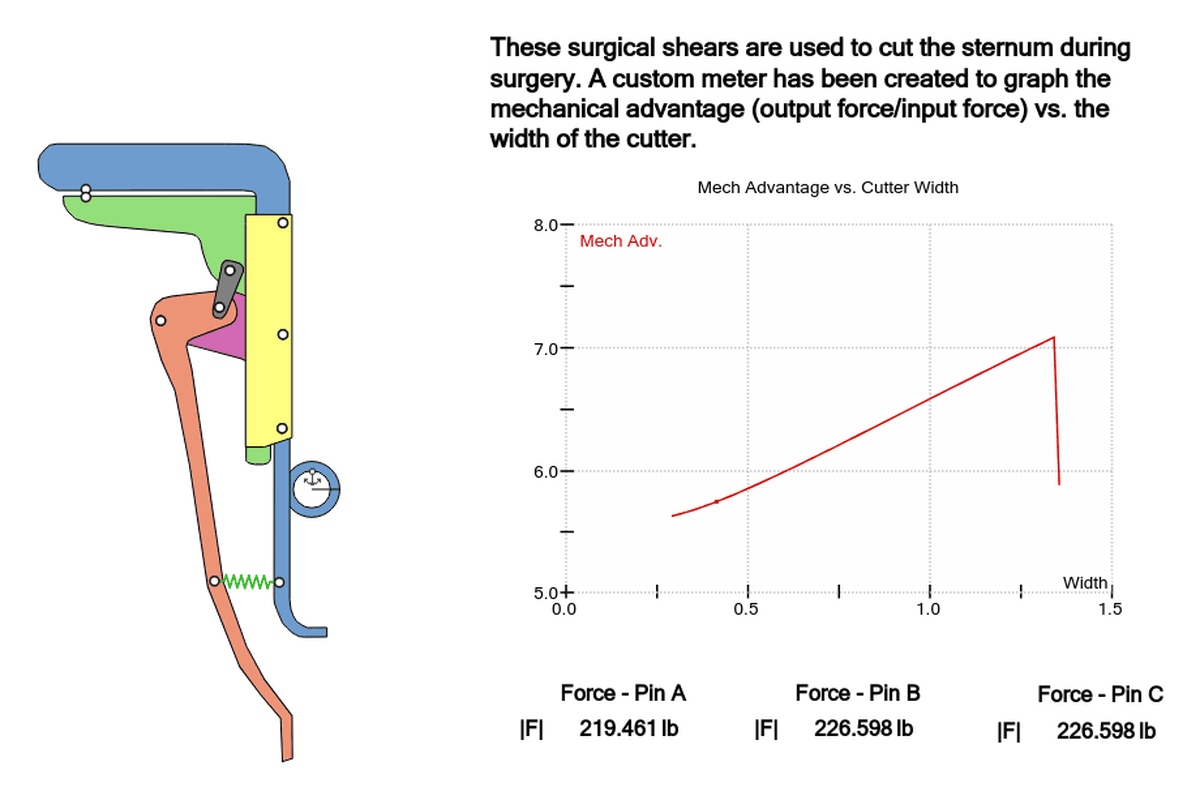
 Air Resistance (4)
Explore how drag forces change motion. See why objects reach terminal velocity, how orientation alters drag, and how projectile paths deviate from ideal parabolas.
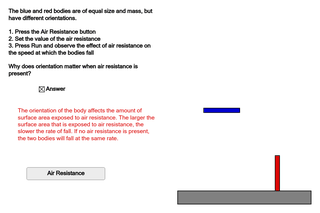
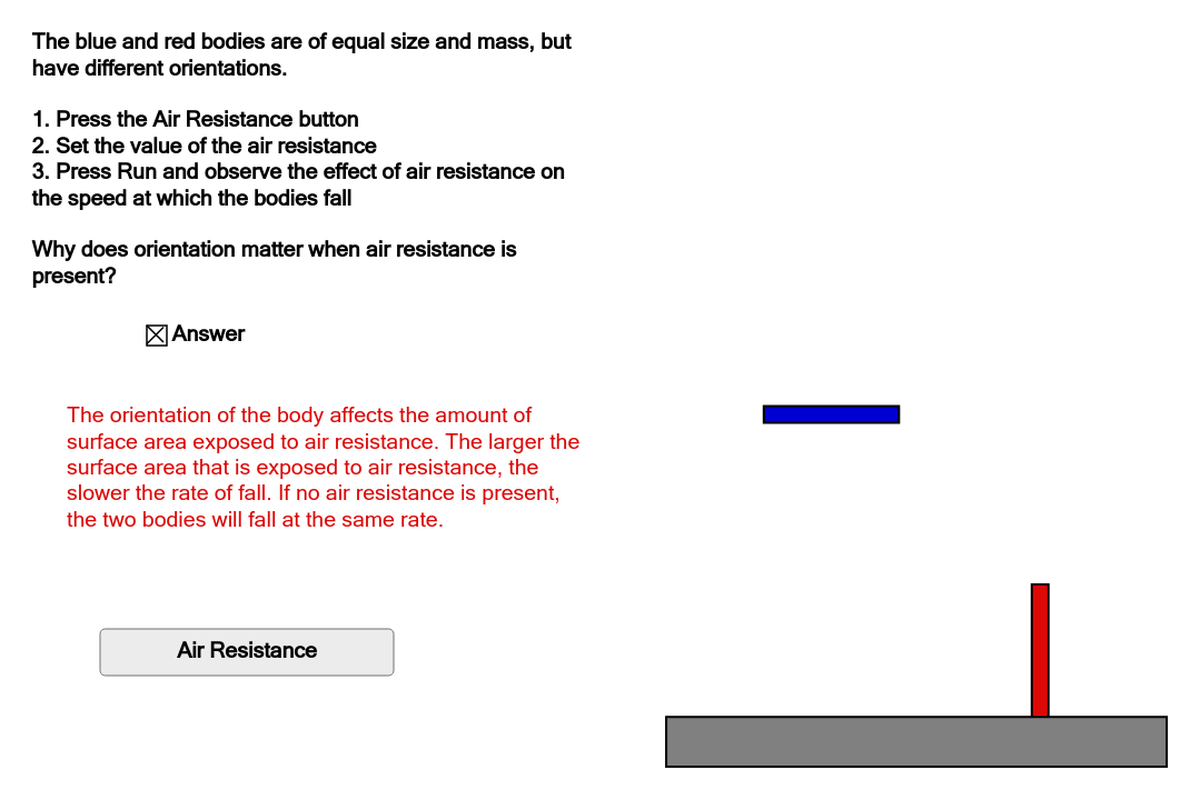
Effect of Orientation
See how object orientation changes drag force
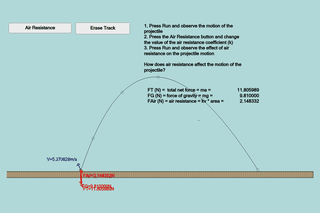
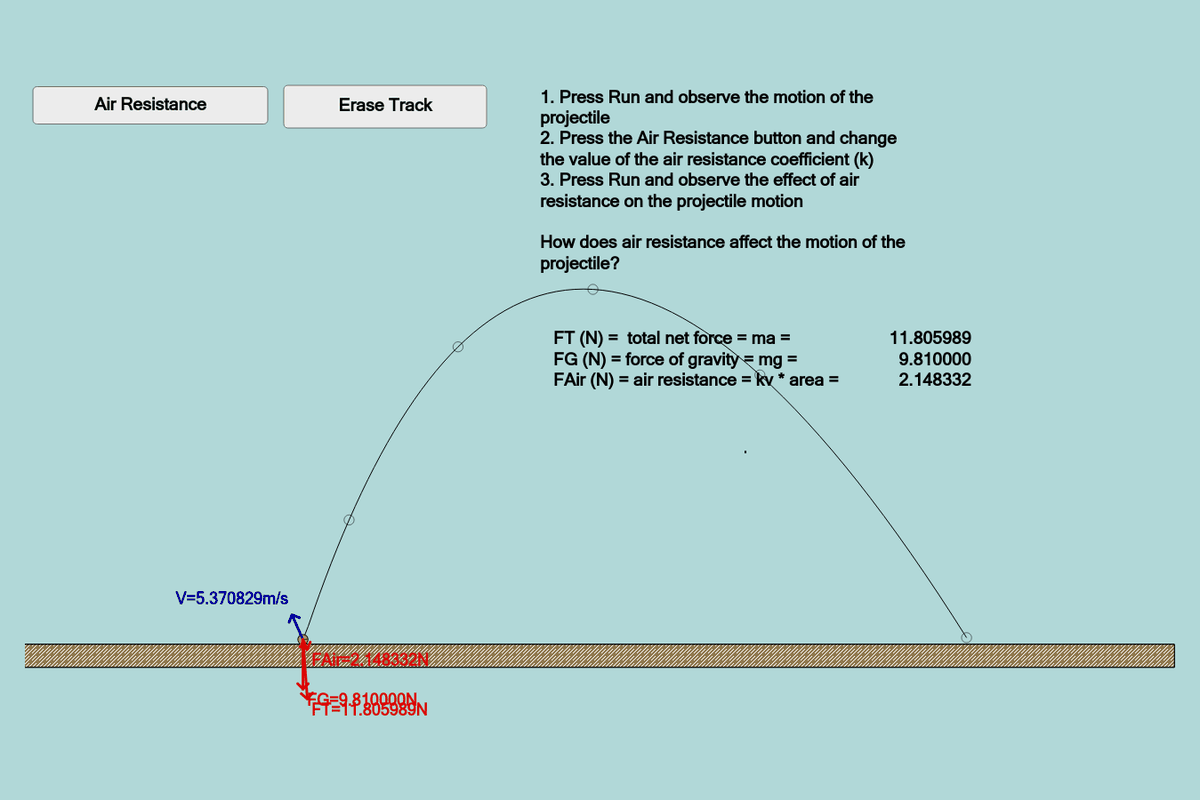
Effect on Projectile
Compare projectile paths with and without air resistance
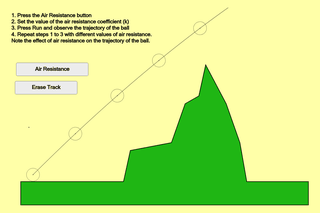
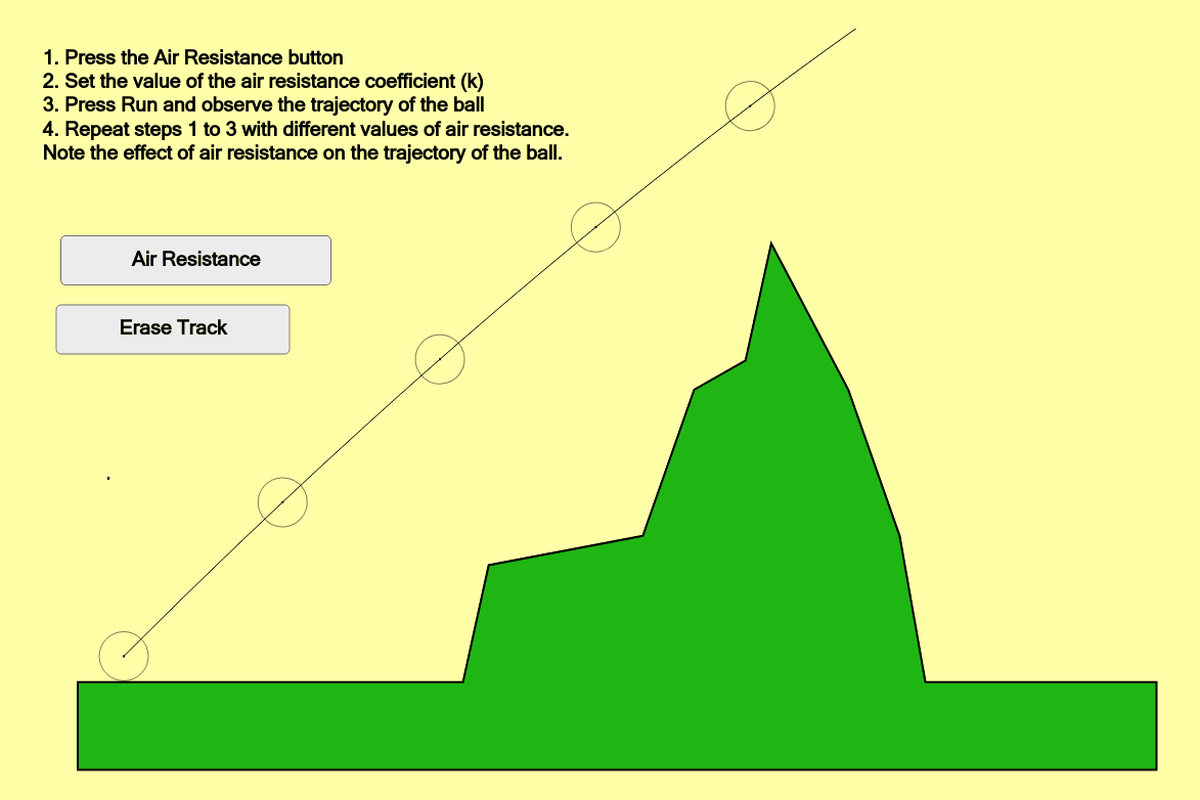
Effect on Trajectory
Watch drag curve a trajectory away from the ideal parabola
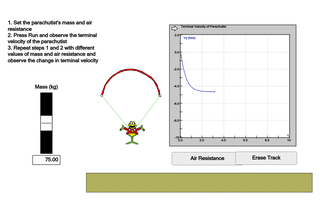
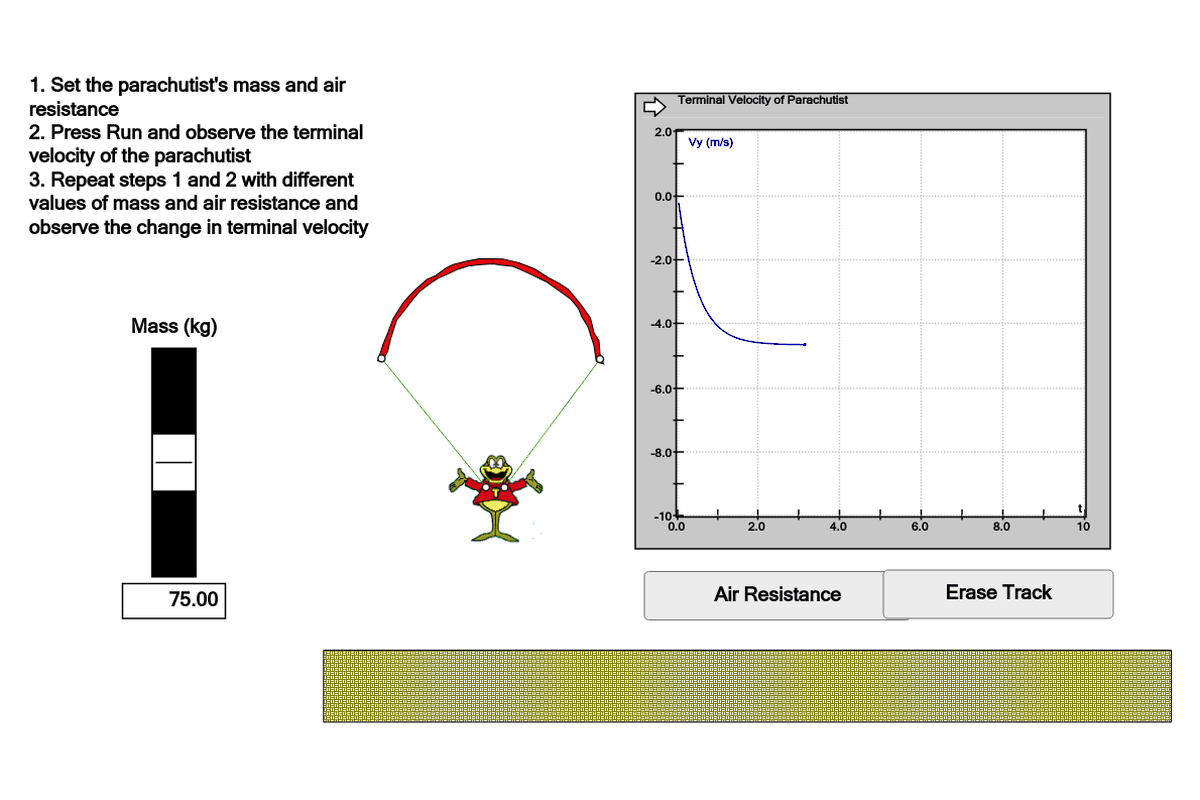
Terminal Velocity
An object approaches terminal velocity as drag balances gravity
 Astronomy (6)
Model orbital motion driven by gravitational attraction. Observe how varying initial conditions produces circles, ellipses, escape trajectories, and multi-body dynamics.
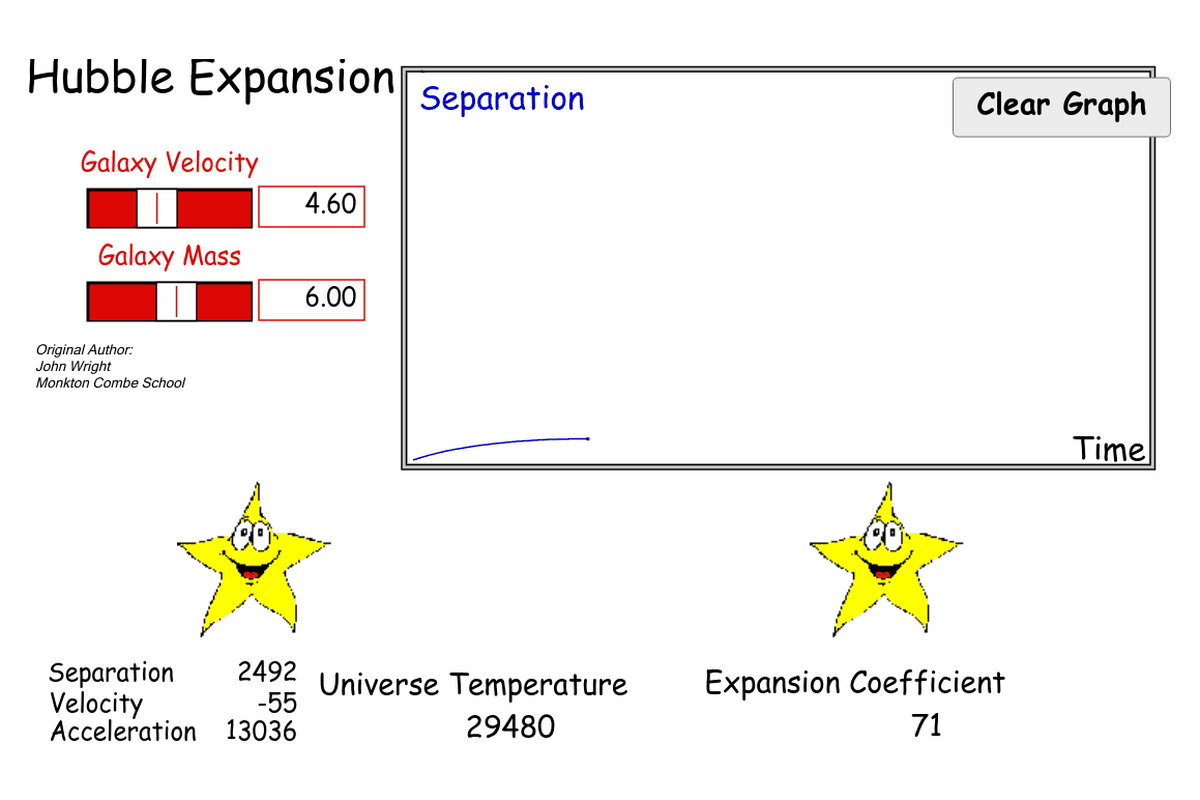
Hubble Expansion
Visualize Hubble's Law and the expansion of the universe
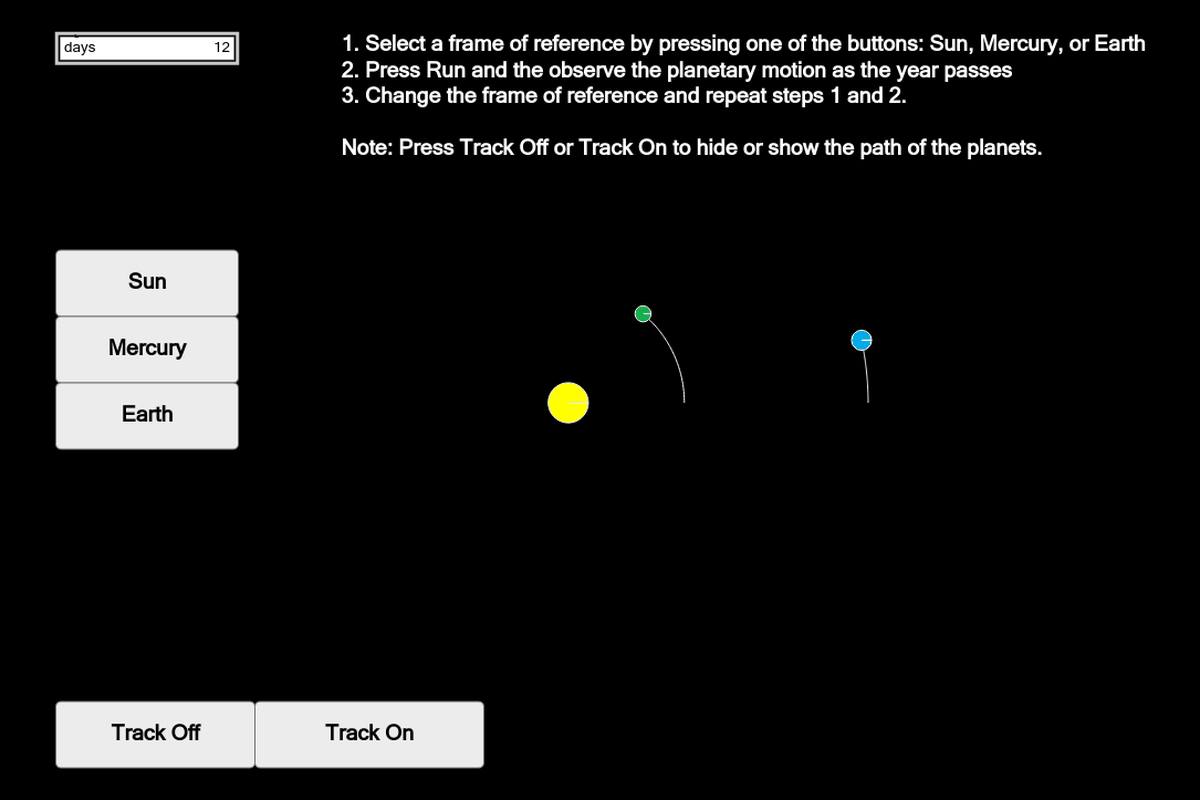
Planetary Motion
Observe Kepler's laws of planetary motion
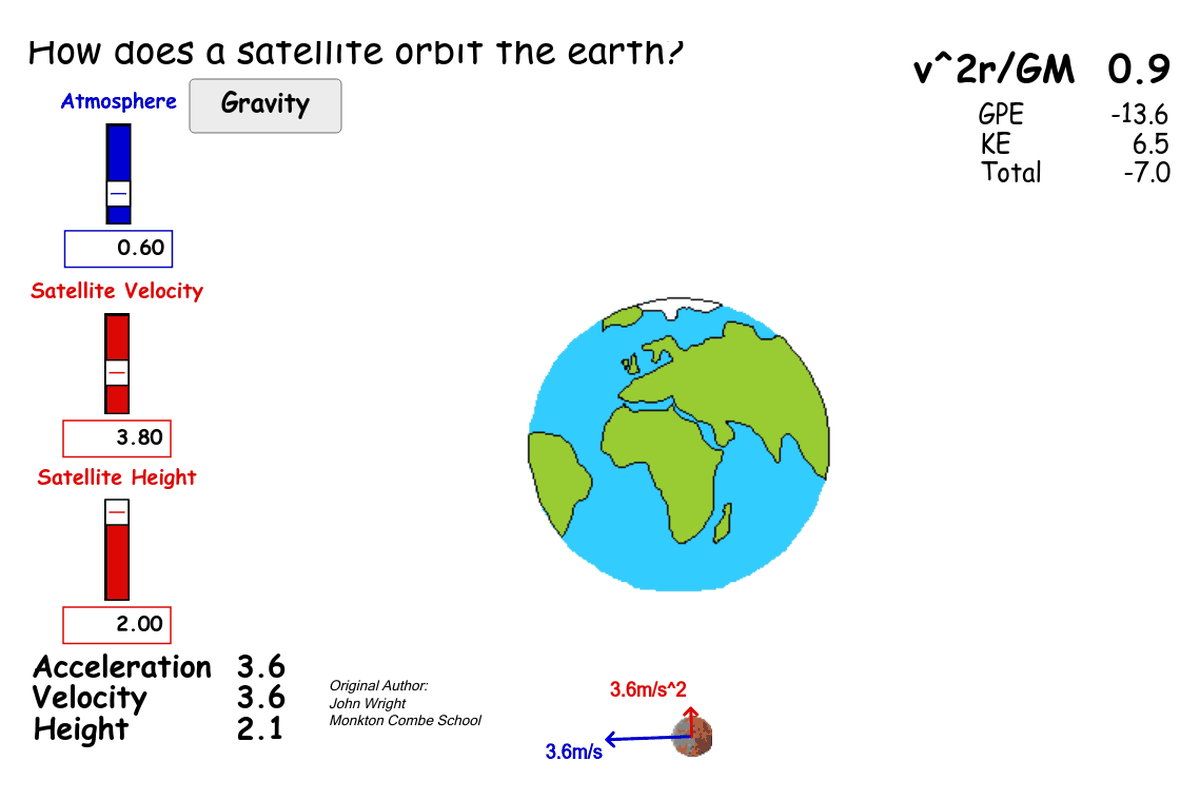
Satellite
Orbit a satellite under gravitational attraction
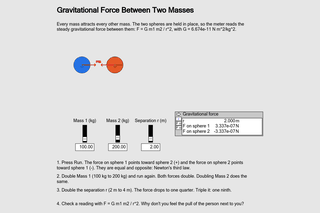
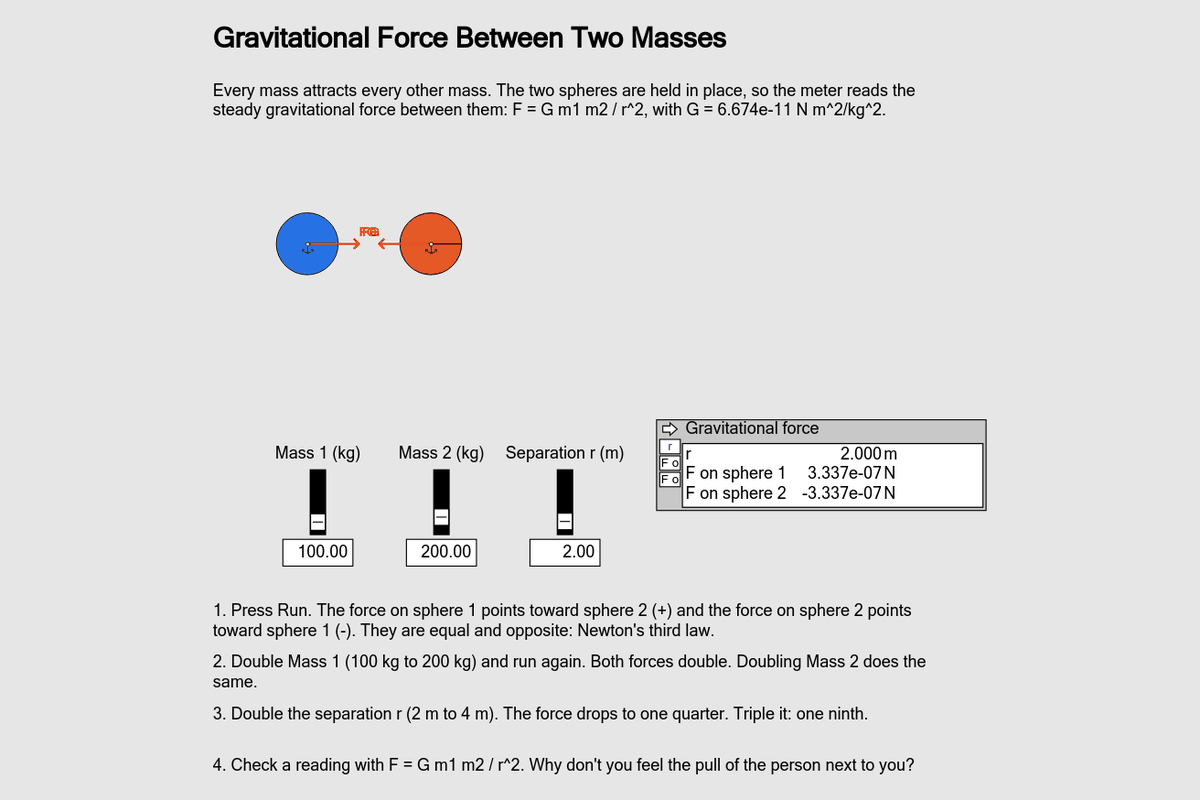
Gravitational Force Between Two Masses
Change two masses and their distance and read Newton's gravitational force
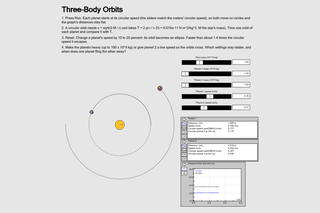
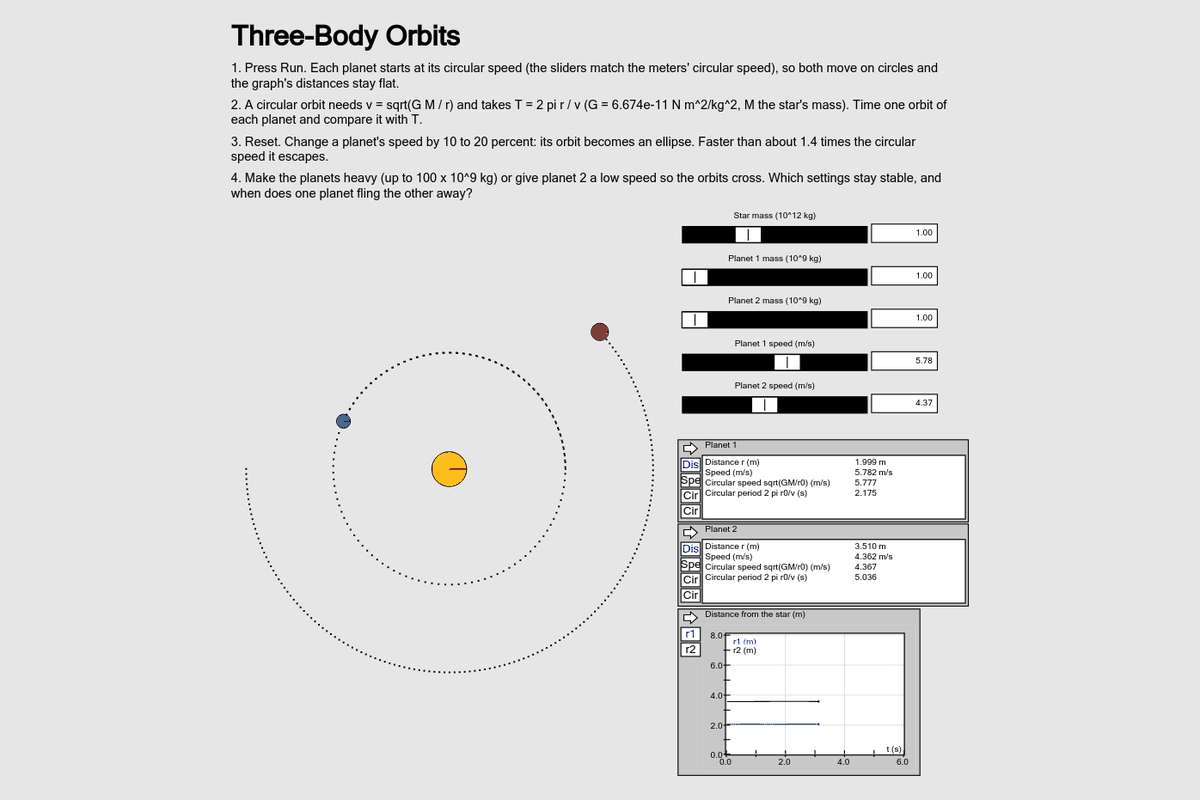
Three-Body Orbits
A star and two planets: find orbits that stay stable and ones where a planet is thrown out
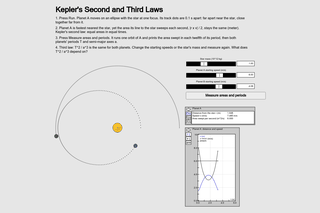
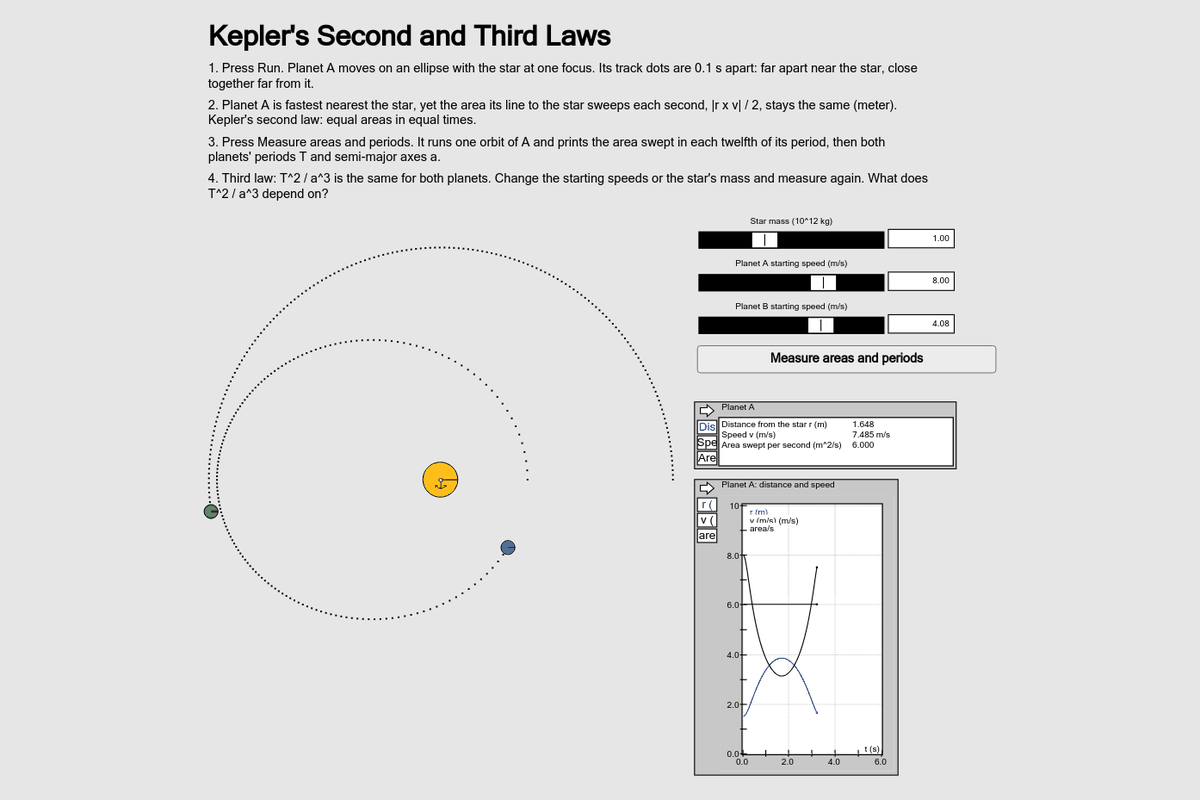
Kepler's Second and Third Laws
A planet sweeps equal areas in equal times; T^2/a^3 is the same for every orbit of one star
 Collisions (3)
Investigate elastic and inelastic collisions. Track how momentum and energy transfer between colliding bodies of different masses and speeds.
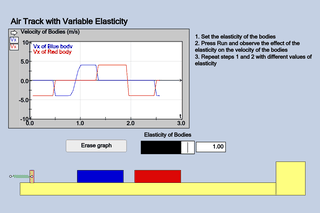
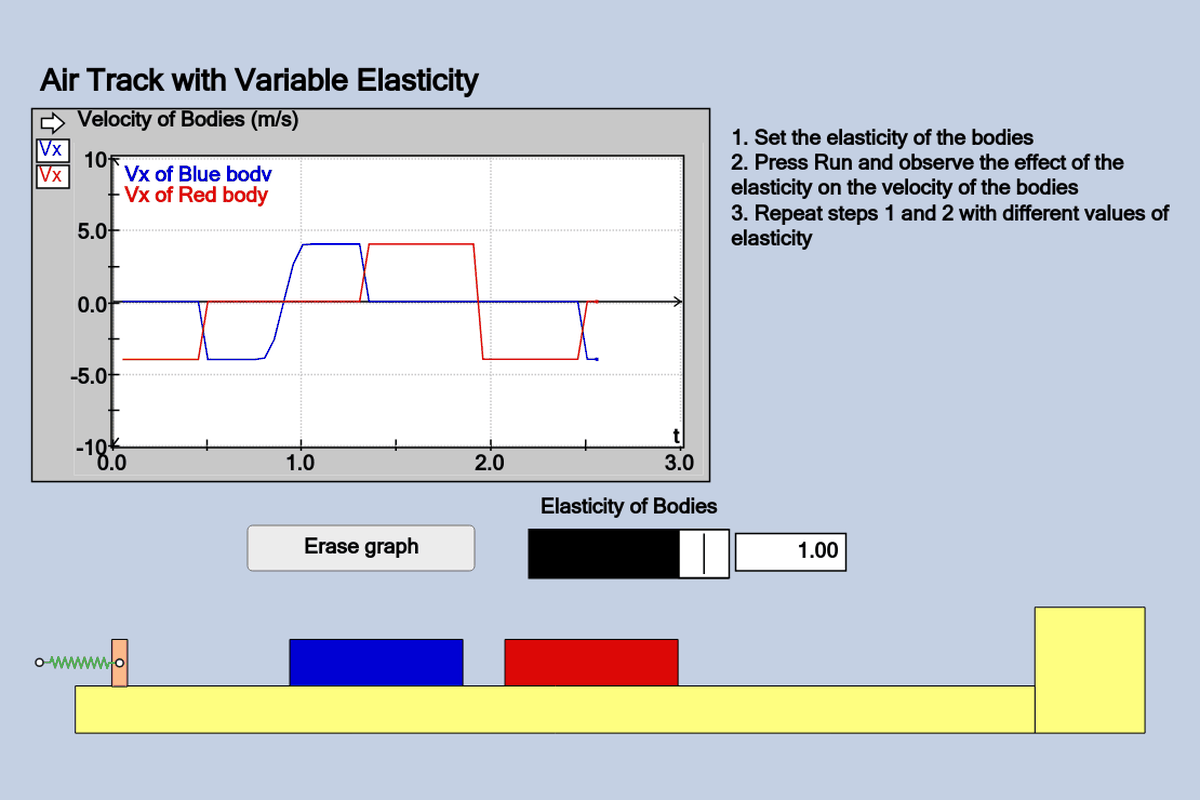
Air Track
Classic air-track collision with near-zero friction
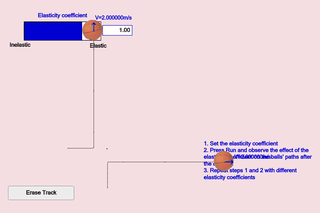
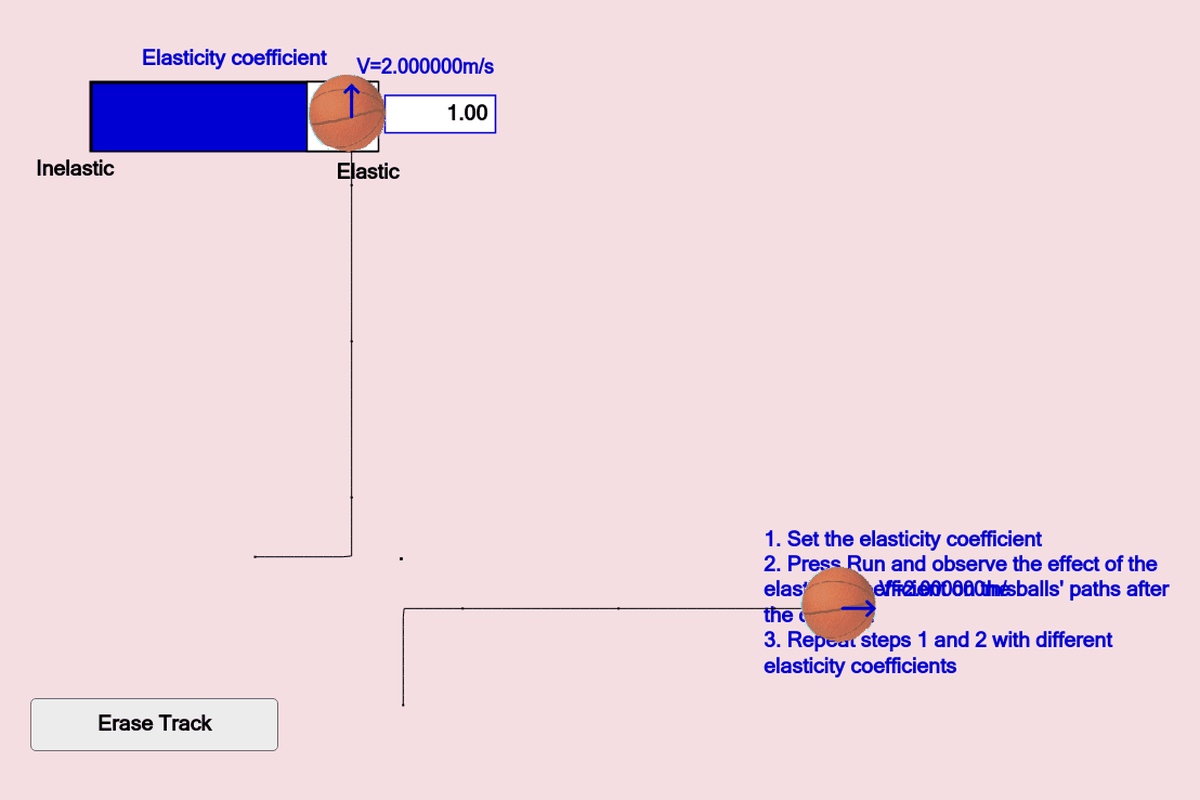
Elastic vs Inelastic
Compare energy conservation in elastic and inelastic collisions
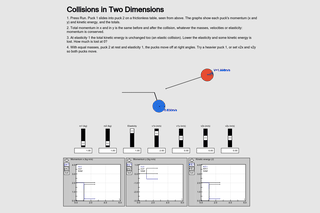
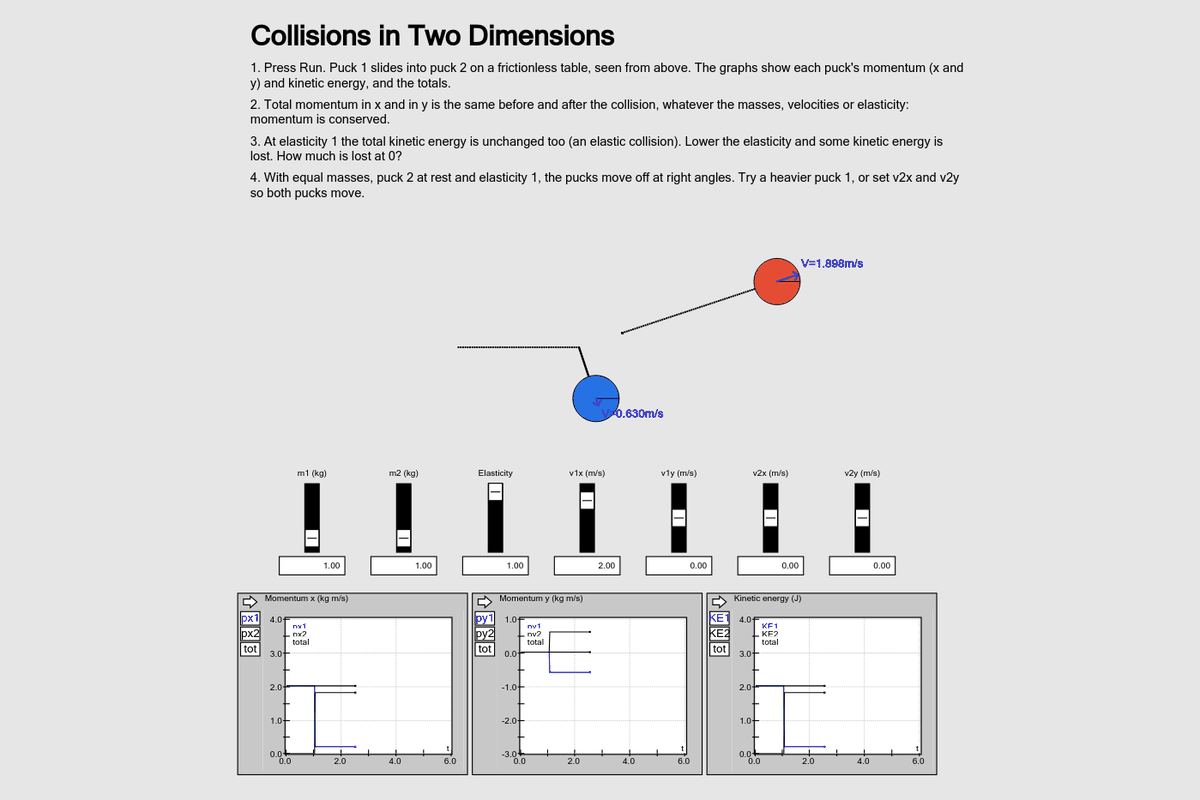
Collisions in Two Dimensions
Two pucks collide: momentum is conserved in x and y, kinetic energy only when the collision is elastic
 Electronics (5)
Visualize the dynamics of circuit elements. Simulations cast capacitors, resistors, and oscillators as mechanical analogues to build electrical intuition.
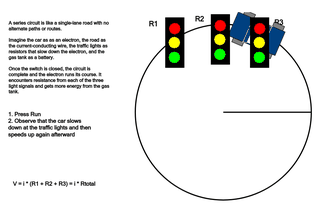
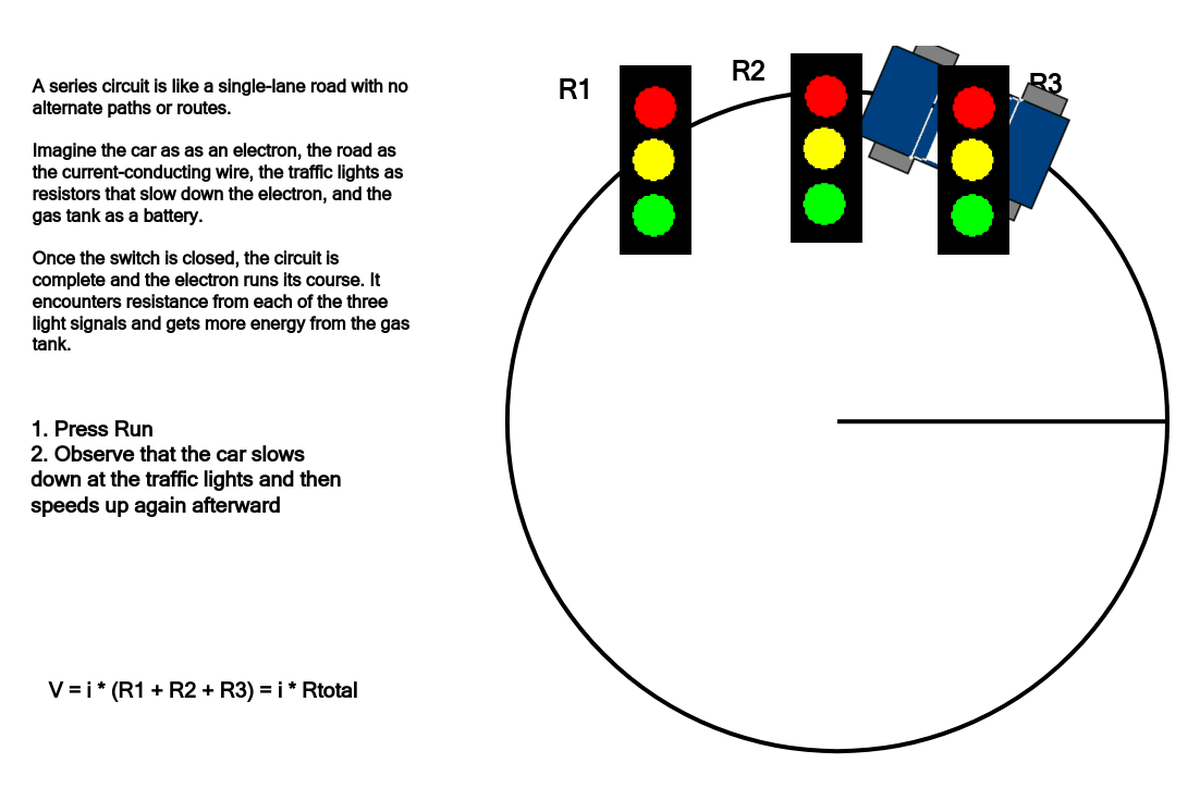
Circuit Concept
Mechanical analogy of charge flow in a circuit
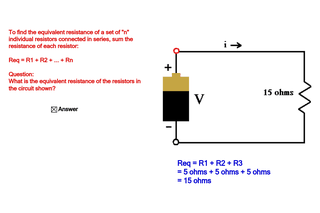
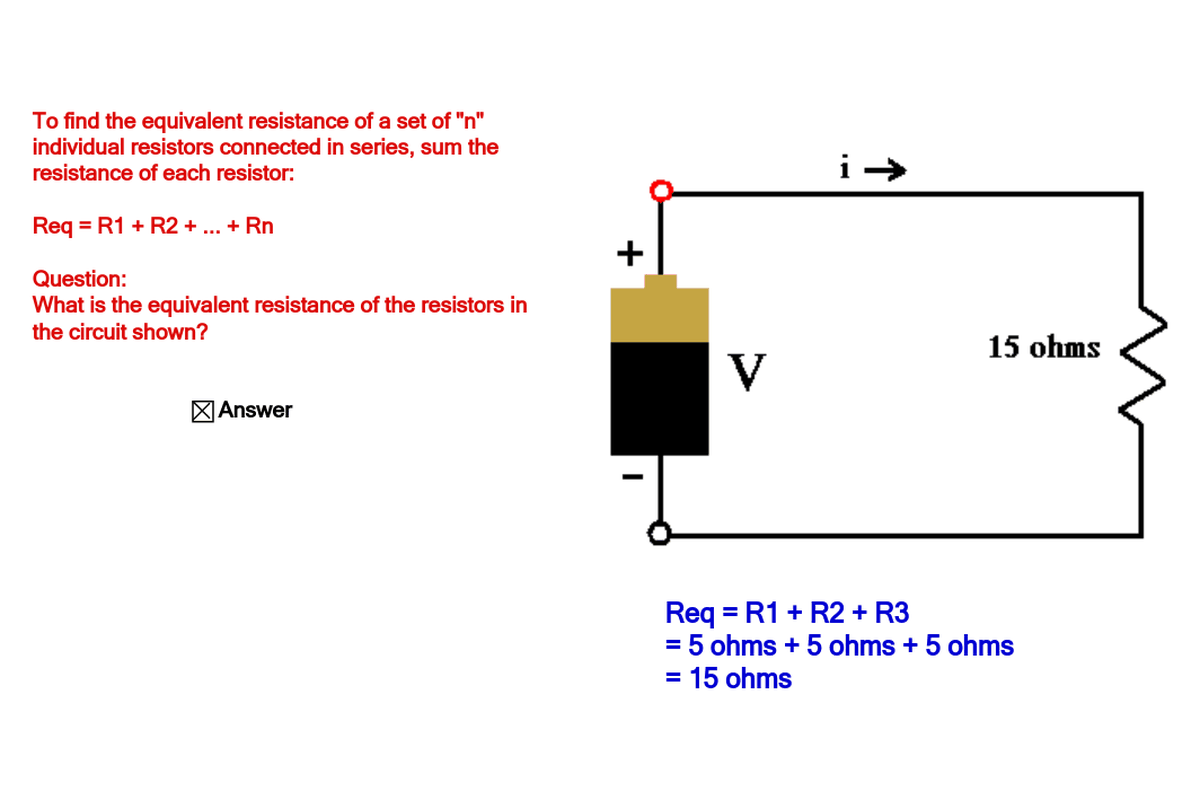
Equivalent Circuit In Series
Combine series resistors into an equivalent resistance
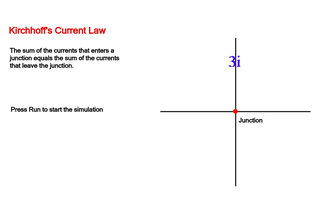
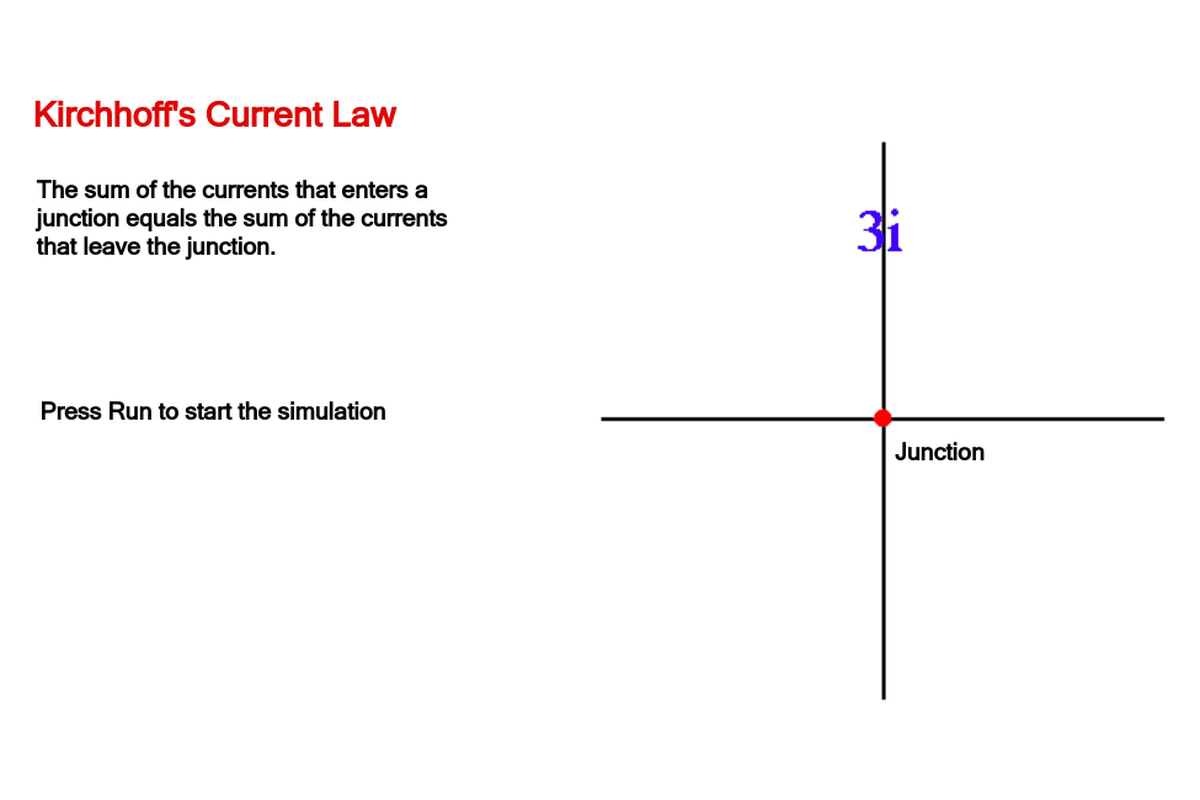
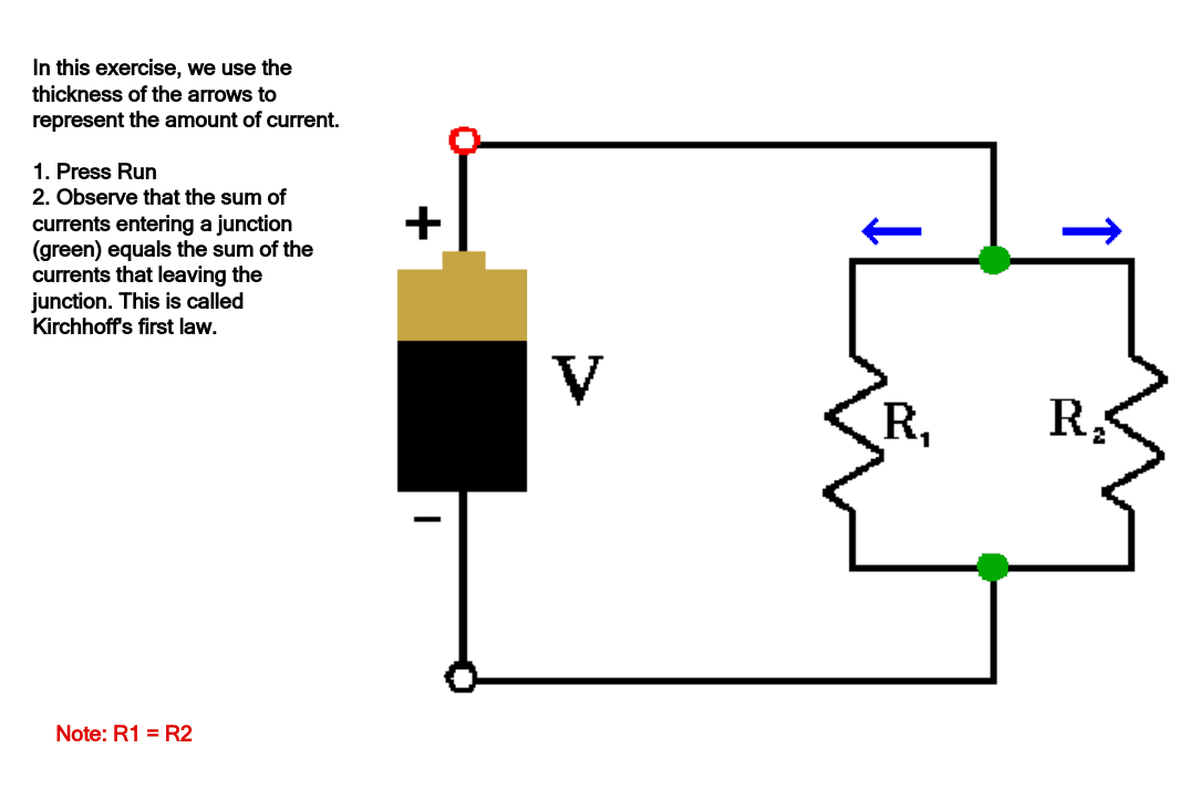
Kirchhoff Current Law
Verify KCL at a circuit junction
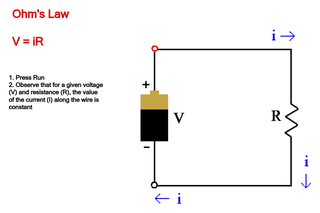
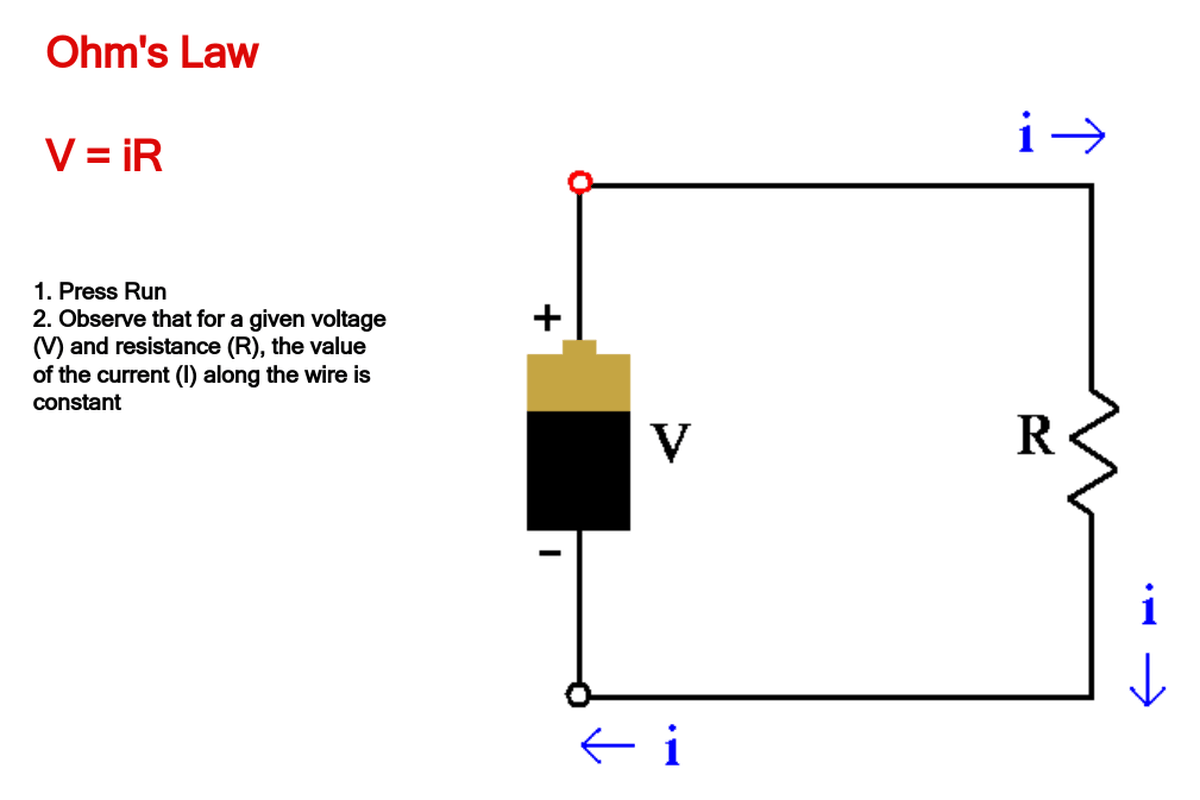
Ohm's Law
Explore V = IR using a mechanical analogy
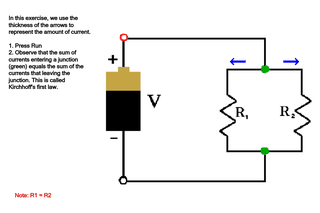
Parallel Circuit
Combine resistors in parallel and compare the result
 Electrostatics (8)
Work with Coulomb forces between charges. See how like charges repel, opposite charges attract, and fields build from charge arrangements.
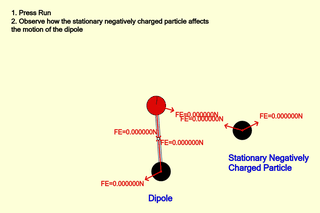
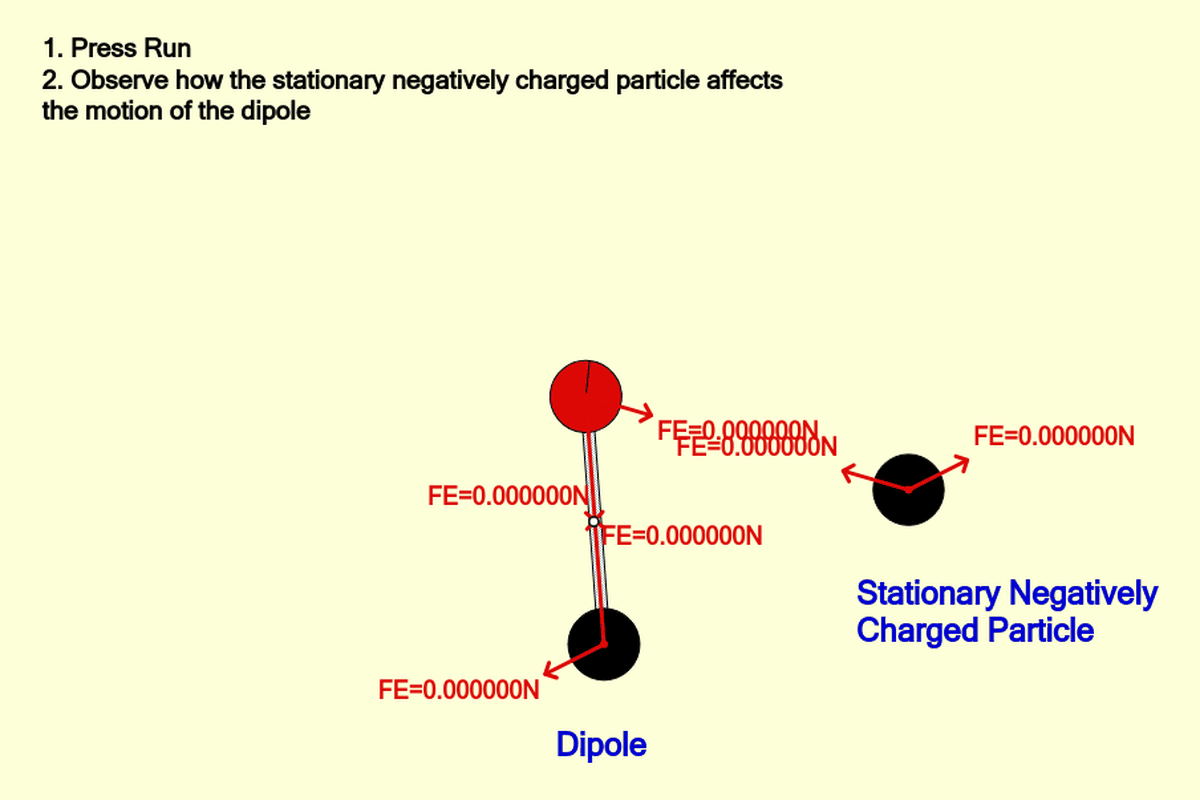
Charged Dipole
Electric dipole rotating in an external field
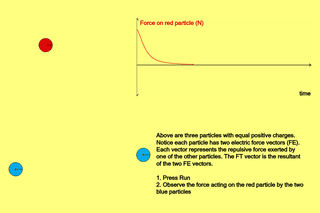
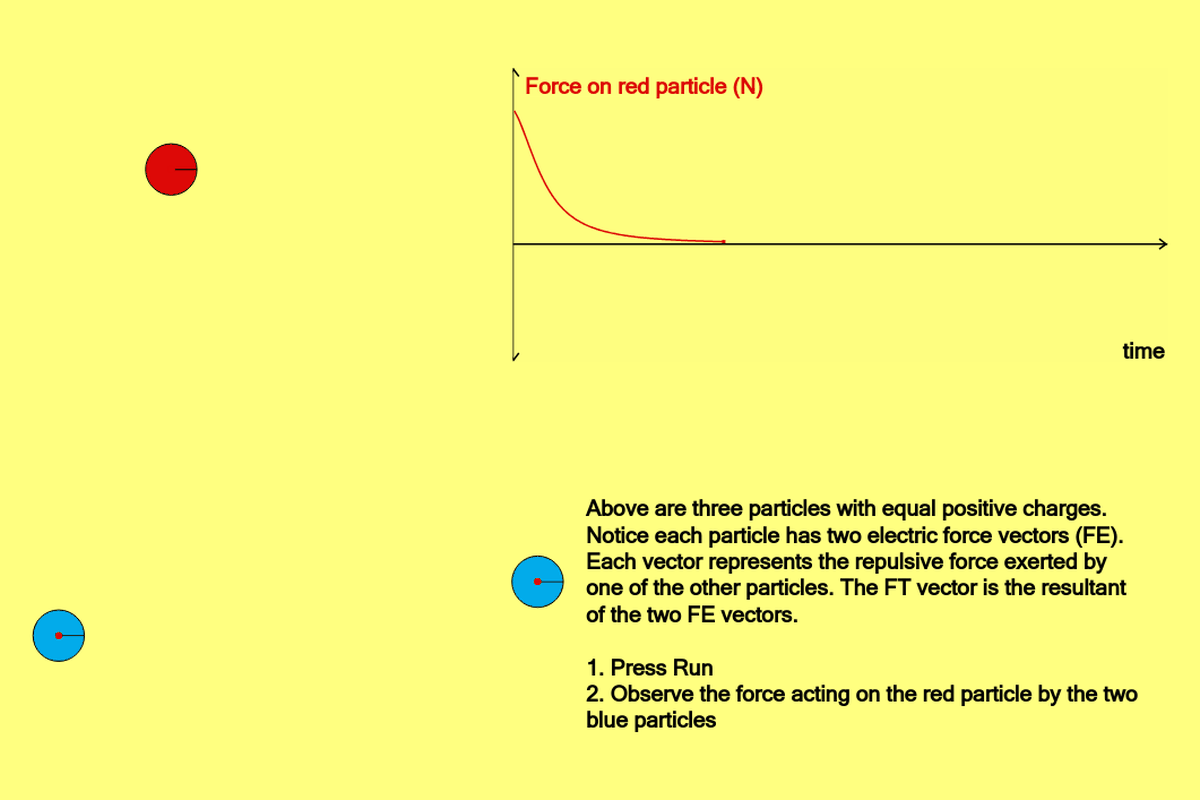
Electrostatic Forces
Coulomb attraction and repulsion between charges
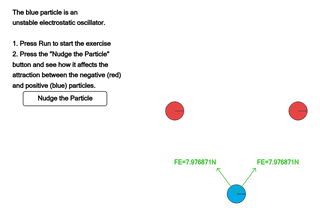
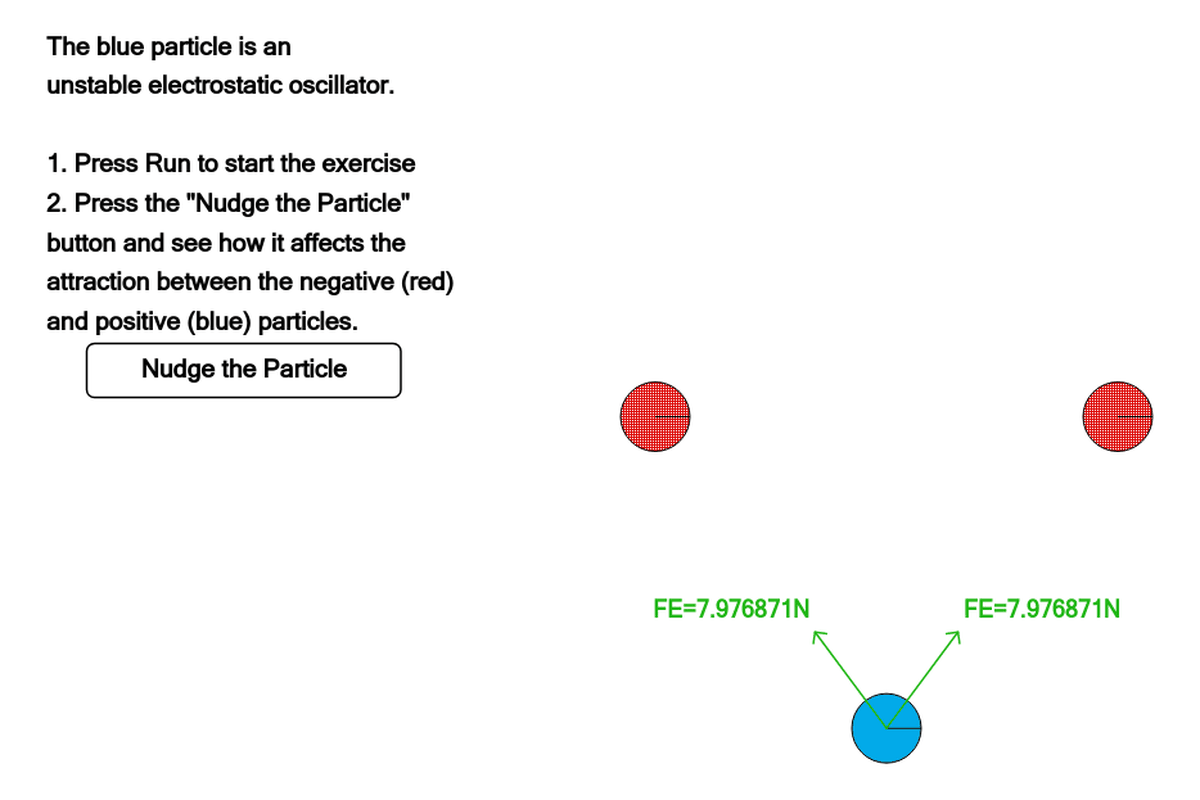
Electrostatic Oscillator
Oscillating charge between two fixed charges
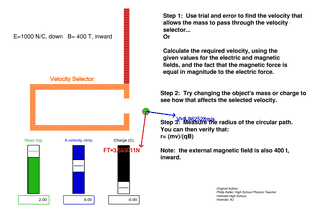
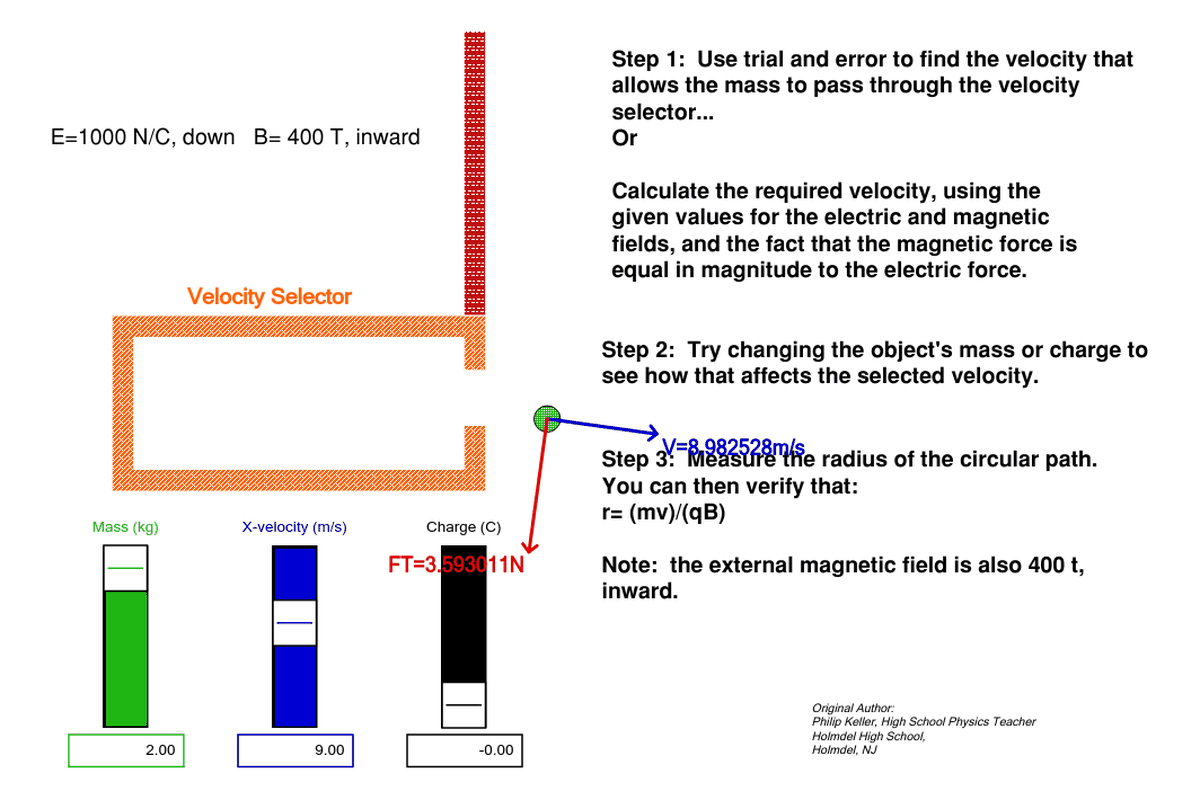
Mass Spectrometer
Separate charged particles by mass using crossed fields
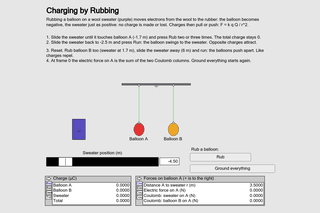
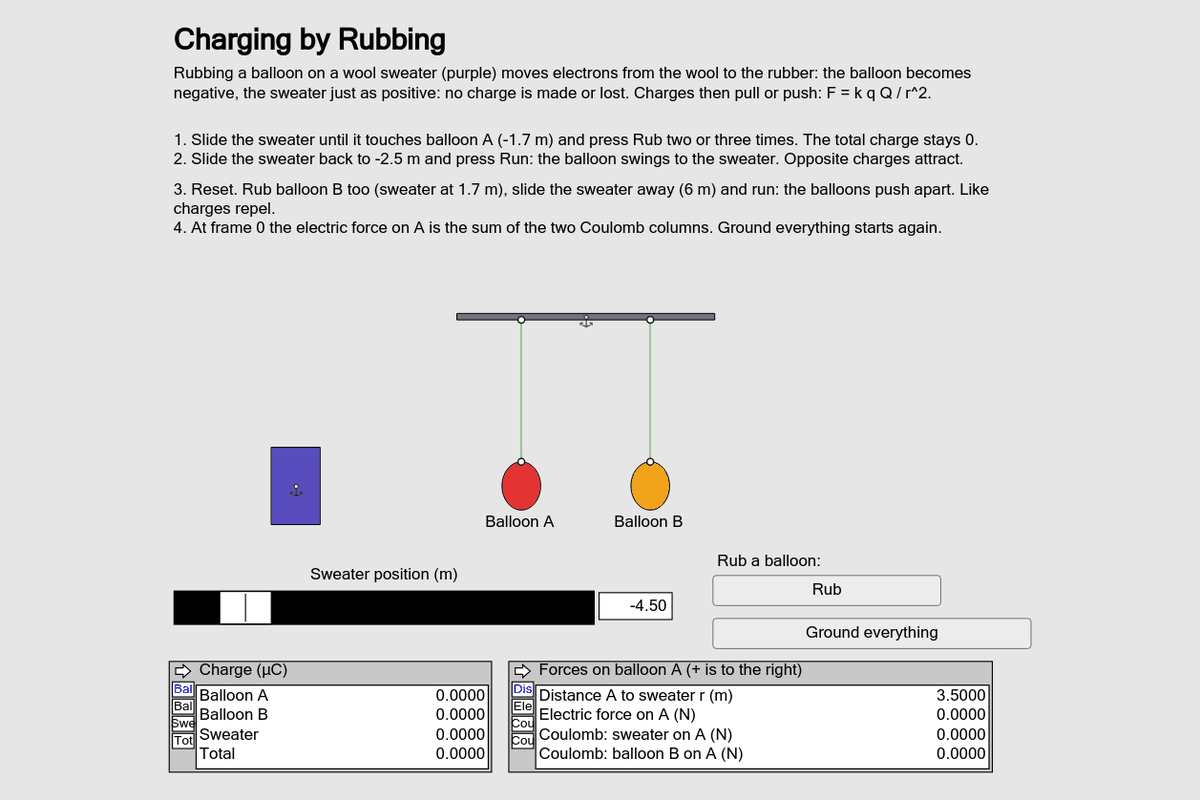
Charging by Rubbing
Rub a balloon on a sweater to move charge: the total stays zero, opposite charges attract and like charges repel
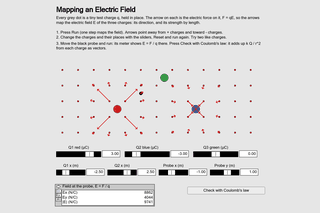
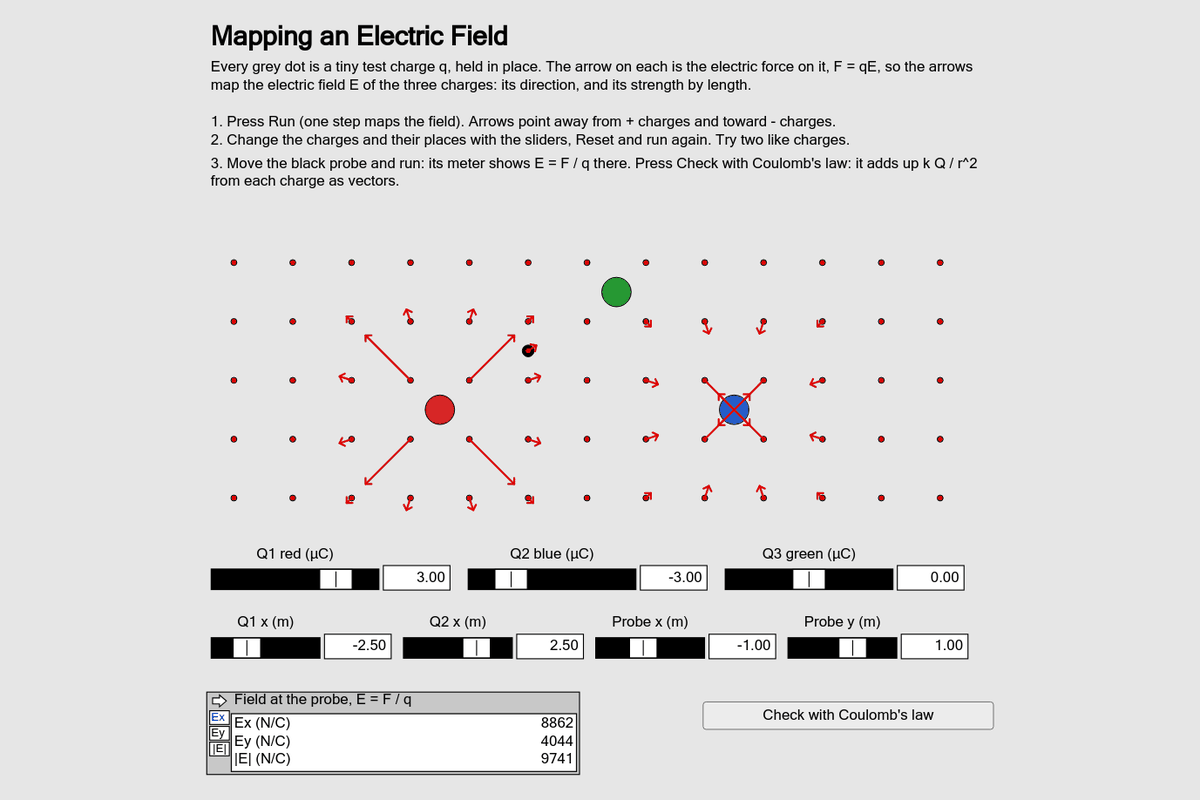
Mapping an Electric Field
A grid of tiny test charges shows the field of up to three charges; a probe reads E = F/q
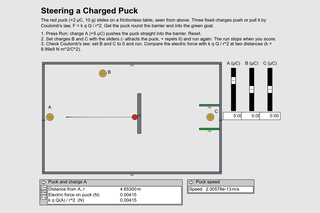
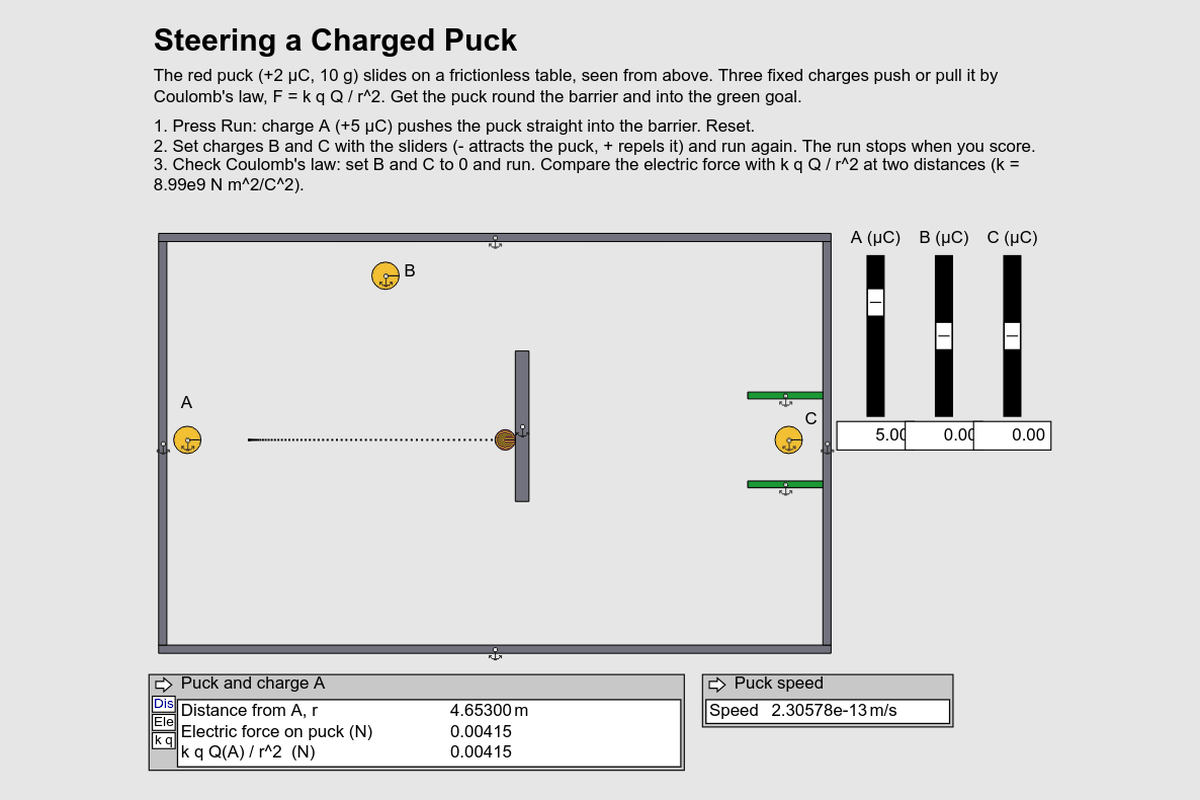
Steering a Charged Puck
Slide a charged puck round a barrier into a goal by choosing three fixed charges
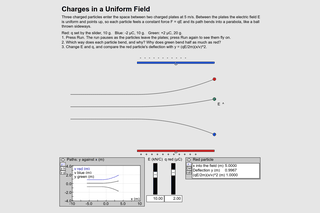
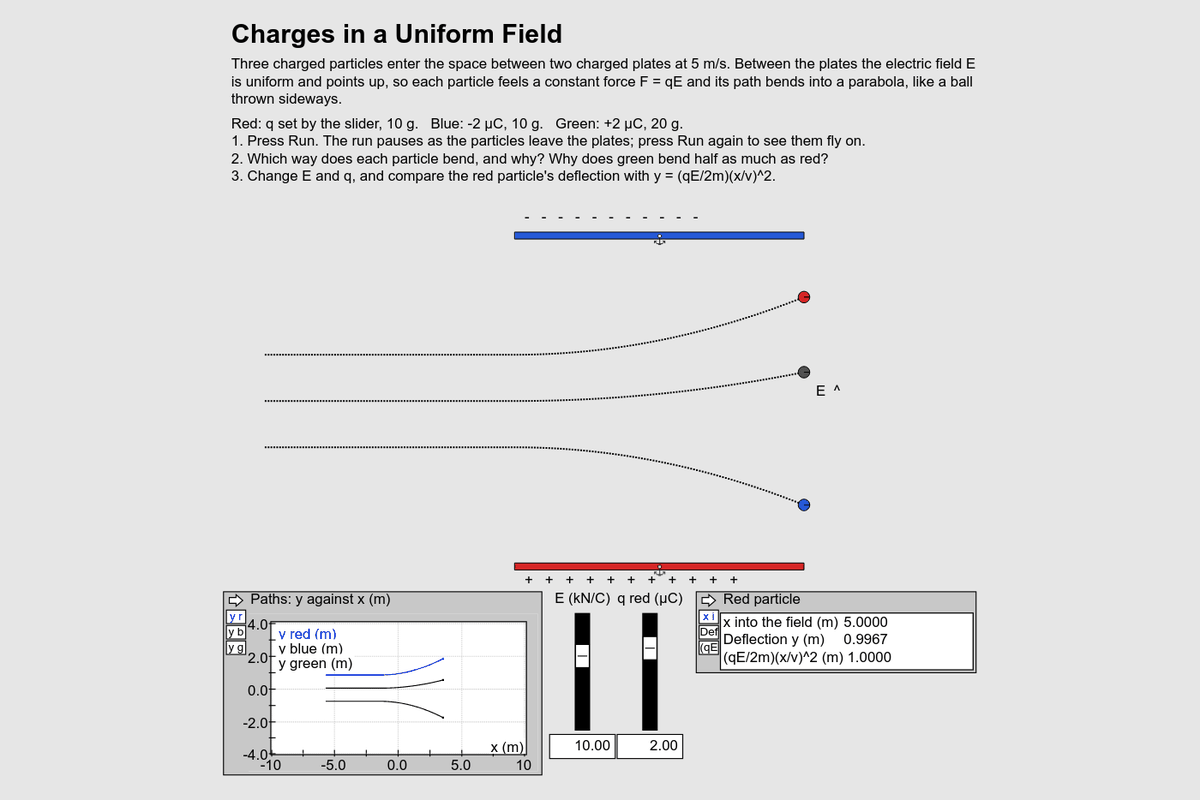
Charges in a Uniform Field
Charged particles cross between two plates and their paths bend into parabolas
 Equilibrium (4)
Balance forces and torques to hold systems at rest. See what it takes for a beam, a stack of blocks, or a hinged object to stay put.
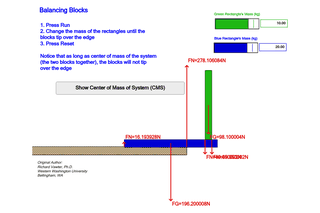
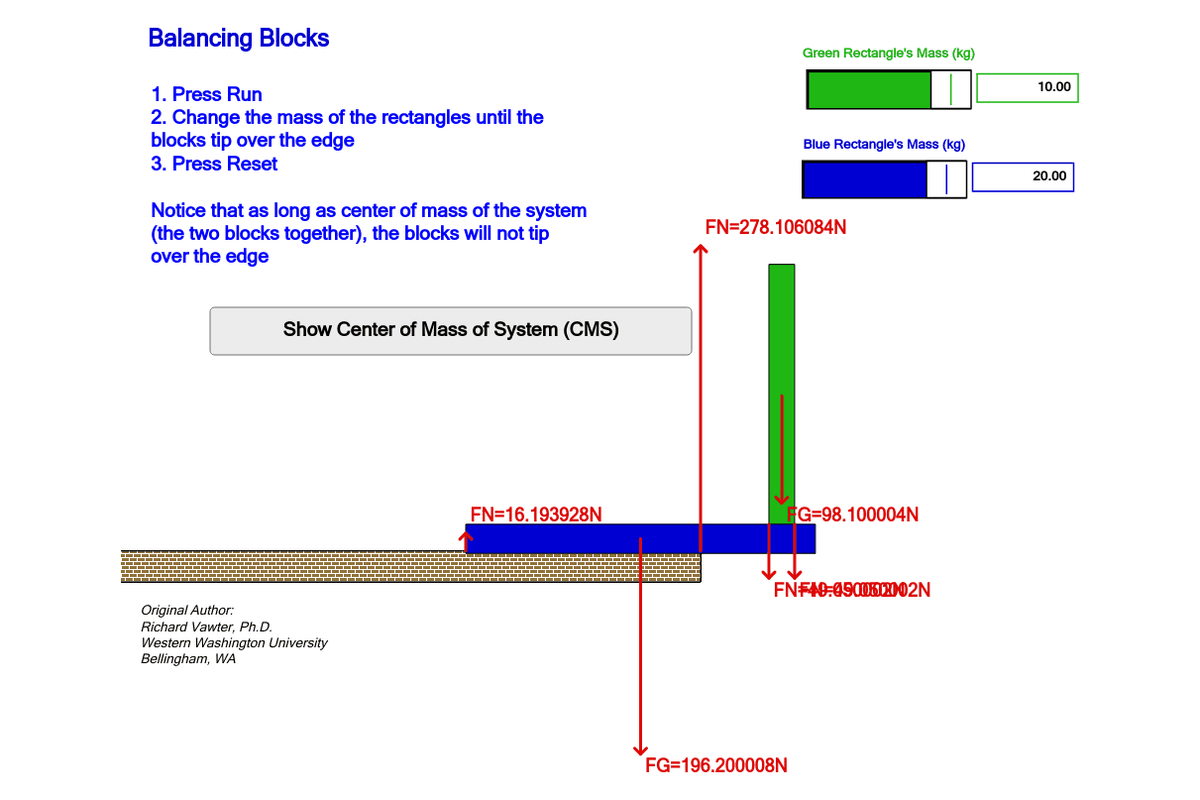
Balancing Blocks
Stack blocks and find the balance point
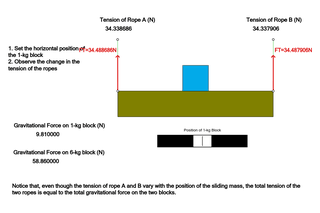
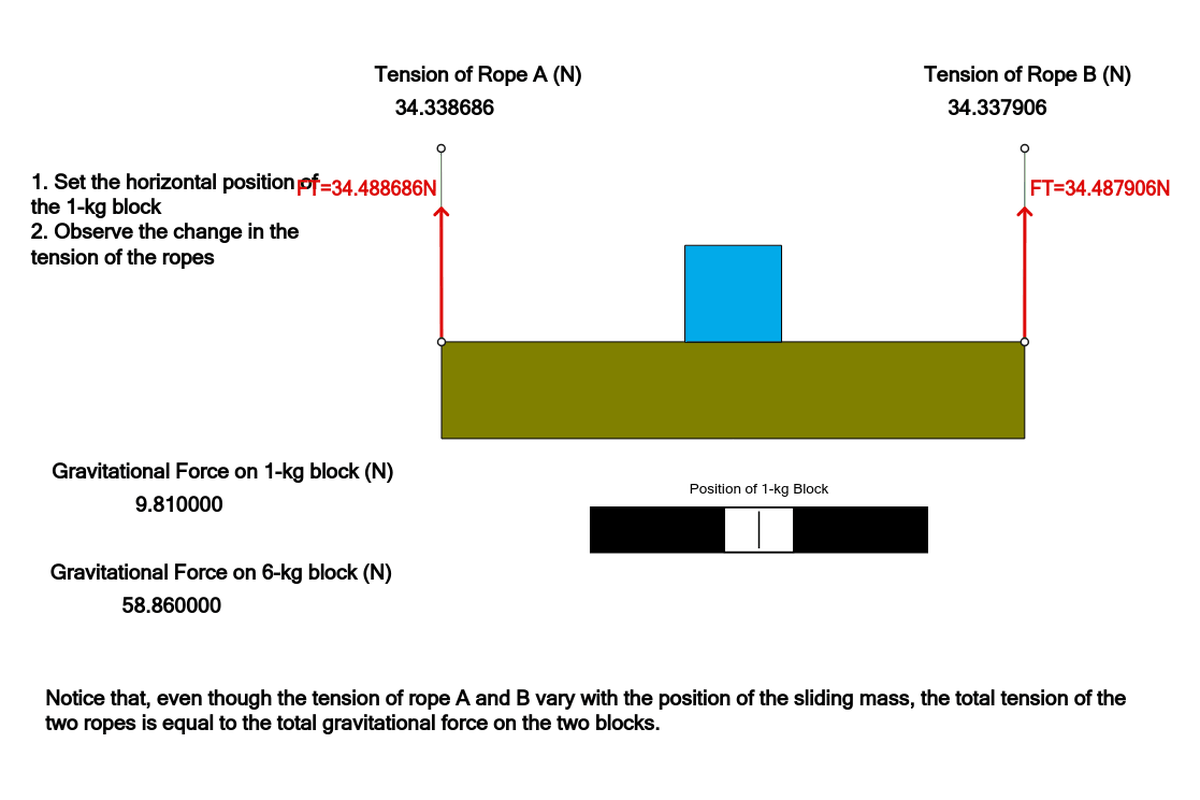
Rope Tension
Resolve forces and tensions in a static rope system
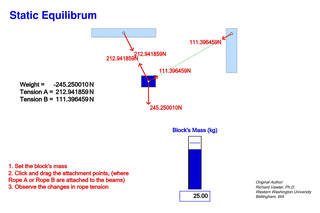
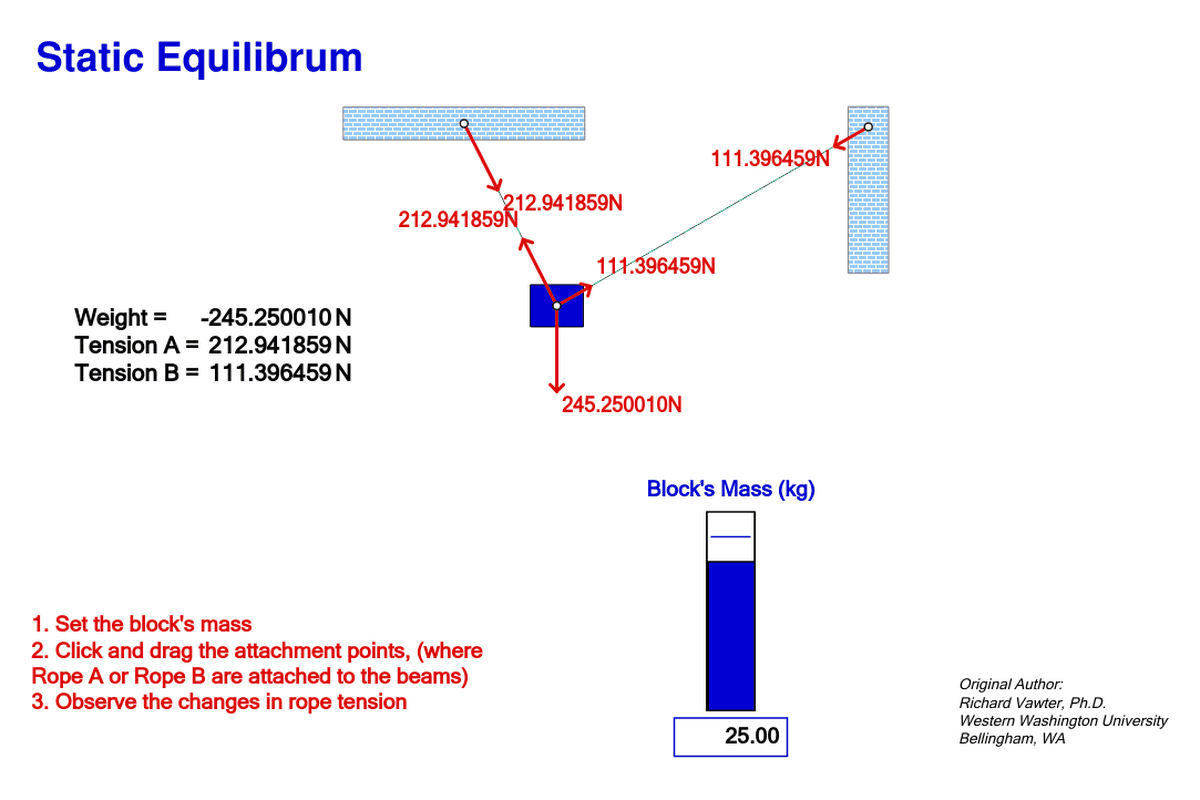
Static Equilibrium
Body at rest with balanced forces and moments
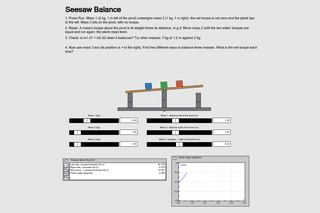
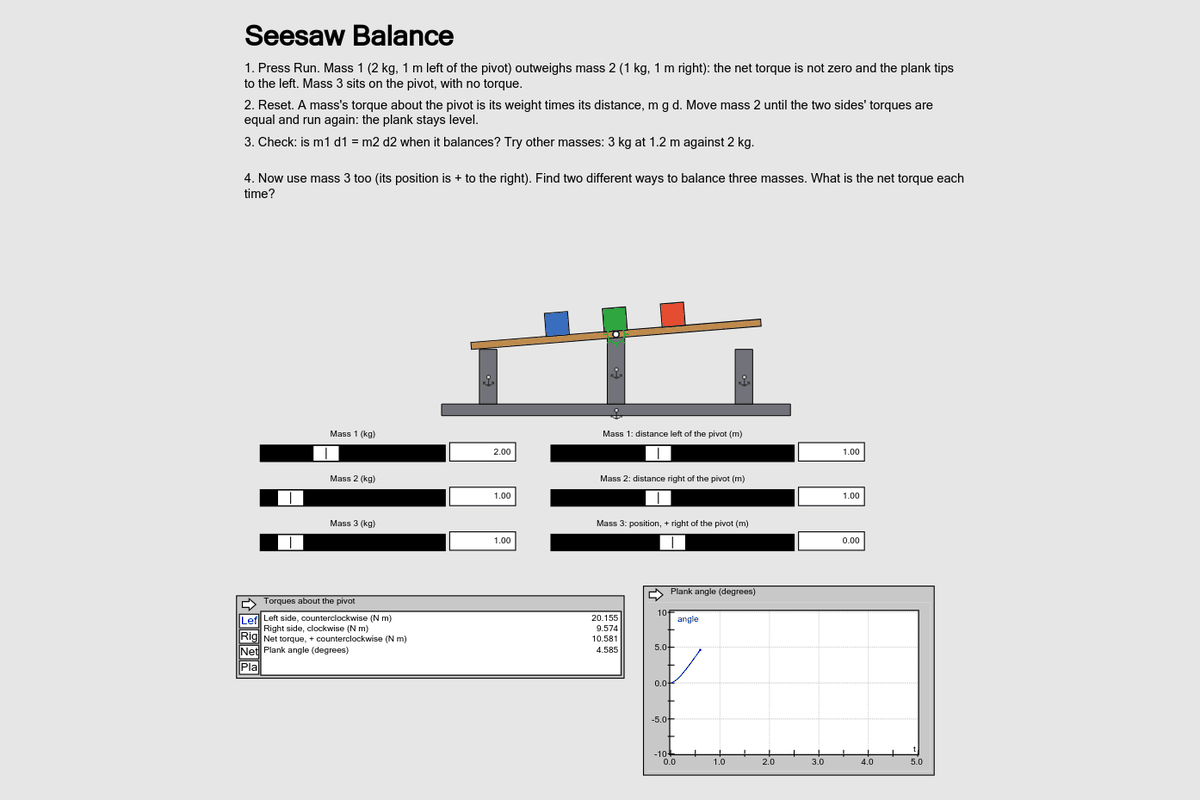
Seesaw Balance
Place masses on a seesaw and balance the torques m g d on each side
 Evaporation and Condensation (3)
Watch particles change phase as energy flows in or out. Model liquid turning to vapor and back to show how temperature and molecular speed connect.
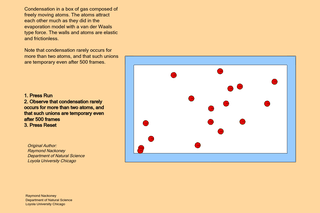
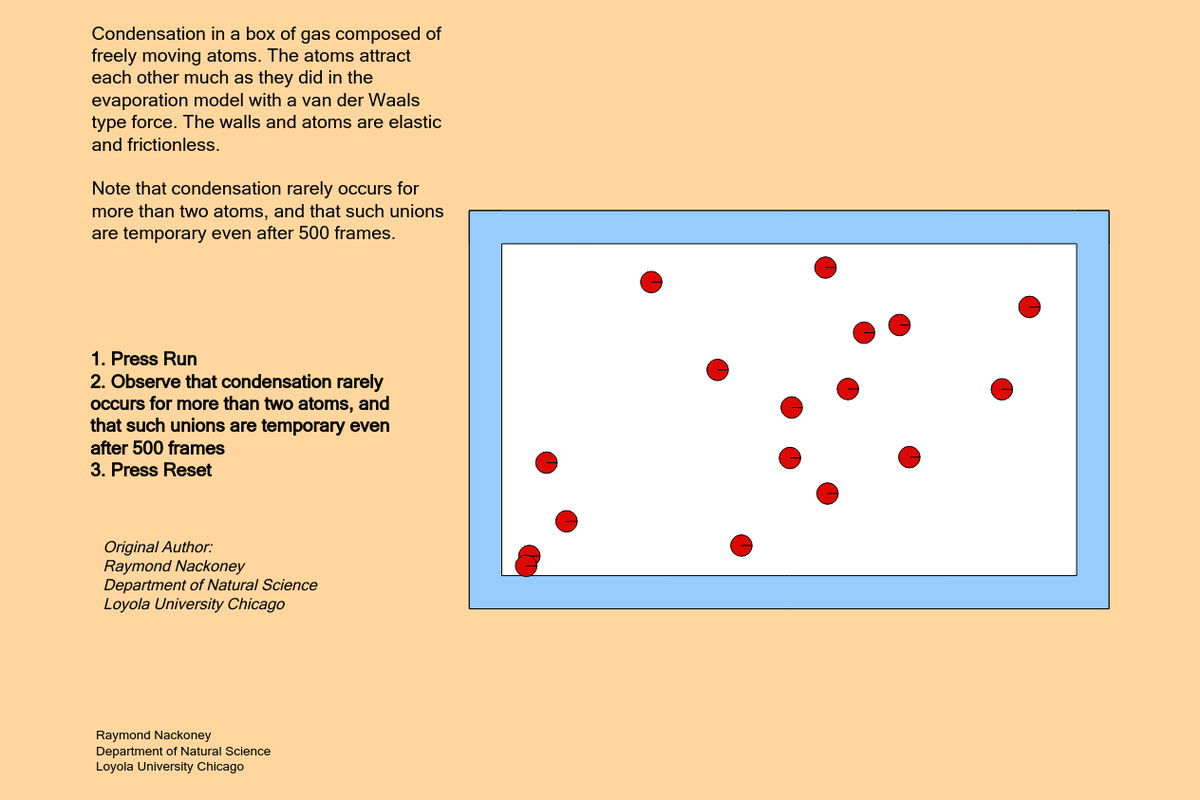
Condensation 1
Molecules slow down and aggregate into a liquid phase
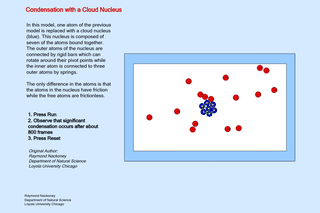
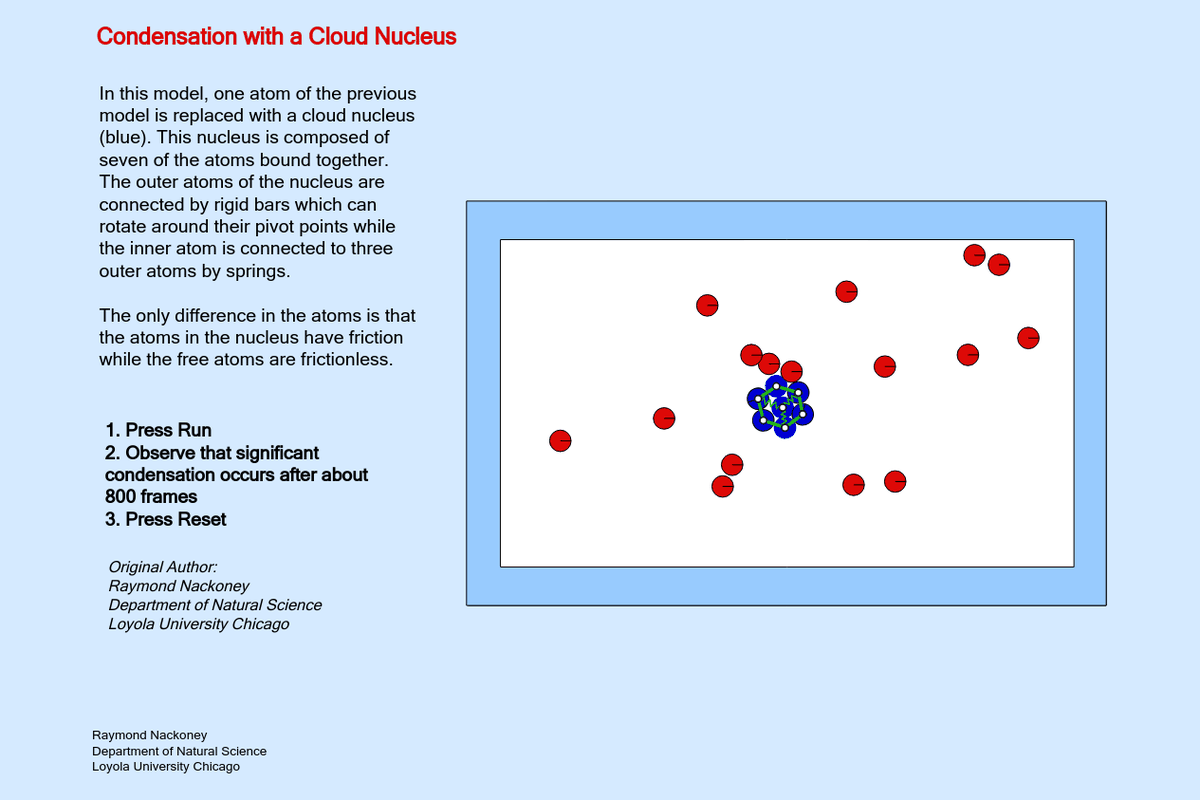
Condensation 2
Further exploration of molecular condensation
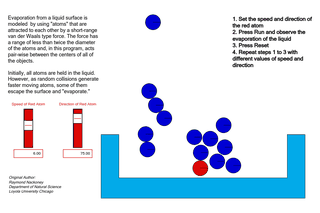
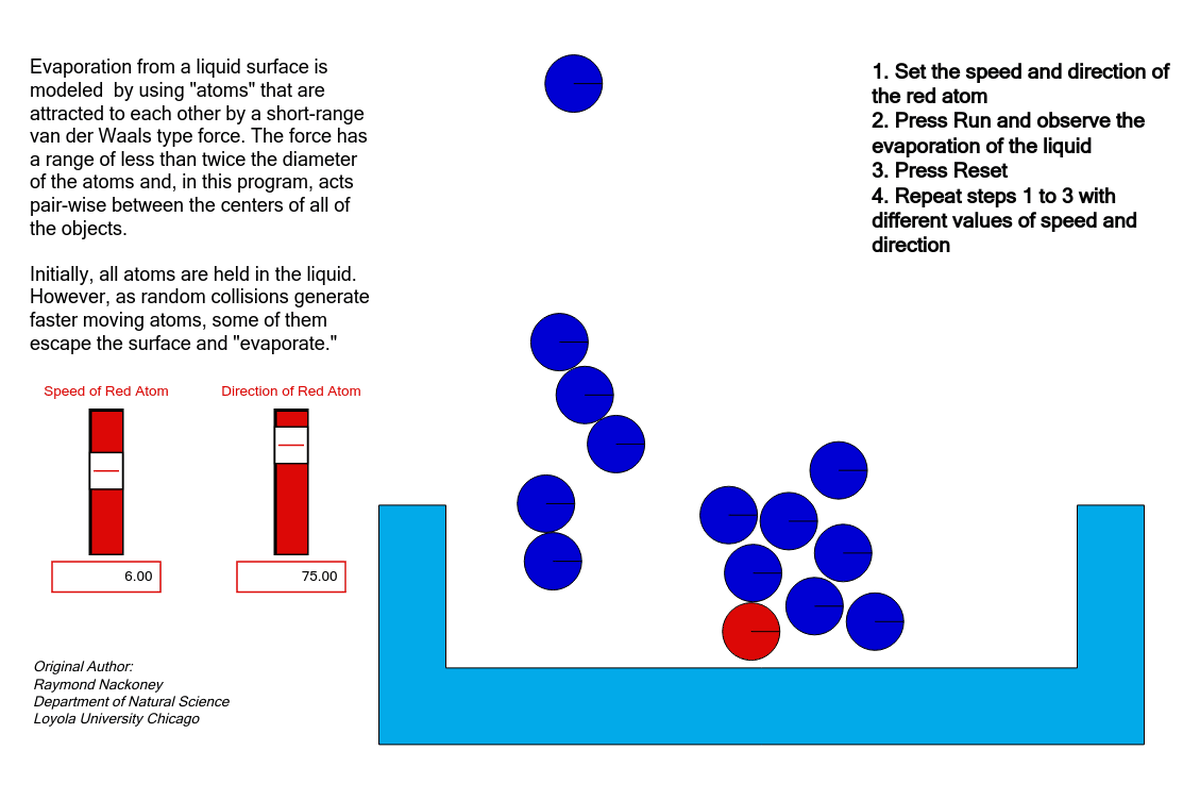
Evaporation
Fast molecules escape from the surface of a liquid
 Fluids (2)
Explore why things float or sink. Compare the buoyant force with the weight of blocks of different densities and sizes.
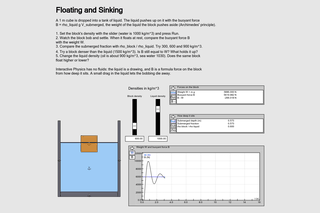
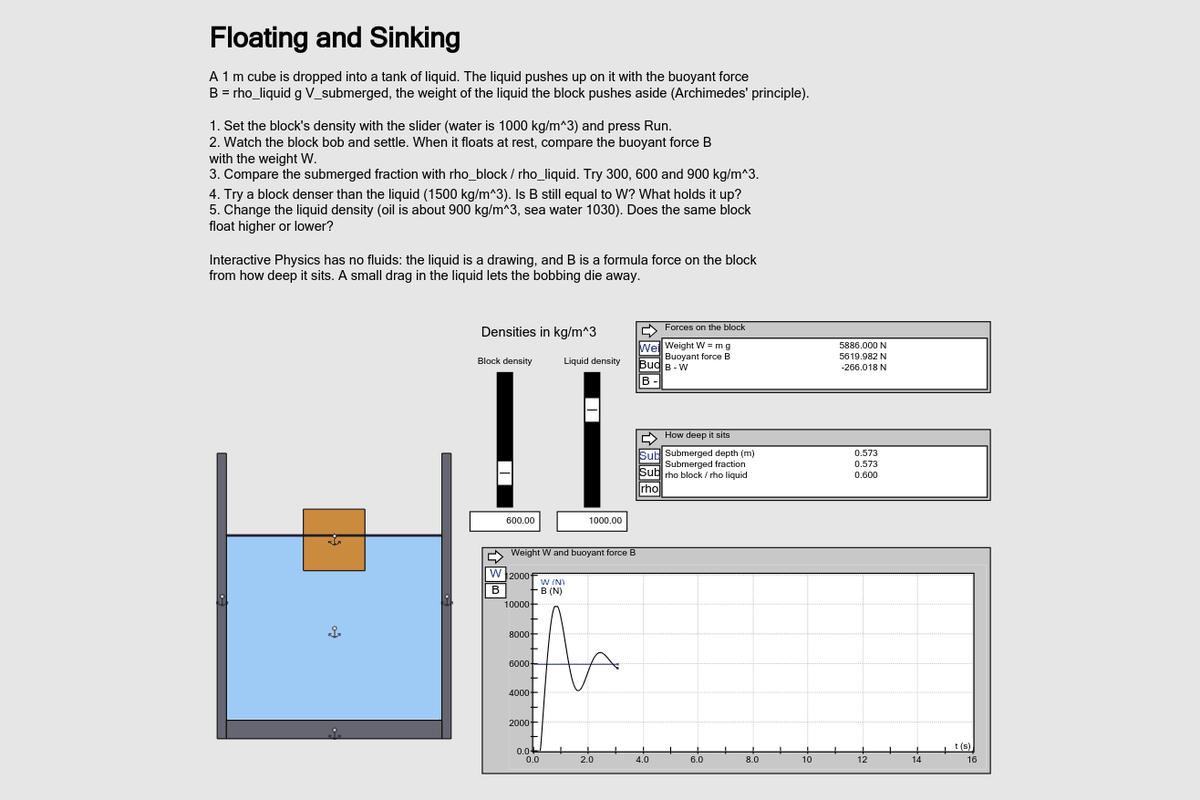
Floating and Sinking
A block floats where the buoyant force equals its weight (Archimedes' principle)
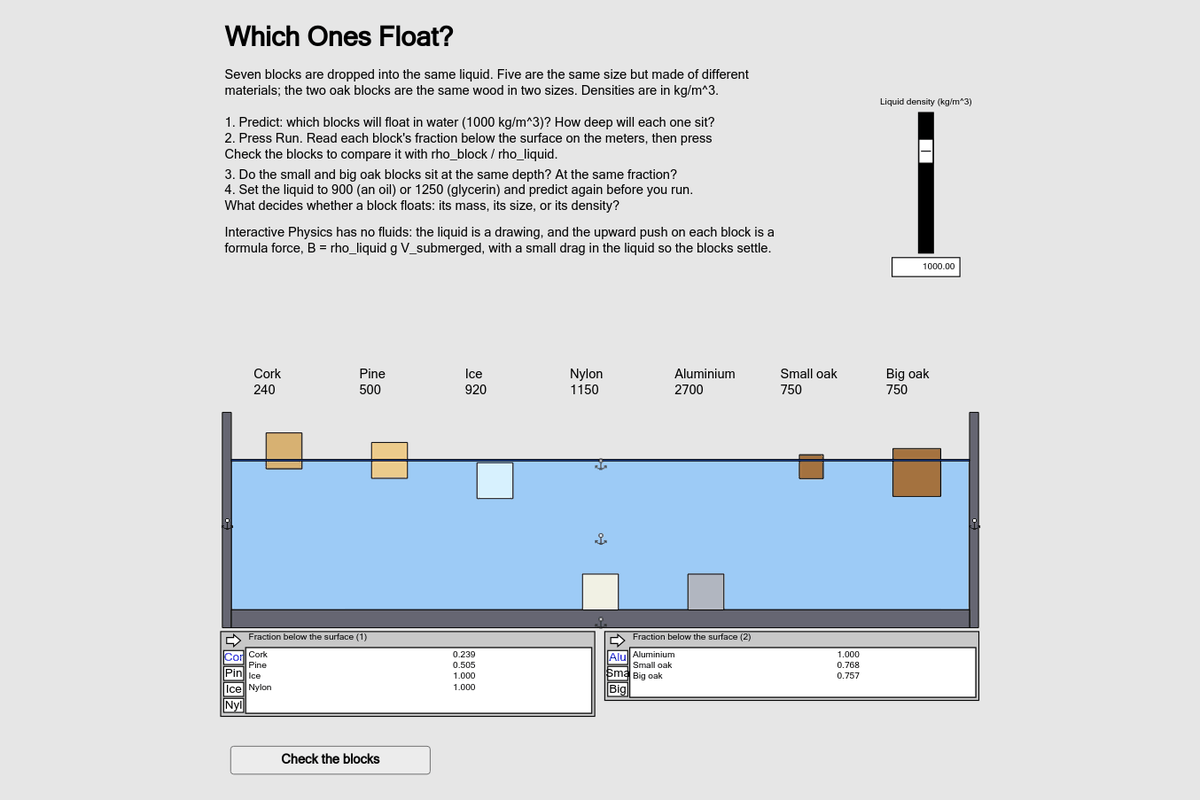
Which Ones Float?
Blocks of different materials and sizes in one liquid: density decides which float and how deep
 Frame of Reference (3)
See the same motion from different vantage points. Compare how velocities, paths, and even the appearance of forces change between observers.
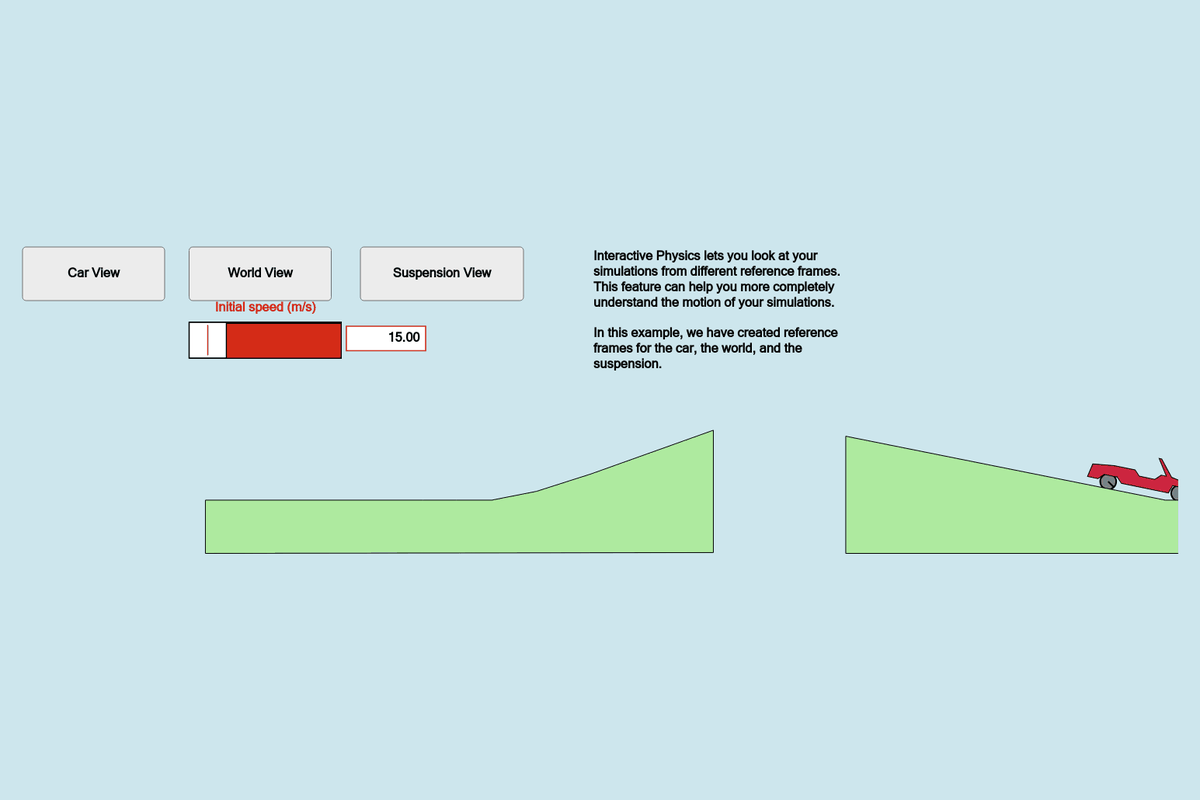
Car Jump
Projectile motion viewed from different reference frames
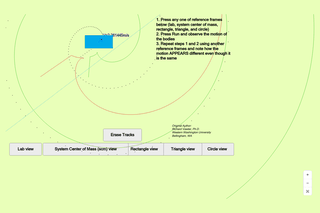
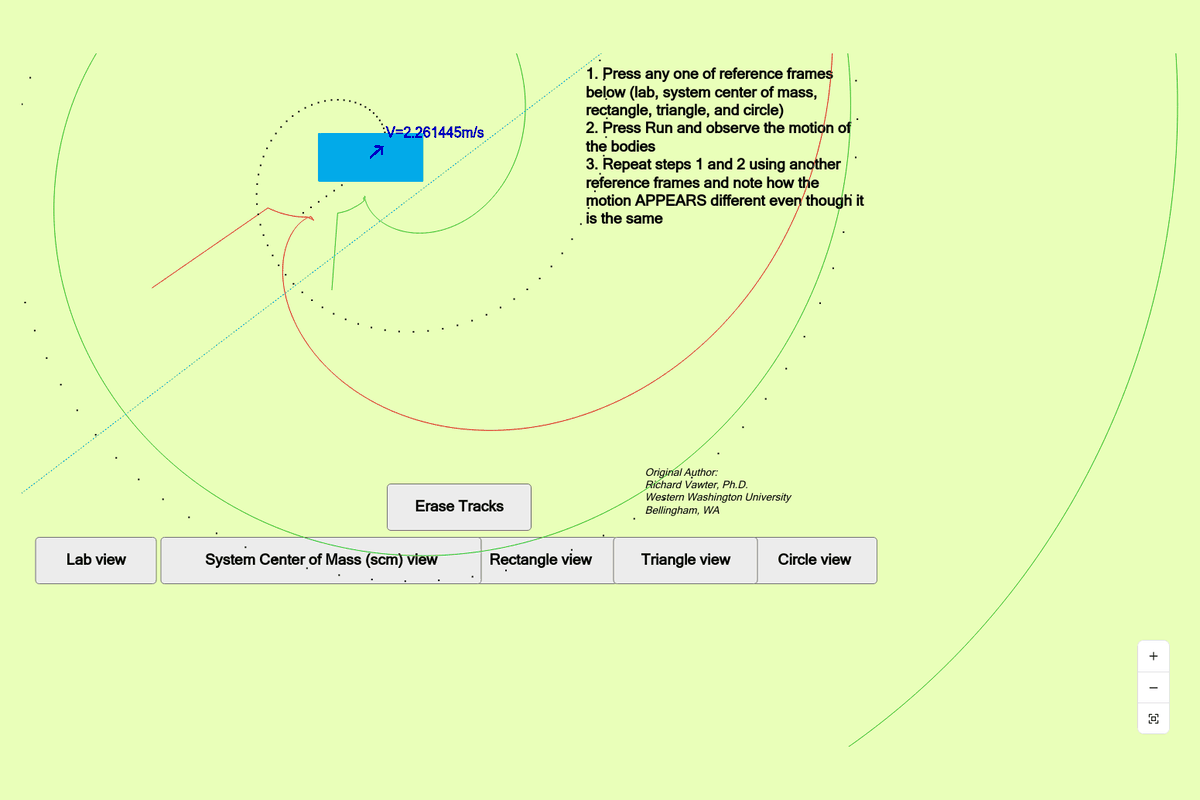
Collision
Same collision seen from multiple frames of reference
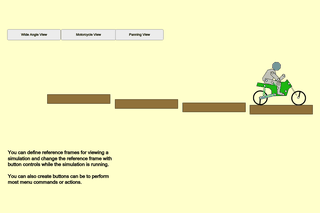
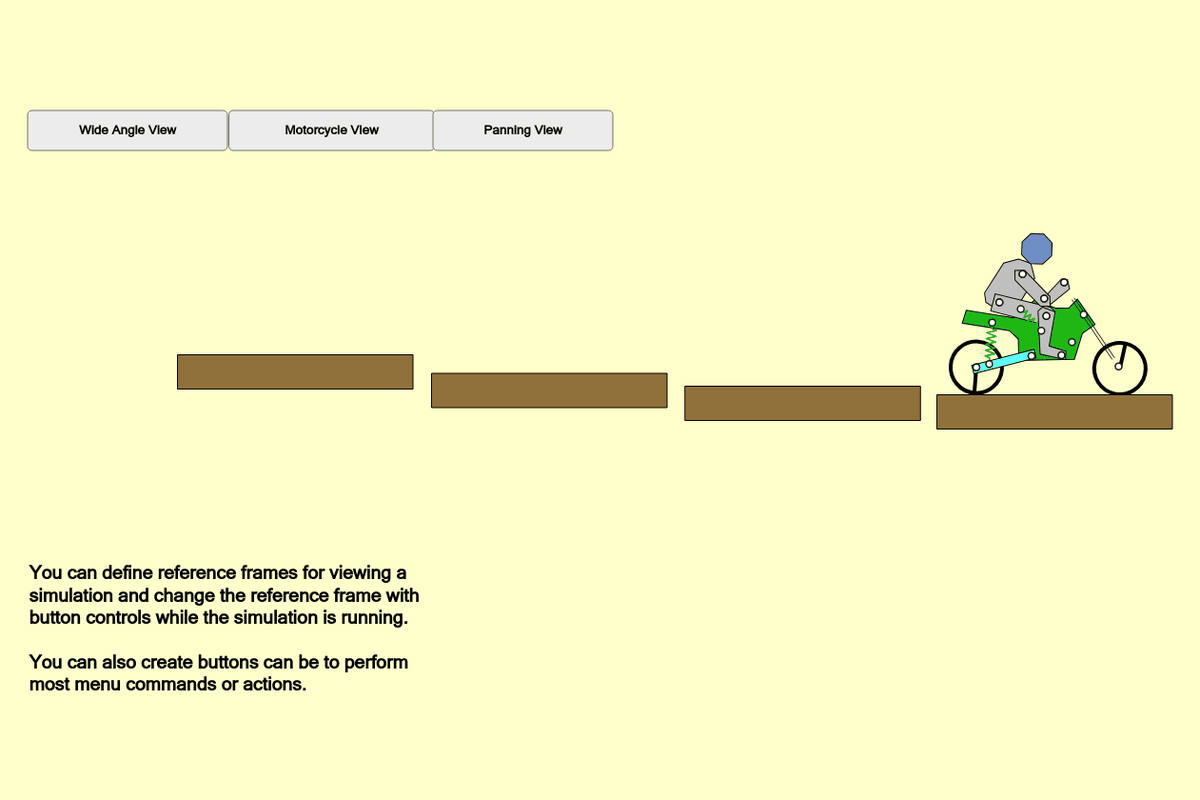
Motorcycle
Motorcycle motion observed from ground and rider frames
 Friction (7)
Quantify the force that opposes sliding. Compare static and kinetic friction across surfaces, slopes, and loaded conditions.
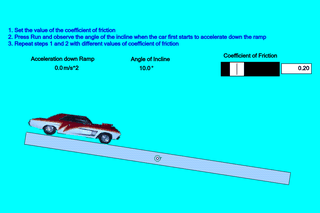
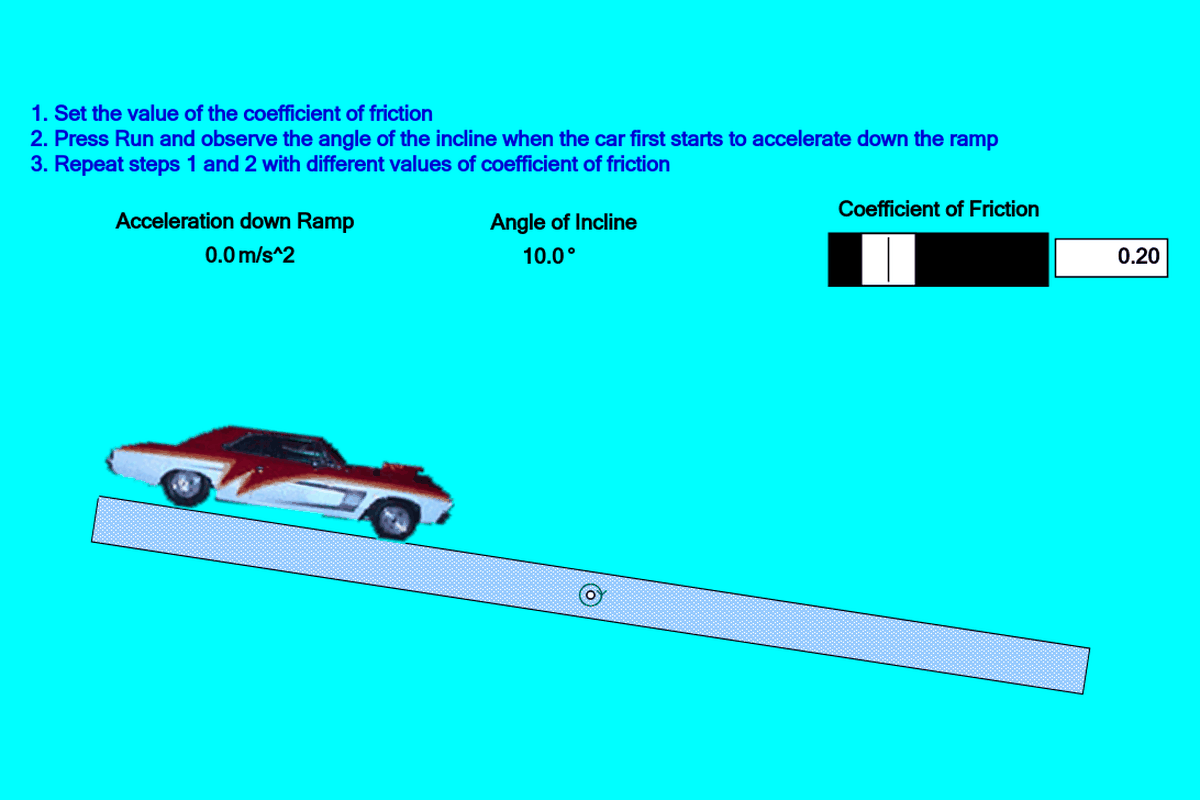
Car on Ramp
Slope angle and friction determine whether a car slides
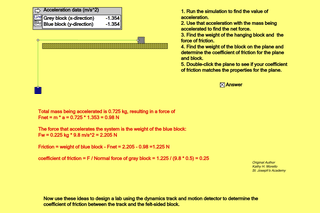
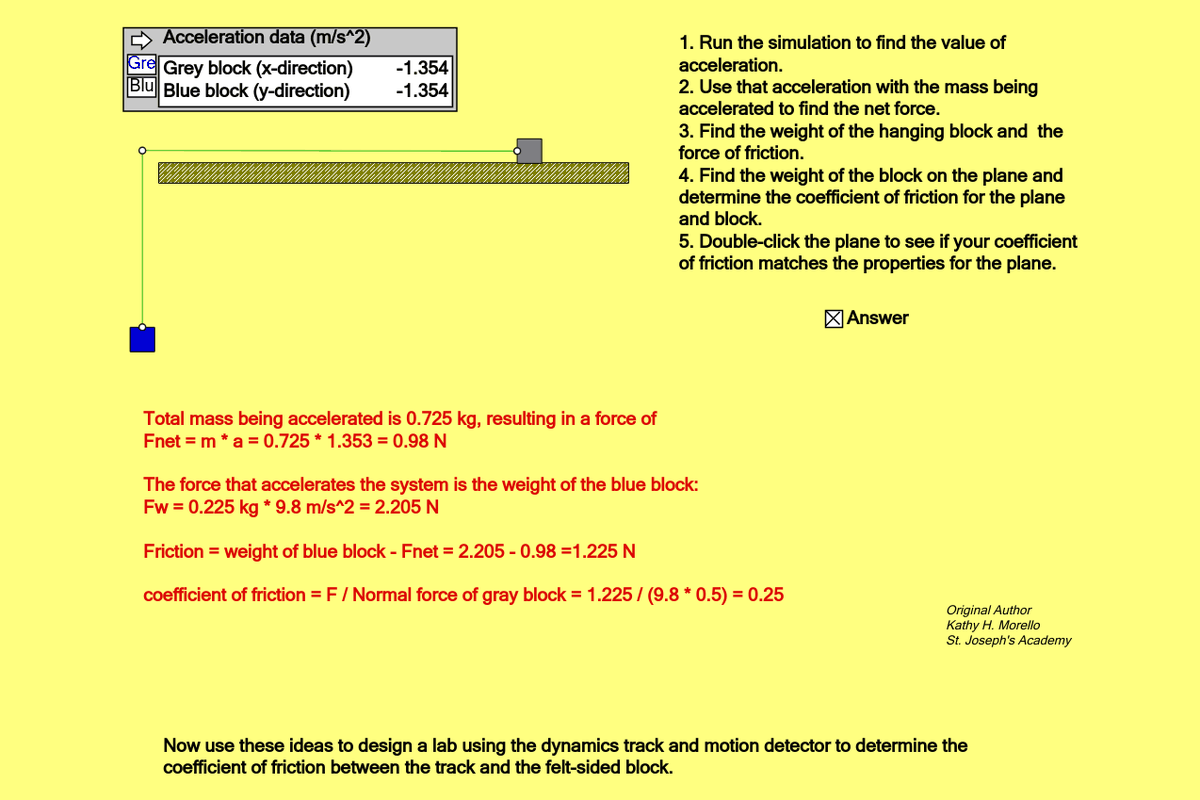
Find Friction Coefficient
Measure μ by tilting a ramp until sliding starts
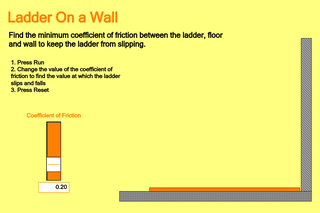
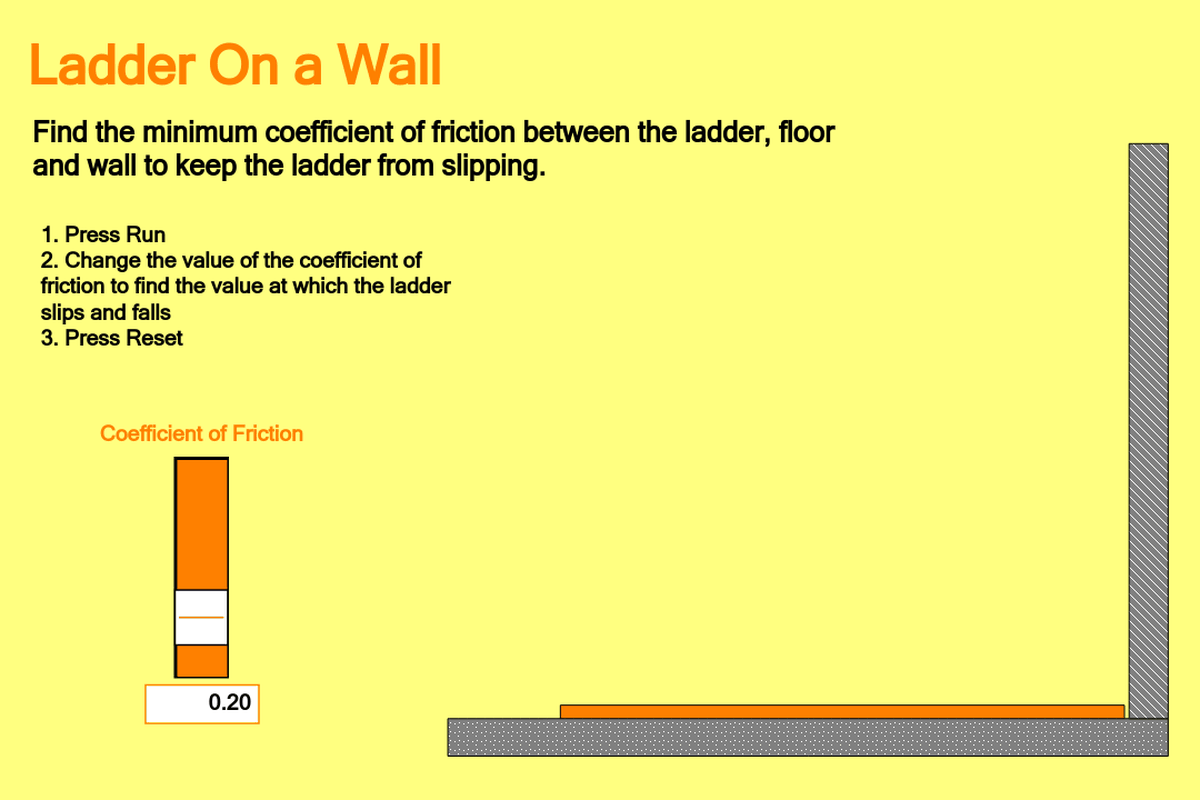
Ladder on Wall
When does a ladder slip against a floor and wall?
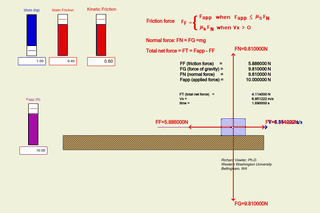
Static and Kinetic Friction
Compare the two regimes of frictional force
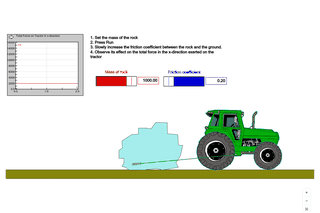
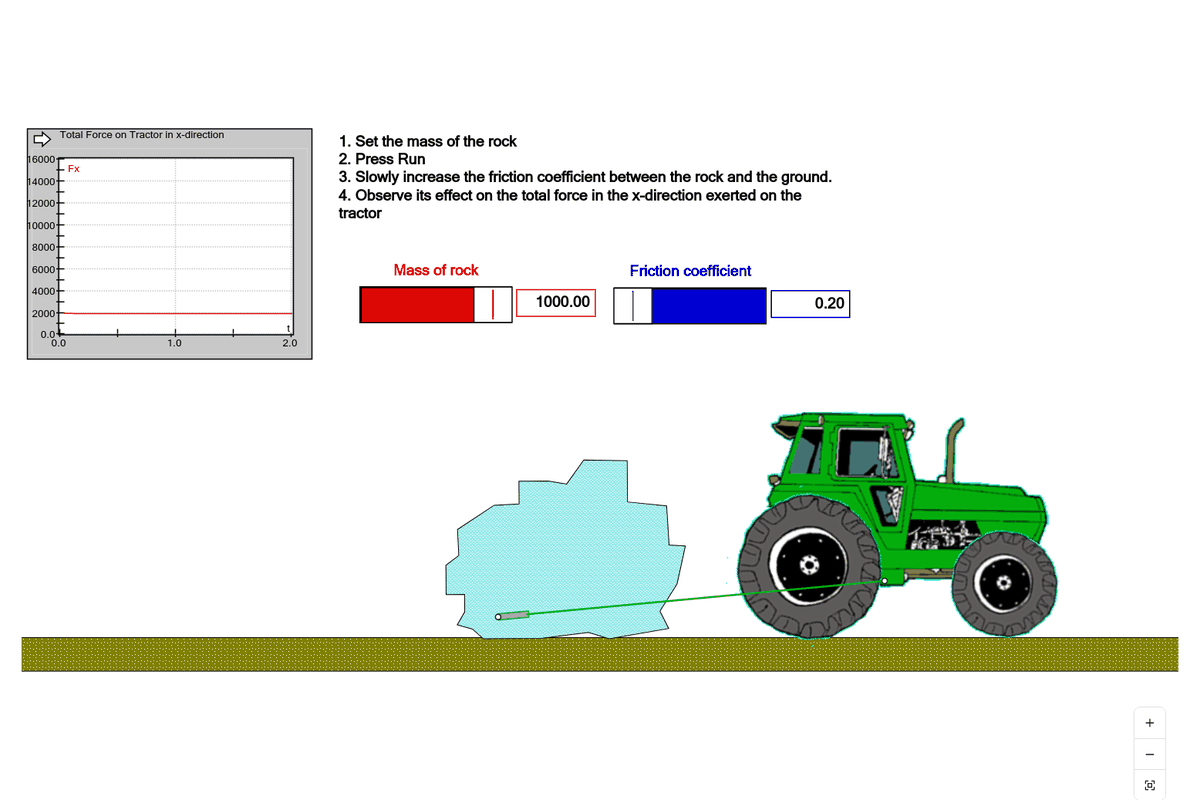
Tractor
Tractor traction and drive-wheel friction
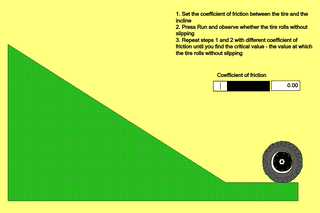
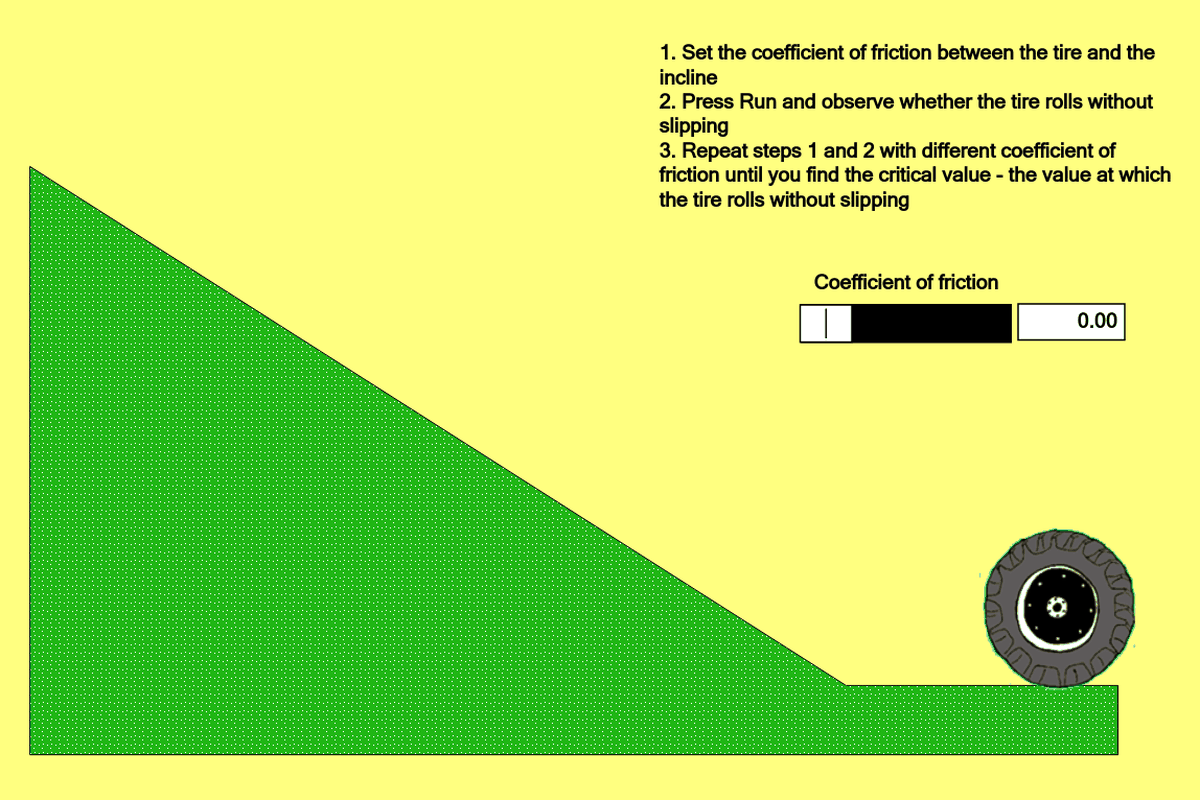
Wheel on Incline
Rolling vs sliding of a wheel on an inclined plane
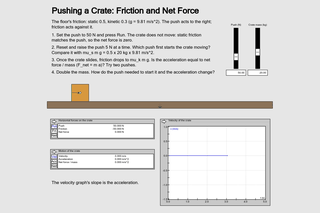
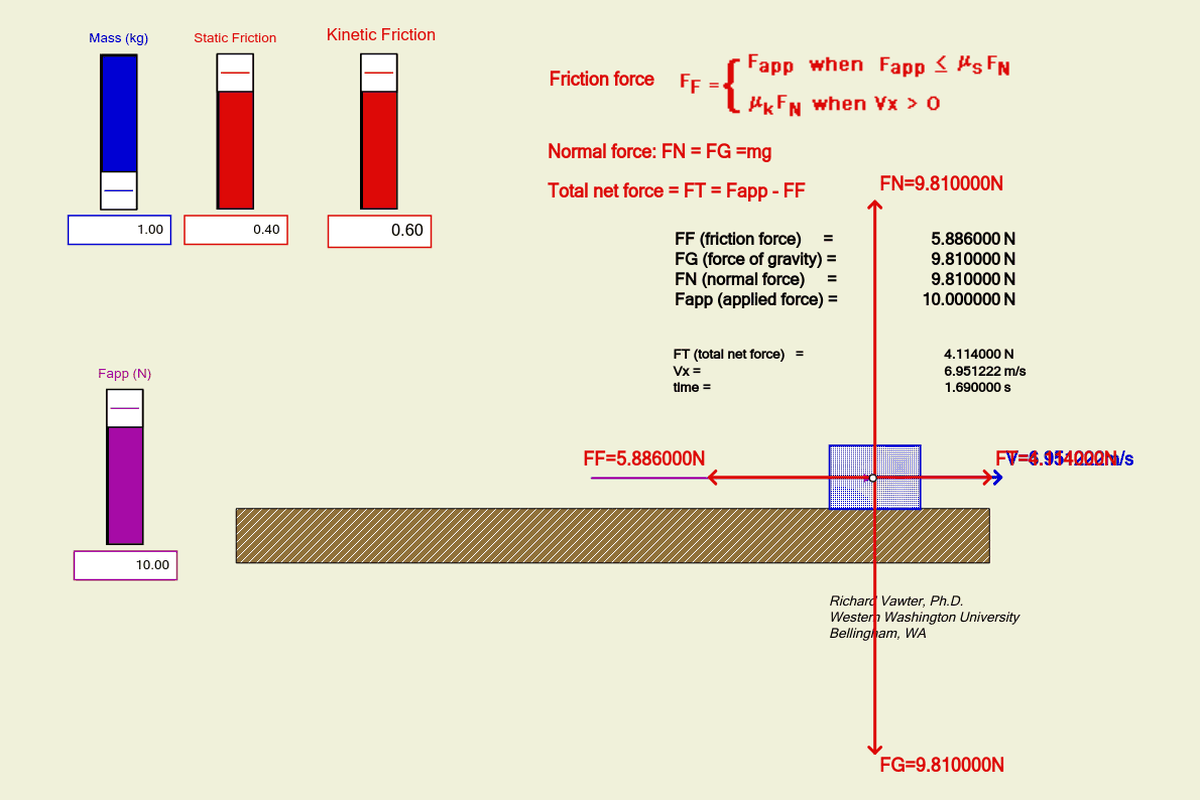
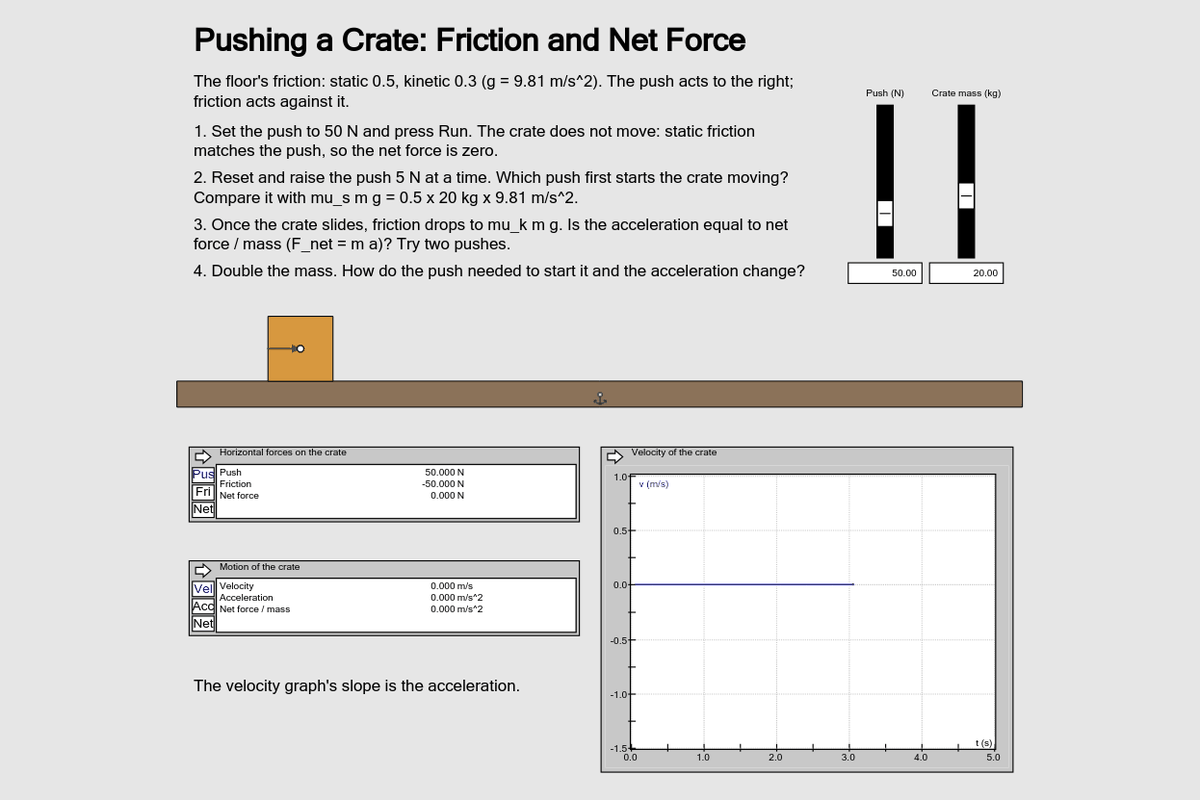
Pushing a Crate
Find the push that starts a crate moving, then check F_net = m a while it slides
 Fun Examples (10)
A curated set of entertaining simulations that apply physics principles in unexpected ways. Great for sparking curiosity and demonstrating what Interactive Physics can do.
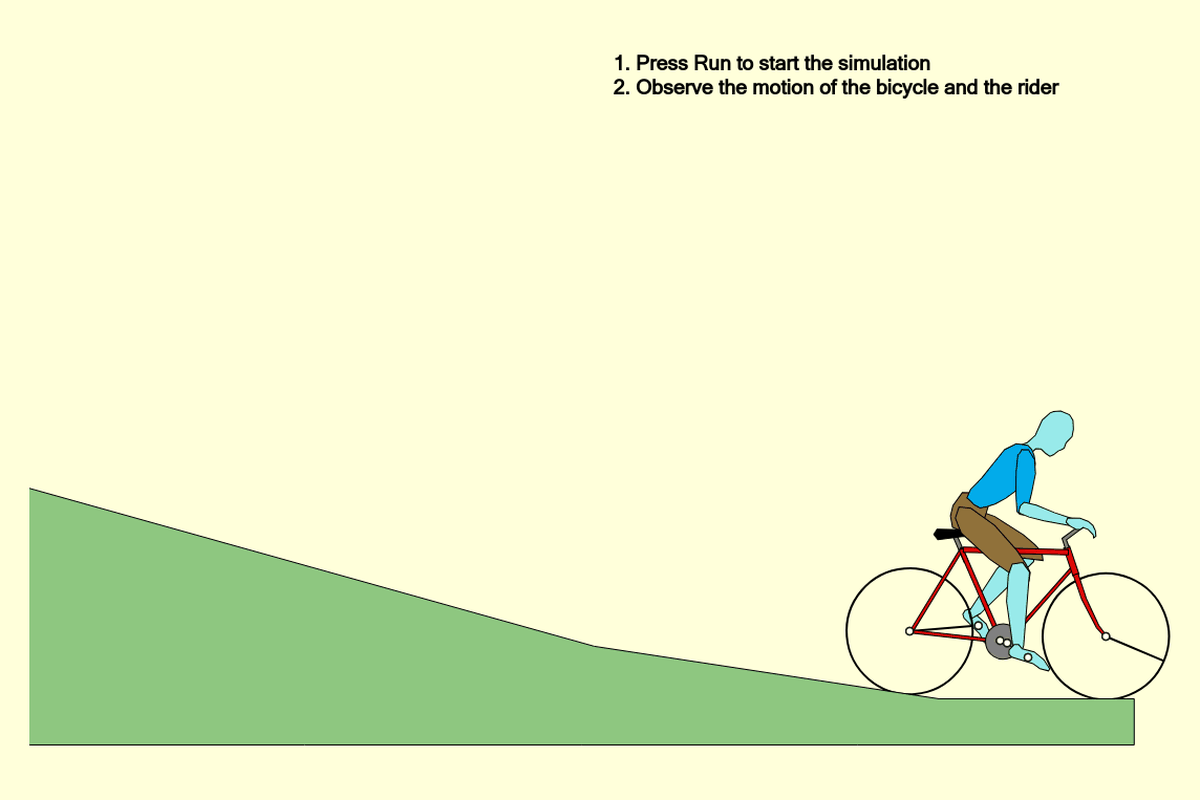
Bike Rider
Animated cyclist traversing a track
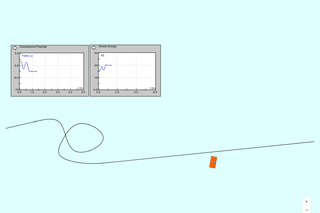
Curved Slot
Body constrained to a curved slot path
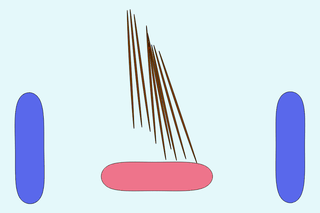
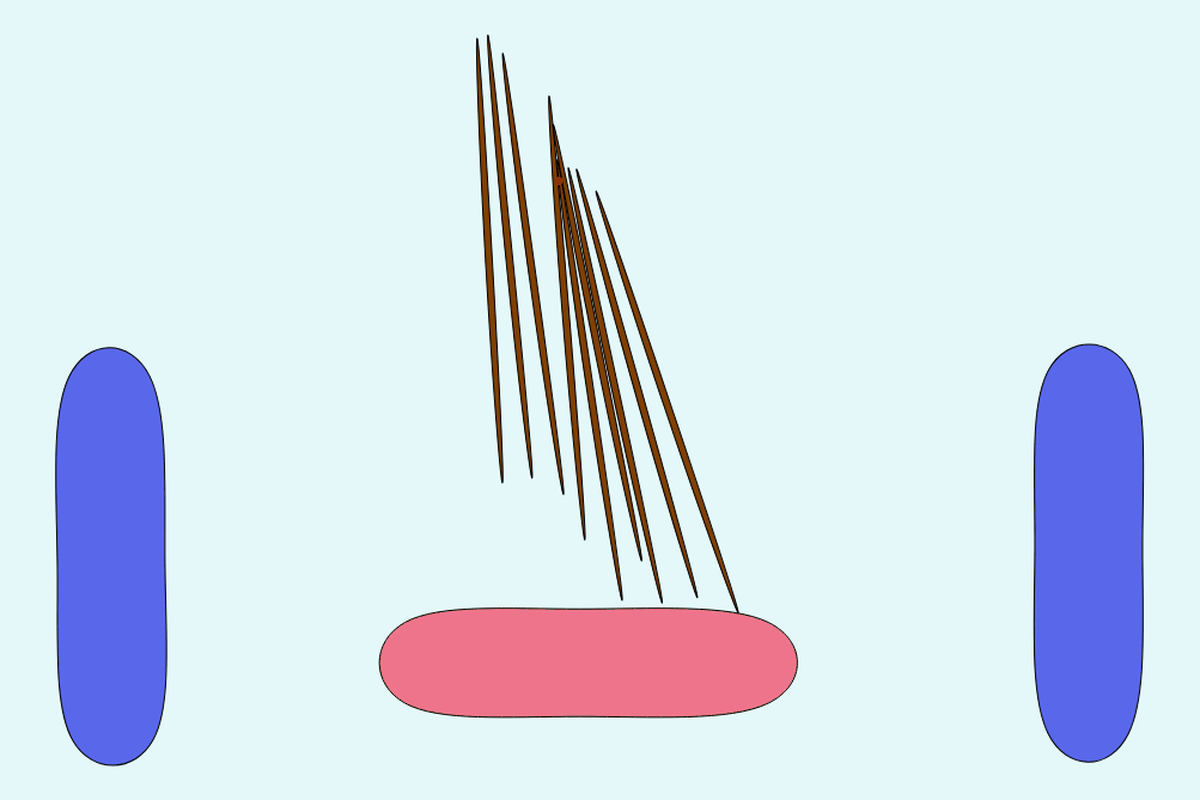
Dancing Toothpicks
Whimsical vibration-driven toothpick dance
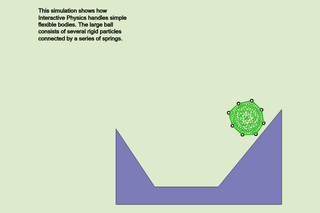
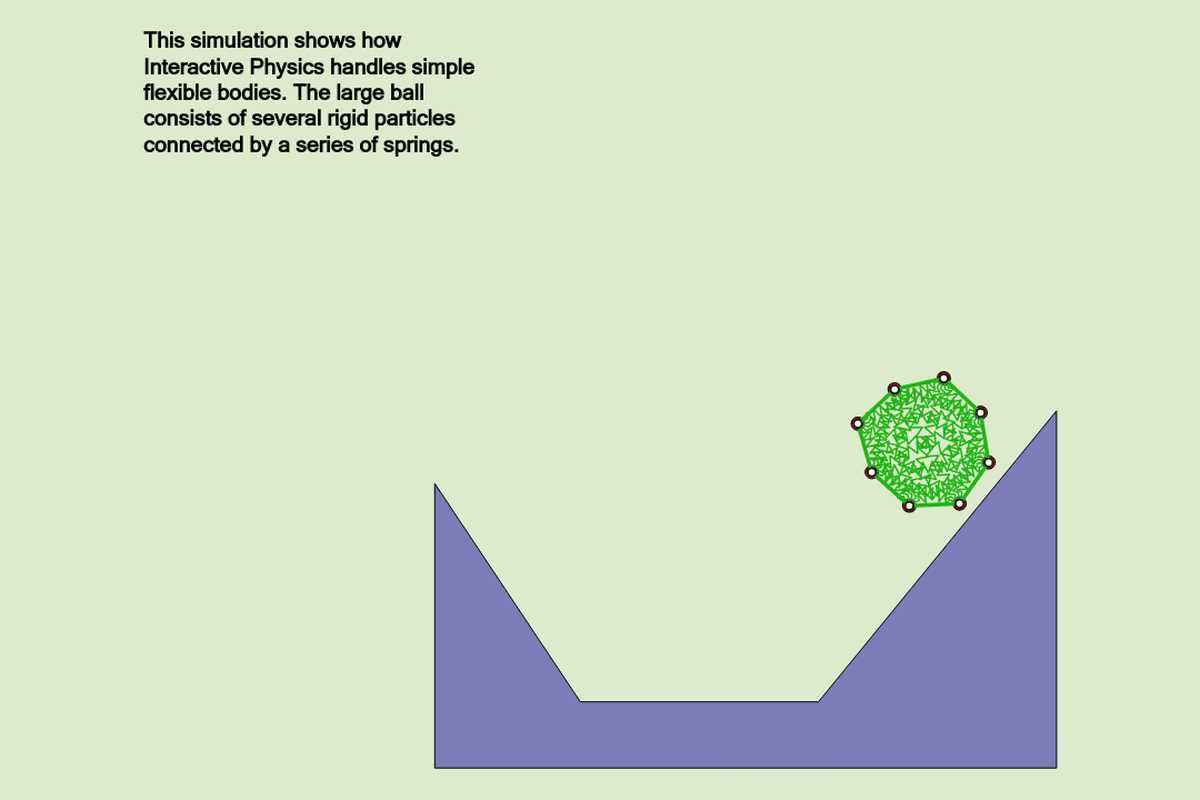
Flexible Ball
Soft-body ball deforming on impact
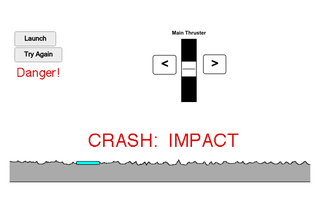
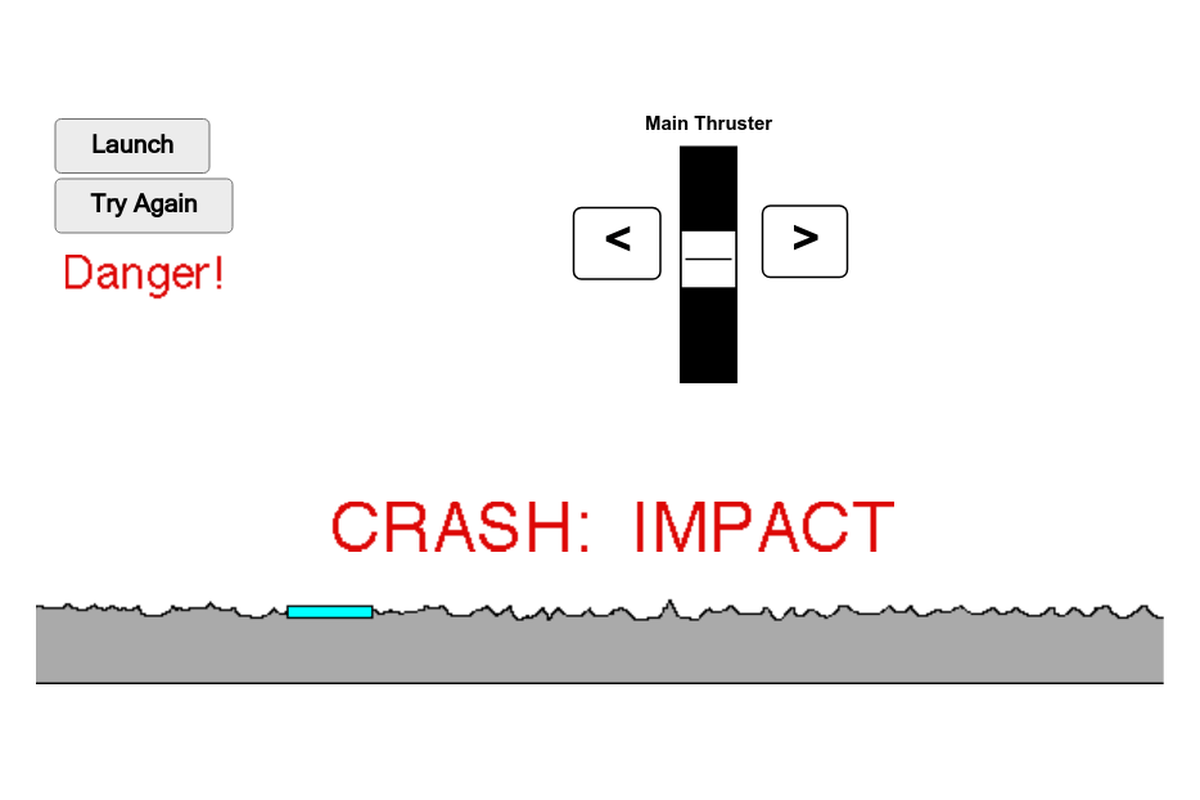
Lunar Lander
Pilot a lander onto the Moon's surface with limited fuel
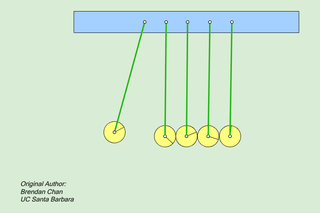
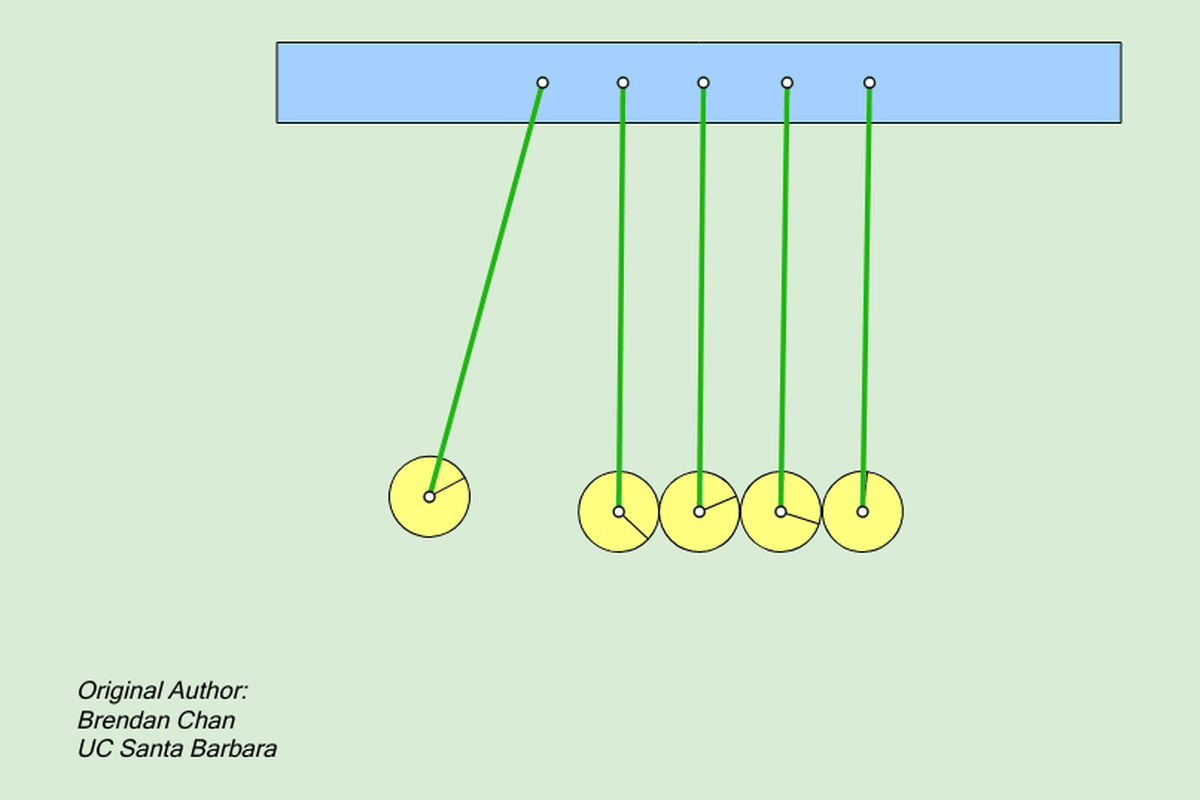
Newton's Cradle
Classic momentum-transfer pendulum demonstration
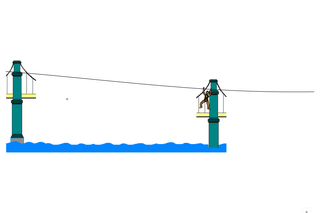
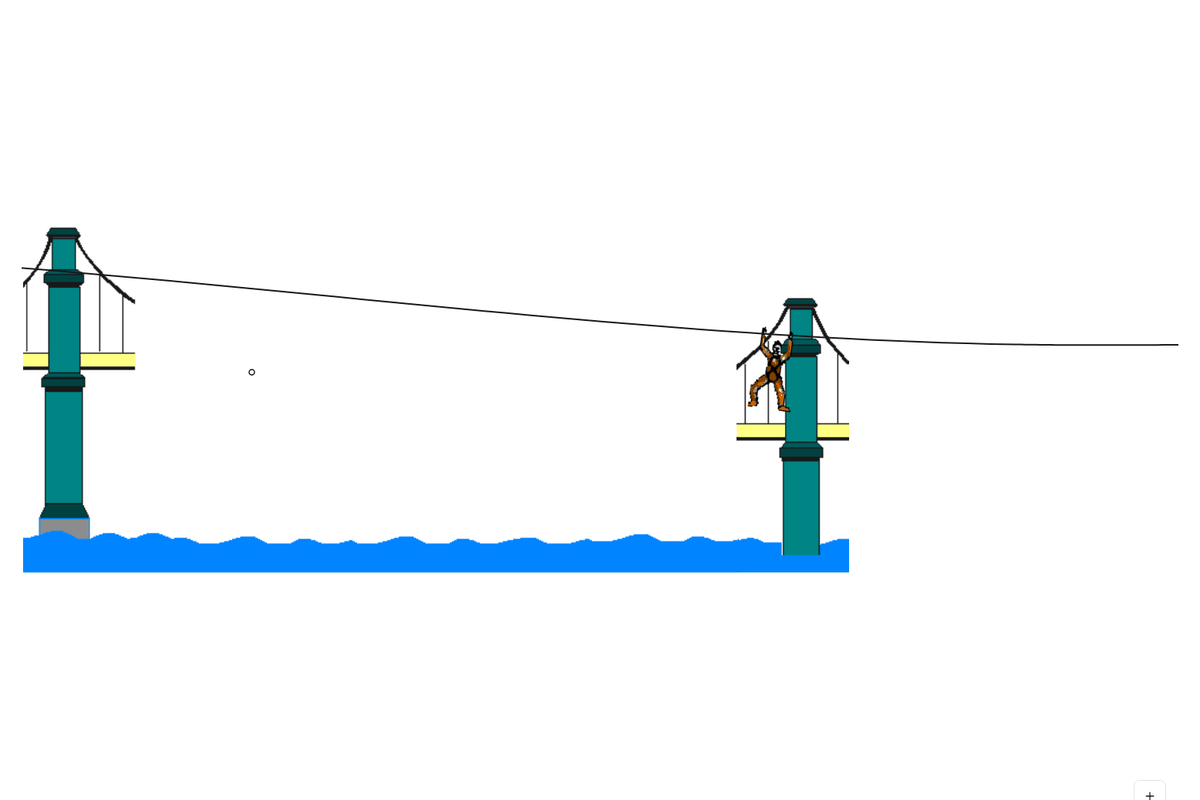
Rescue Mission
Drop a rescue package onto a moving target
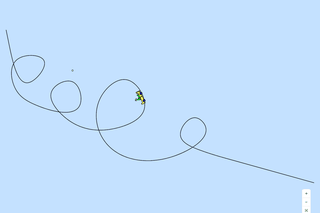
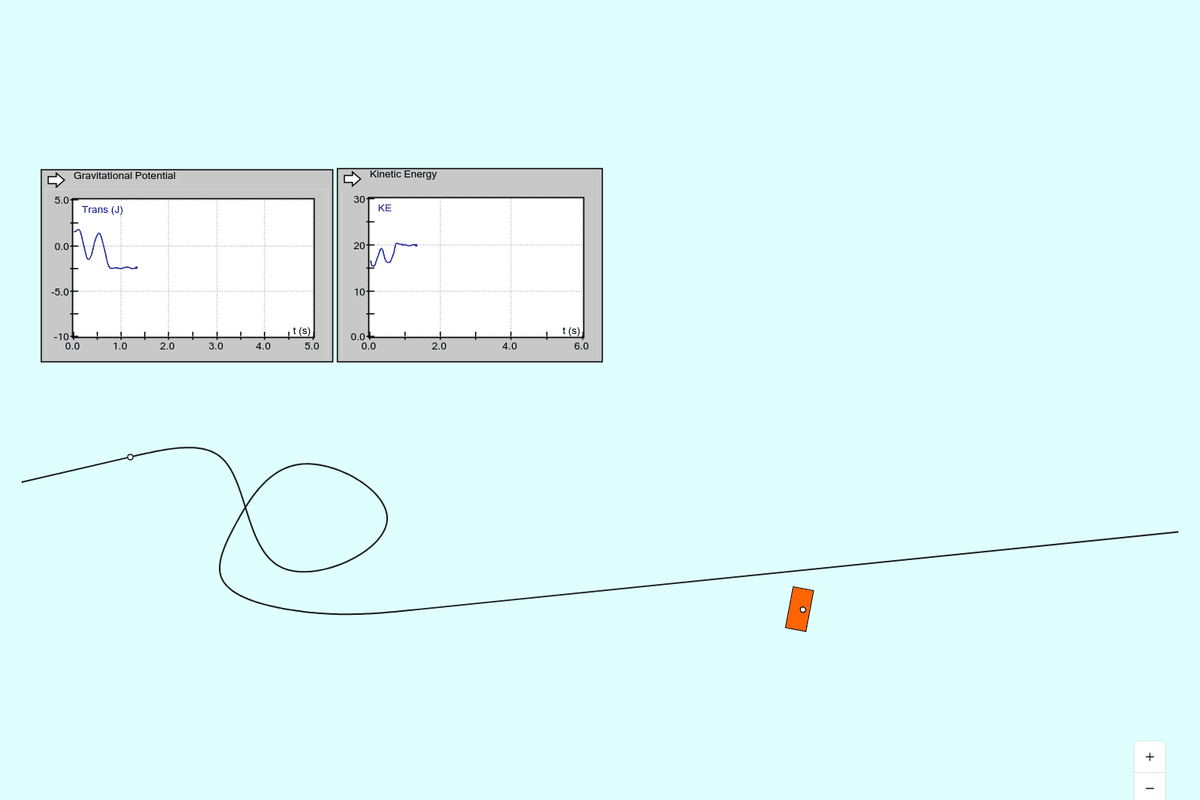
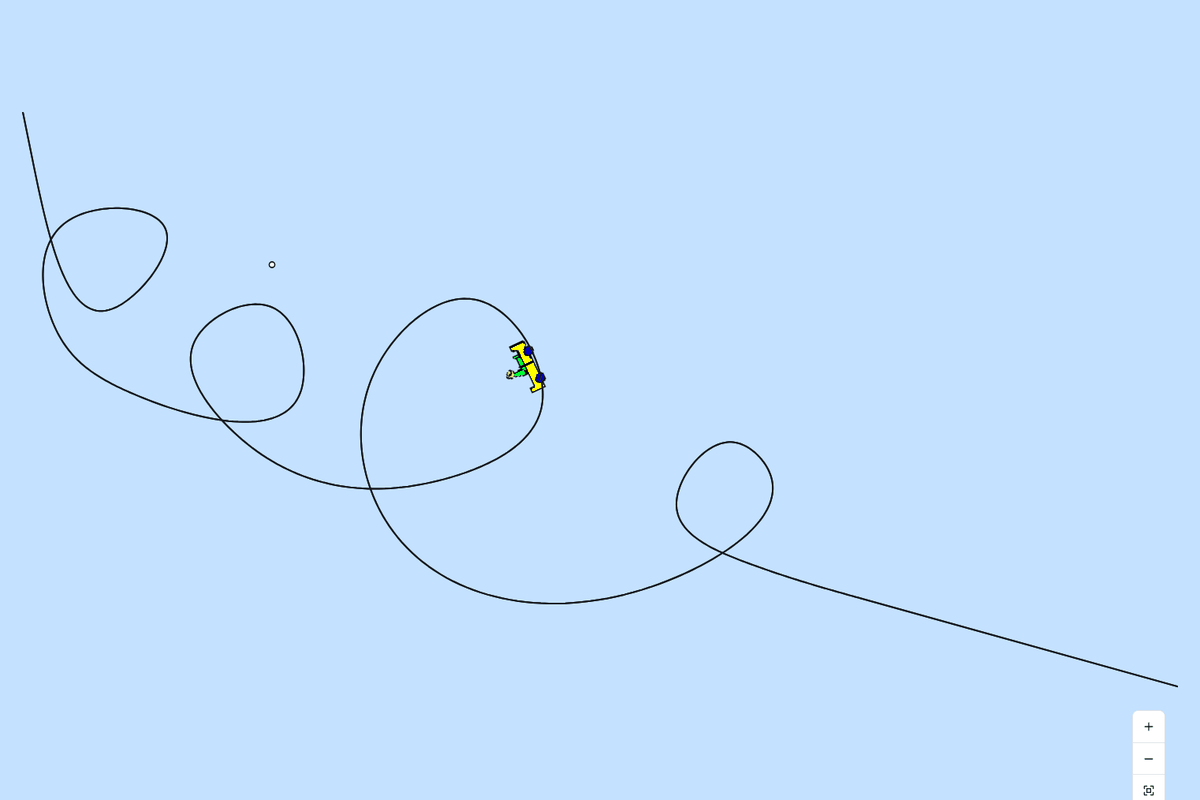
Simple Roller Coaster
Car travelling a looping roller-coaster track
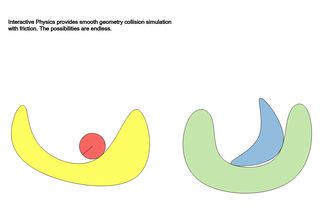
Smooth Collisions
Low-friction billiard-style collisions

Three Gears Rotating Text
Three meshed gears with attached text labels

 Kinetic Theory of Gas (6)
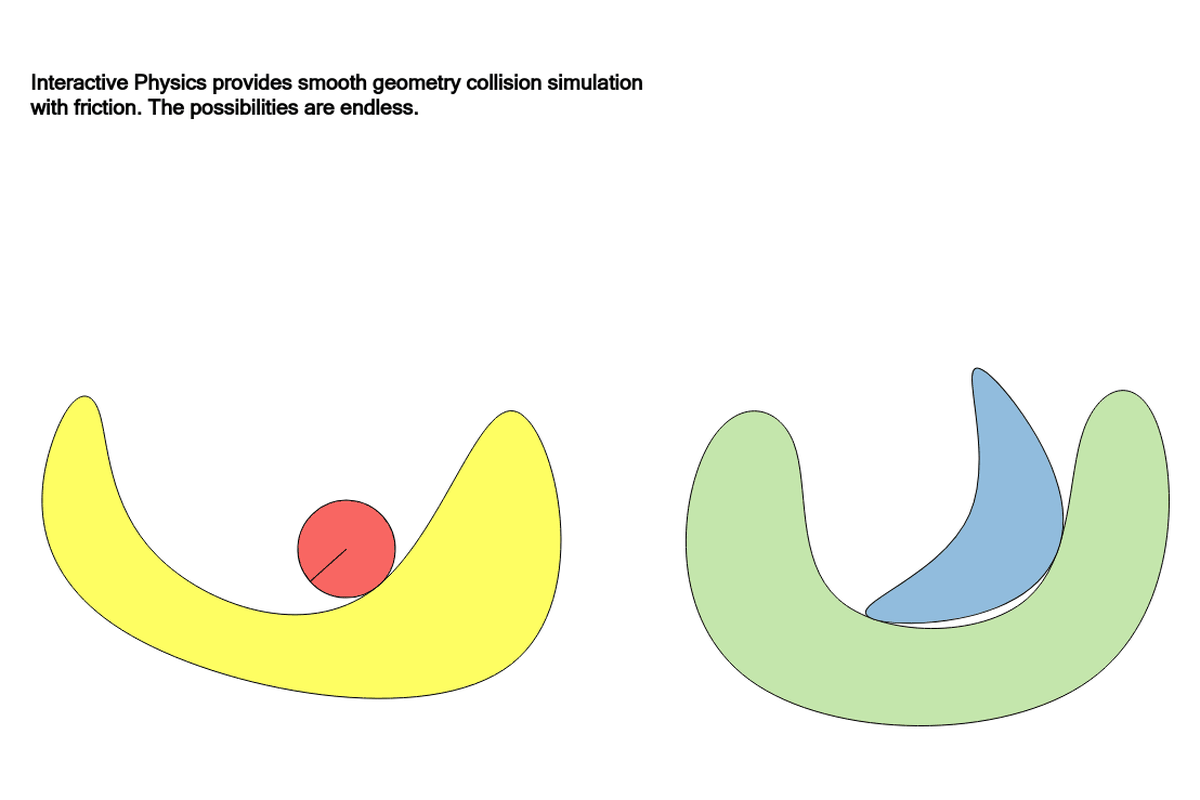
Bridge the macroscopic gas laws and microscopic particle motion. Watch how molecular collisions create pressure and how temperature changes particle speeds.
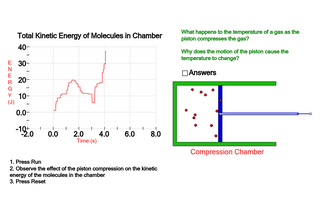
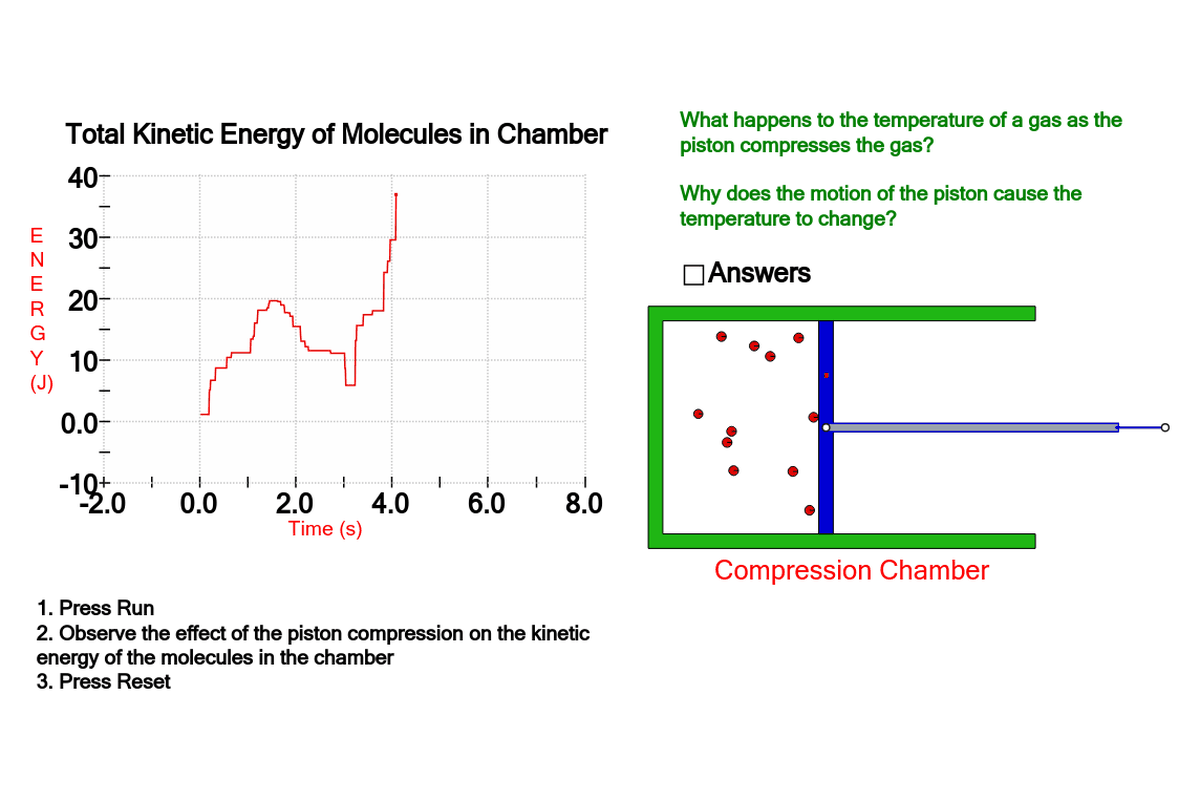
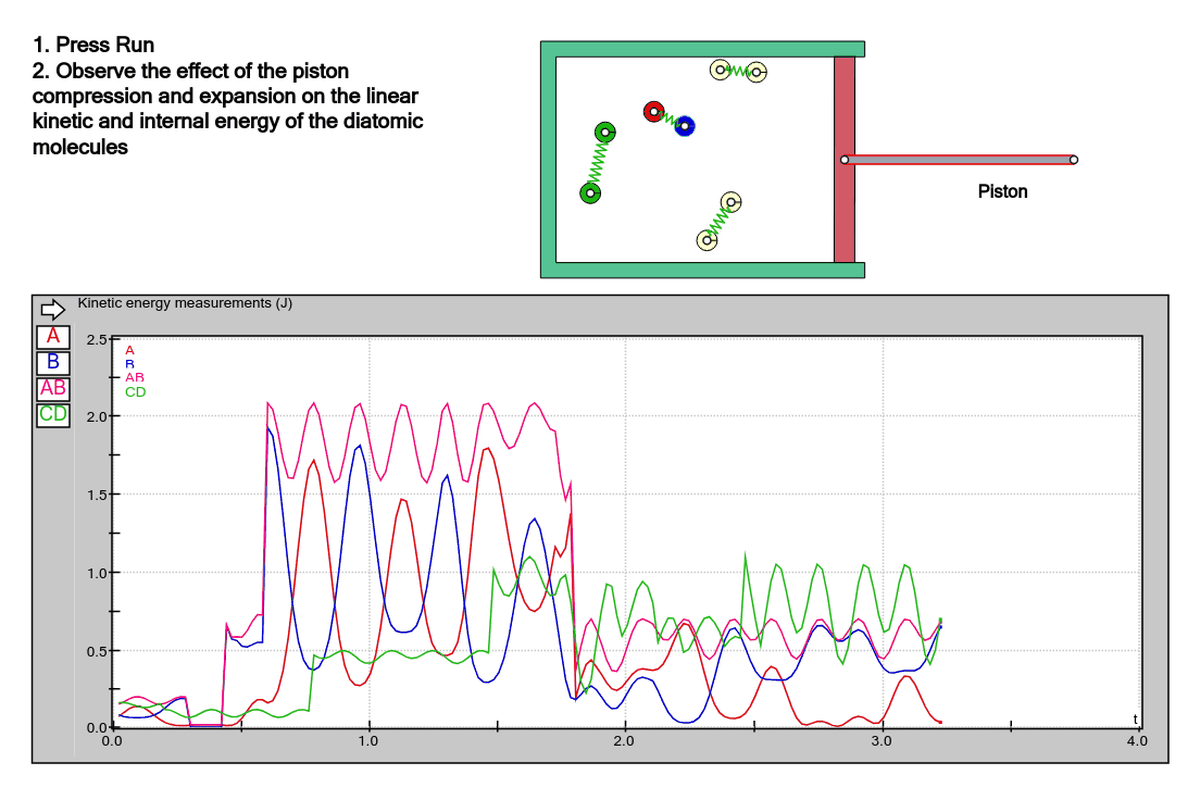
Compression of Gas
Piston compression illustrating pressure-volume relation
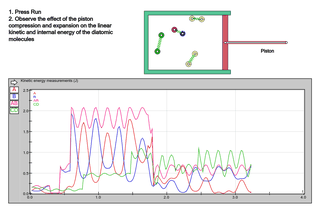
Diatomic Molecule
Vibrational and rotational modes of a two-atom molecule
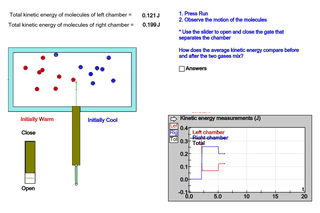
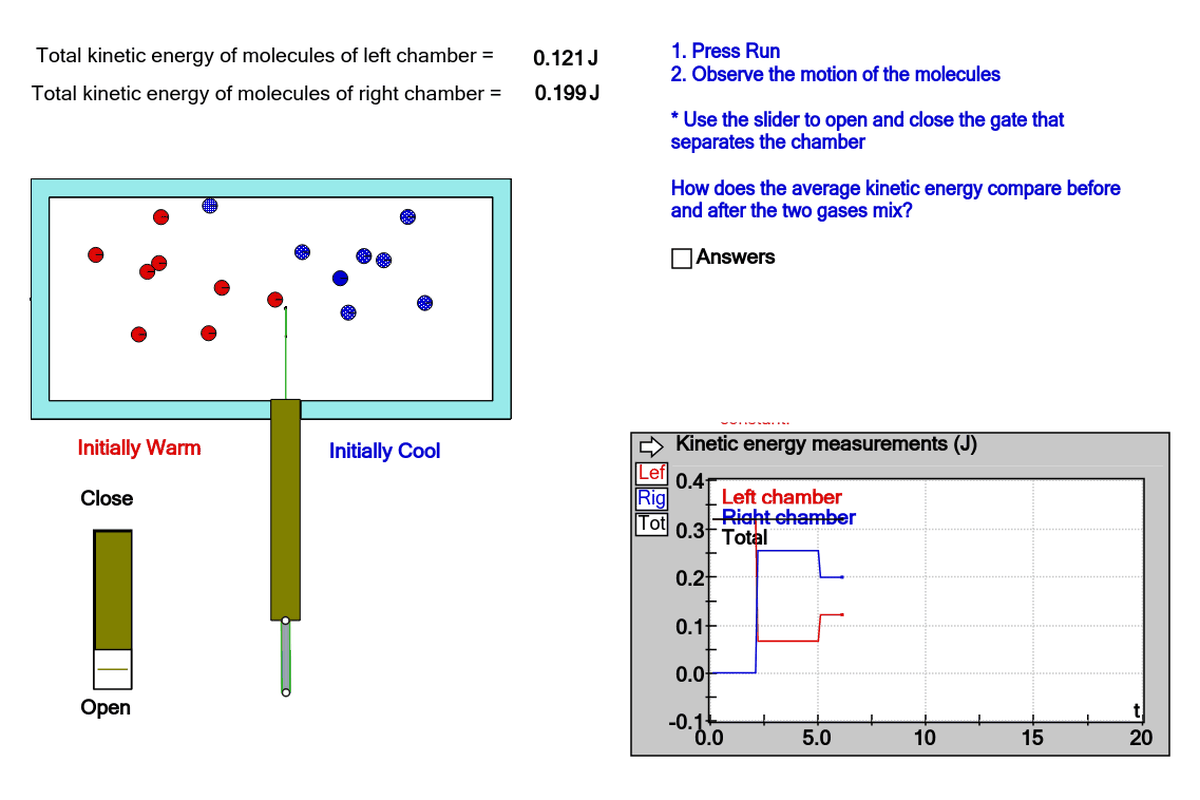
Maxwell's Demon
Thought experiment sorting fast and slow molecules
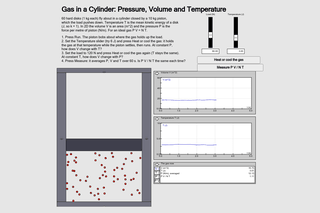
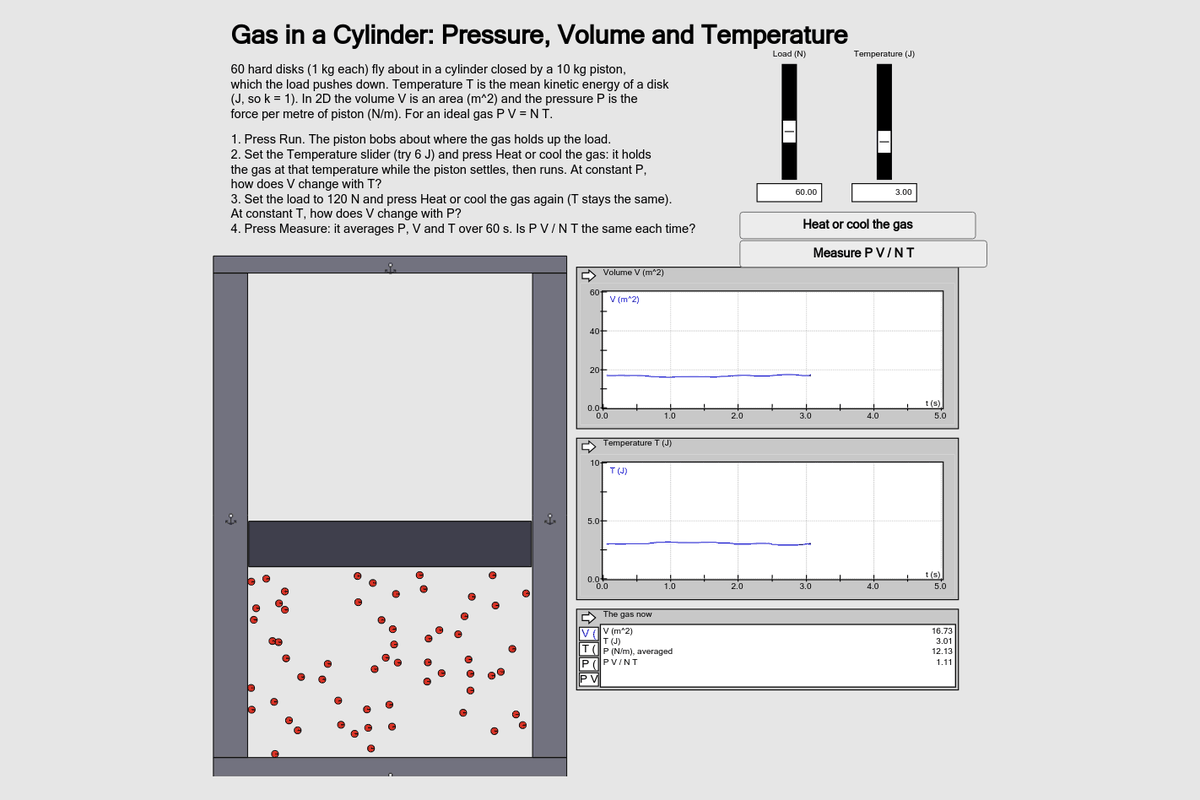
Gas in a Cylinder
Hard disks hold up a weighted piston: heat the gas, add load, and test P V = N T
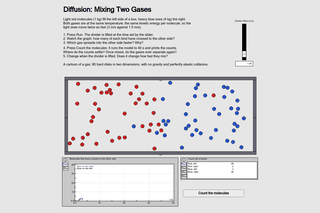
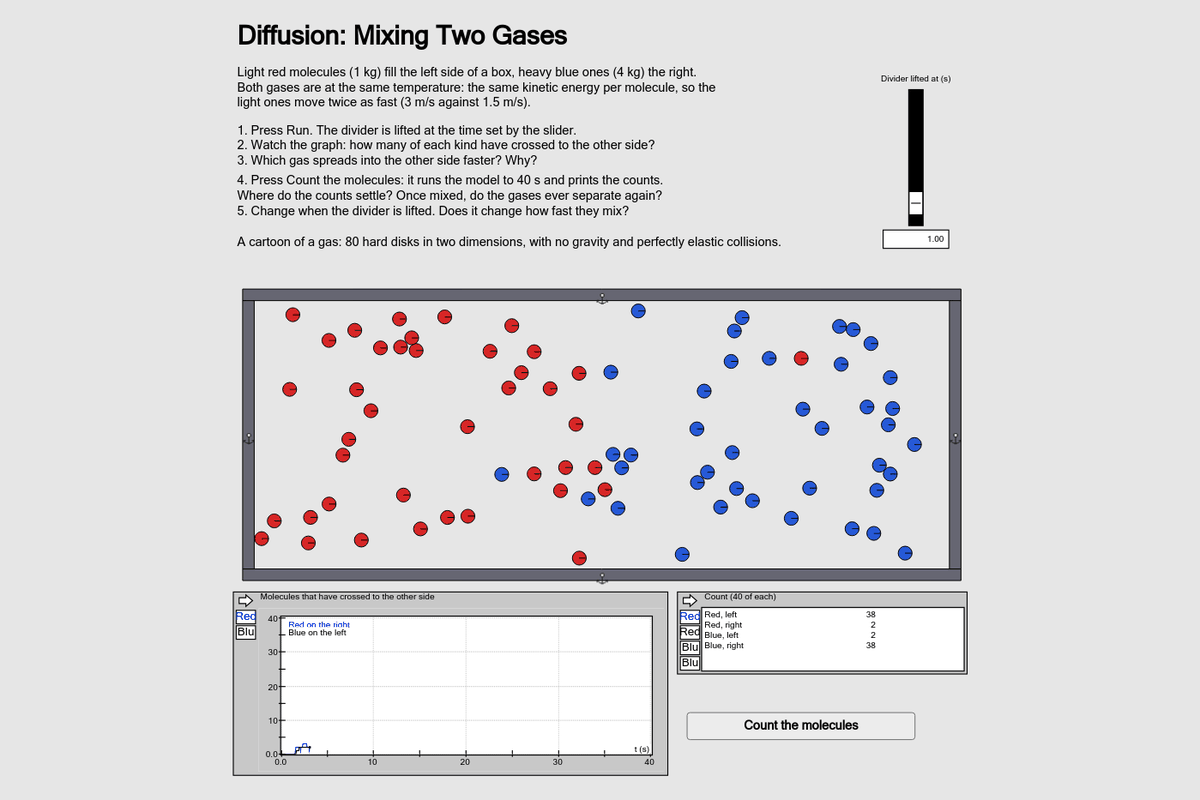
Diffusion: Mixing Two Gases
Two gases mix when a divider is lifted; the lighter molecules spread faster
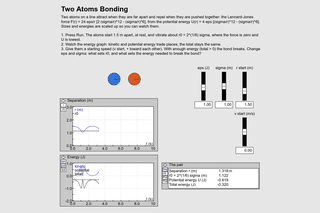
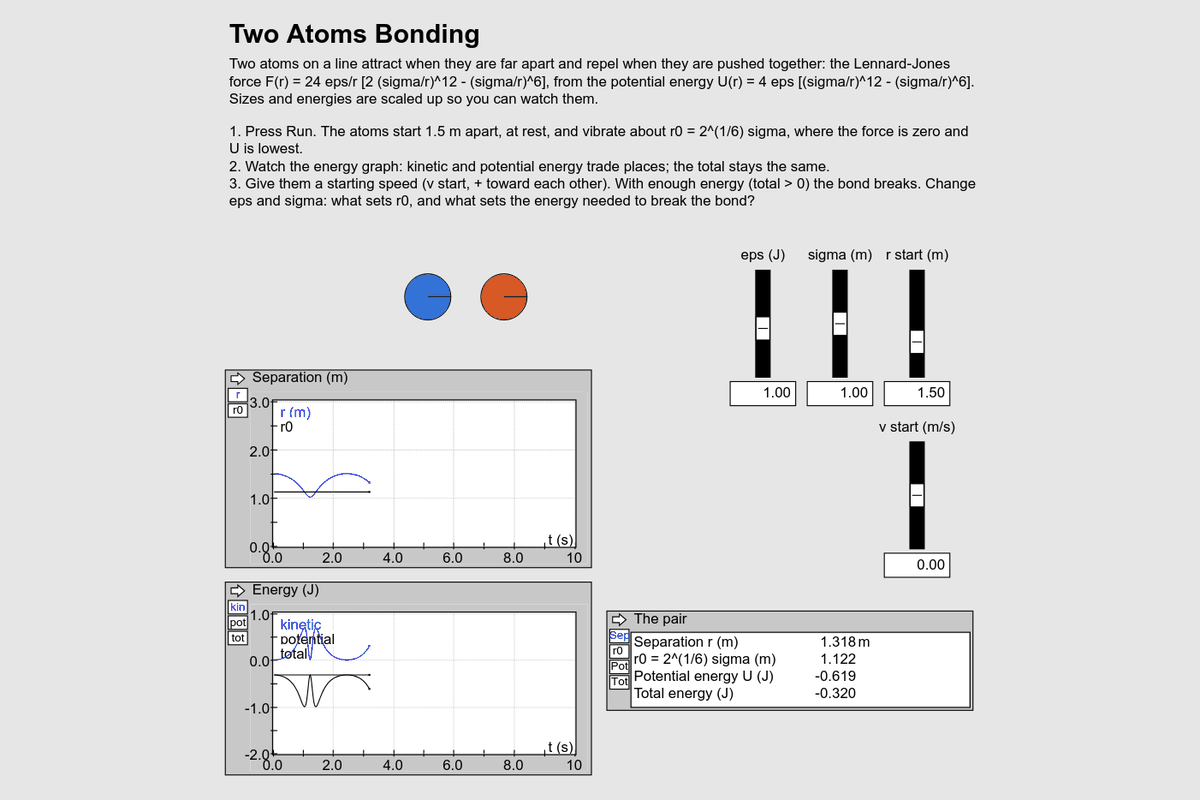
Two Atoms Bonding
Two atoms joined by the Lennard-Jones force vibrate about r0, or break apart with enough energy
 Magnetism (8)
Investigate magnetic attraction, repulsion, and how moving charges are influenced by magnetic fields. Models include dipoles, levitation, and field interactions.
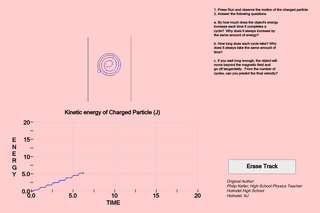
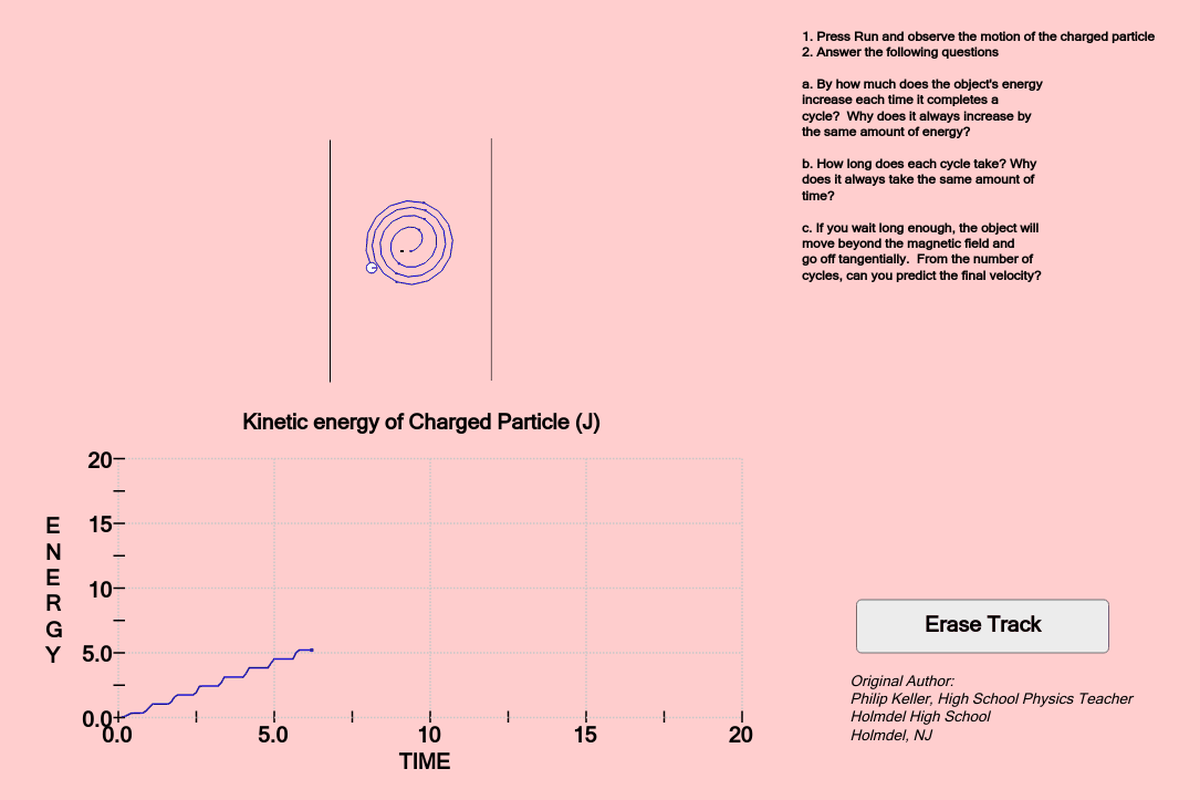
Cyclotron Demonstrator
Charged particle spiralling inside a cyclotron
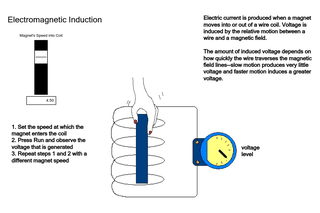
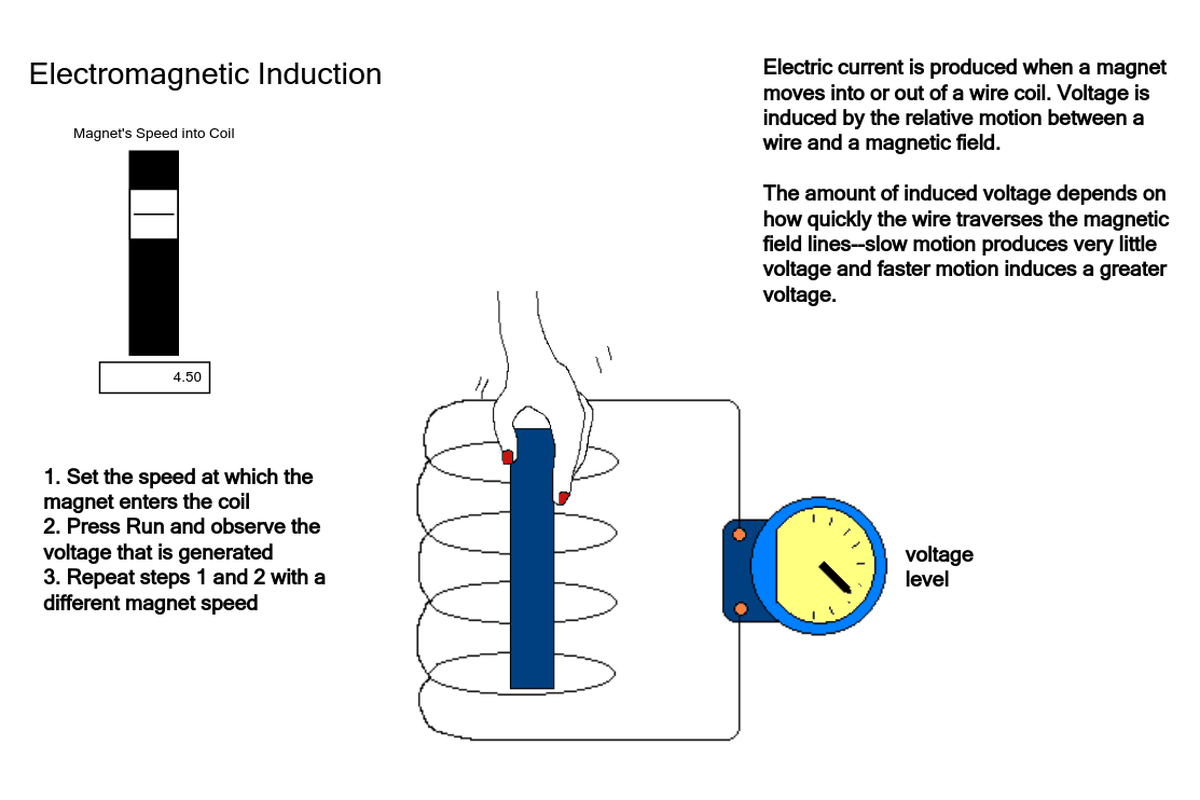
Electromagnetic Induction
Induced EMF from a moving magnet and coil
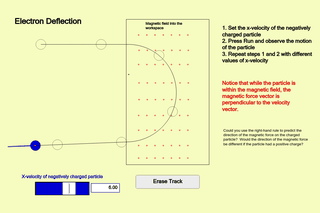
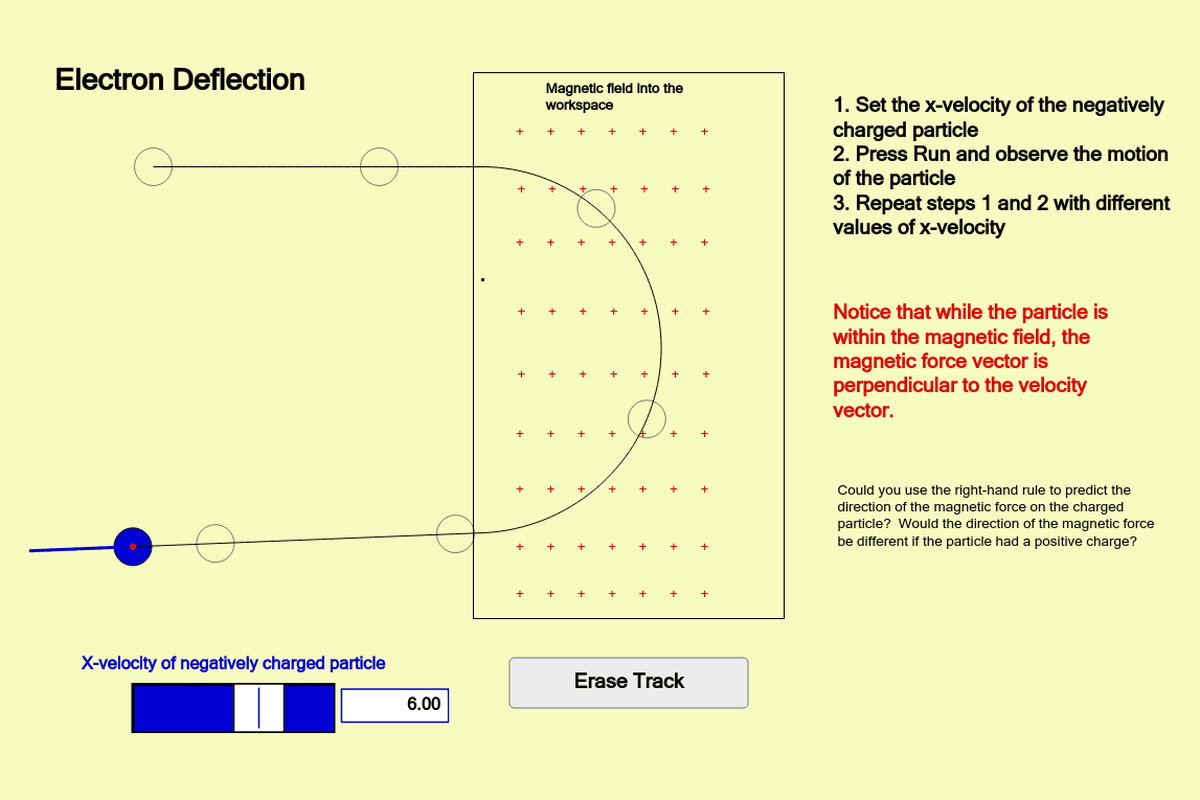
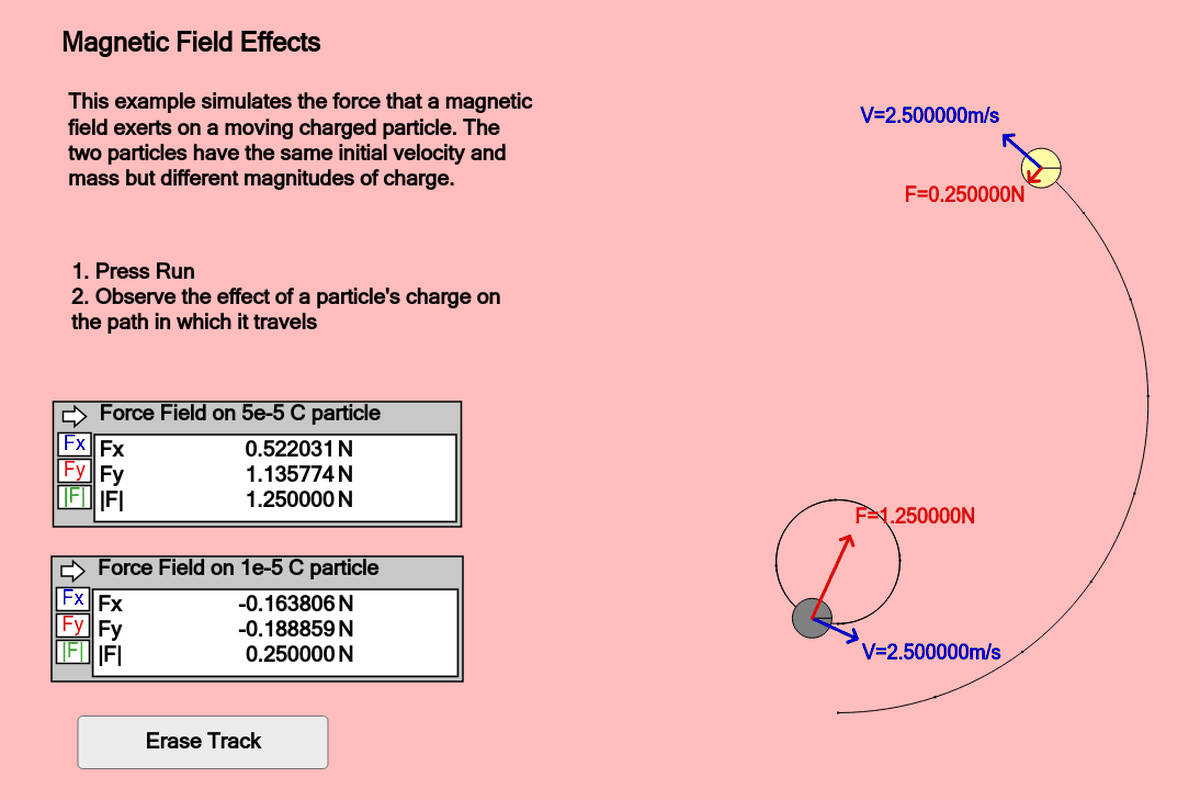
Electron Deflection
Beam of electrons curving in a magnetic field
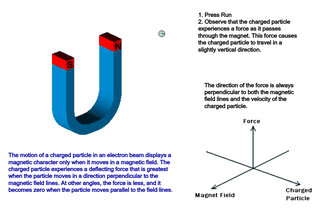
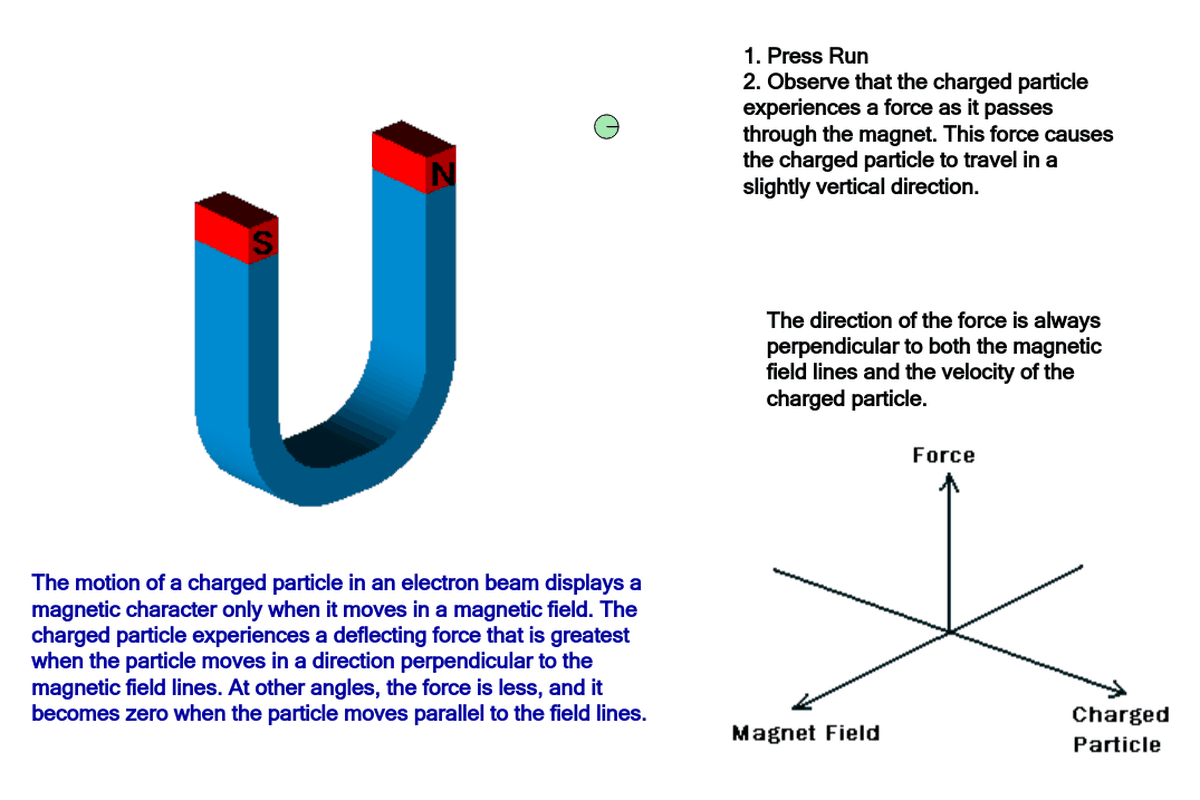
Magnetic Deflection
Charged particle deflected by a magnetic field
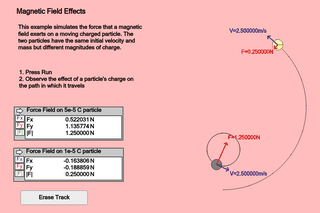
Magnetic Field
Visualization of a magnetic-field pattern
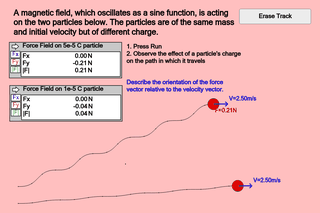
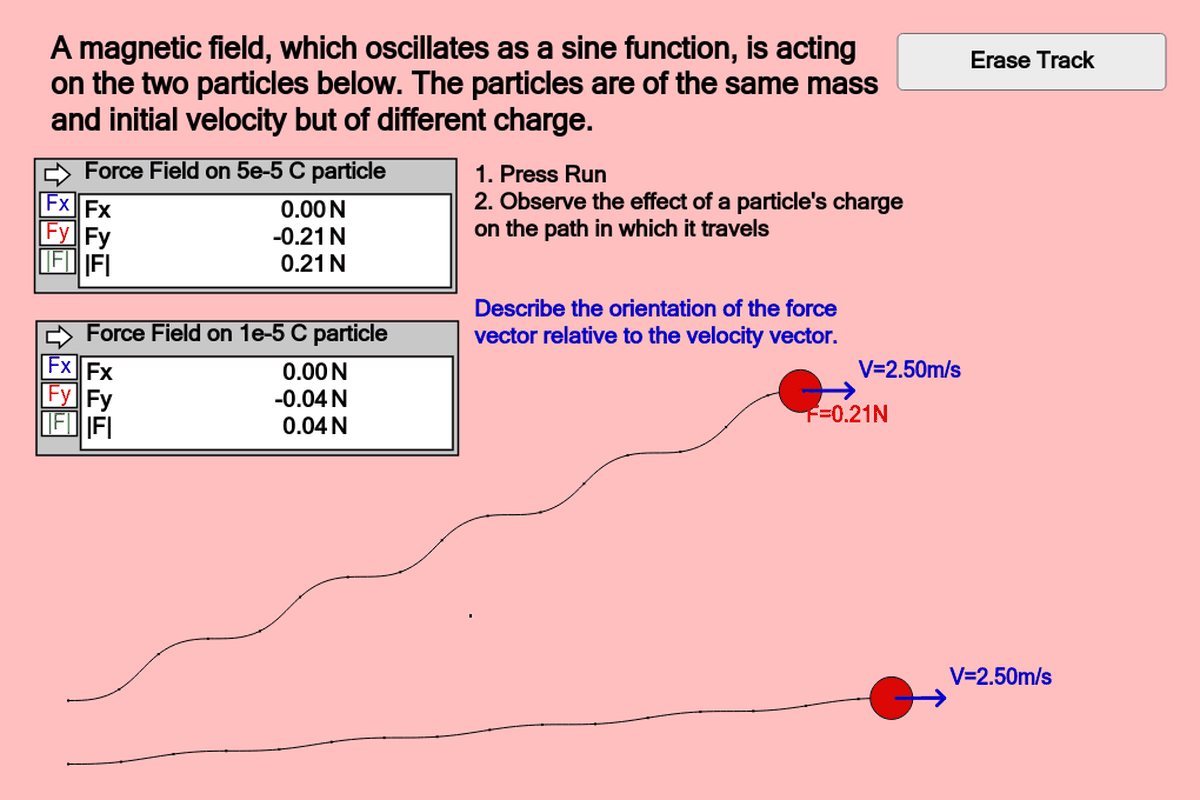
Oscillating Magnetic Field
Response of charges to a time-varying magnetic field
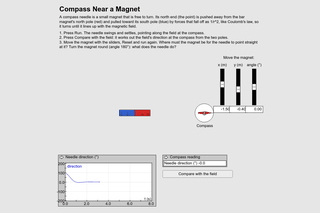
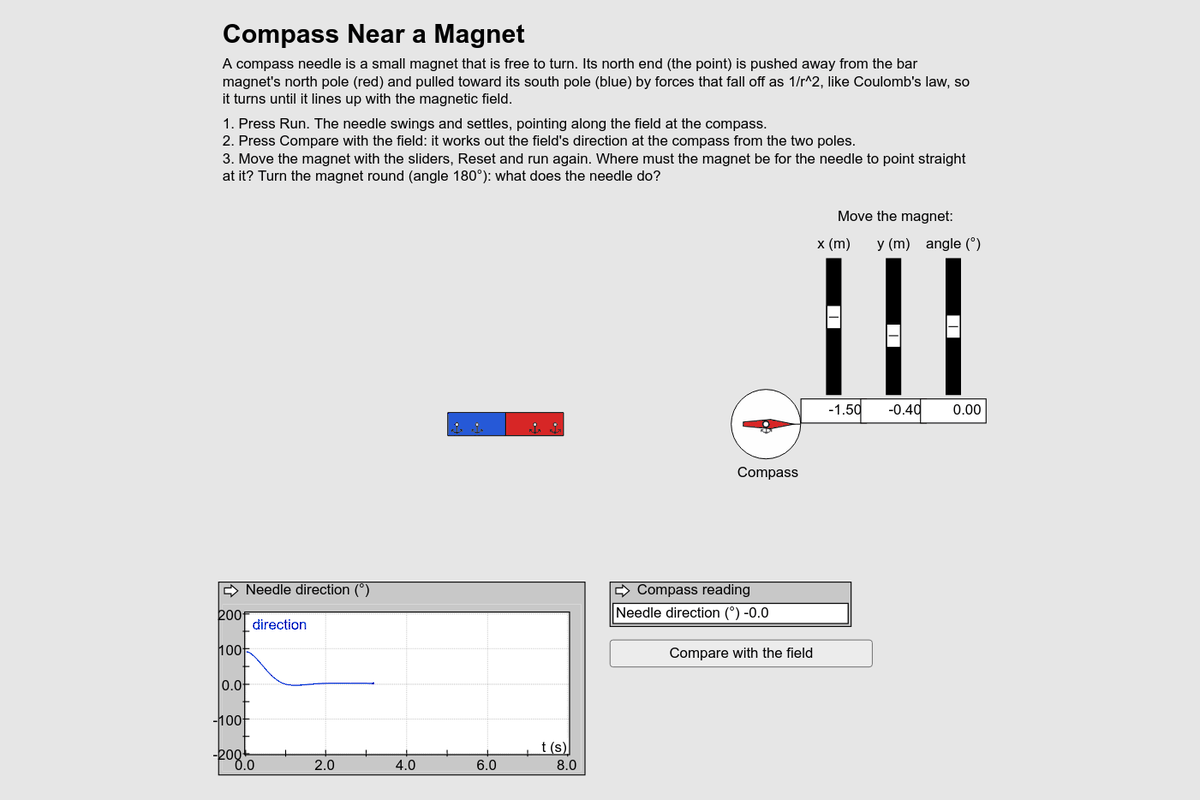
Compass Near a Magnet
A pivoted compass needle turns to line up with the field of a bar magnet you move
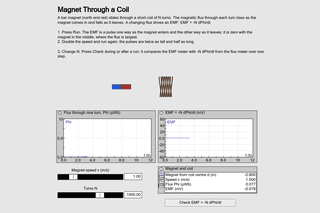
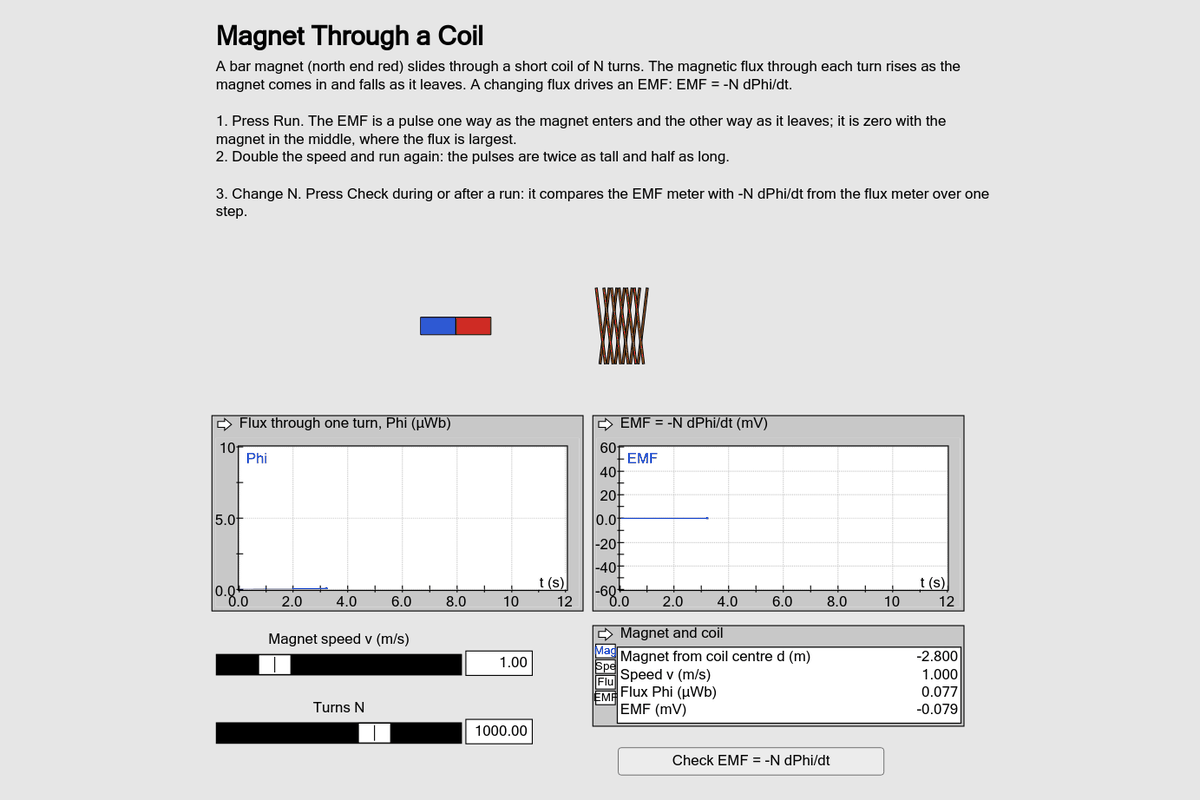
Magnet Through a Coil
A magnet passes through a coil: the flux and the EMF = -N dPhi/dt; faster gives a bigger EMF
 Math (2)
Use Interactive Physics to illustrate mathematical relationships visually. Great for tying graphs, formulas, and simulation together.
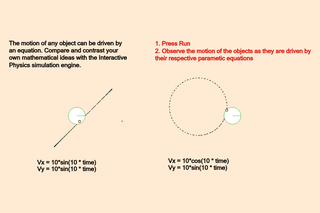
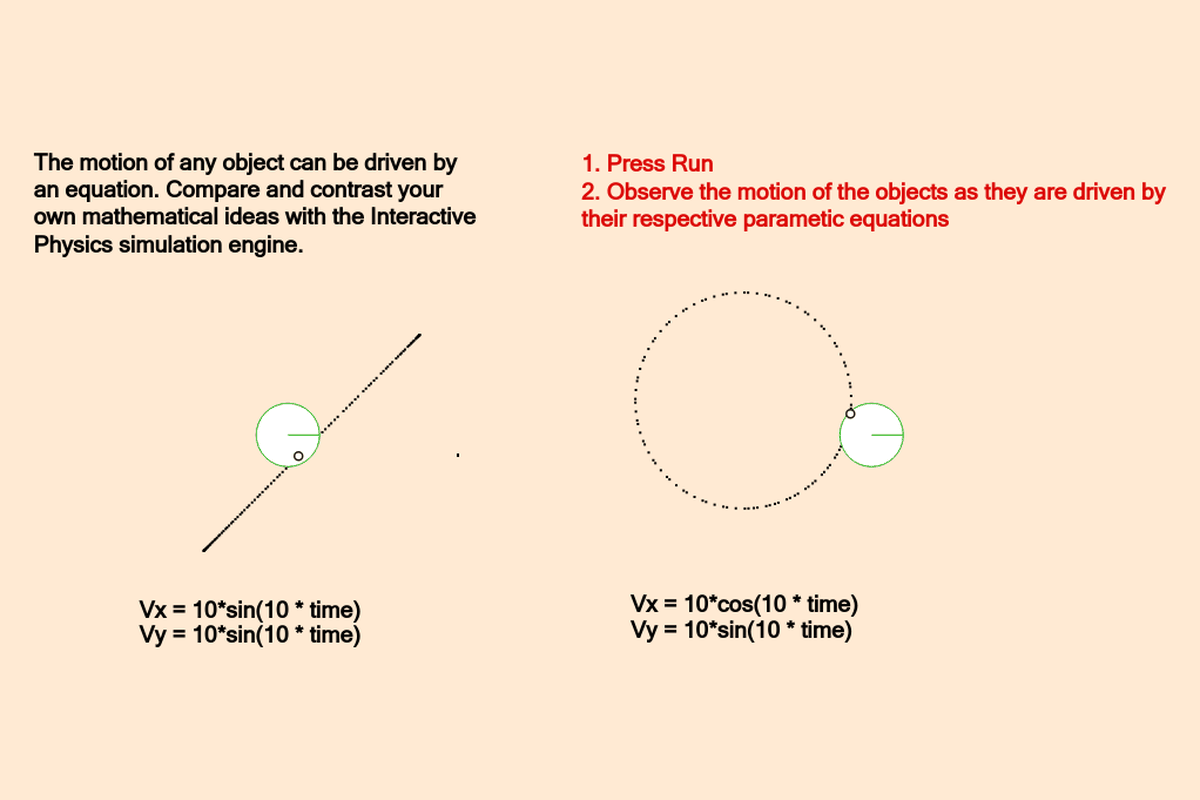
Sin/Cos Functions
Trace sine and cosine curves from circular motion
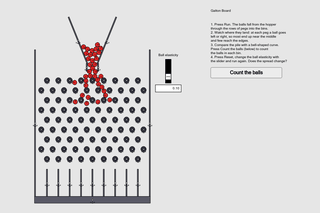
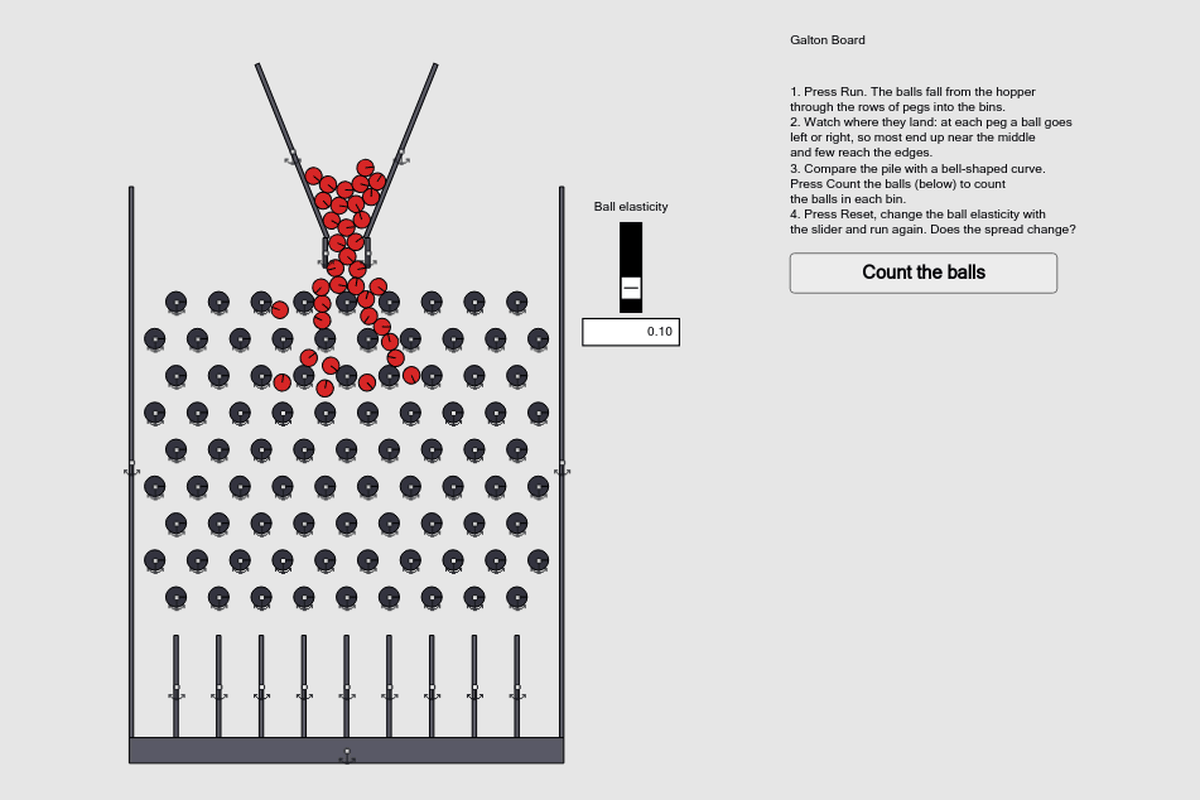
Galton Board
Balls fall through rows of pegs into bins and pile up in a bell curve; a button counts them
 Momentum (17)
Explore momentum and its conservation in collisions, explosions, and recoil. Watch how mass and velocity combine into a single conserved quantity: p = m × v.
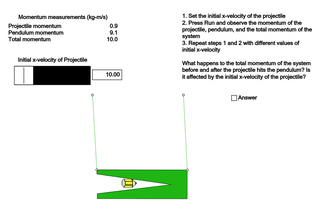
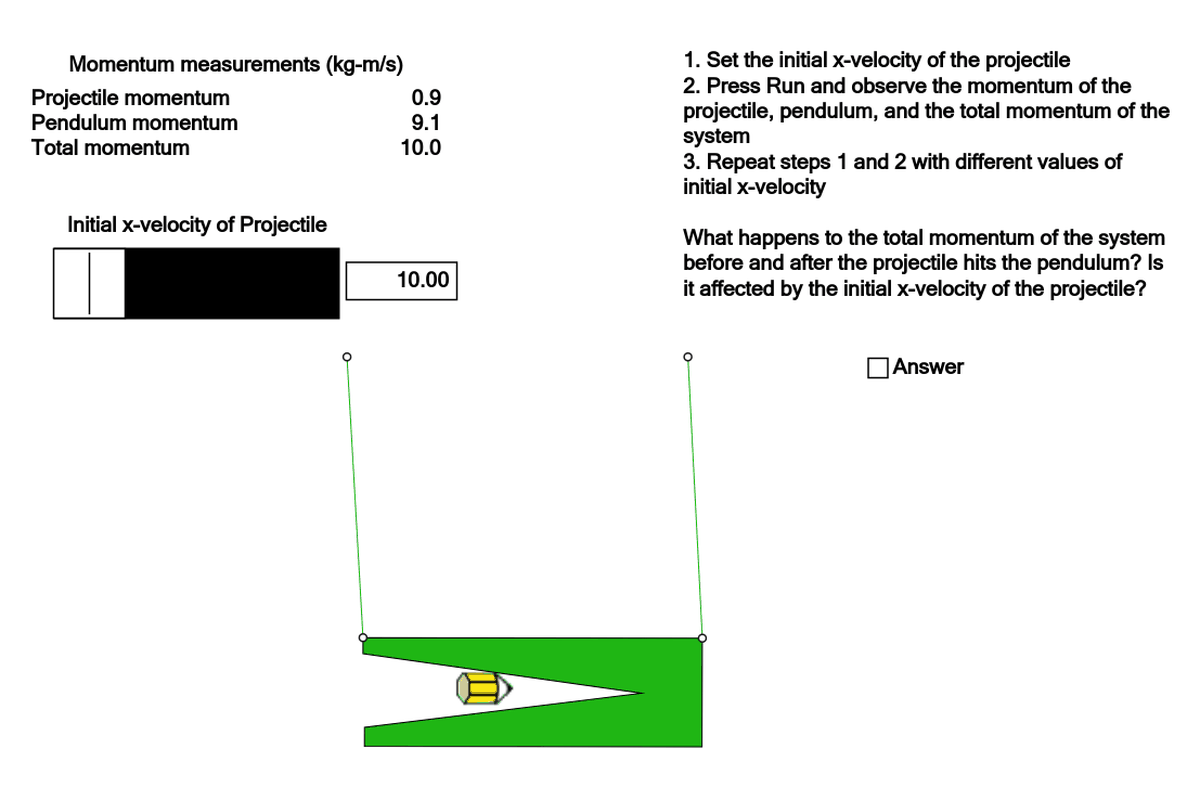
Ballistic Pendulum
Measure a projectile's speed by swinging a pendulum
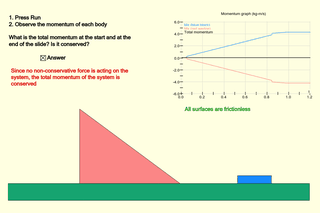
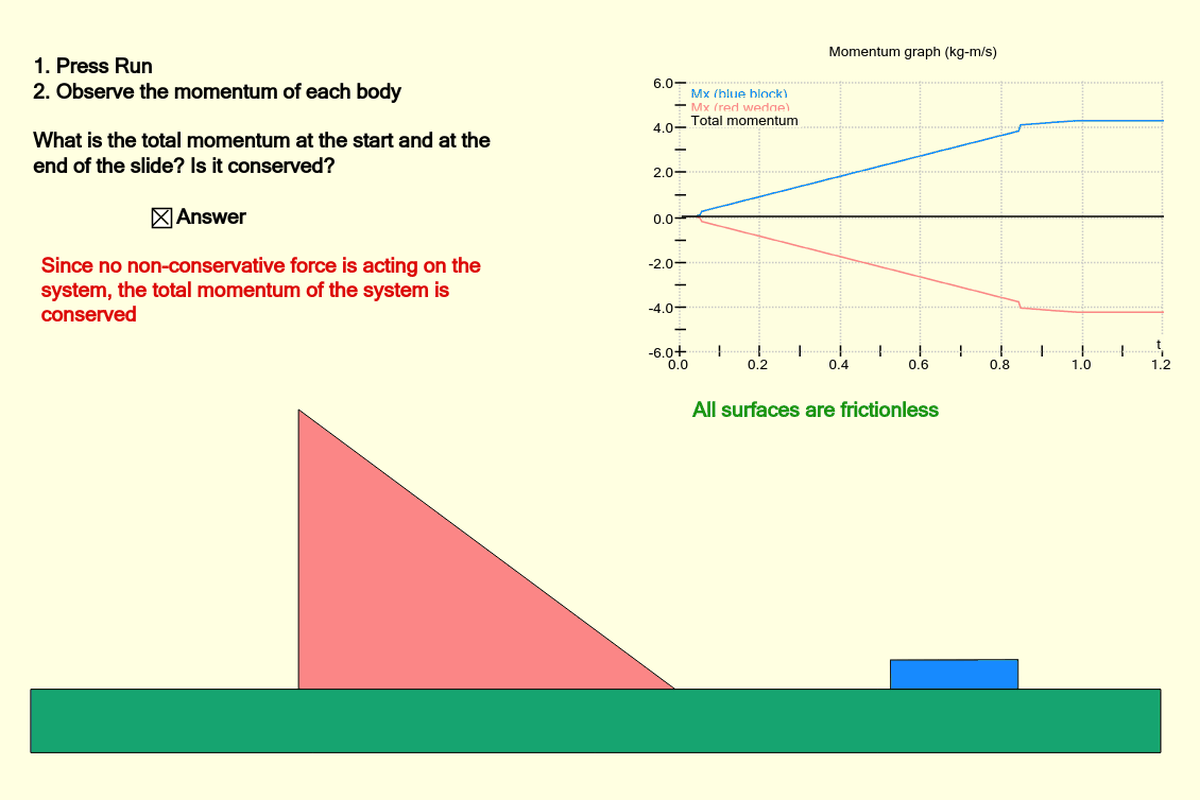
Block on Wedge
Sliding block transferring momentum to a wedge
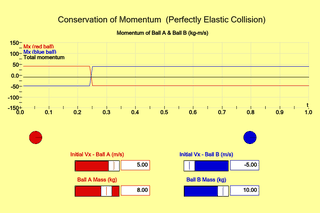
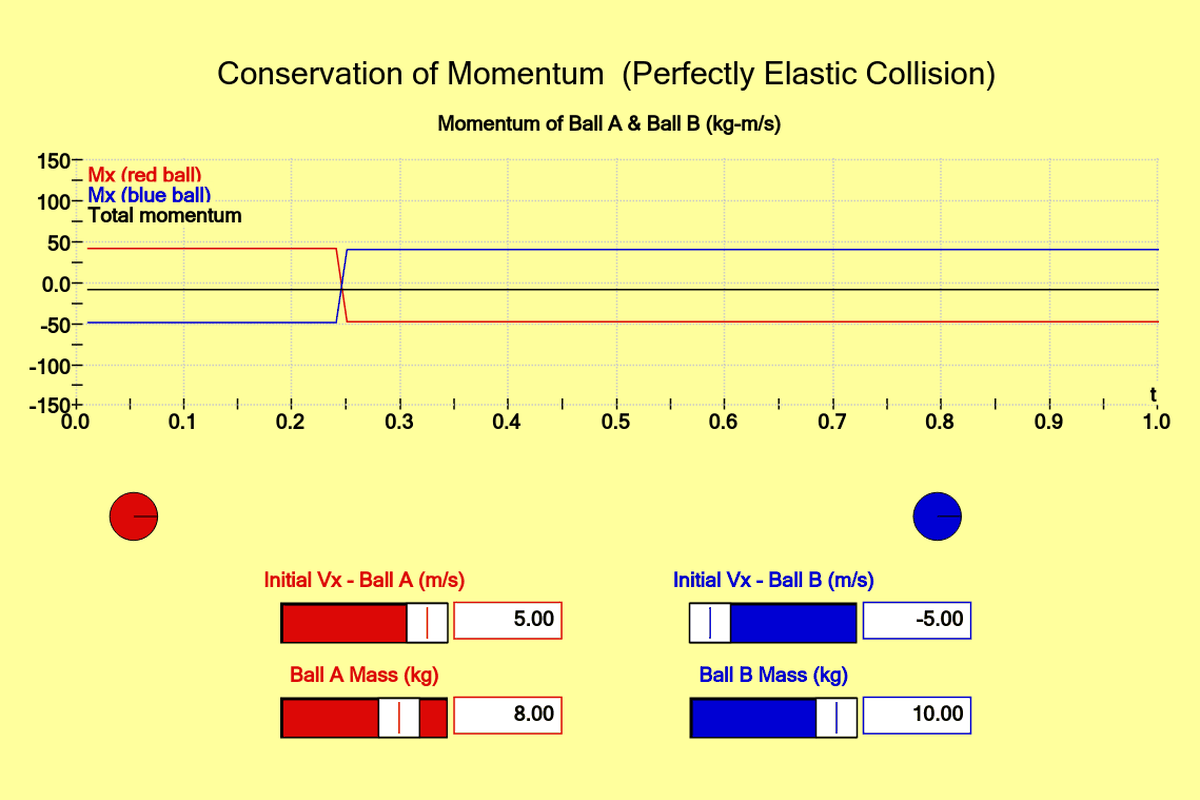
Conservation of Momentum 1
Two-body collision conserving total momentum
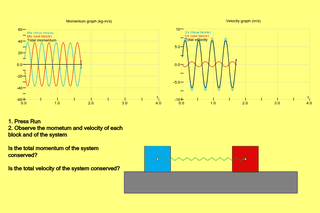
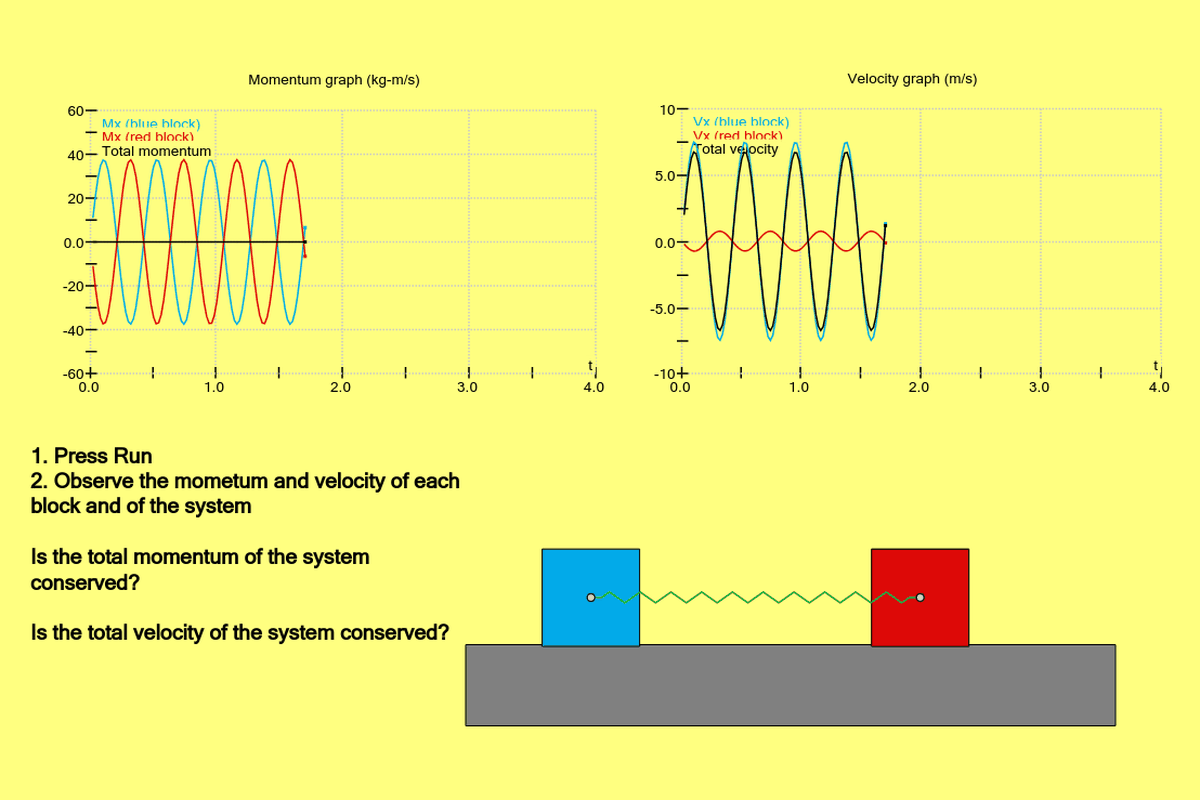
Conservation of Momentum 2
Further exploration of momentum conservation
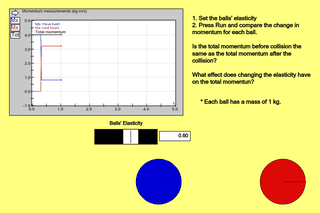
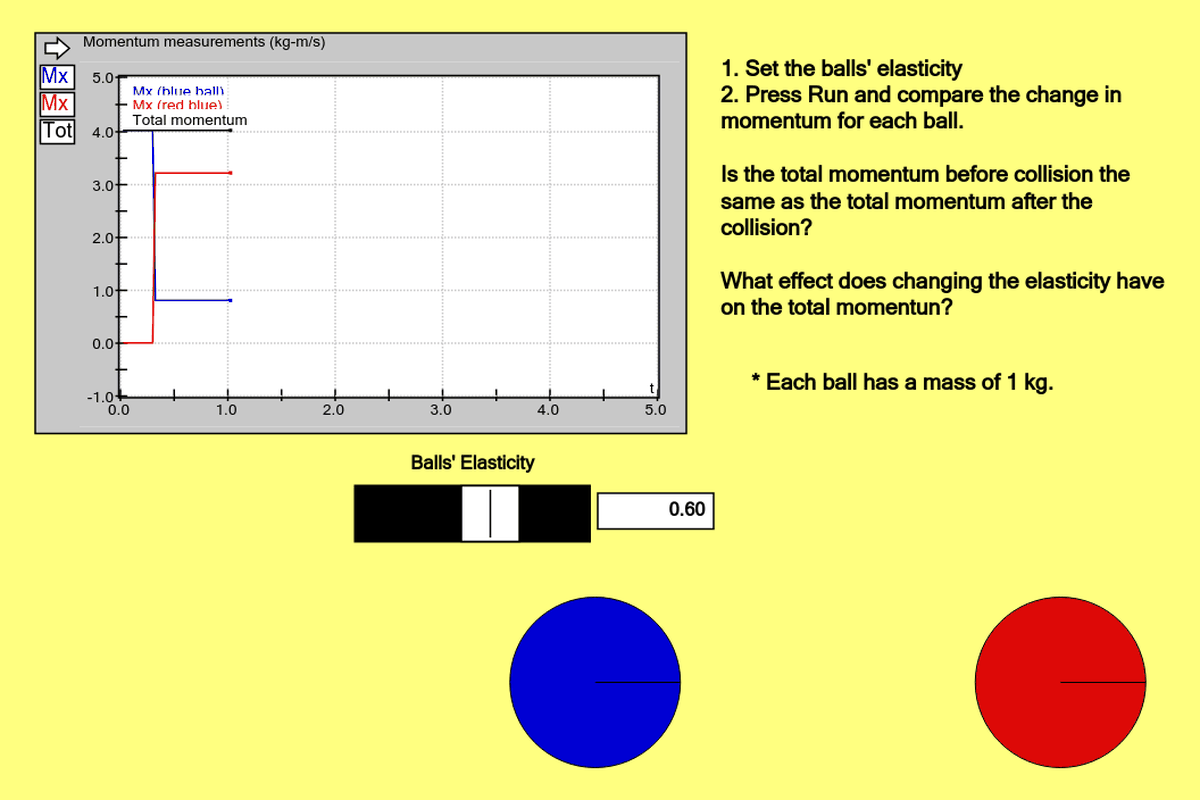
Conservation of Momentum 3
Multi-body case of momentum conservation
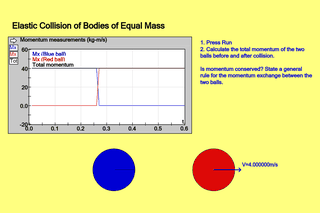
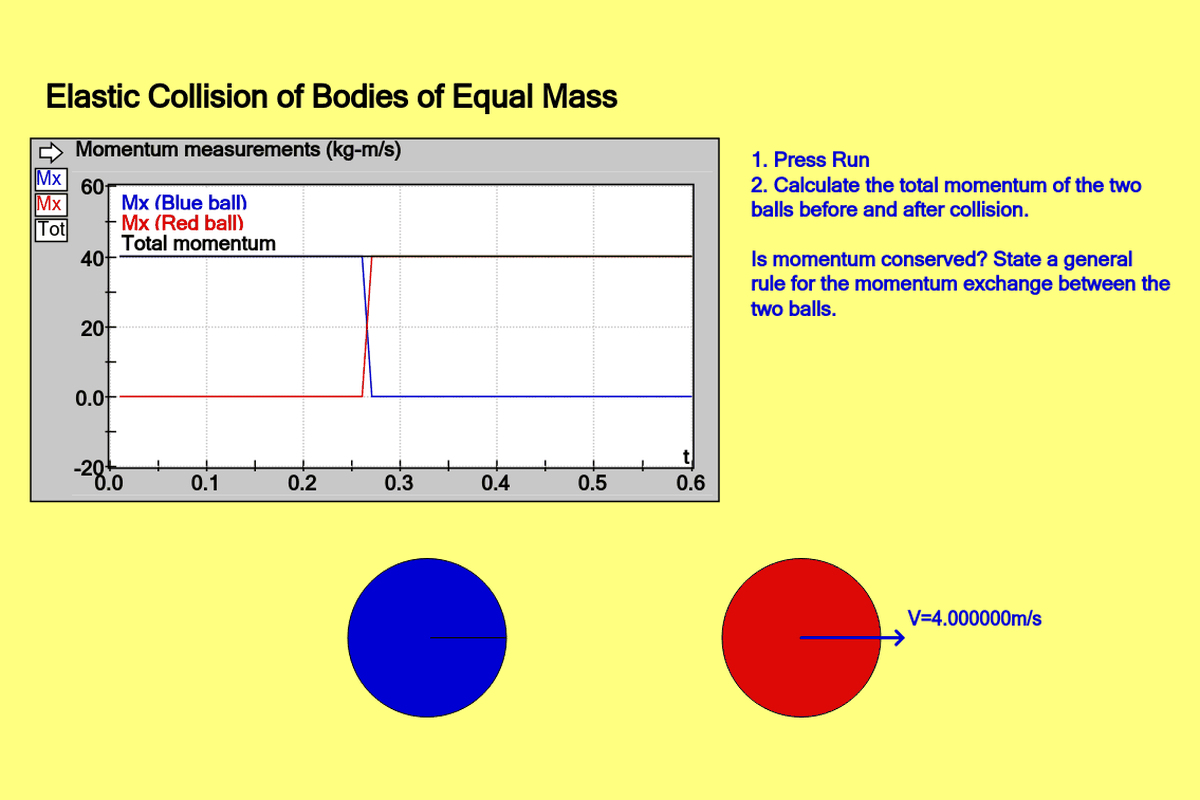
Elastic Equal-Mass Collision
Equal masses exchange velocities in an elastic hit
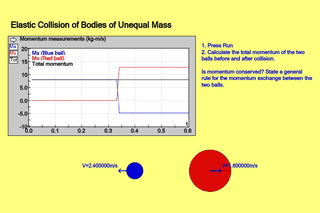
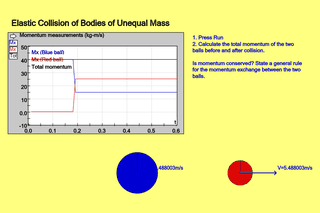
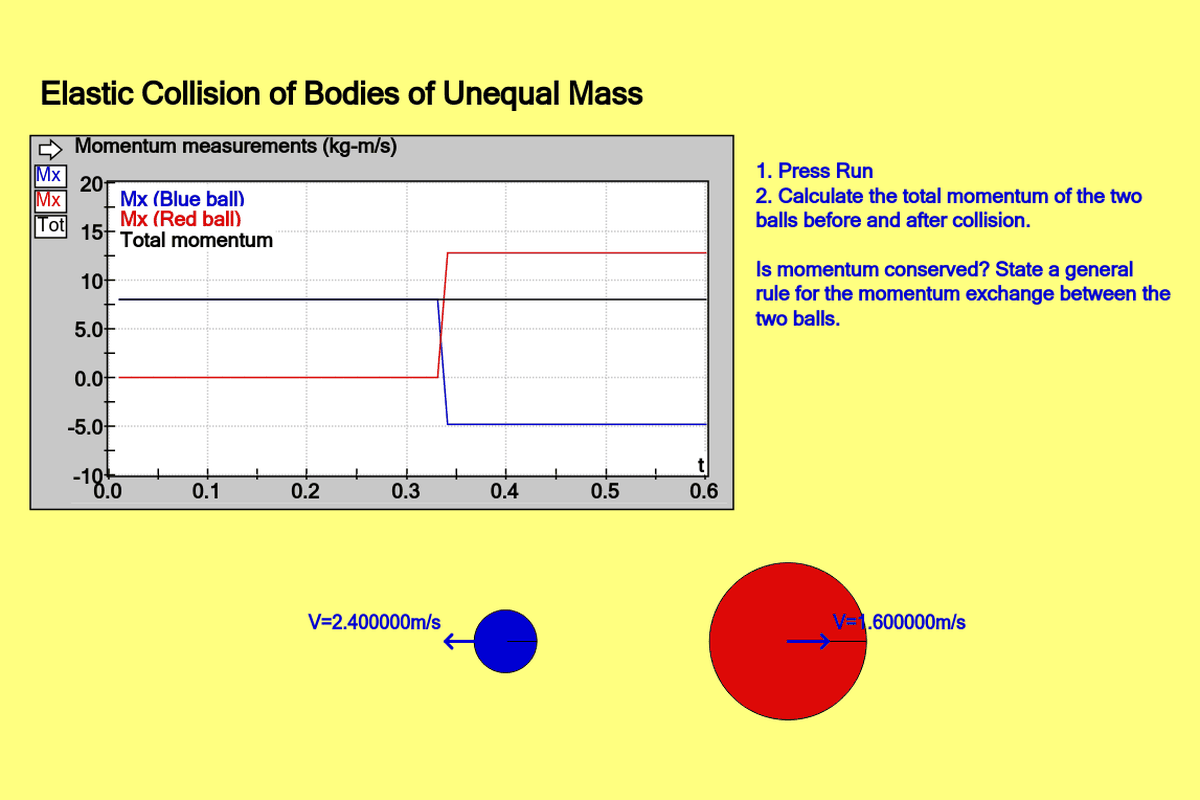
Elastic Unequal-Mass Collision 1
Elastic collision with different masses, case 1
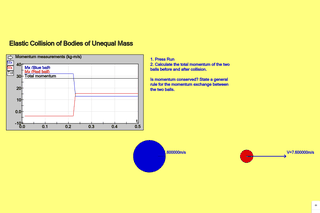
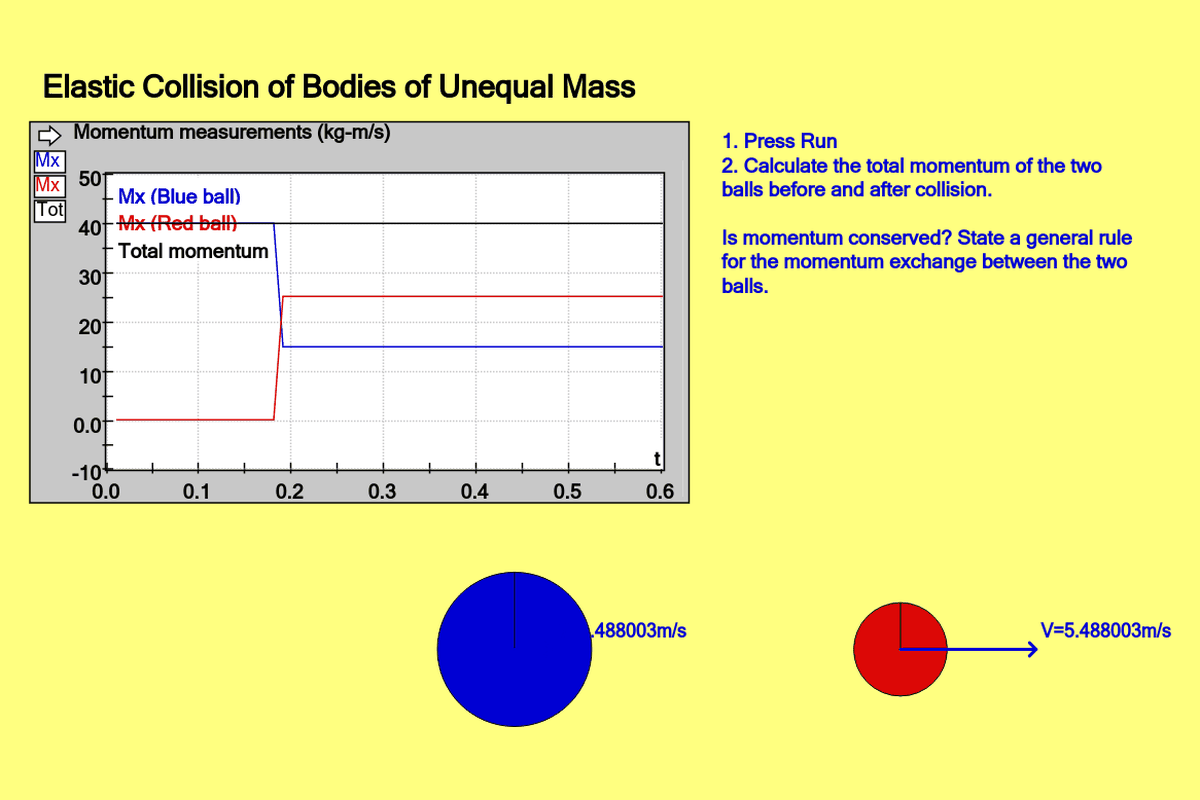
Elastic Unequal-Mass Collision 2
Elastic collision with different masses, case 2
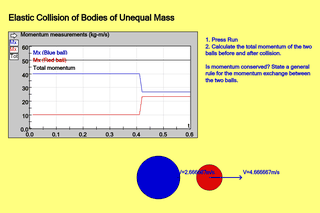
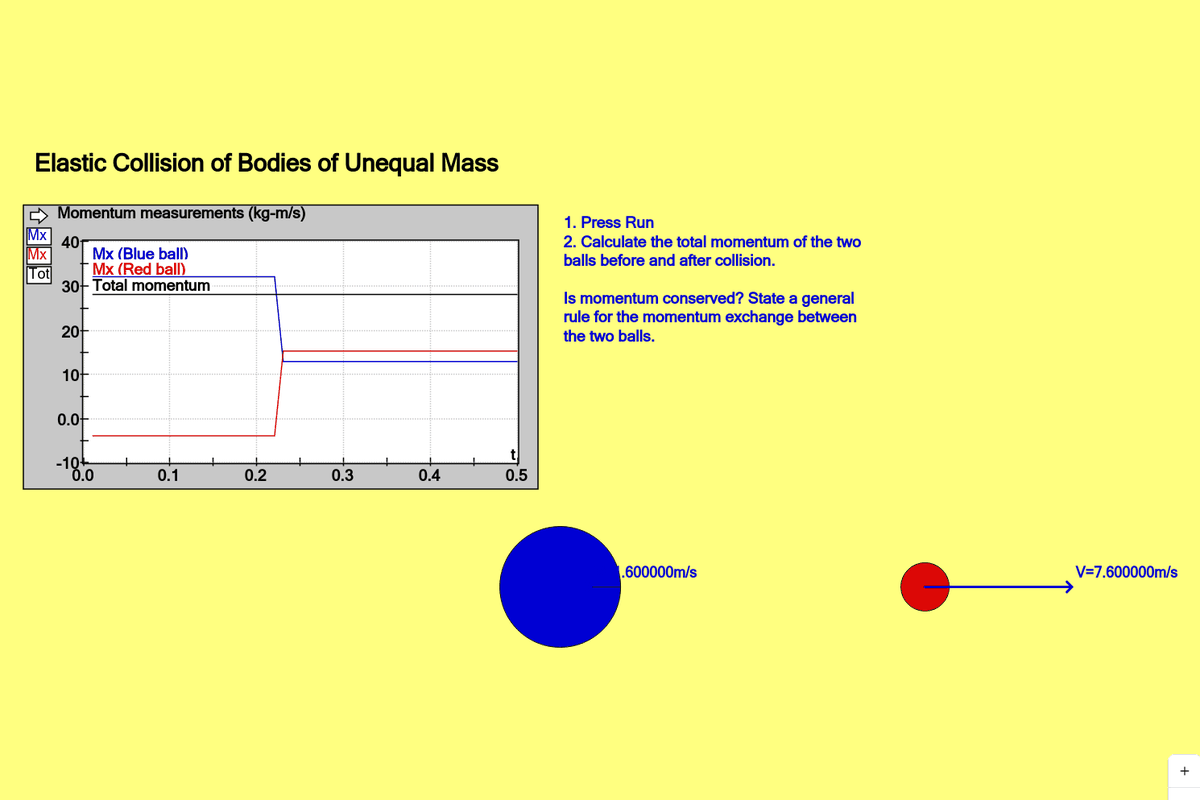
Elastic Unequal-Mass Collision 3
Elastic collision with different masses, case 3
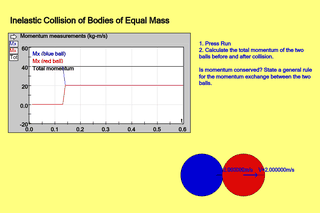
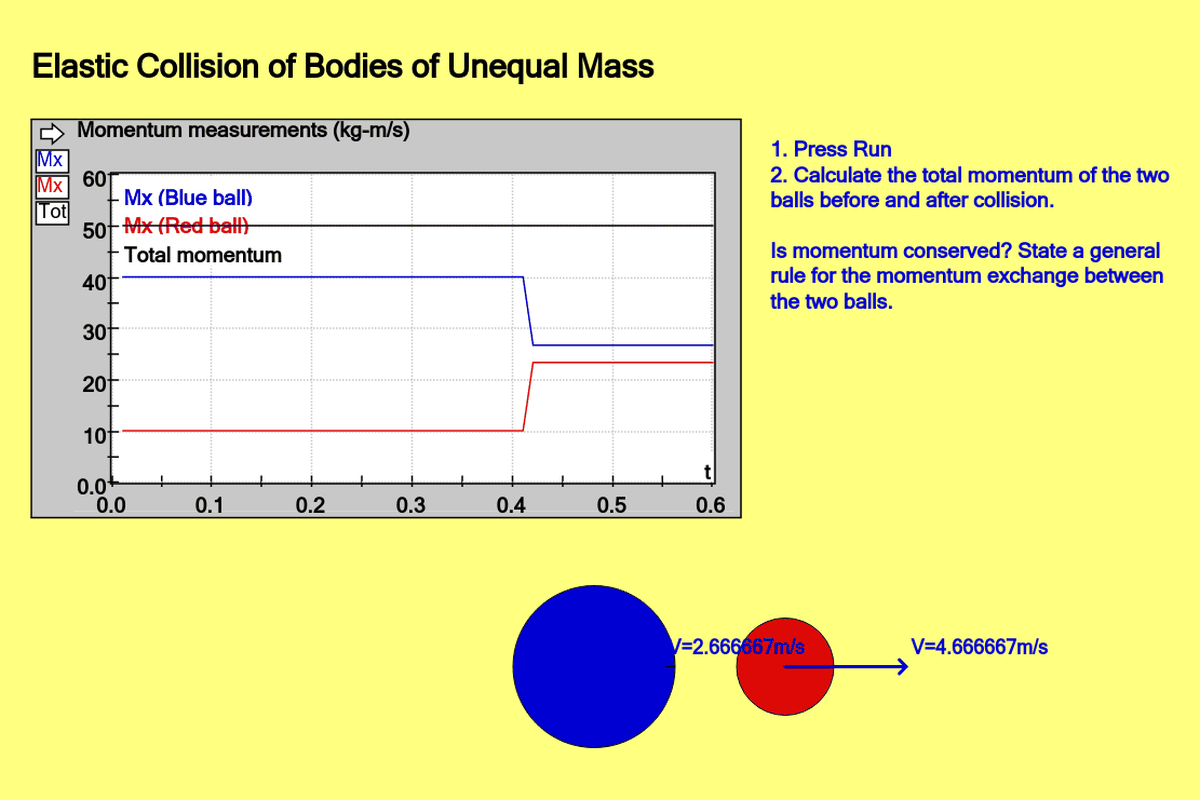
Elastic Unequal-Mass Collision 4
Elastic collision with different masses, case 4
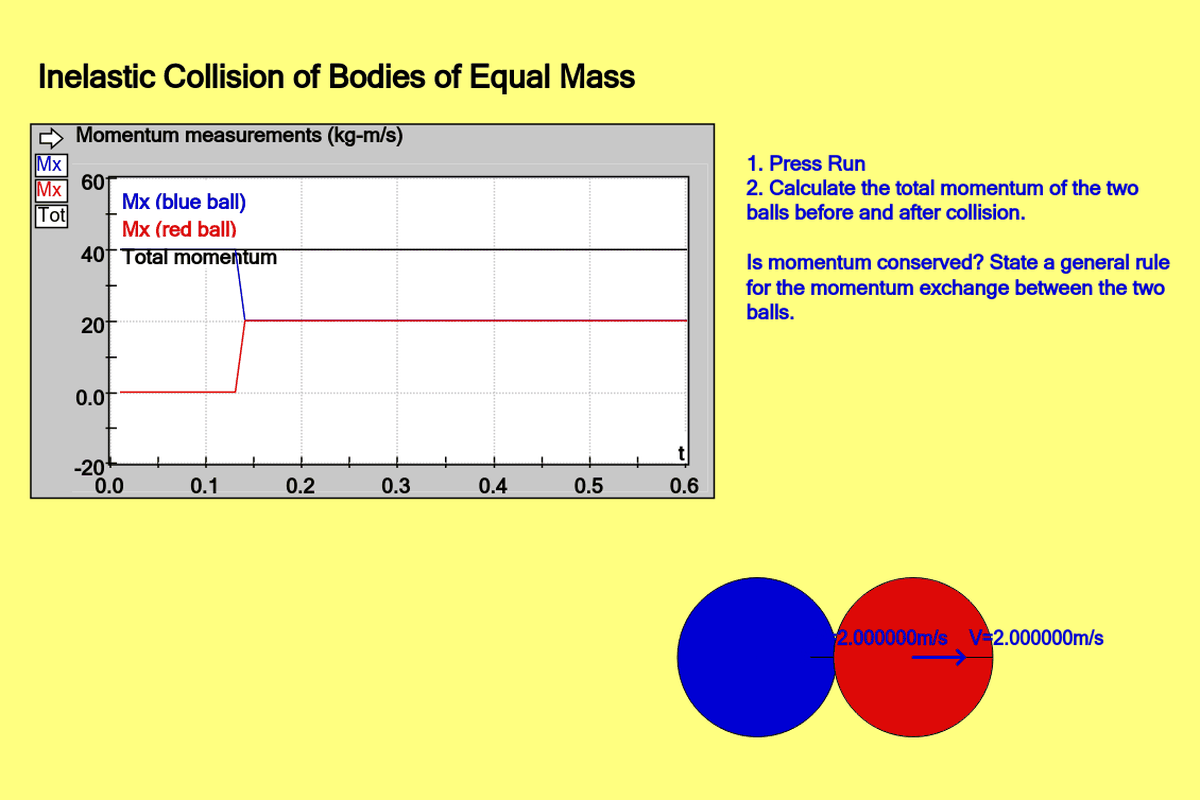
Inelastic Equal-Mass Collision
Equal masses stick together in a perfectly inelastic hit
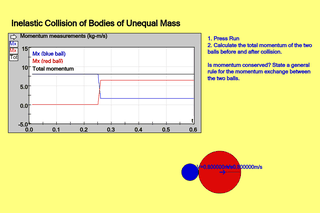
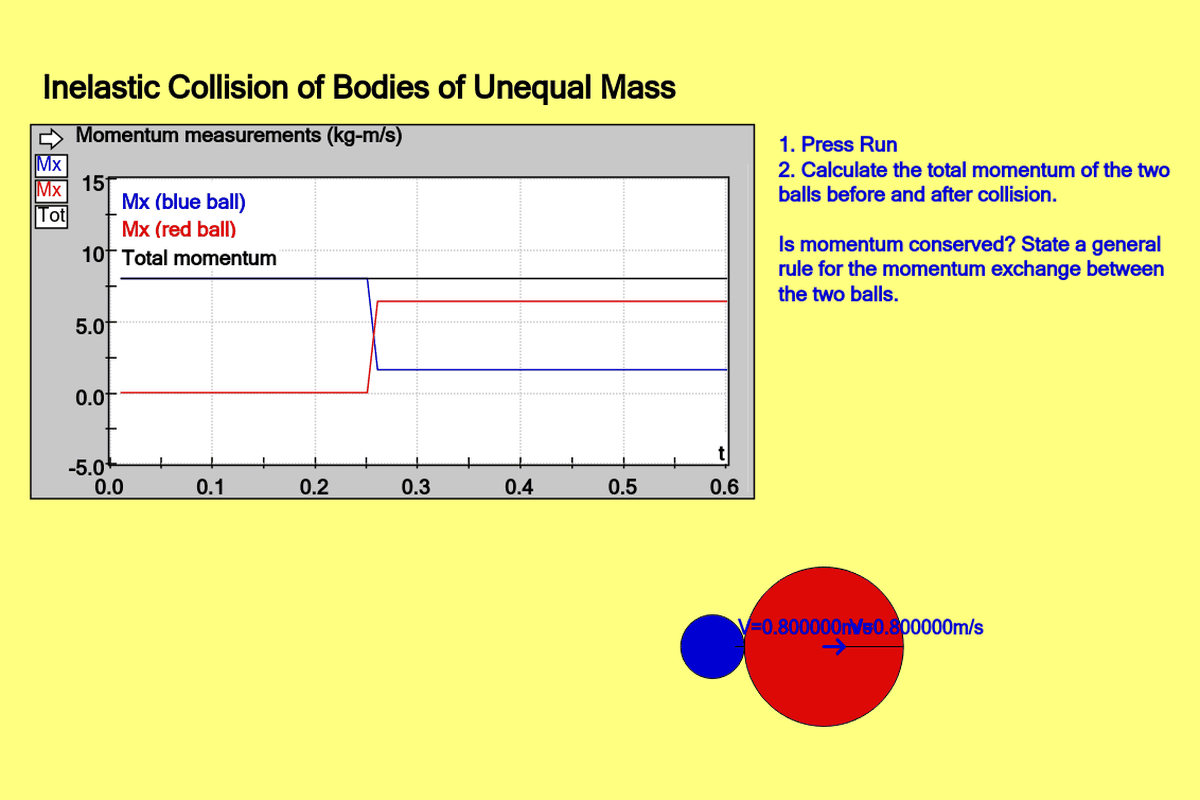
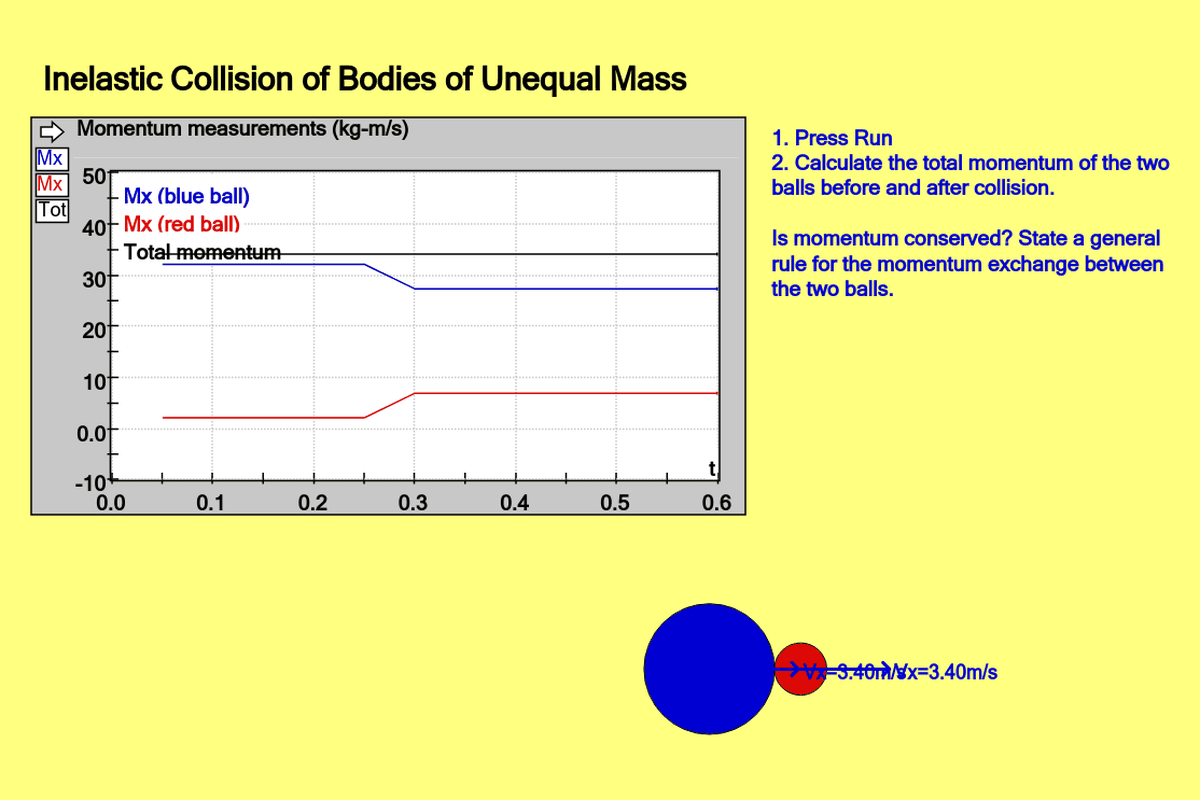
Inelastic Unequal-Mass Collision 1
Inelastic collision with different masses, case 1
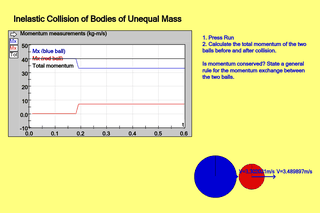
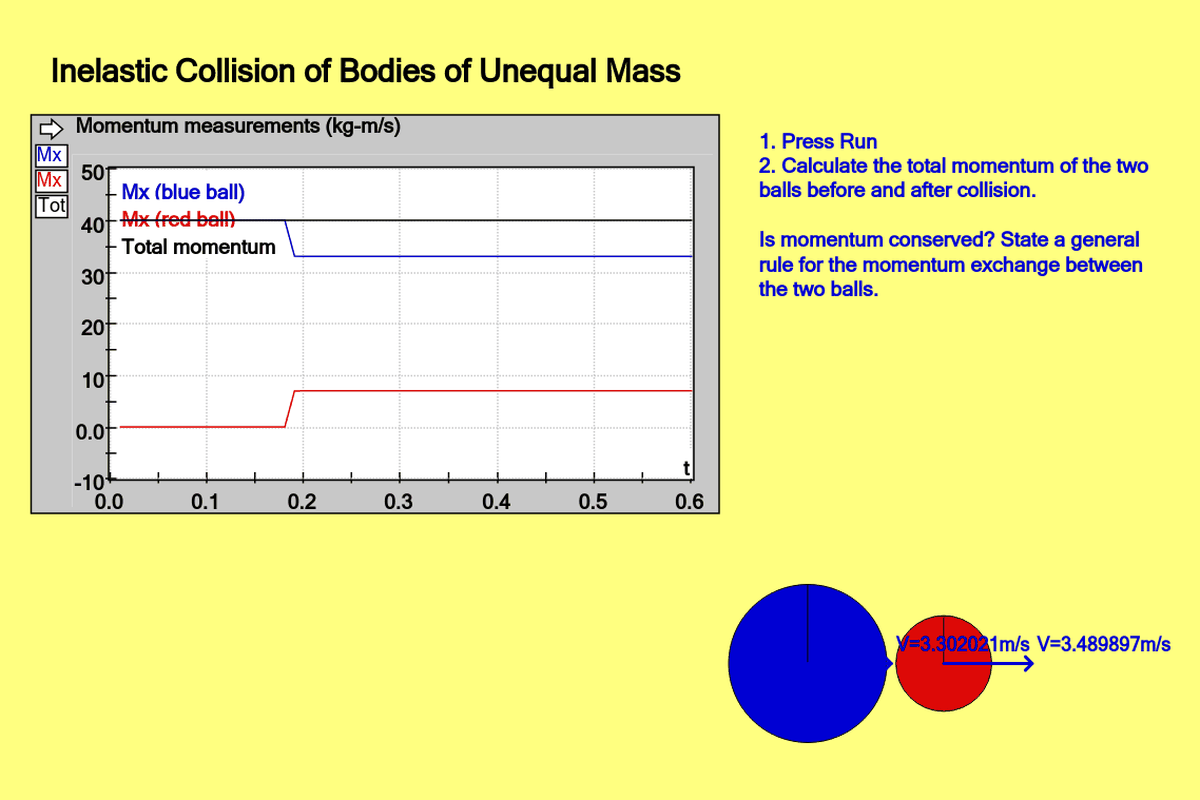
Inelastic Unequal-Mass Collision 2
Inelastic collision with different masses, case 2
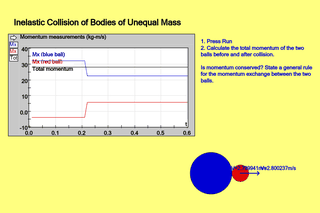
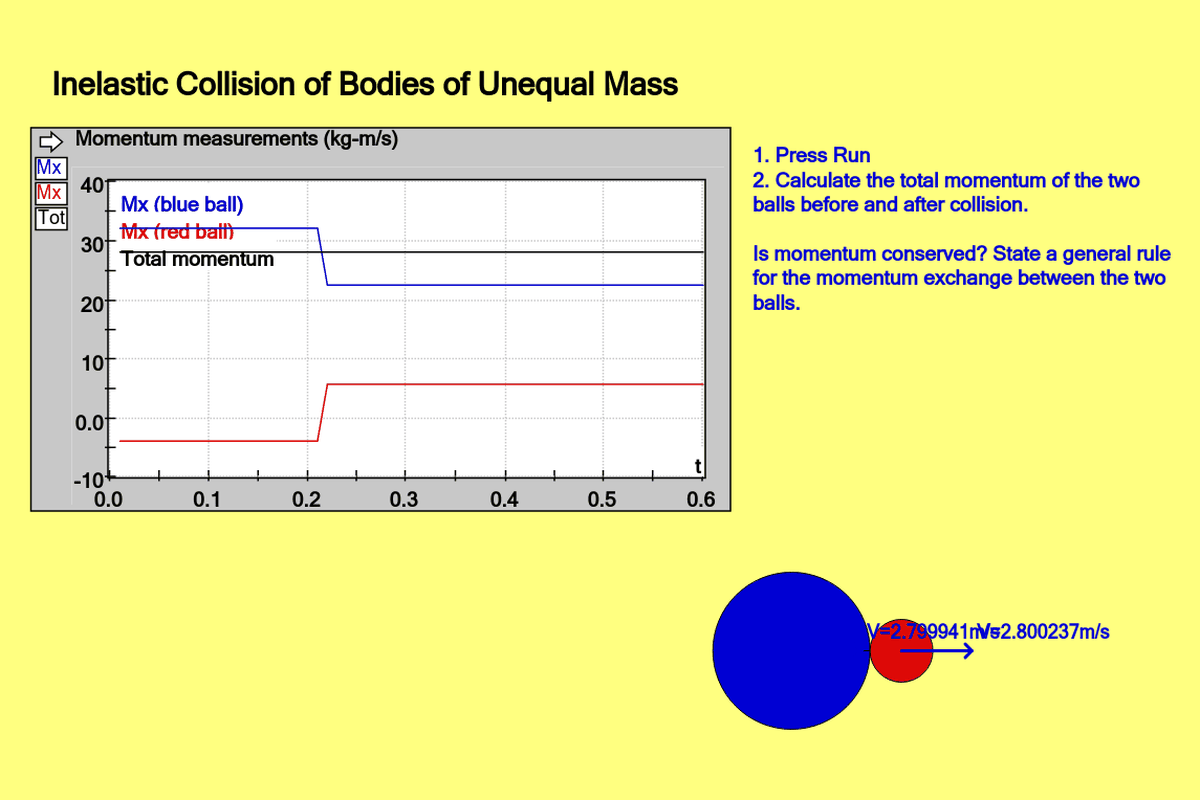
Inelastic Unequal-Mass Collision 3
Inelastic collision with different masses, case 3
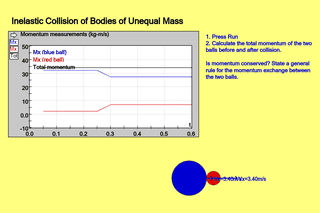
Inelastic Unequal-Mass Collision 4
Inelastic collision with different masses, case 4
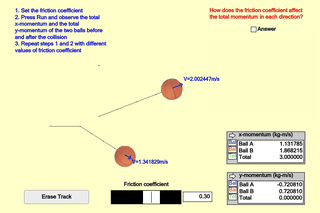
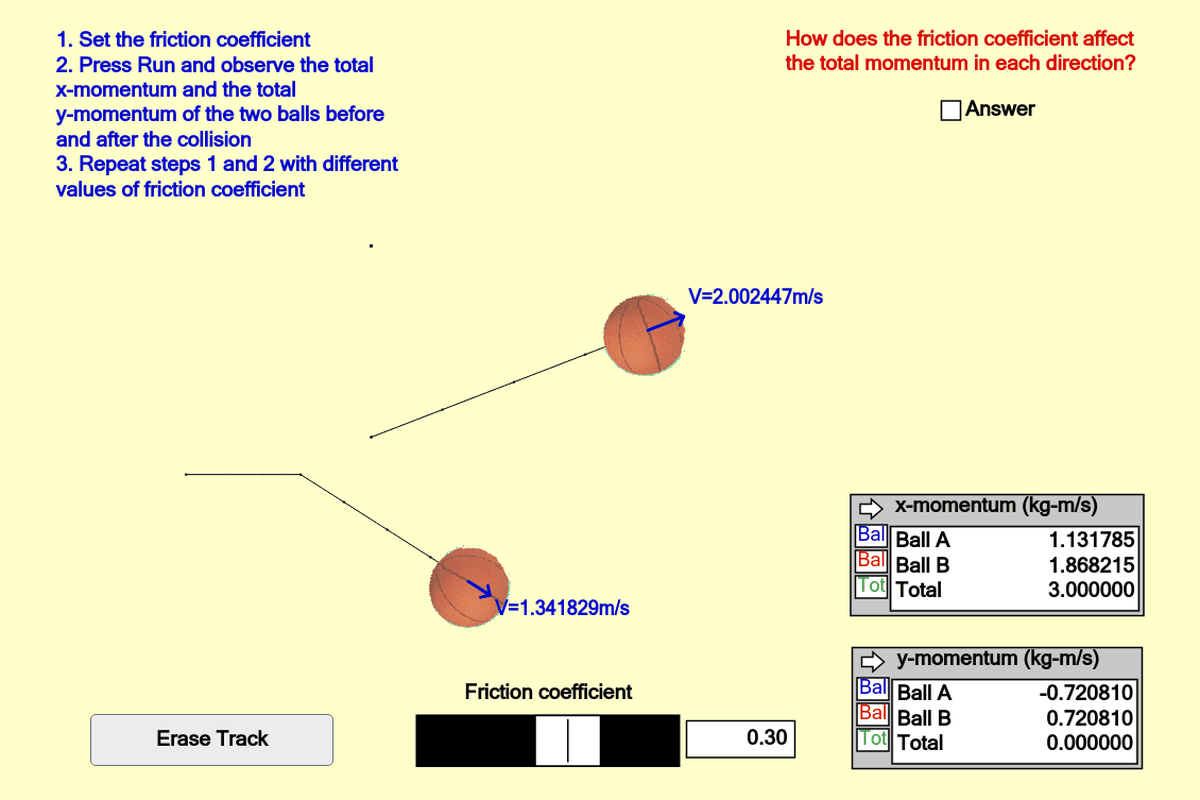
Momentum With Variable Friction
Friction gradually reduces momentum of a sliding body
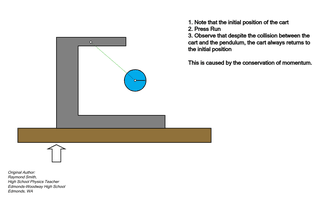
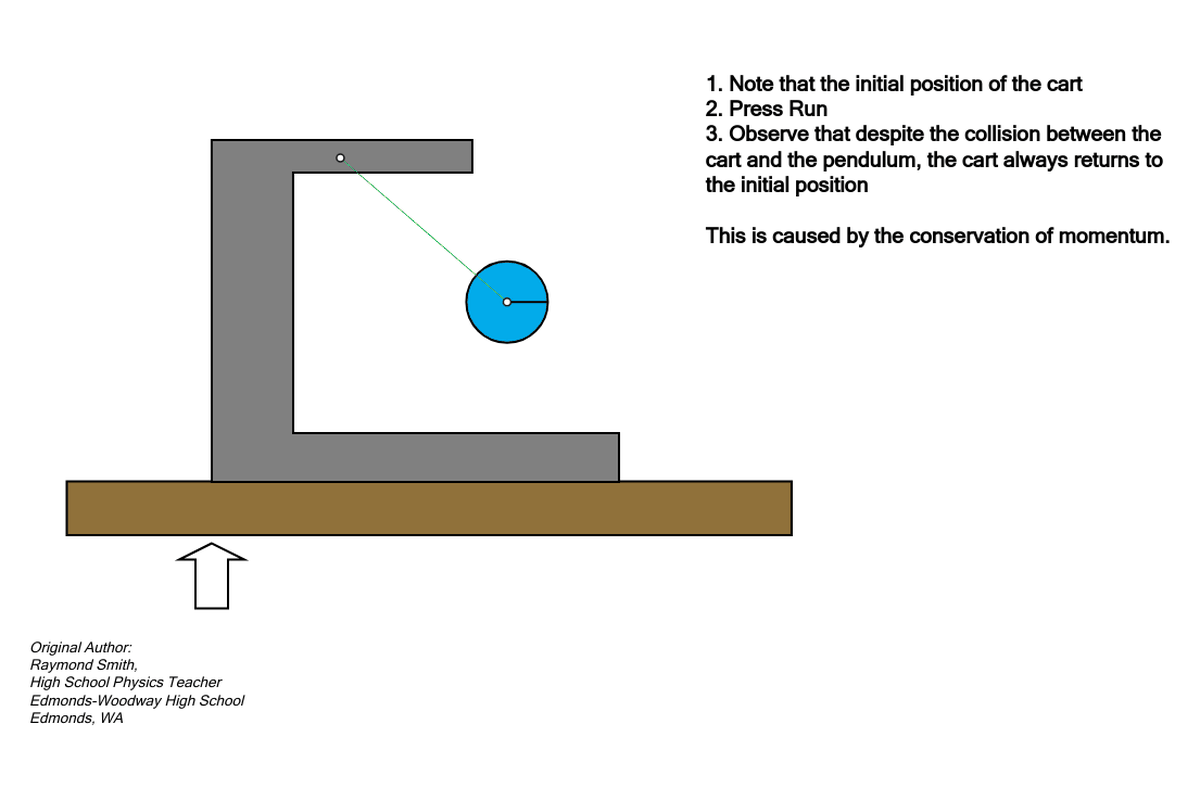
Pendulum on Cart
Pendulum swinging on a freely rolling cart
 Motion in One Dimension (8)
Study straight-line motion. Watch how position, velocity, and acceleration are linked, and how constant and non-constant forces shape trajectories along a line.
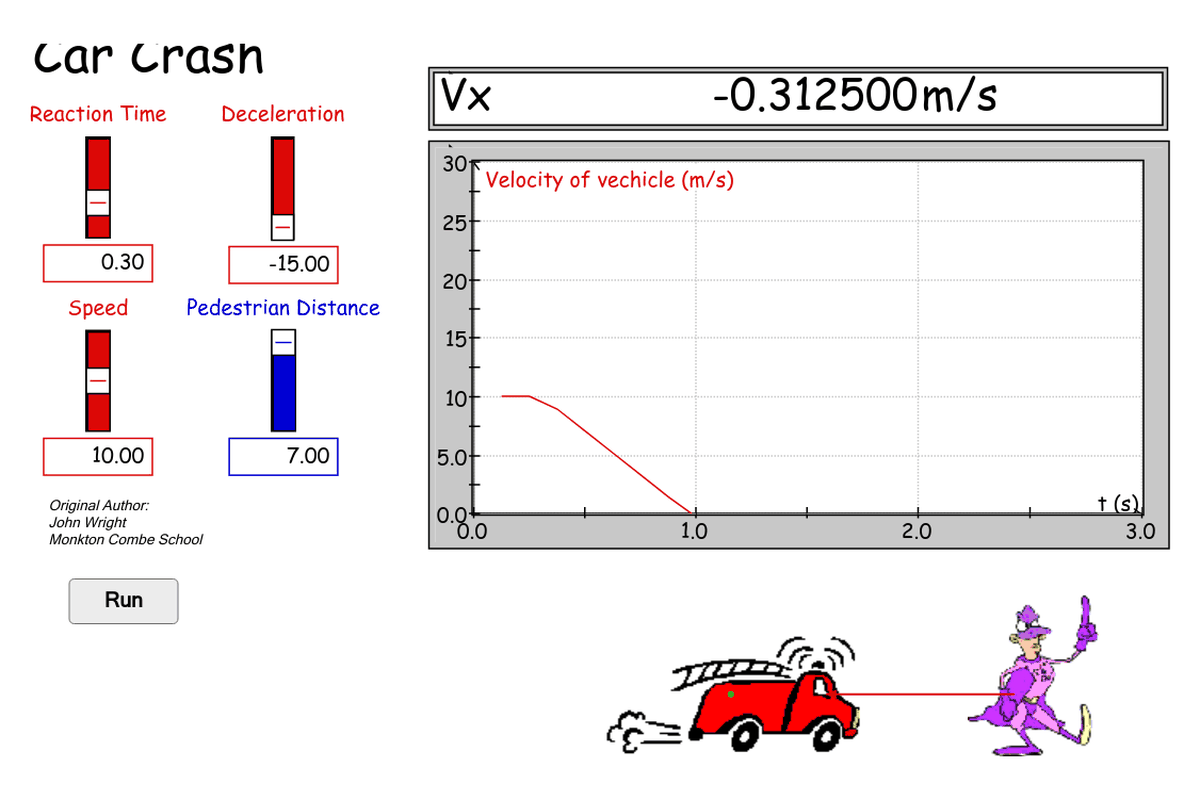
Car Crash
One-dimensional car-to-car impact
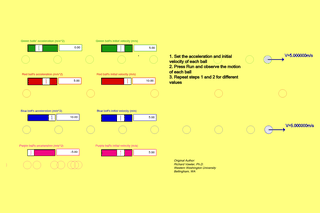
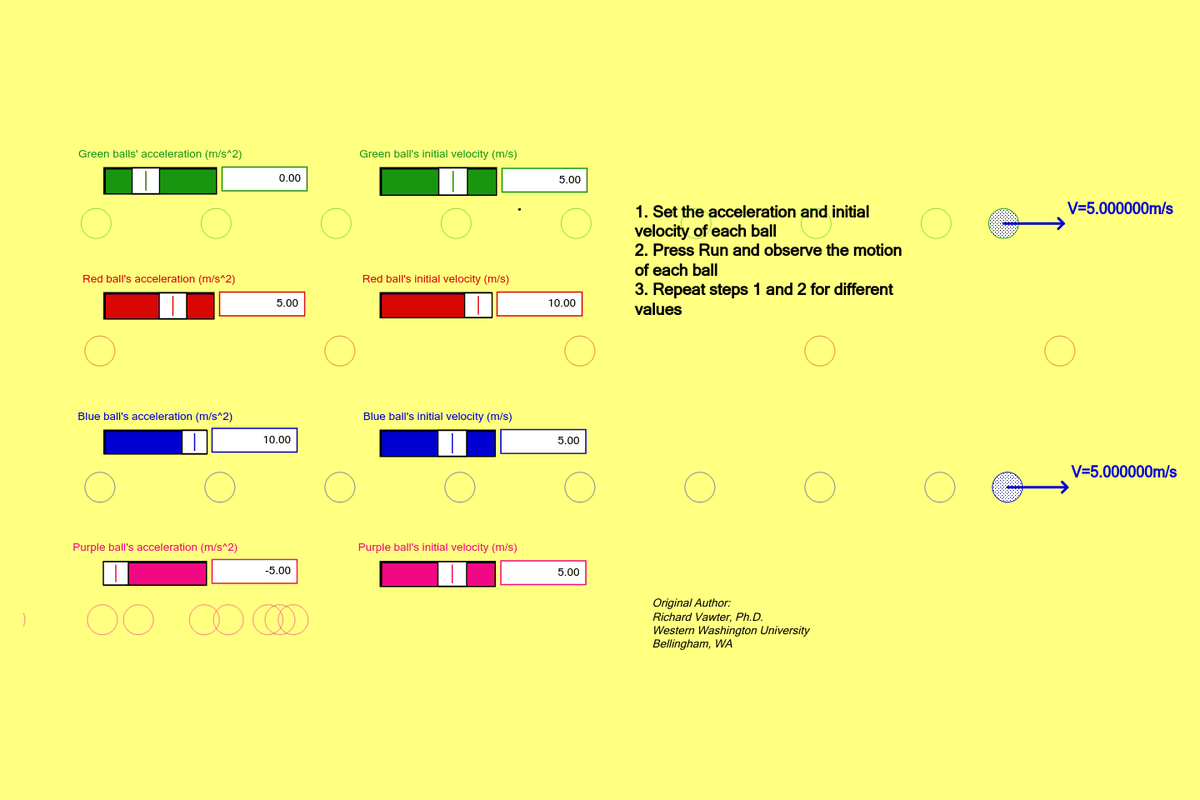
Comparisons of Accelerations
Race multiple objects with different accelerations
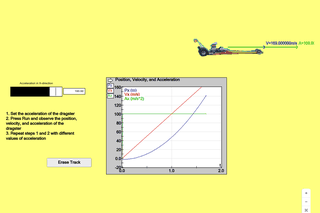
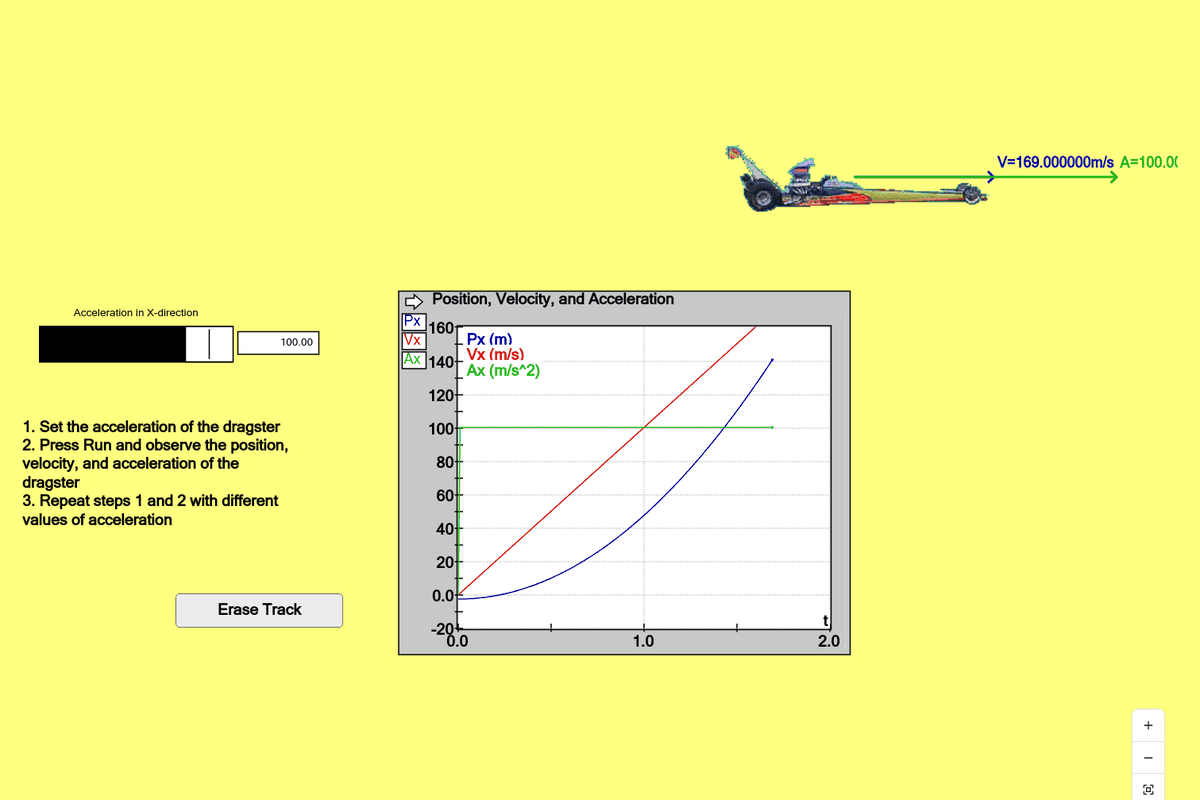
Constant Linear Acceleration
Uniform acceleration producing a parabolic position curve
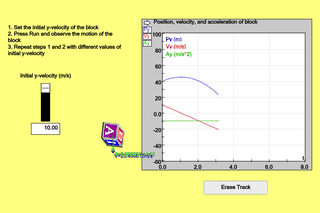
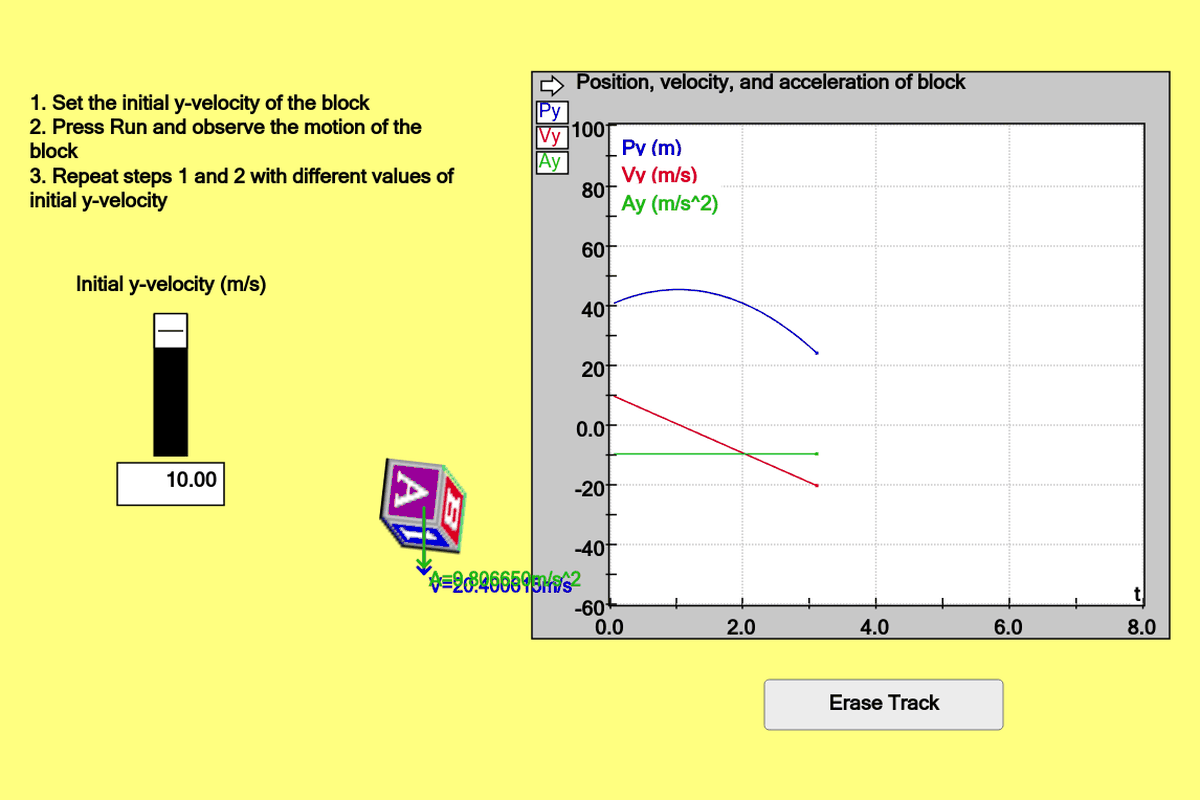
Falling Body
Free fall under gravity with no air resistance
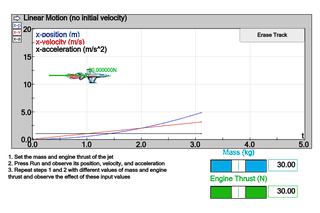
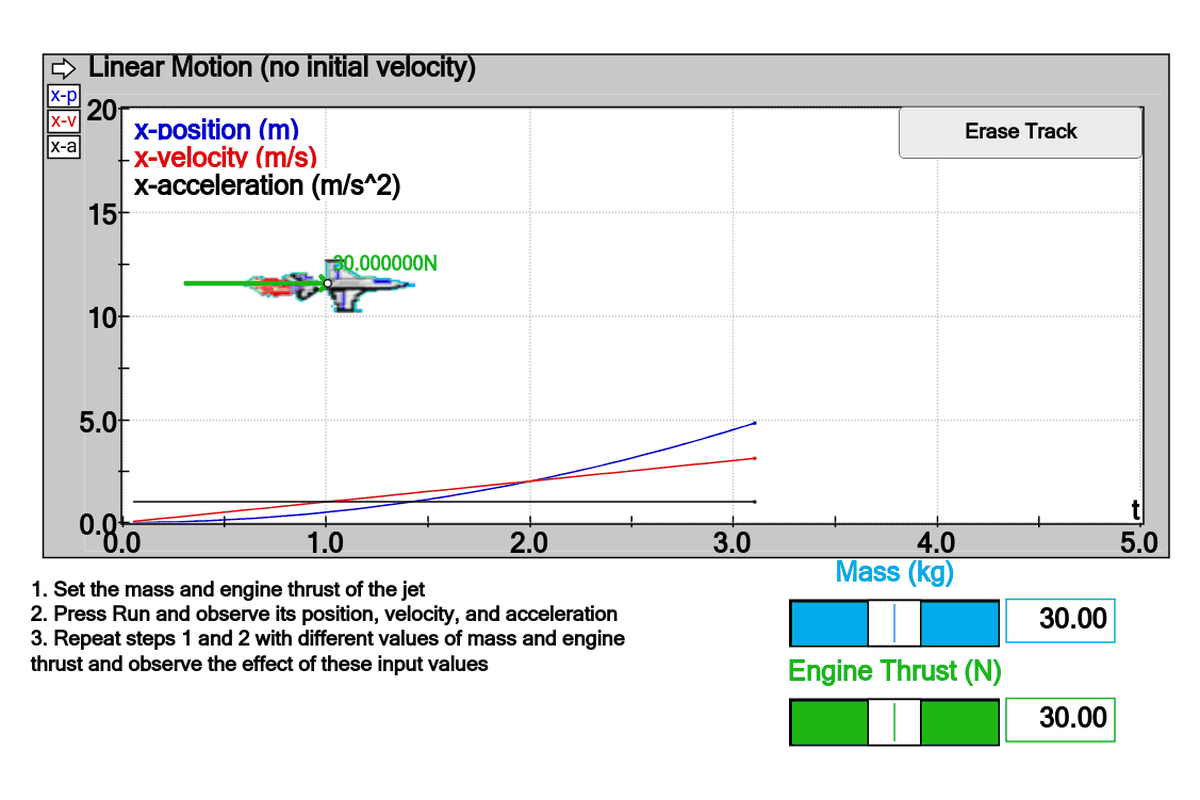
Linear Motion of Jet
Straight-line motion of an accelerating jet
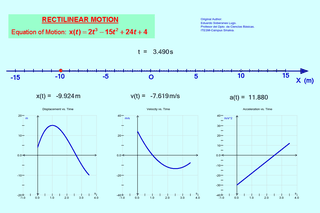
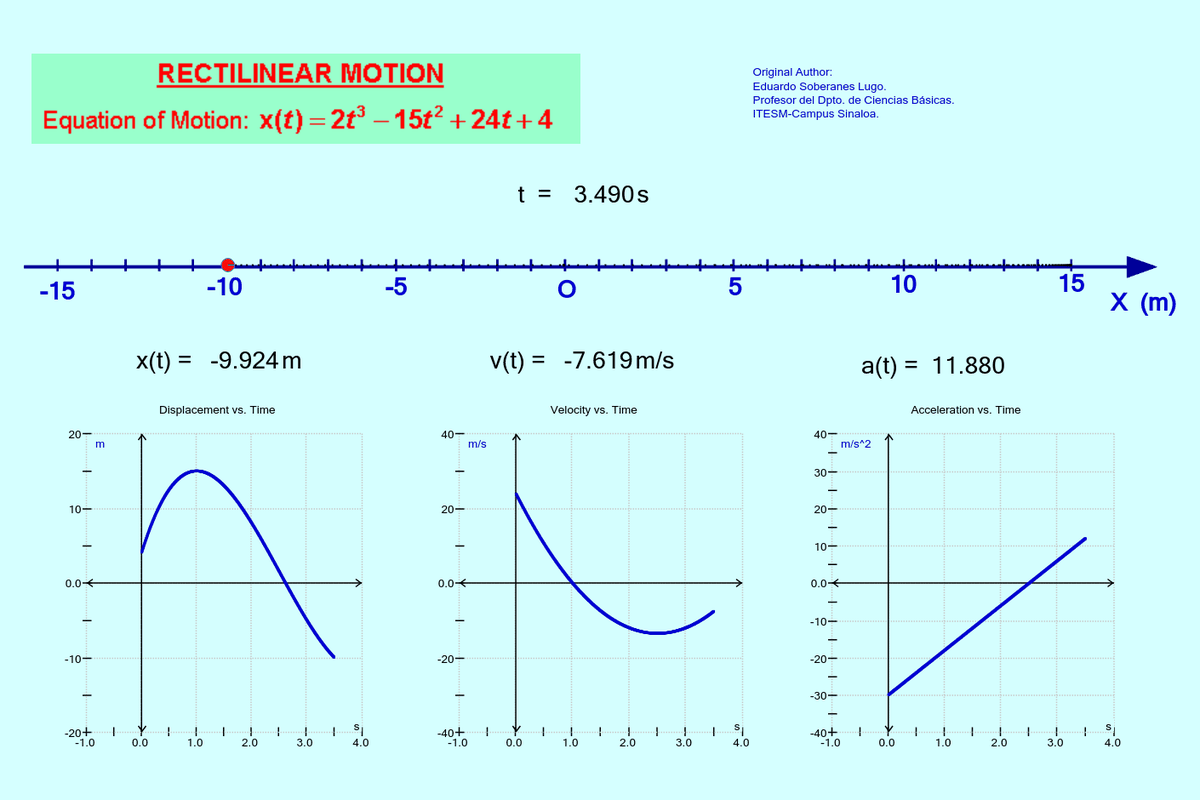
Rectilinear Movement
Plot position, velocity, and acceleration over time
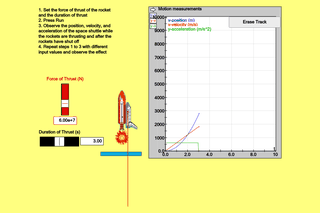
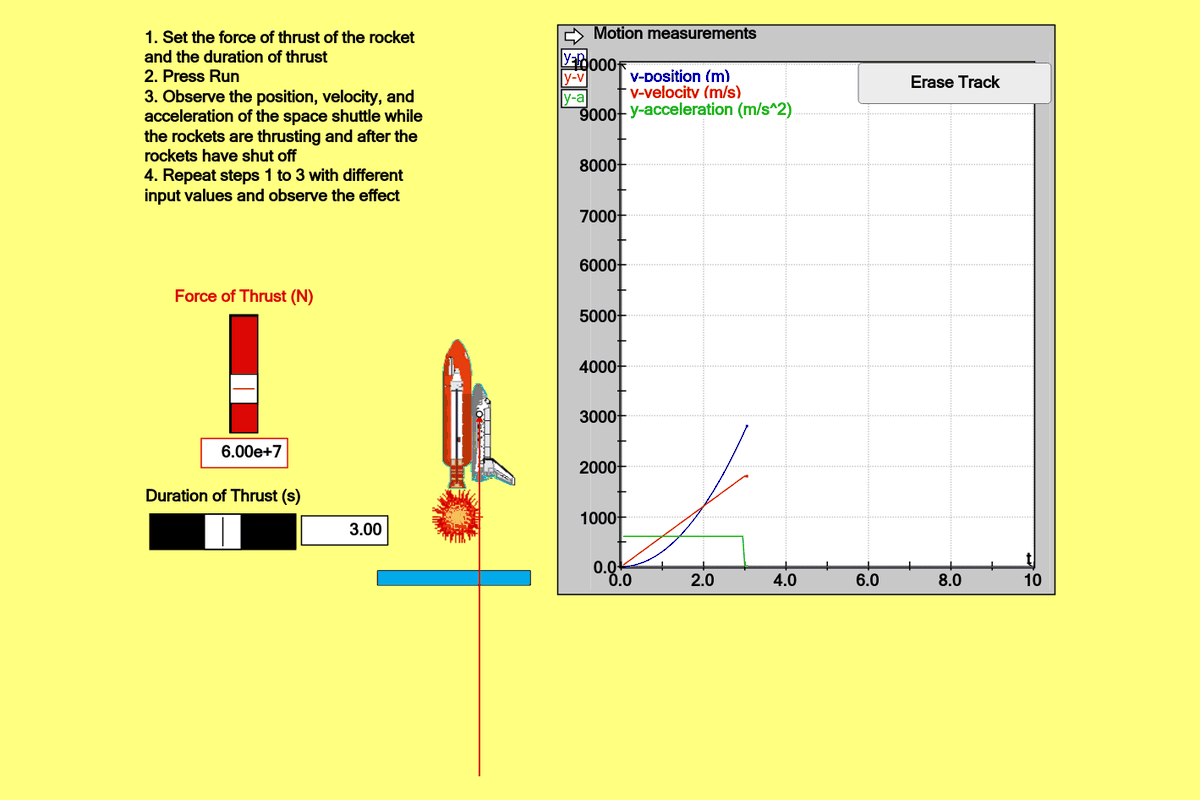
Space Shuttle
Shuttle launch kinematics
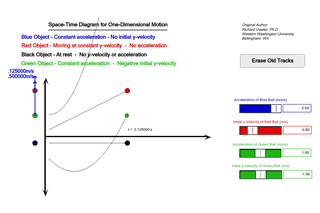
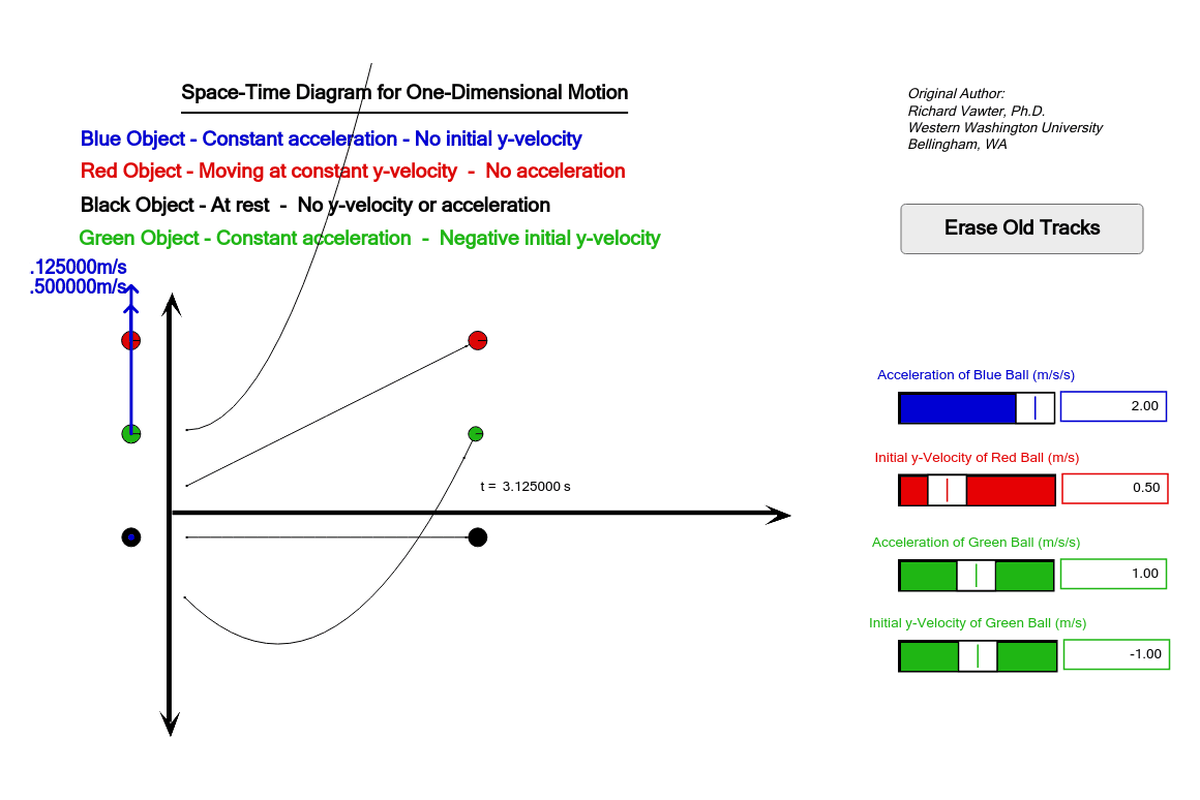
Space-Time Diagram
Graph position vs time for different motions
 Motion in Two Dimensions (5)
Decompose motion into independent x and y components. See how horizontal and vertical motion combine into curved trajectories.
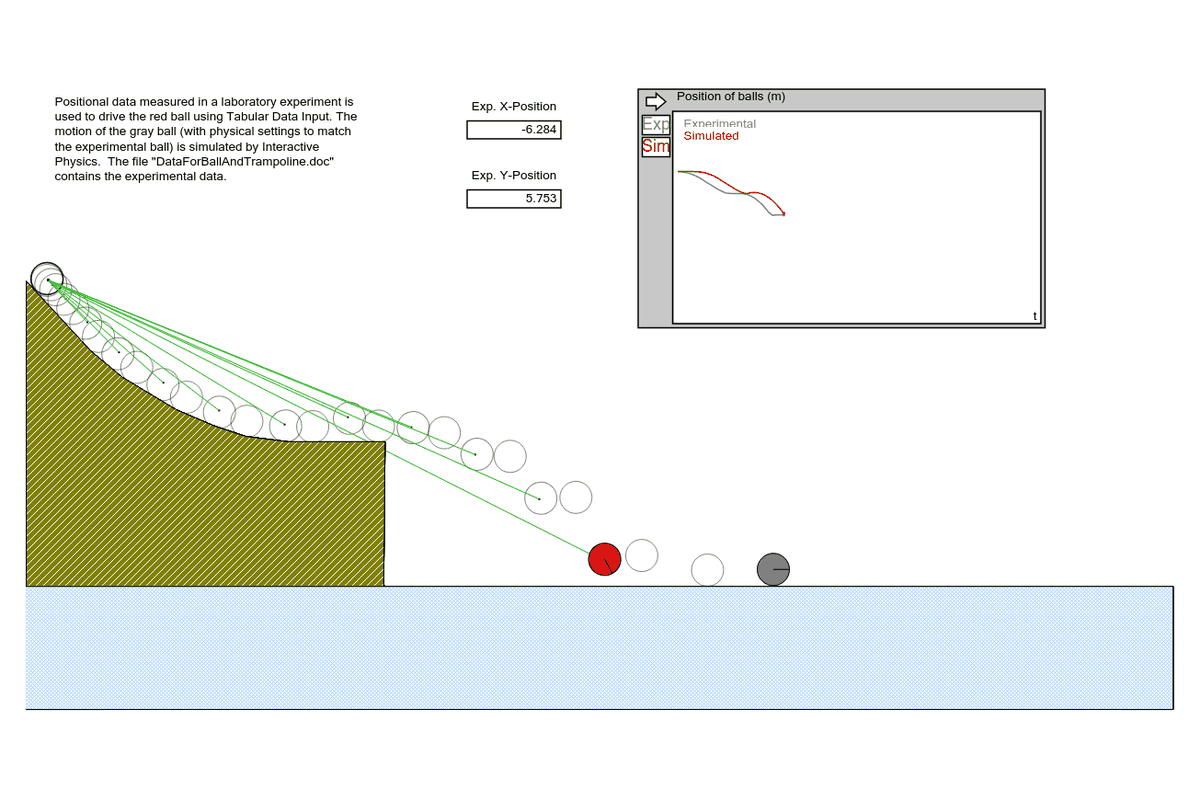
Ball and Trampoline
Ball bouncing on a flexible trampoline surface
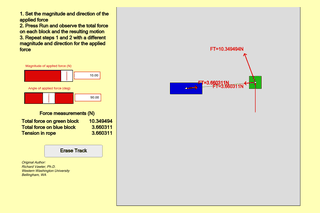
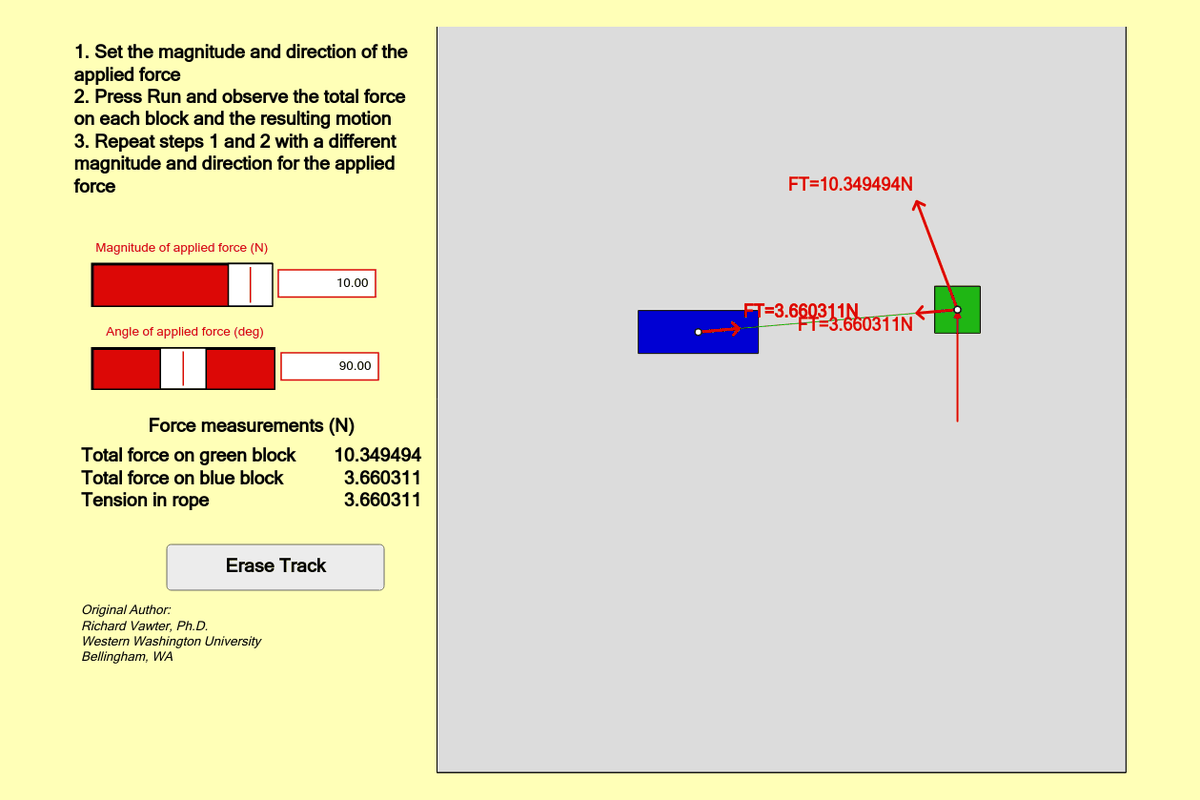
Rope-Joined Blocks
Two blocks connected by a rope moving in 2D
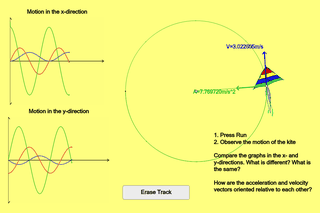
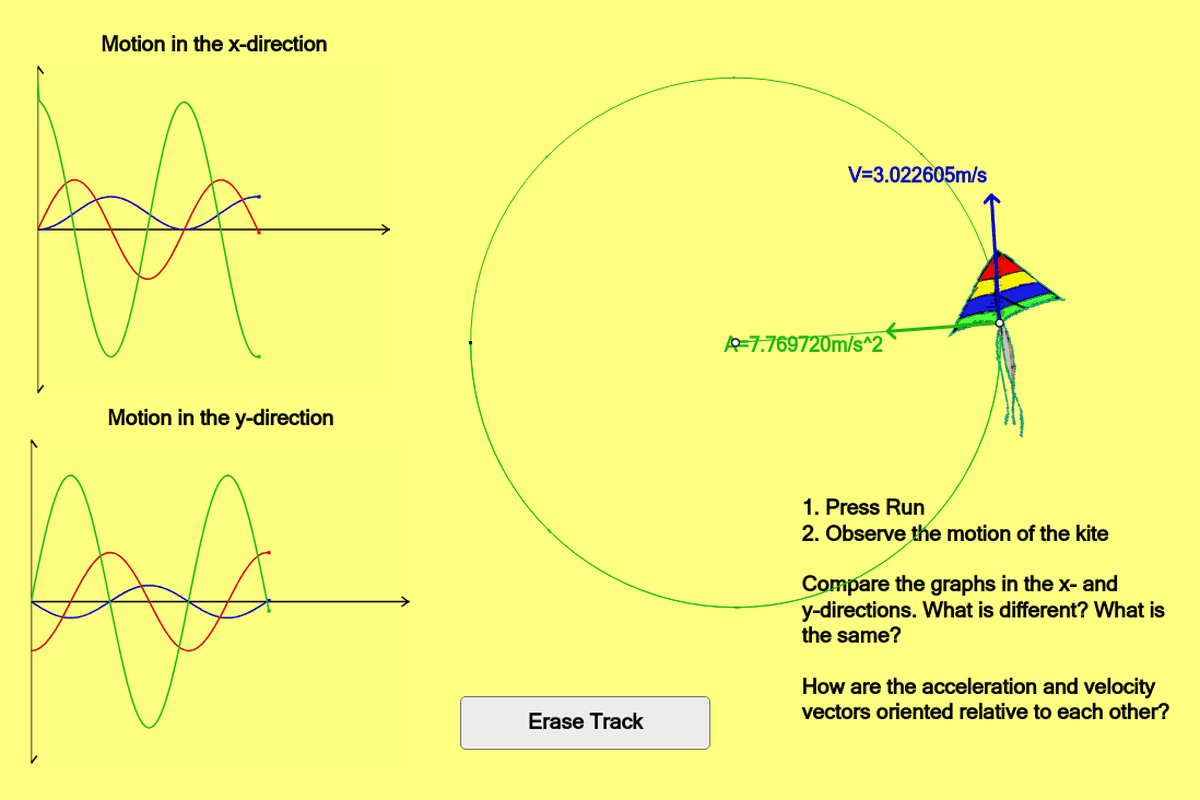
Uniform Circular Motion
Constant-speed circular motion with centripetal force
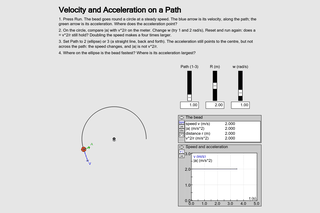
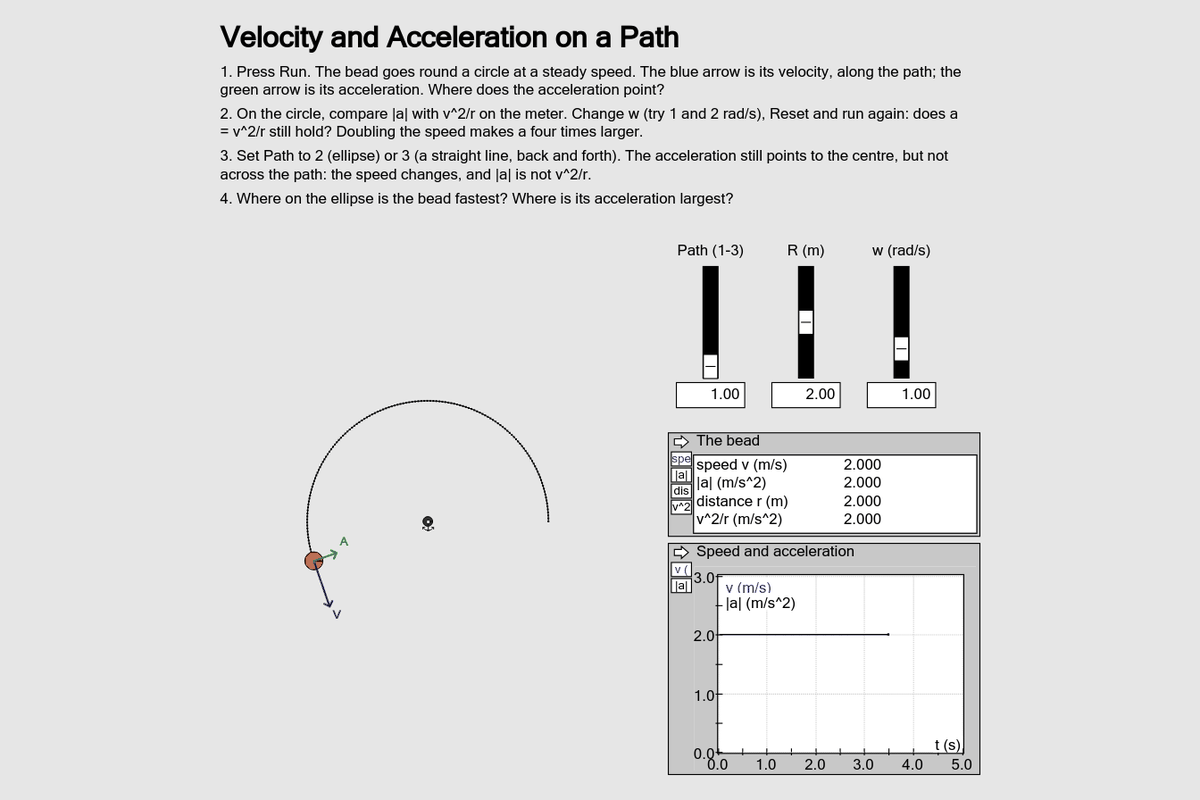
Velocity and Acceleration on a Path
A bead on a circle, ellipse or line with its velocity and acceleration arrows; on a circle a = v^2/r
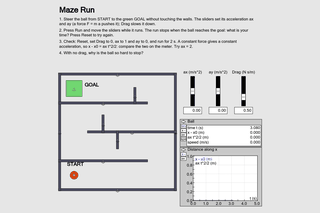
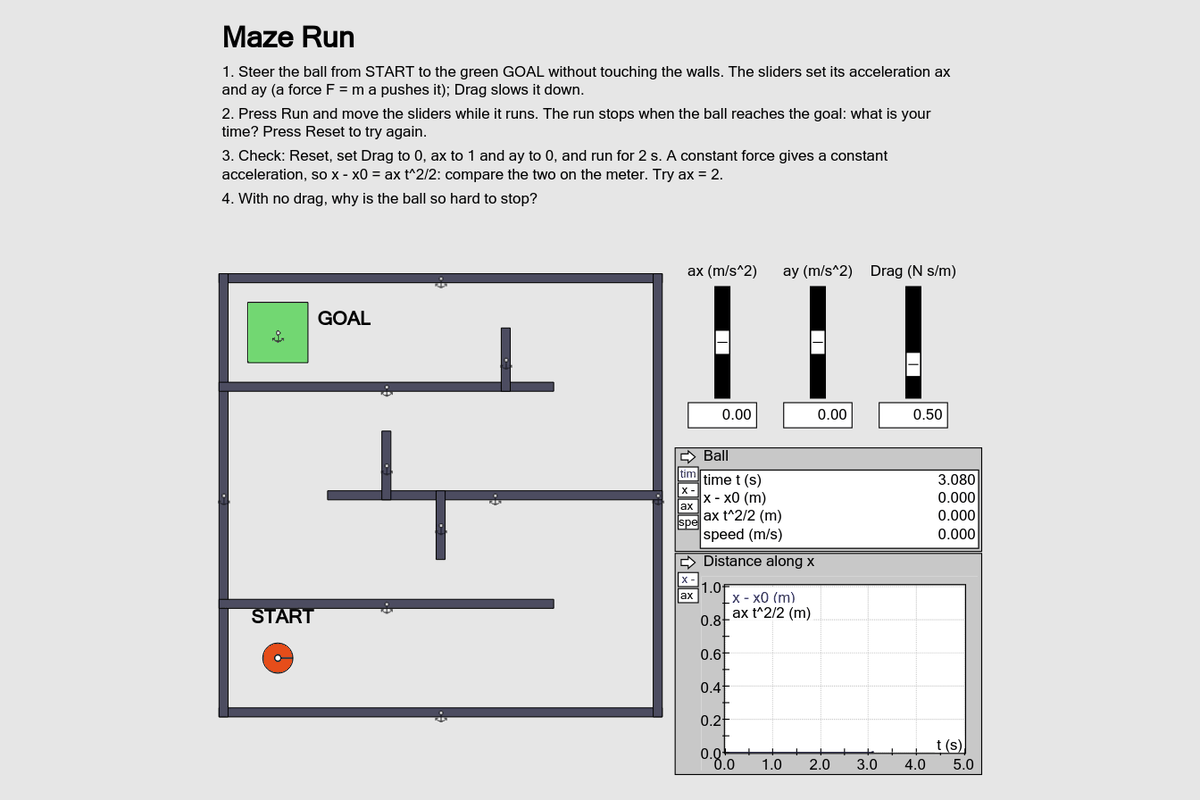
Maze Run
Steer a ball through a maze by setting its acceleration, and time the run
 Newton's Laws (4)
The foundational principles of classical mechanics. Explore inertia, force-acceleration proportionality, and equal-and-opposite interactions.
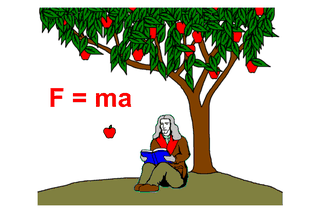
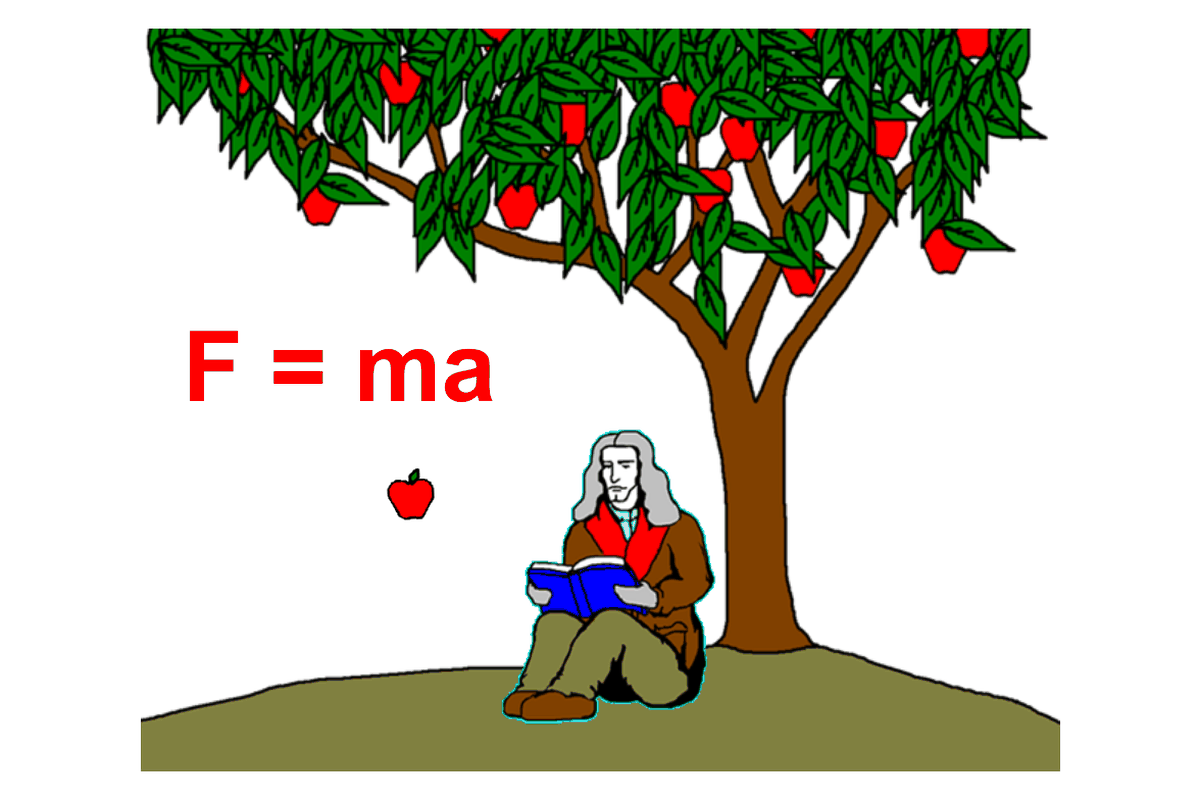
Newton and Apple
Apple falling under gravity — Newton's famous insight
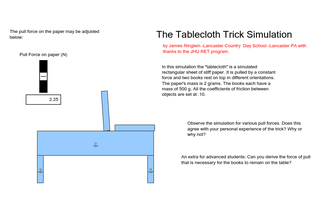
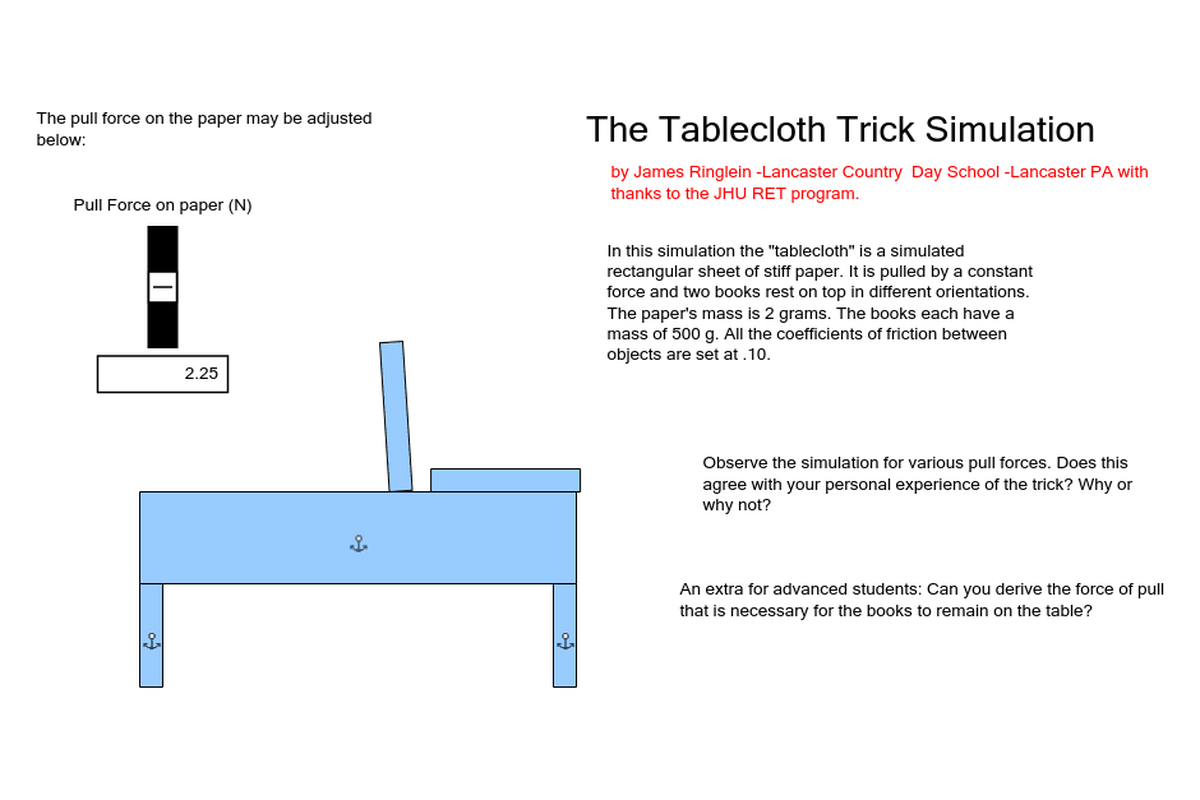
Tablecloth Trick
Inertia demonstration: yank a cloth from under dishes
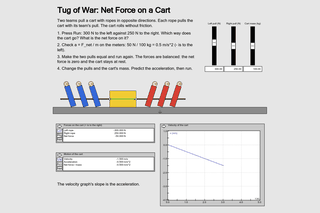
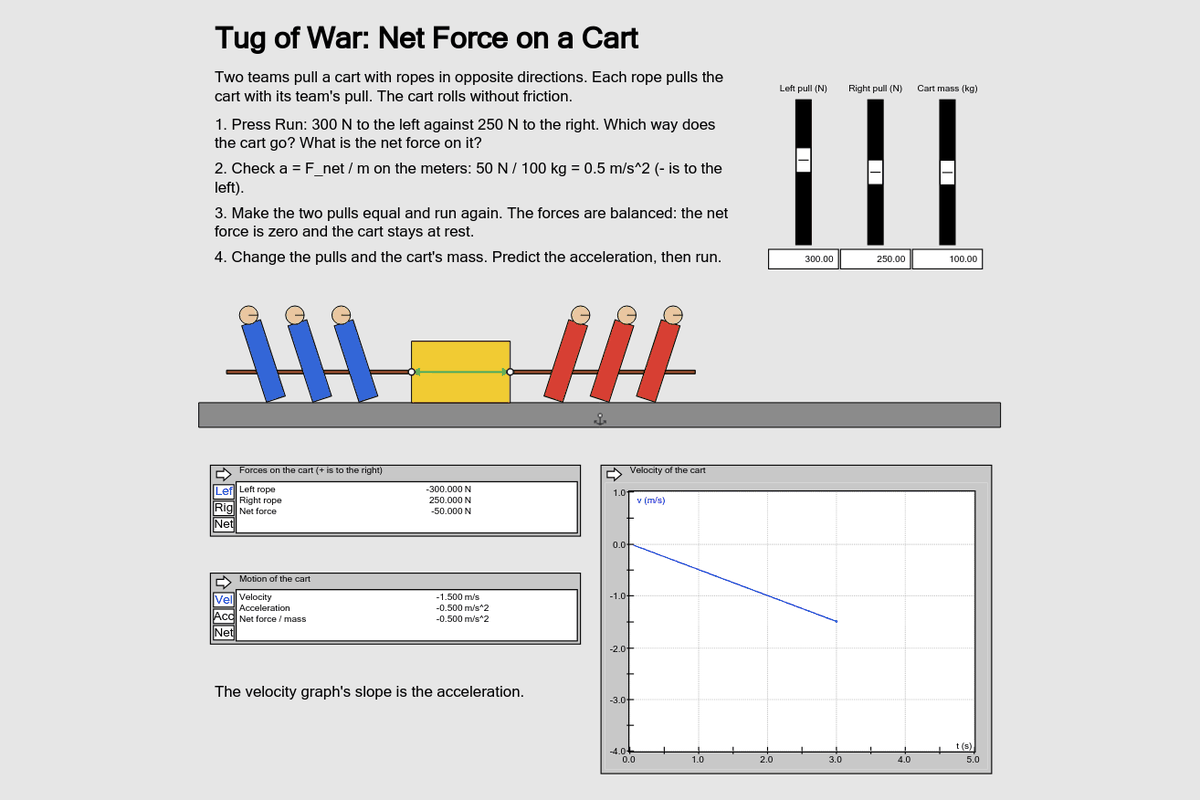
Tug of War
Two teams pull a cart; it speeds up toward the stronger team with a = (F1 - F2)/m
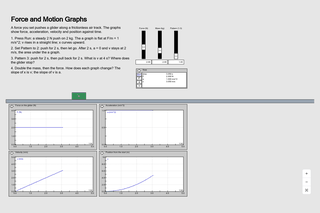
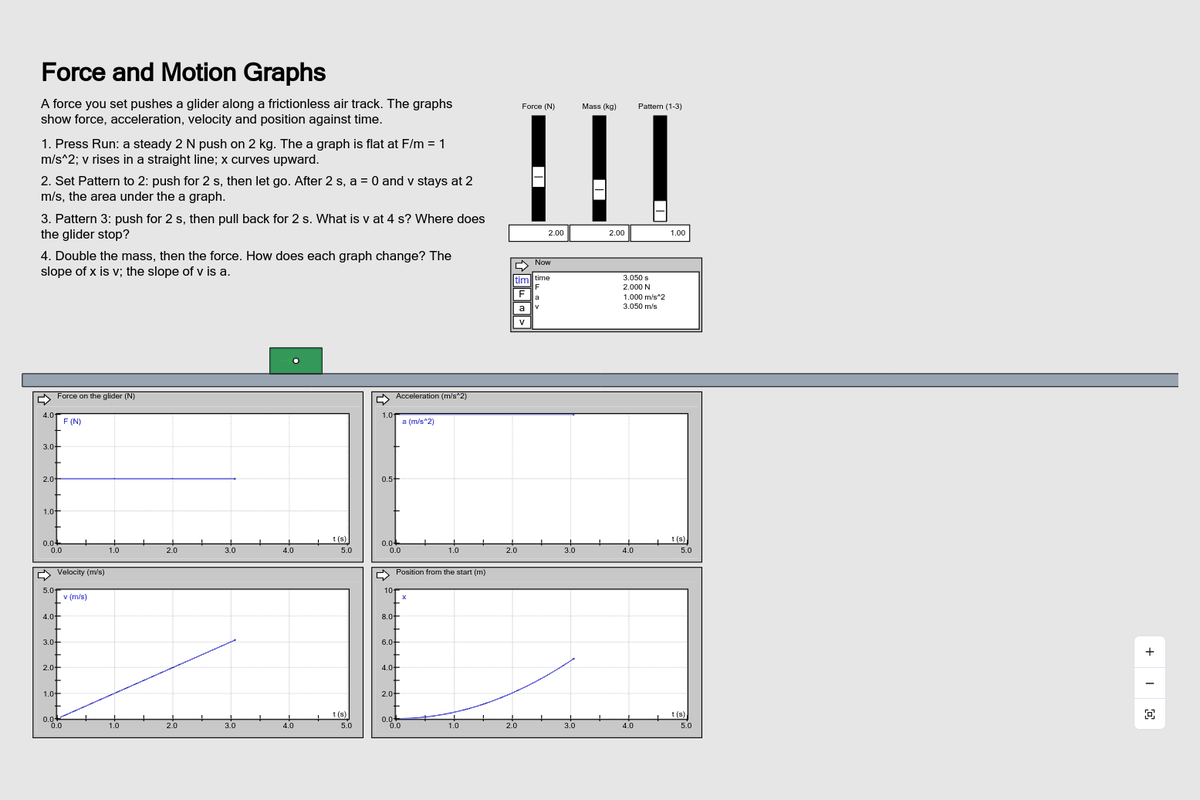
Force and Motion Graphs
Set a force and read force, acceleration, velocity and position against time
 Nuclear Physics (2)
Visualize nuclear interactions and particle behavior. Bring atomic-scale phenomena to life with mechanical-style simulations.
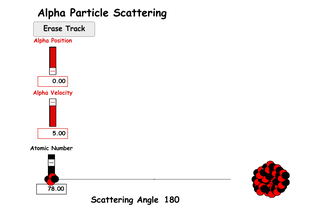
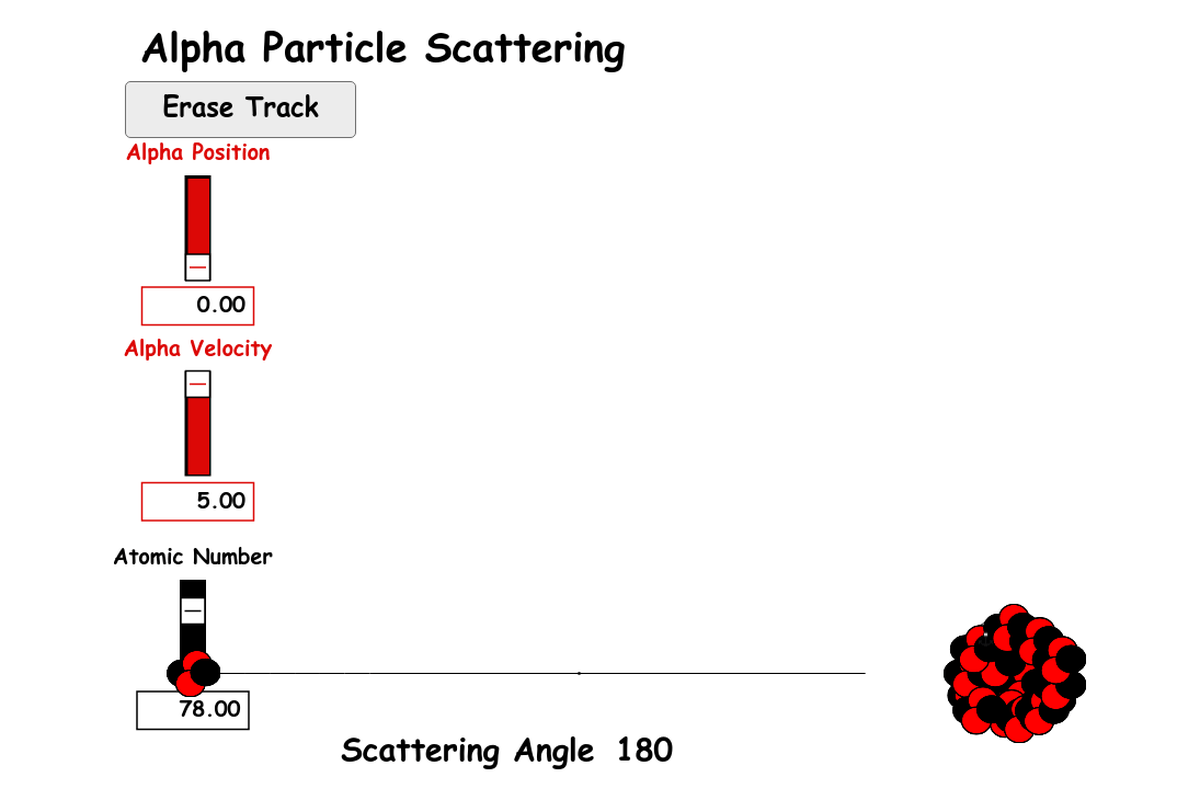
Alpha Particle Scattering
Rutherford's experiment — alpha particles scattering from a nucleus
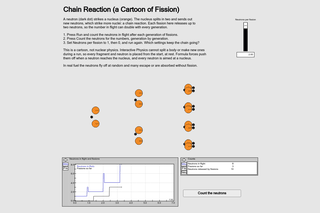
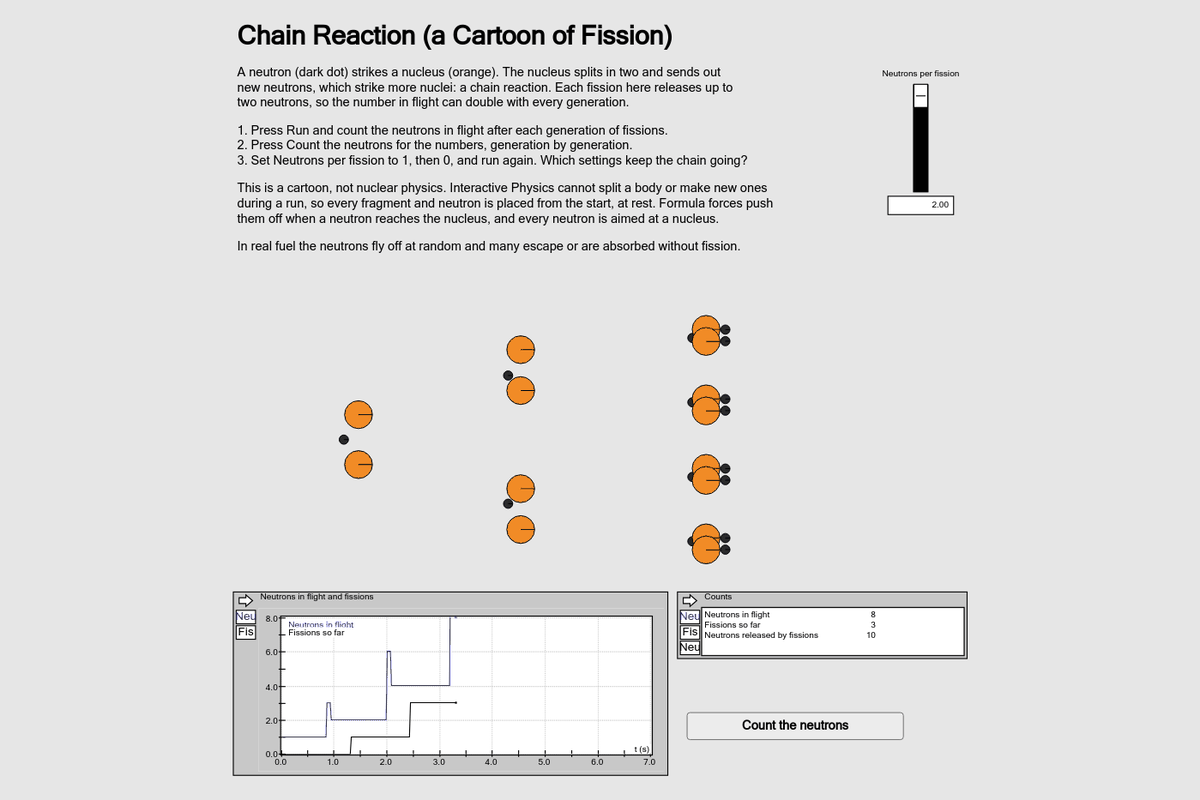
Chain Reaction (a Cartoon of Fission)
A cartoon chain reaction: each fission releases neutrons that split more nuclei
 Optics (5)
Follow rays through lenses and mirrors. Observe reflection, refraction, focusing, and image formation mechanically.
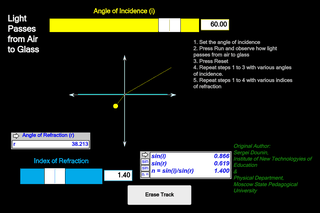
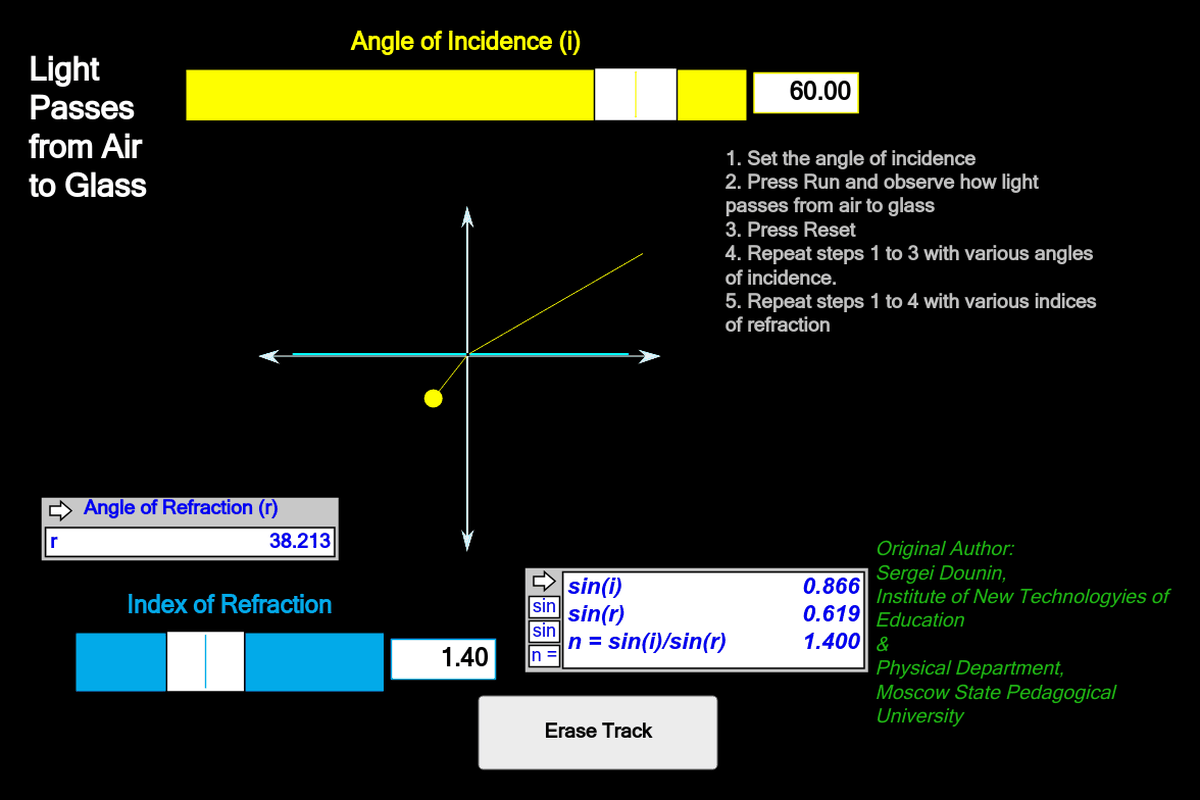
From Air To Glass
Light refracting as it enters a denser medium
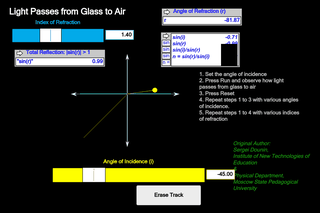
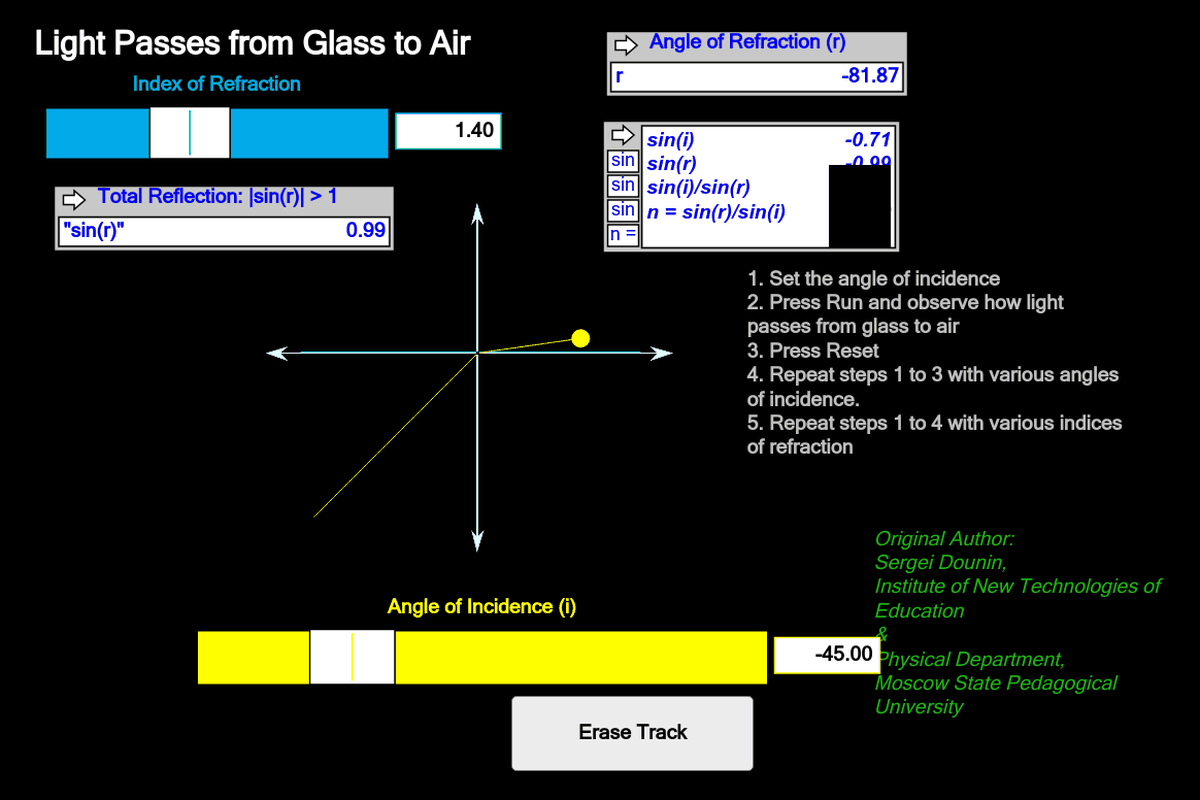
From Glass To Air
Light refracting as it exits to a less dense medium
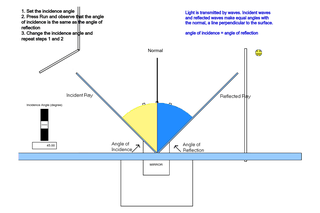
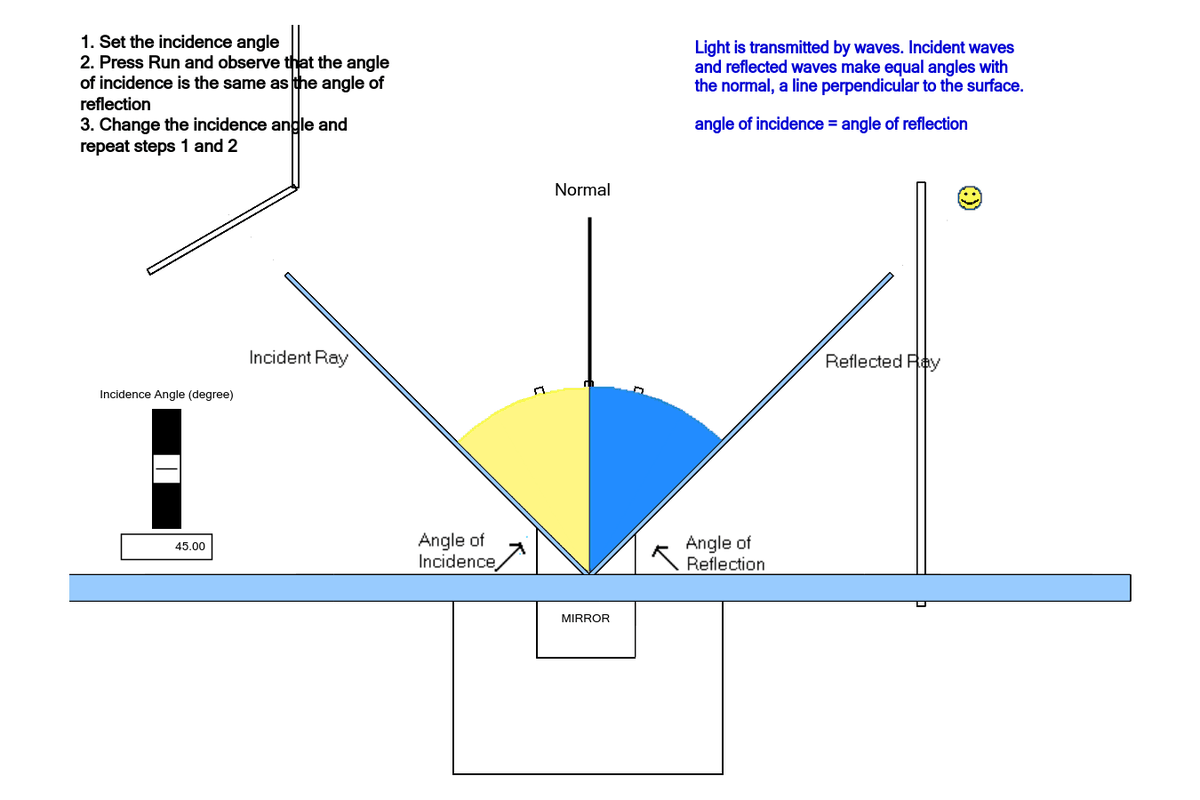
Law of Reflection
Angle of incidence equals angle of reflection
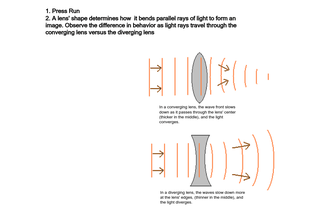
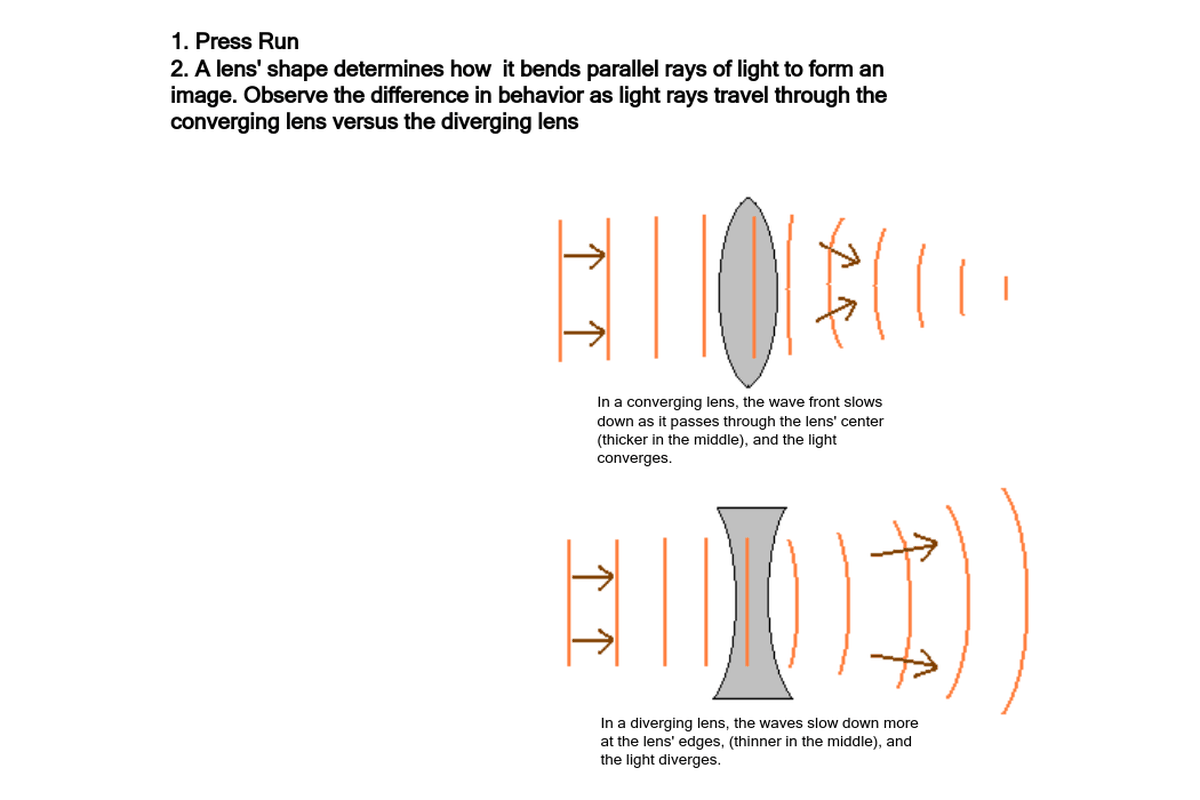
Lens Shape
Different lens geometries and their focal points
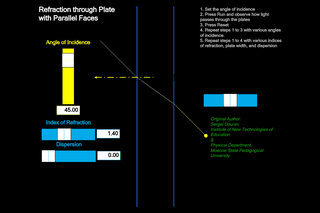
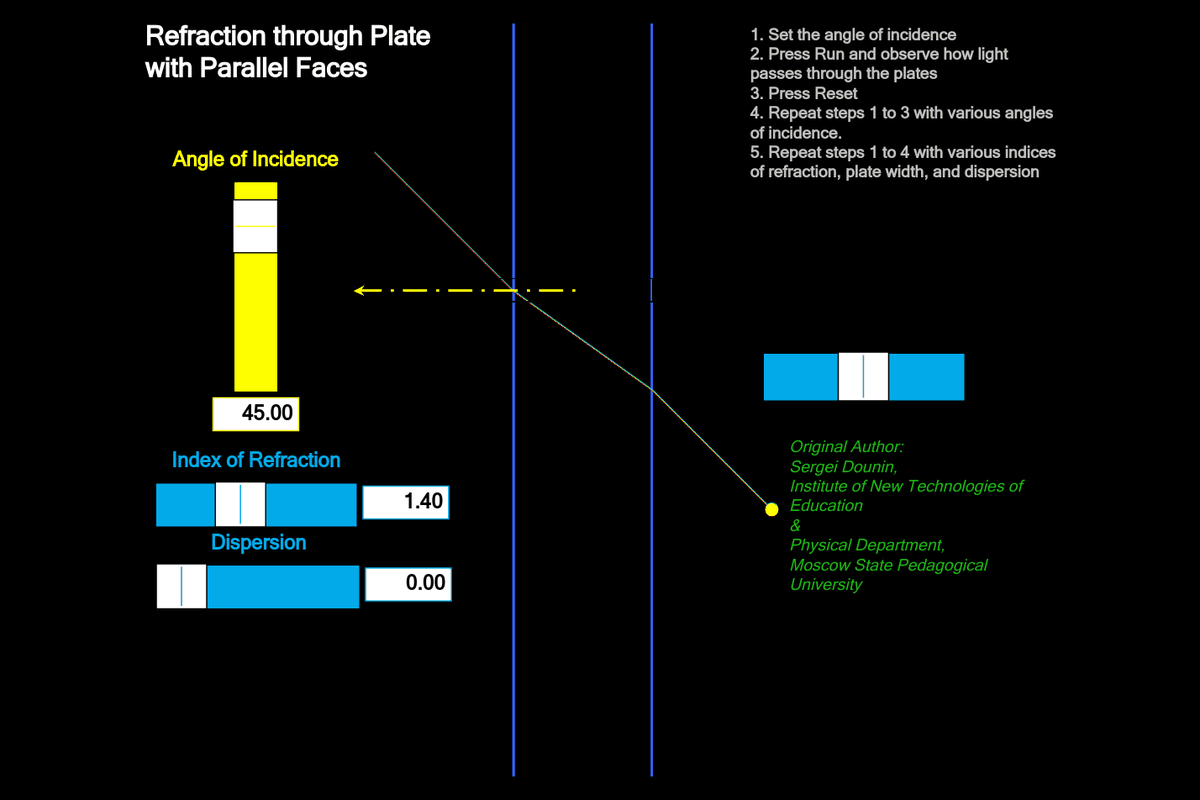
Light Passes Plate
Beam offset when passing through a parallel-sided plate
 Oscillations (18)
Study periodic motion: pendulums, spring-mass systems, and coupled oscillators. See amplitude, period, frequency, and damping in action.
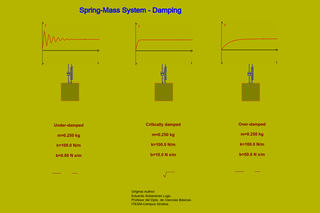
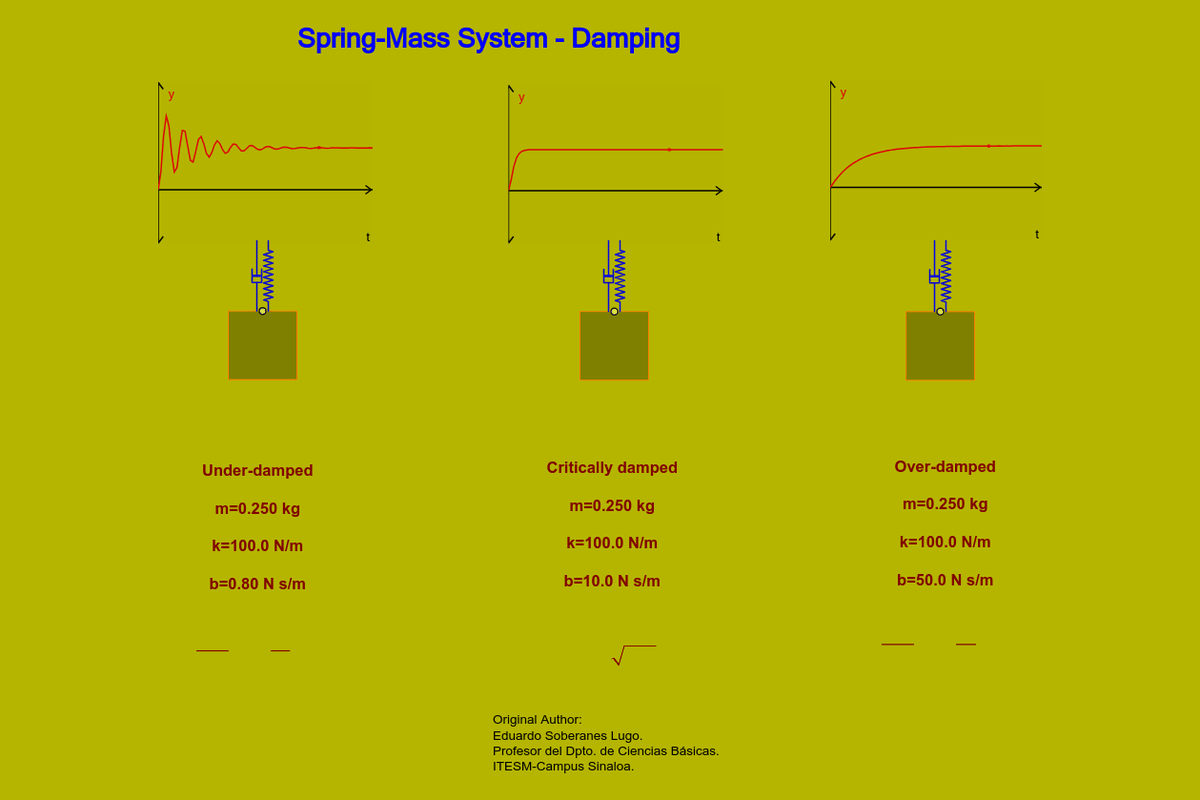
Damped Oscillation
Oscillation amplitude decaying under damping
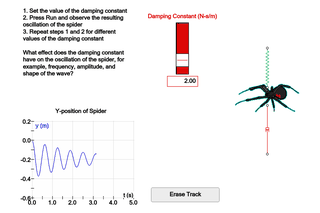
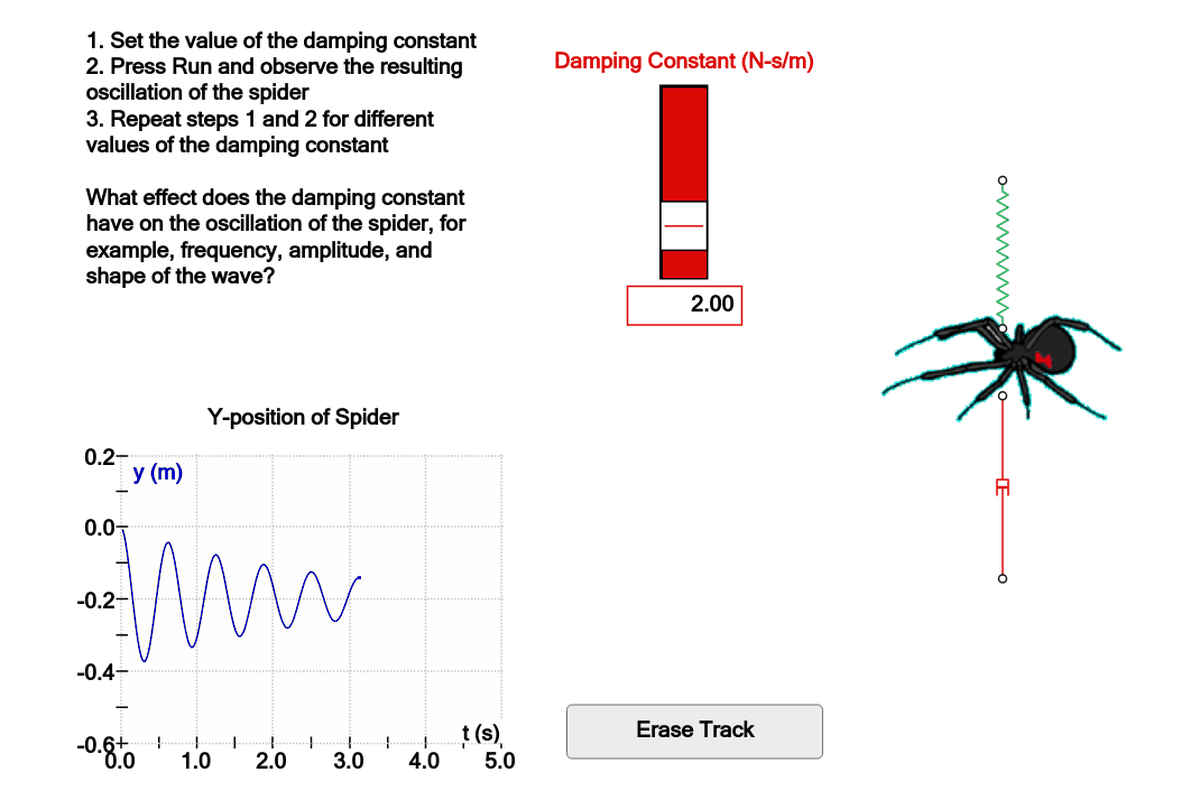
Damping Constant
Measure the damping coefficient of a spring-mass system
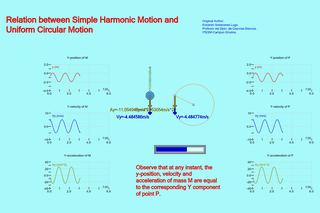
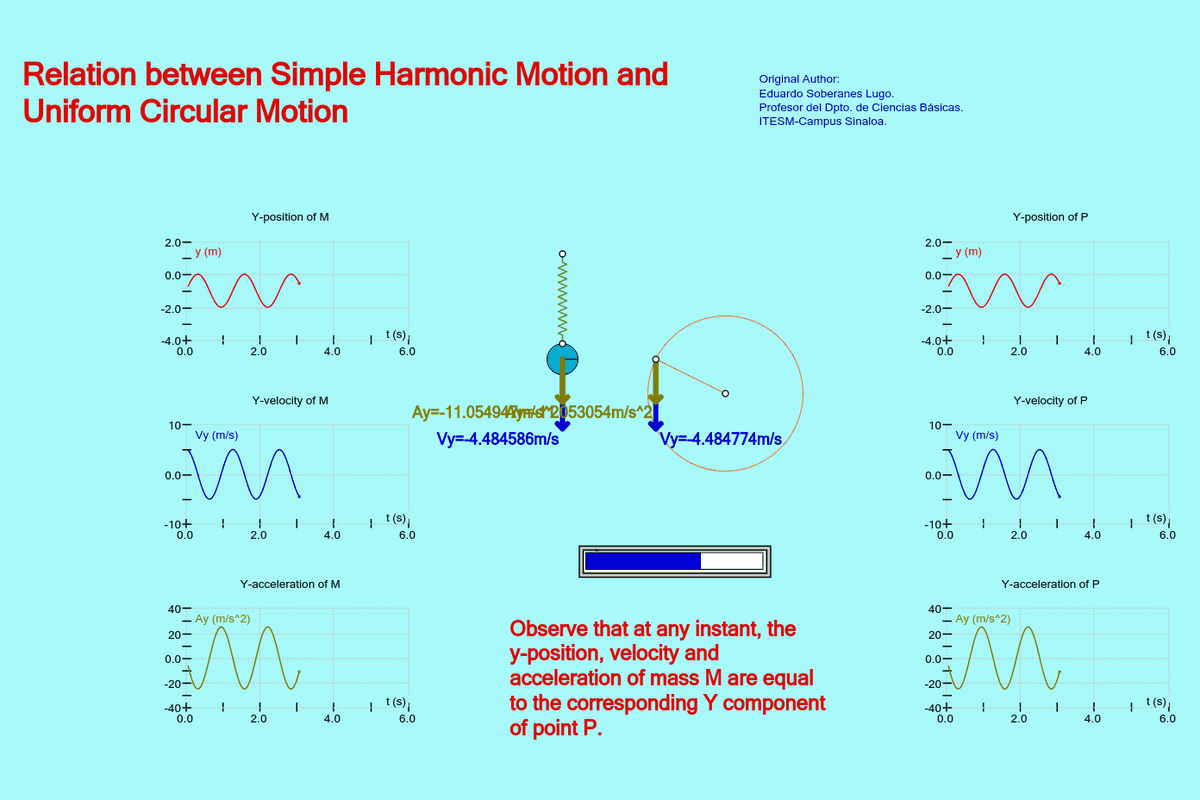
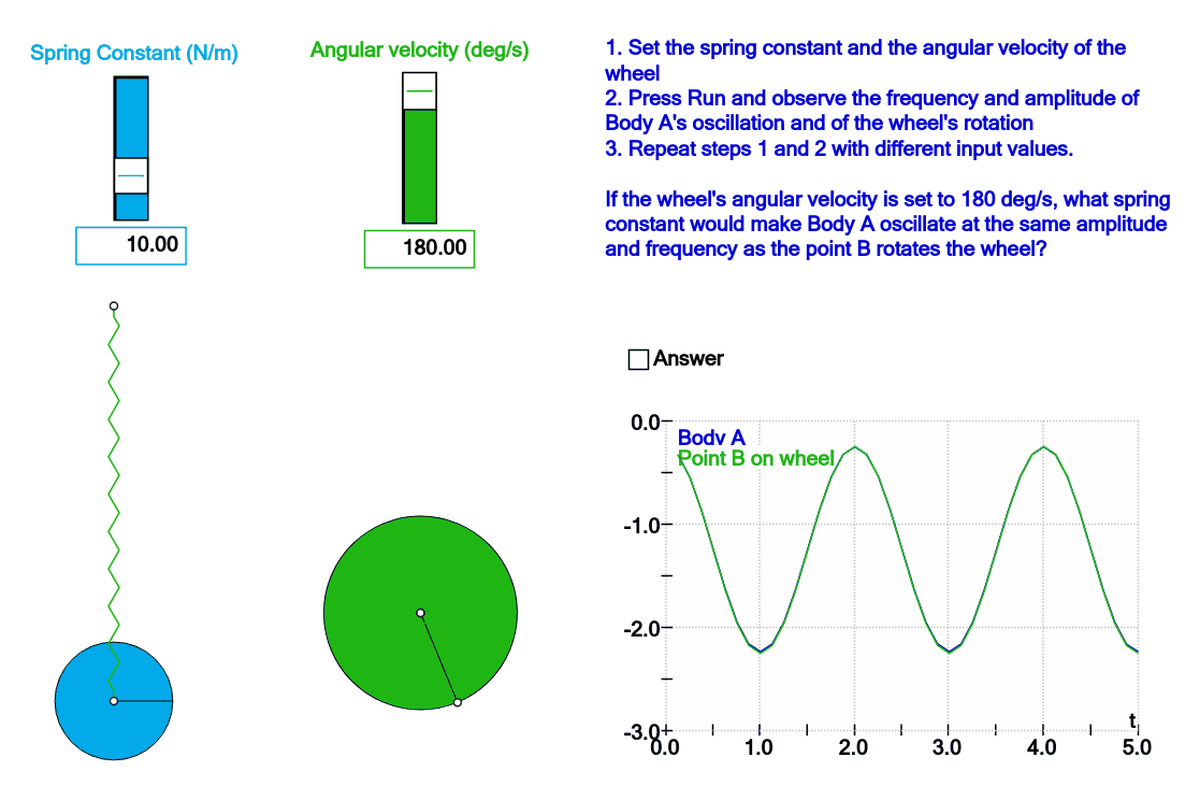
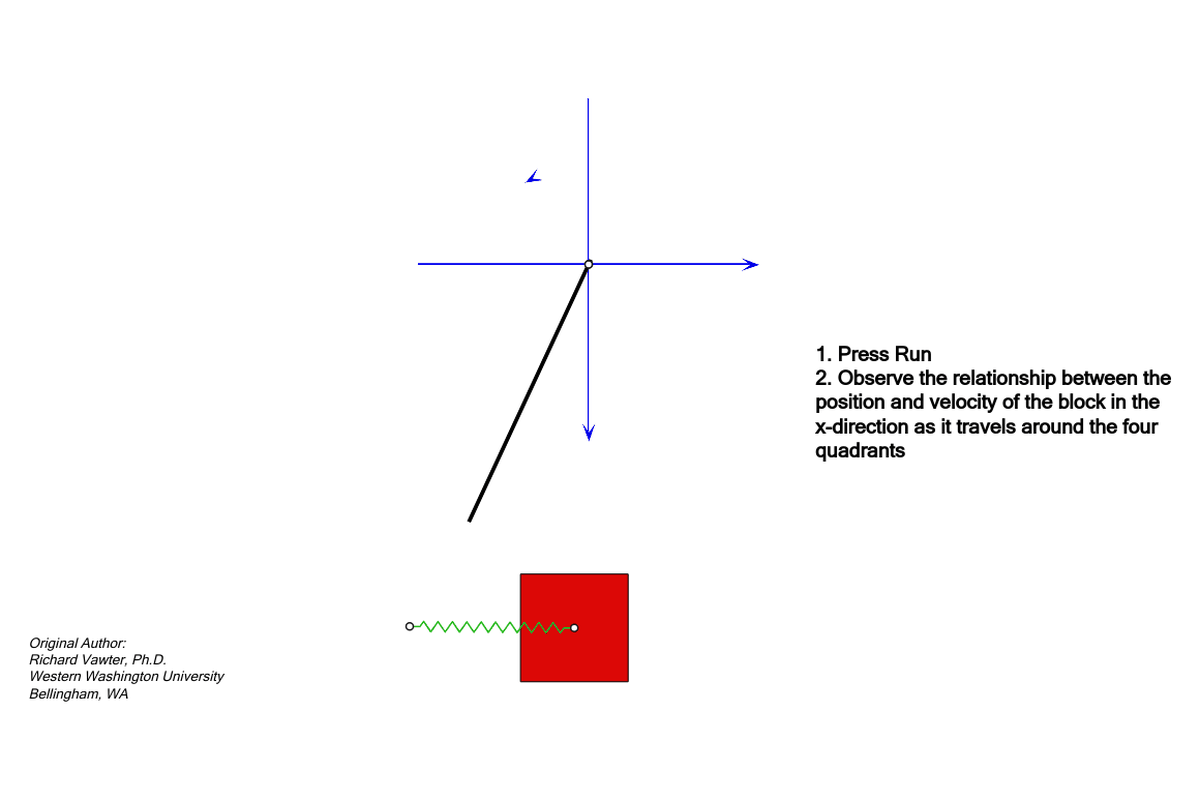
Harmonic vs Circular
Simple harmonic motion as projection of circular motion
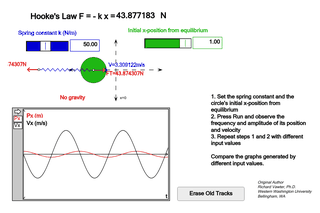
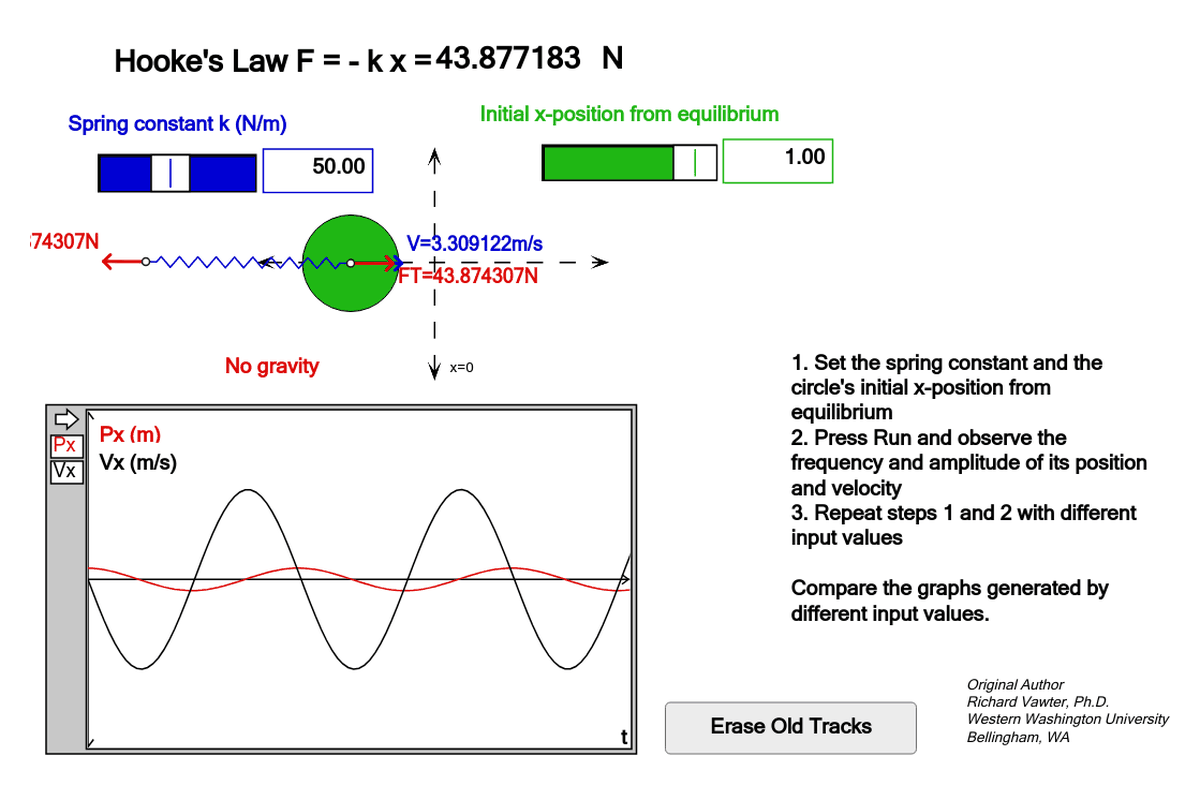
Hooke's Law
Spring force proportional to displacement, F = -kx
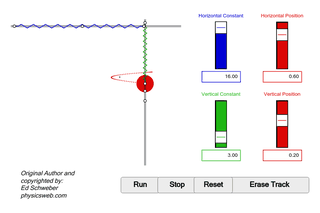
Lissajous Figures
Patterns traced by two perpendicular oscillations
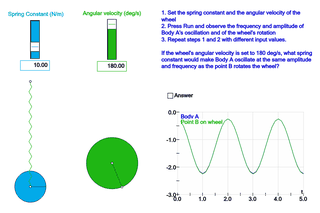
Matching Harmonic Motion
Tune parameters until two oscillators match
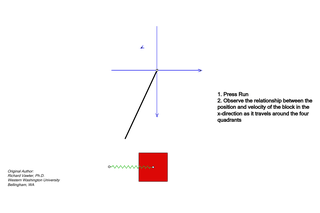
Phase Angle
Phase difference between two oscillators
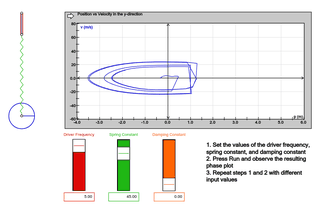
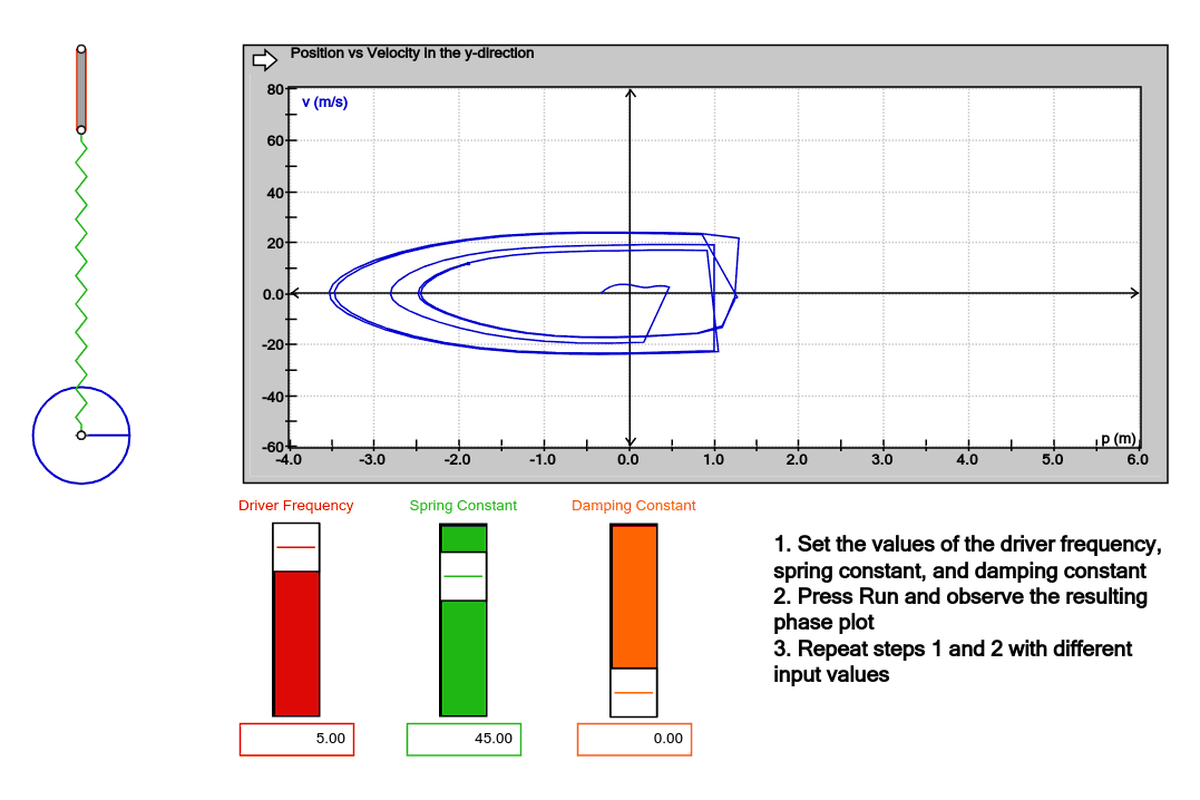
Phase Plot
Position vs velocity trajectory in phase space
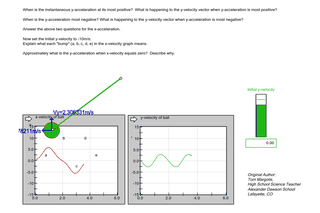
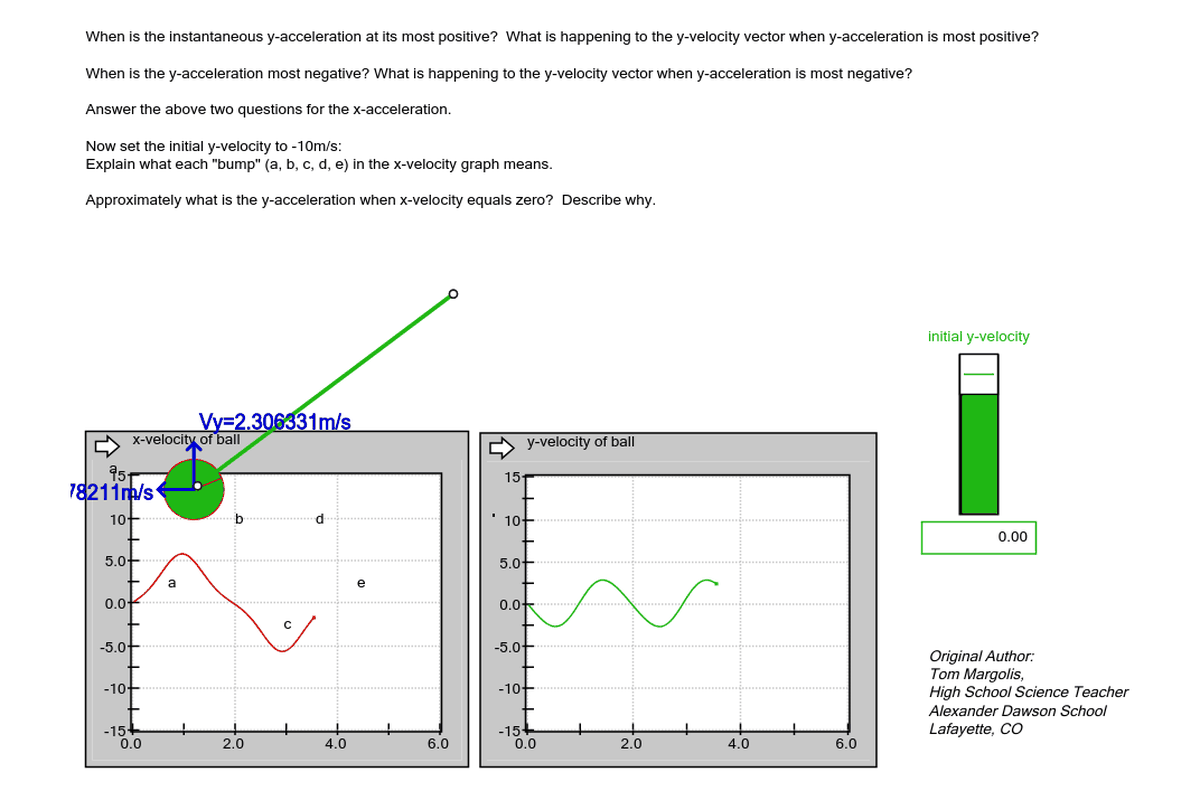
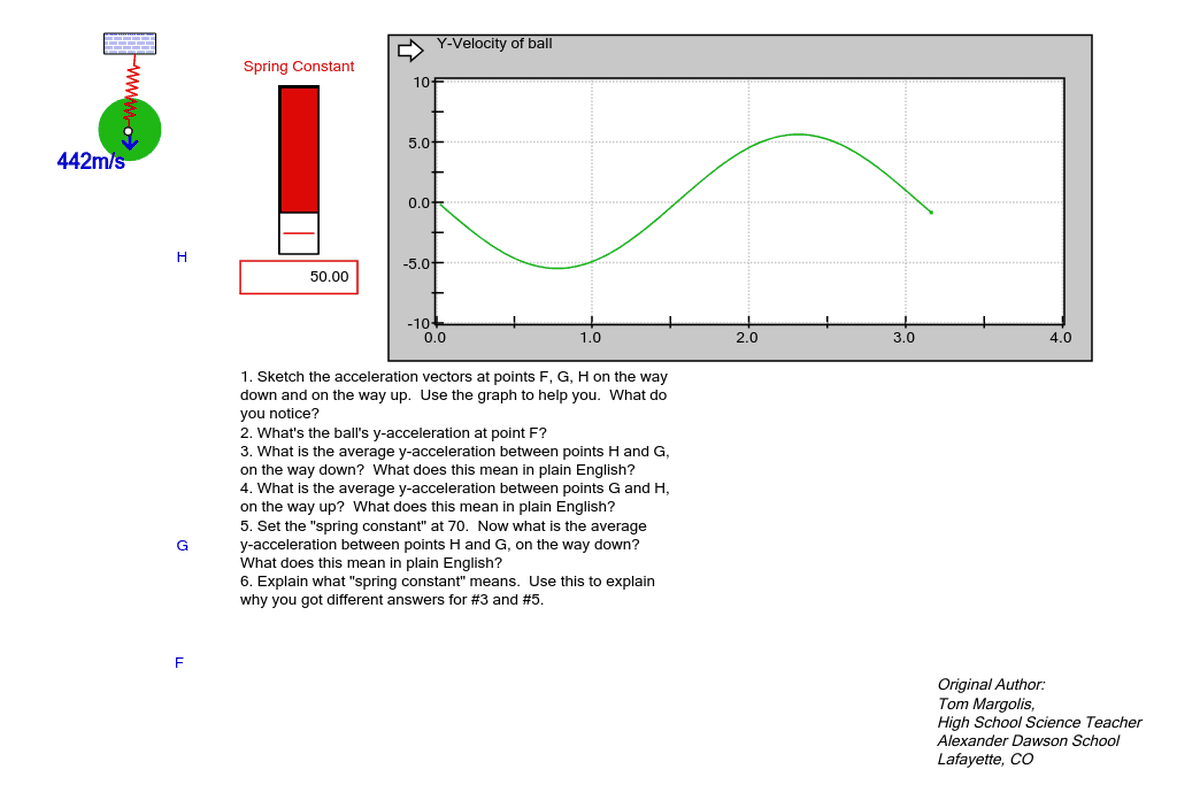
Rope Pendulum Acceleration
Acceleration along the arc of a rope pendulum
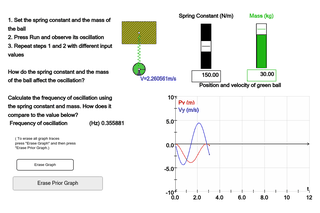
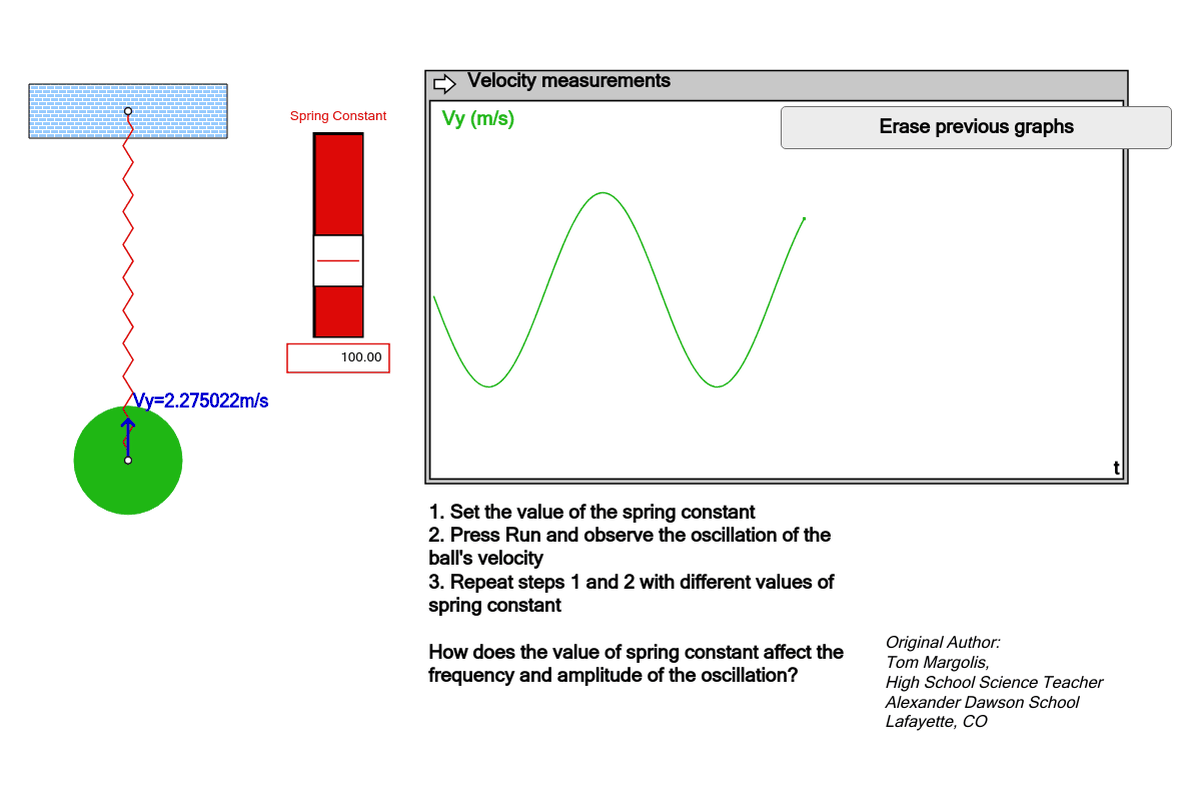
Simple Harmonic Motion
Classical SHM of a spring-mass system
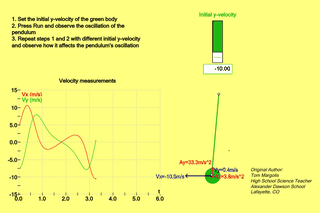
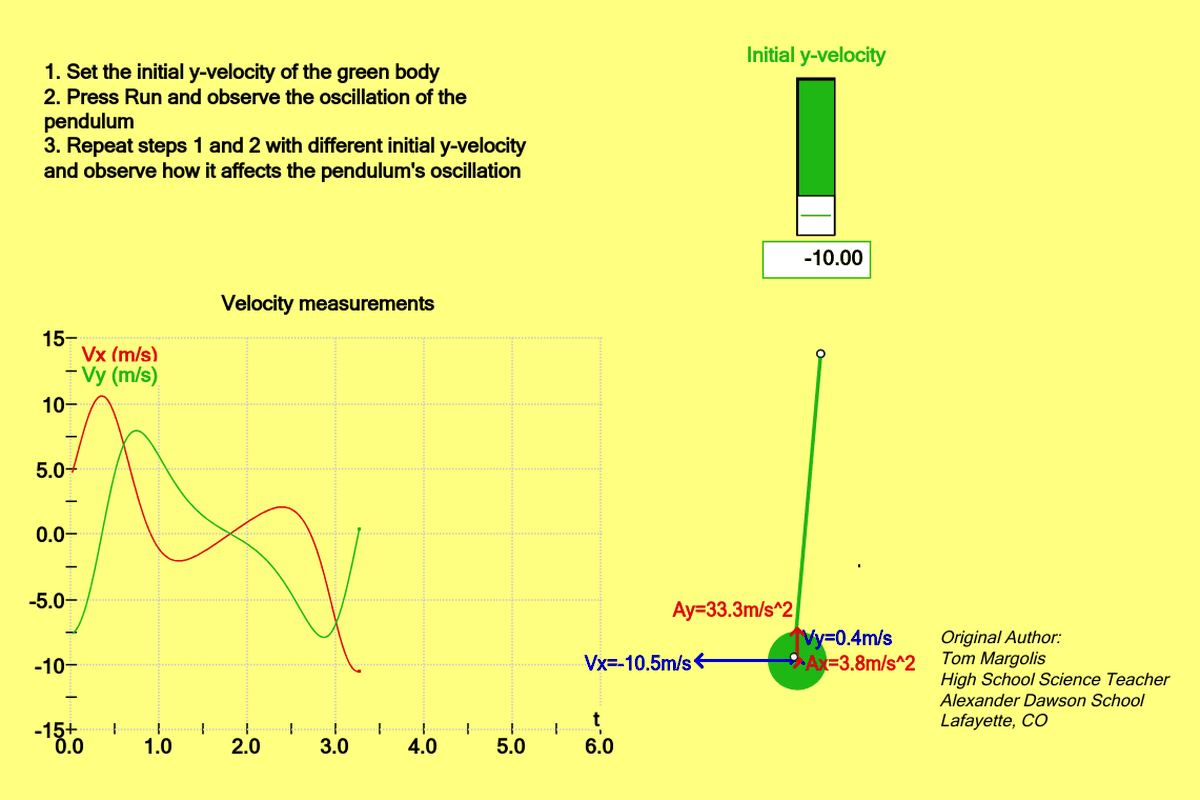
Simple Pendulum
Small-angle pendulum period √(L/g) behaviour
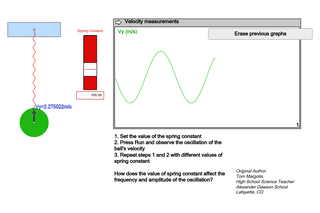
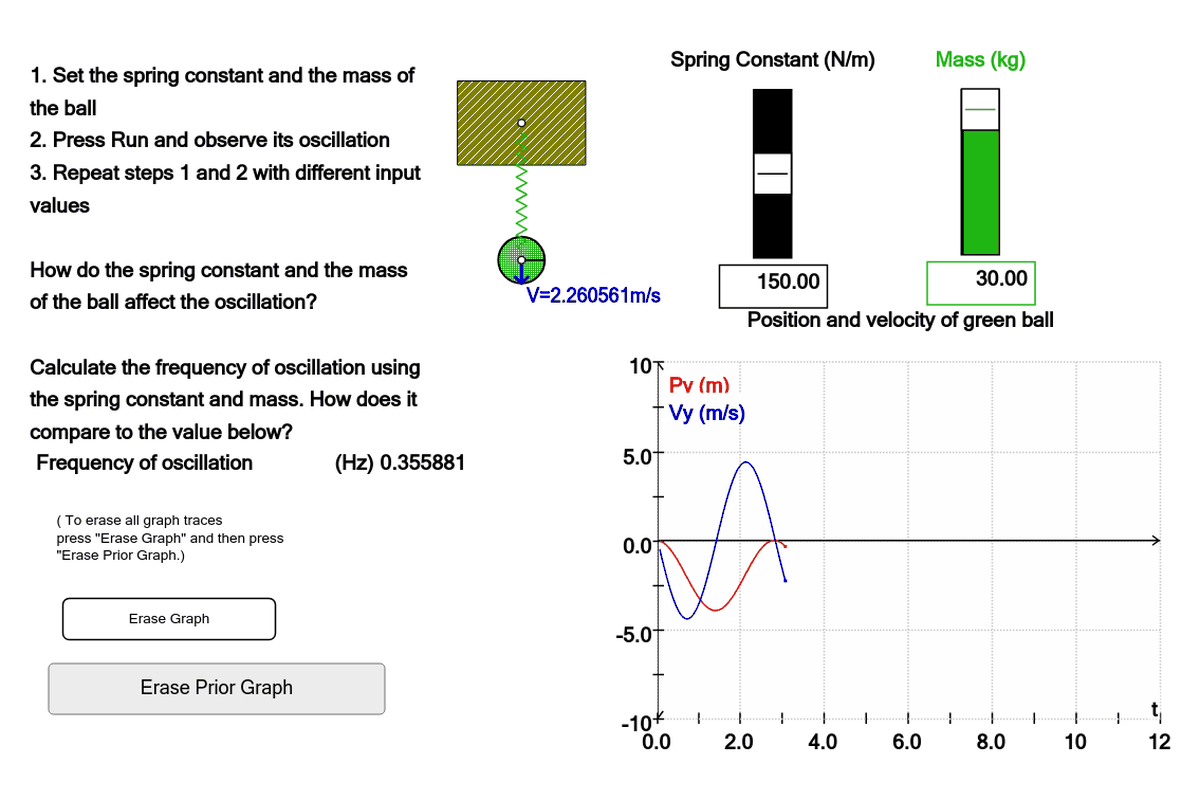
Spring Constant
Determine k from the period of oscillation
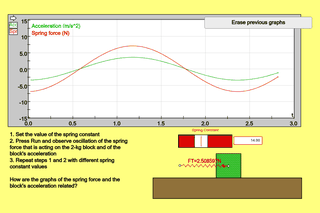
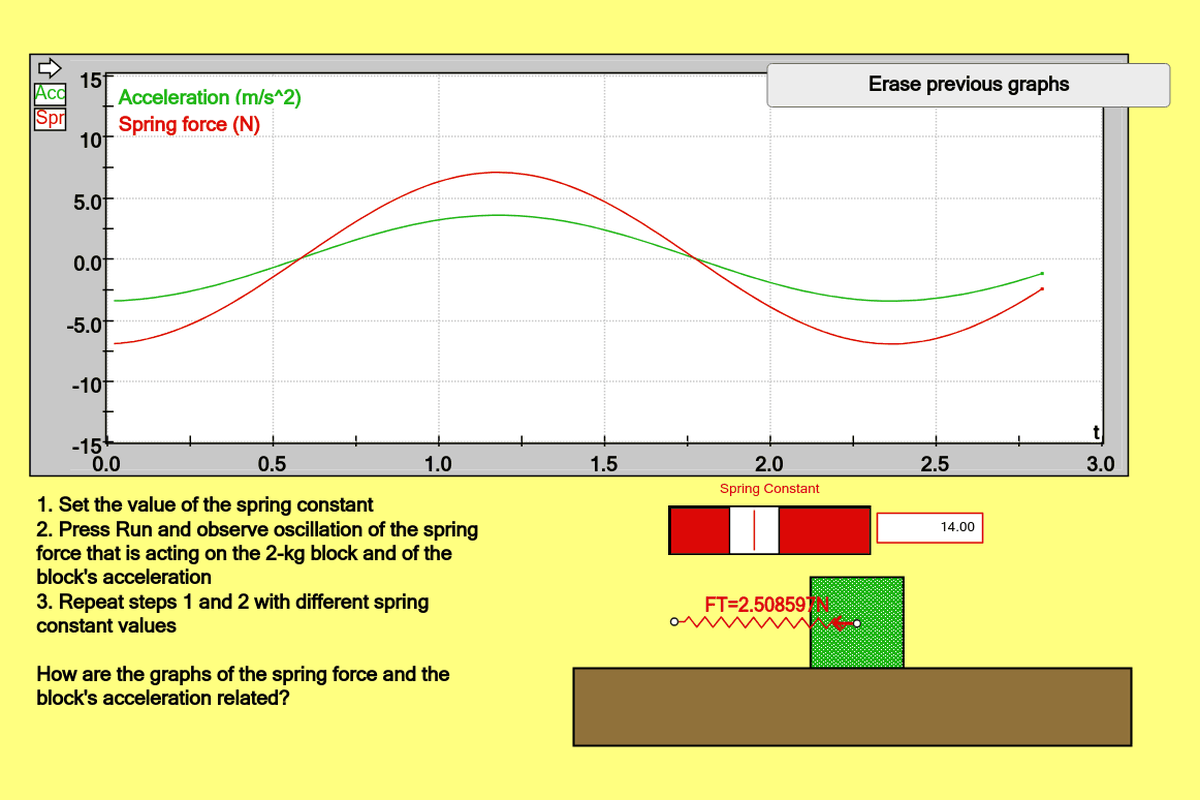
Spring Force
Force exerted by a stretched or compressed spring
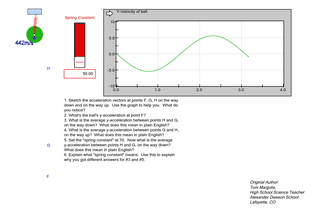
Spring Pendulum Acceleration
Acceleration of a mass on a spring pendulum
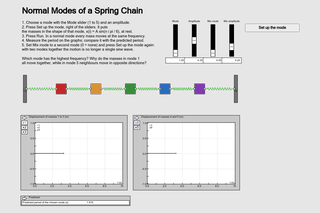
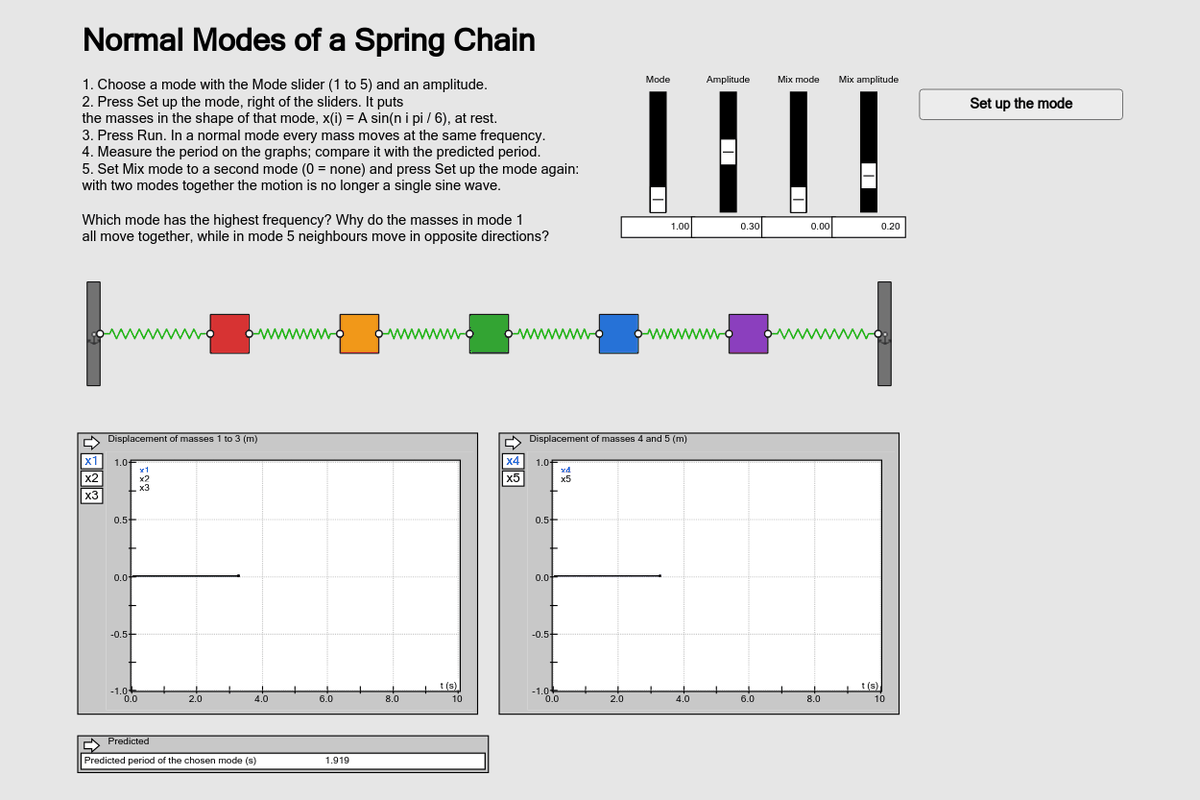
Normal Modes of a Spring Chain
Five masses on springs move in one of five normal modes, each at its own frequency
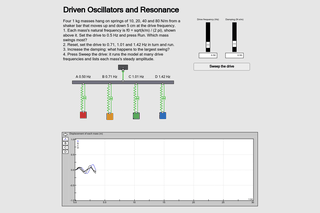
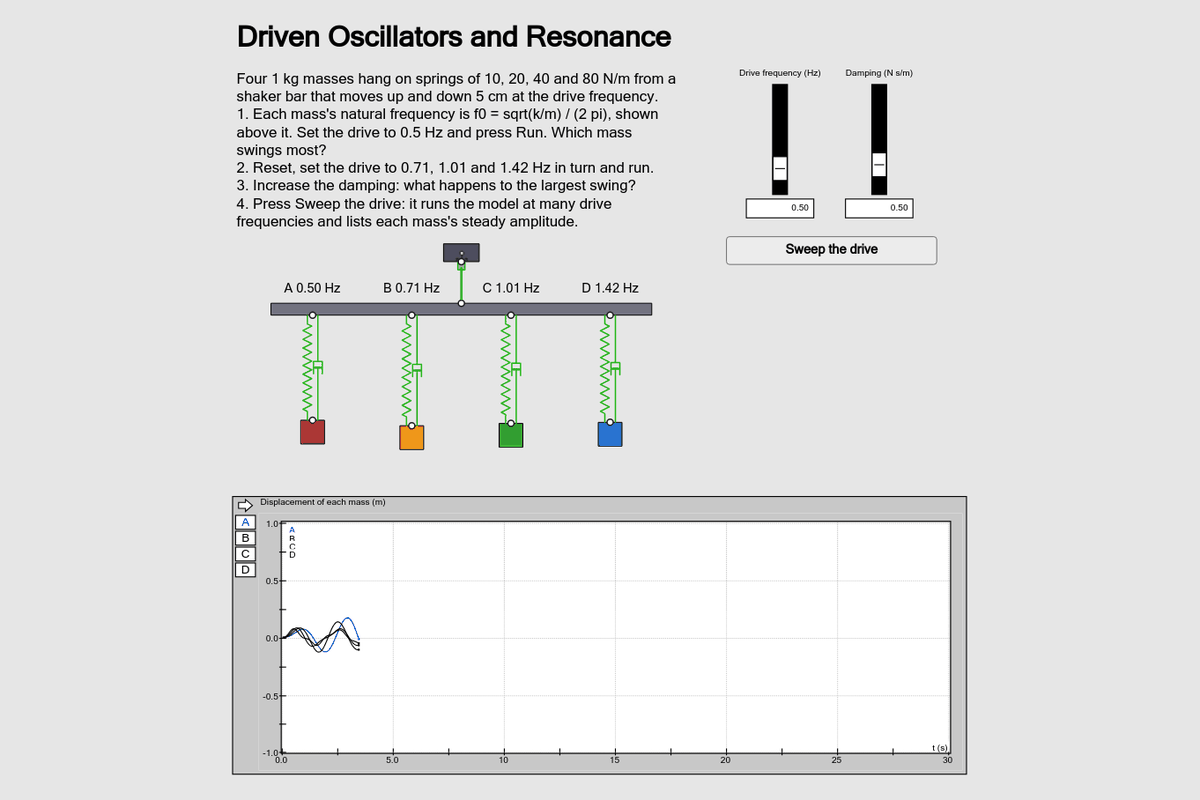
Driven Oscillators and Resonance
Four oscillators on one shaking bar: the one whose natural frequency matches the drive swings most
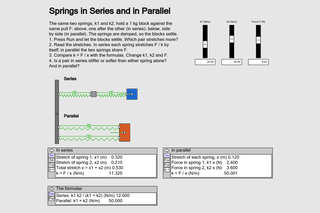
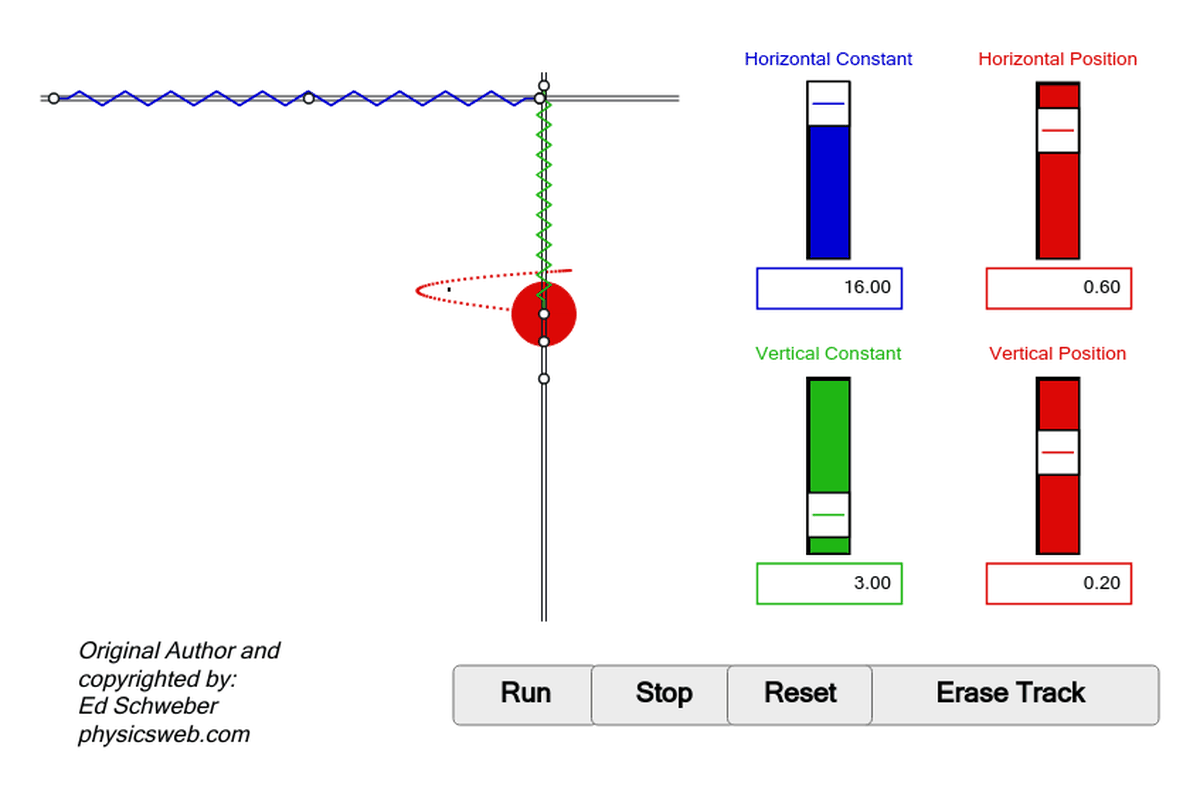
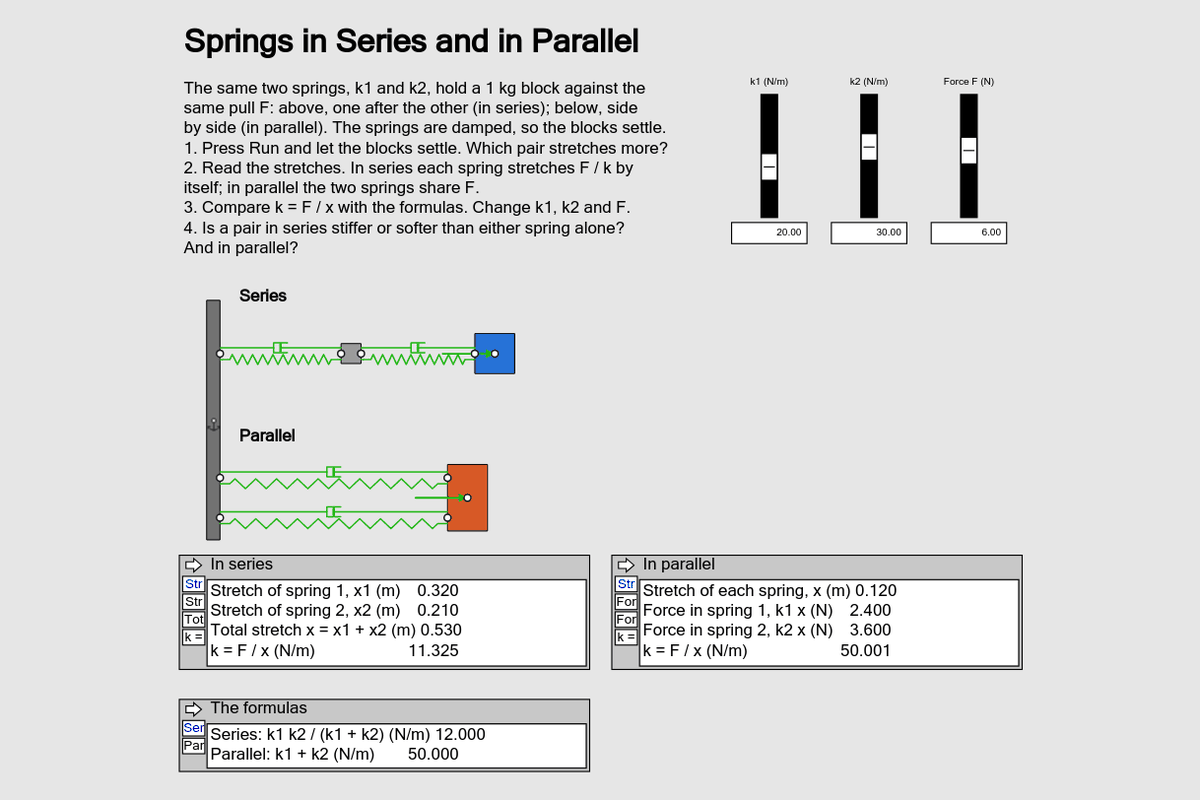
Springs in Series and in Parallel
The same two springs one after the other and side by side; compare the effective spring constants
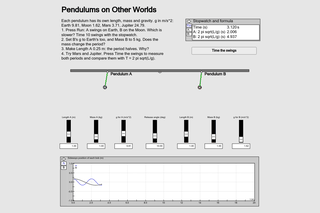
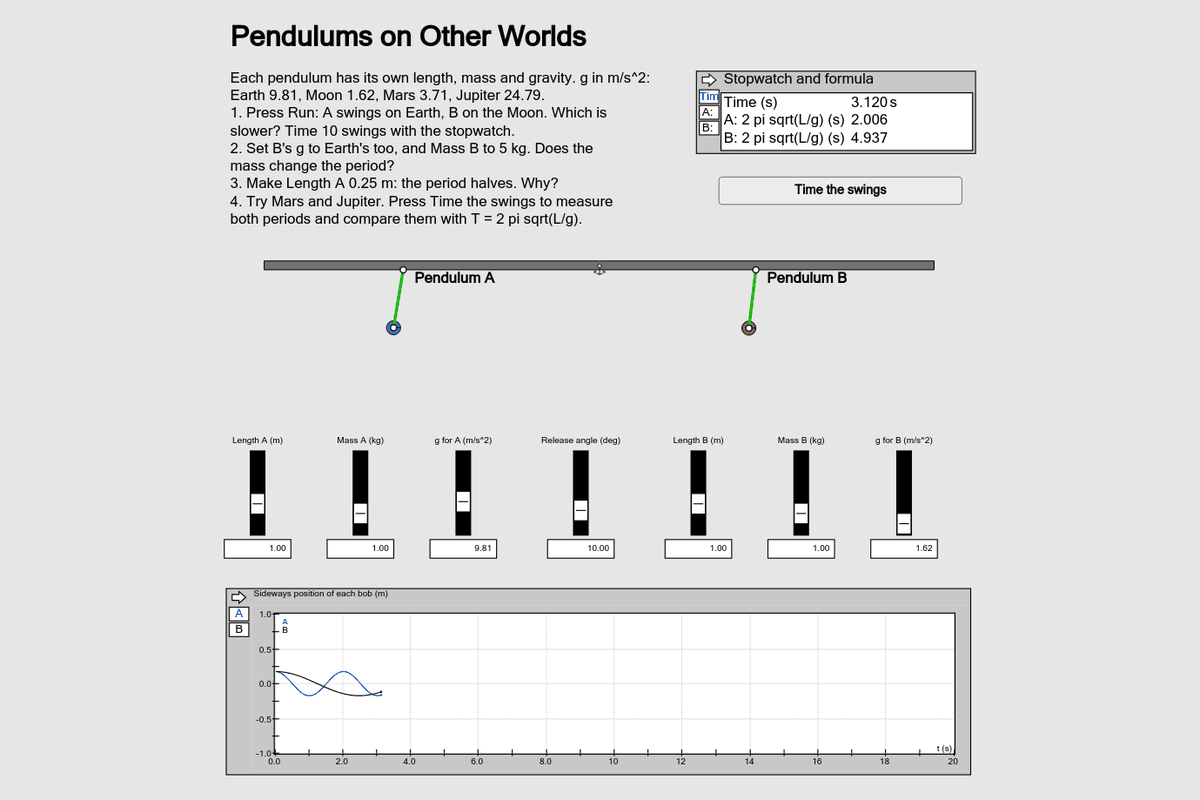
Pendulums on Other Worlds
Two pendulums with their own length, mass and gravity: find what sets the period
 Projectiles (12)
Predict where a launched object will land. Adjust launch speed, angle, and gravity to explore range, height, and flight time.
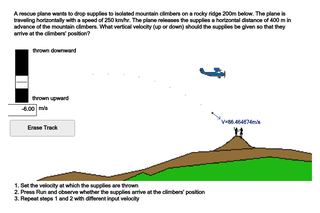
Air Drop (With Sound)
Air-dropped package with audible feedback
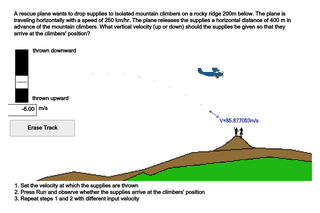
Air Drop
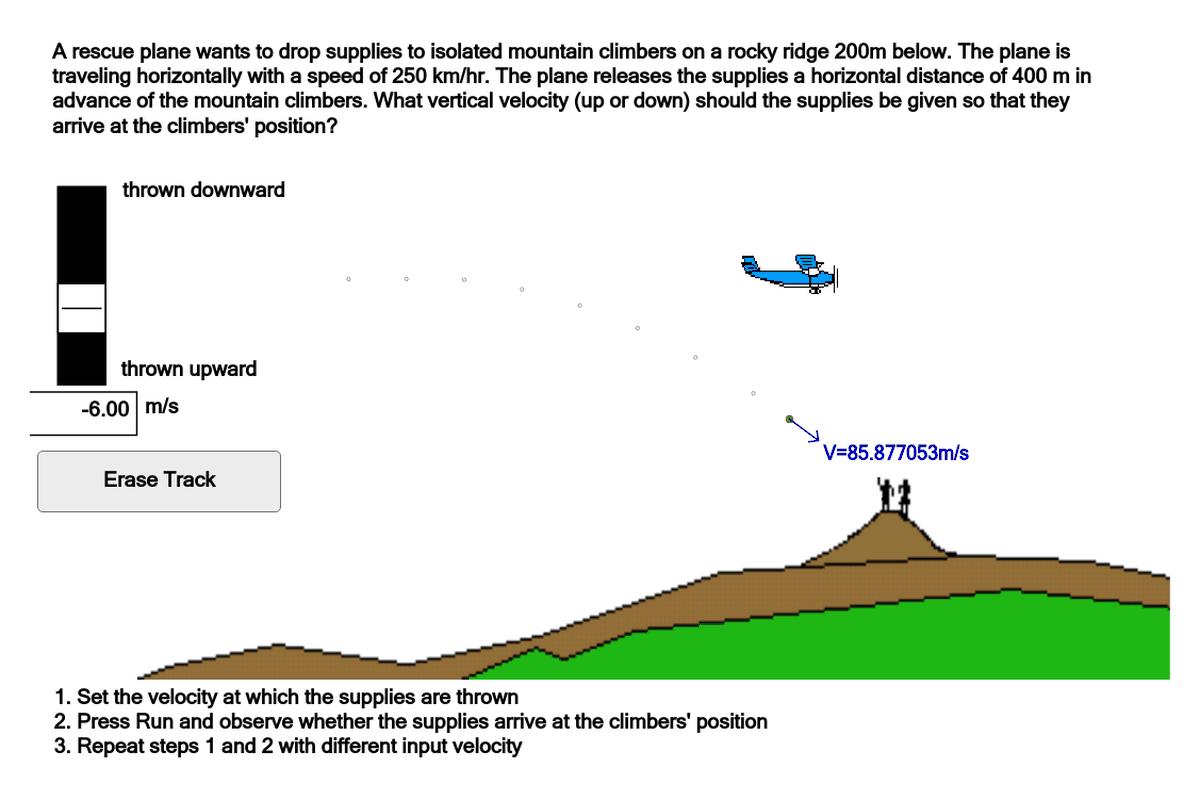
Drop a package from a moving aircraft onto a target
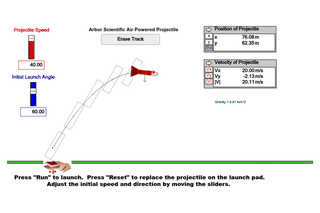
Air-Powered Projectile
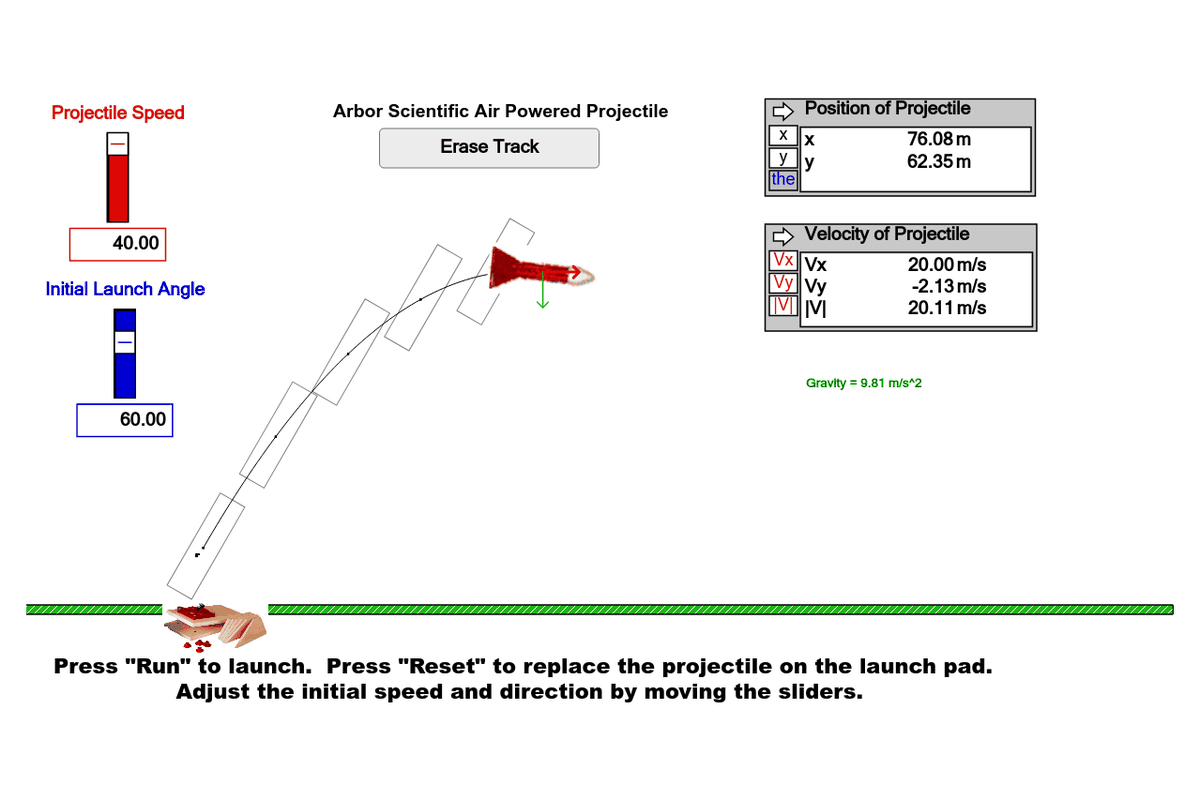
Launch a projectile using compressed air
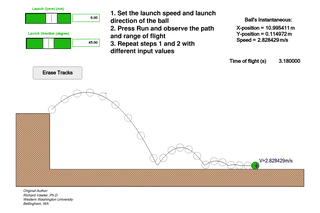
Elevated Launch
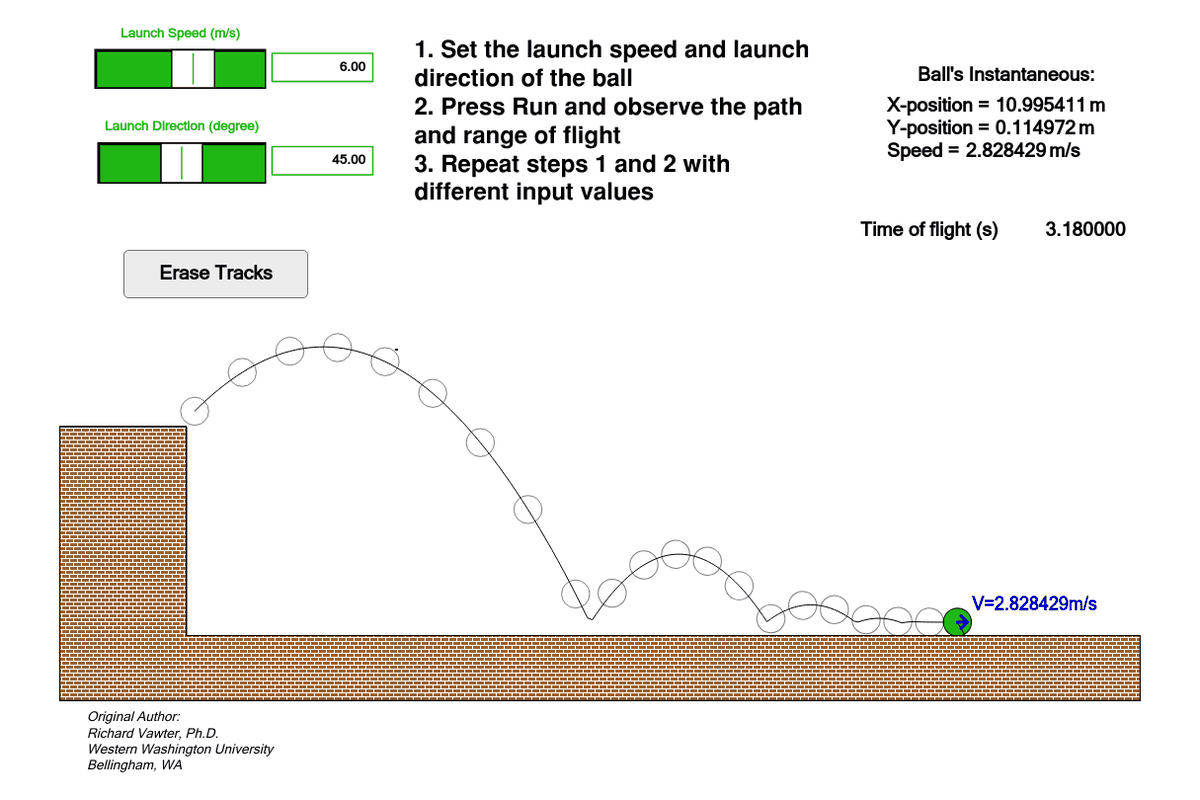
Projectile launched from elevated height
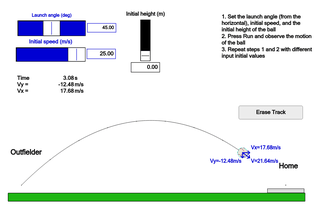
Outfielder
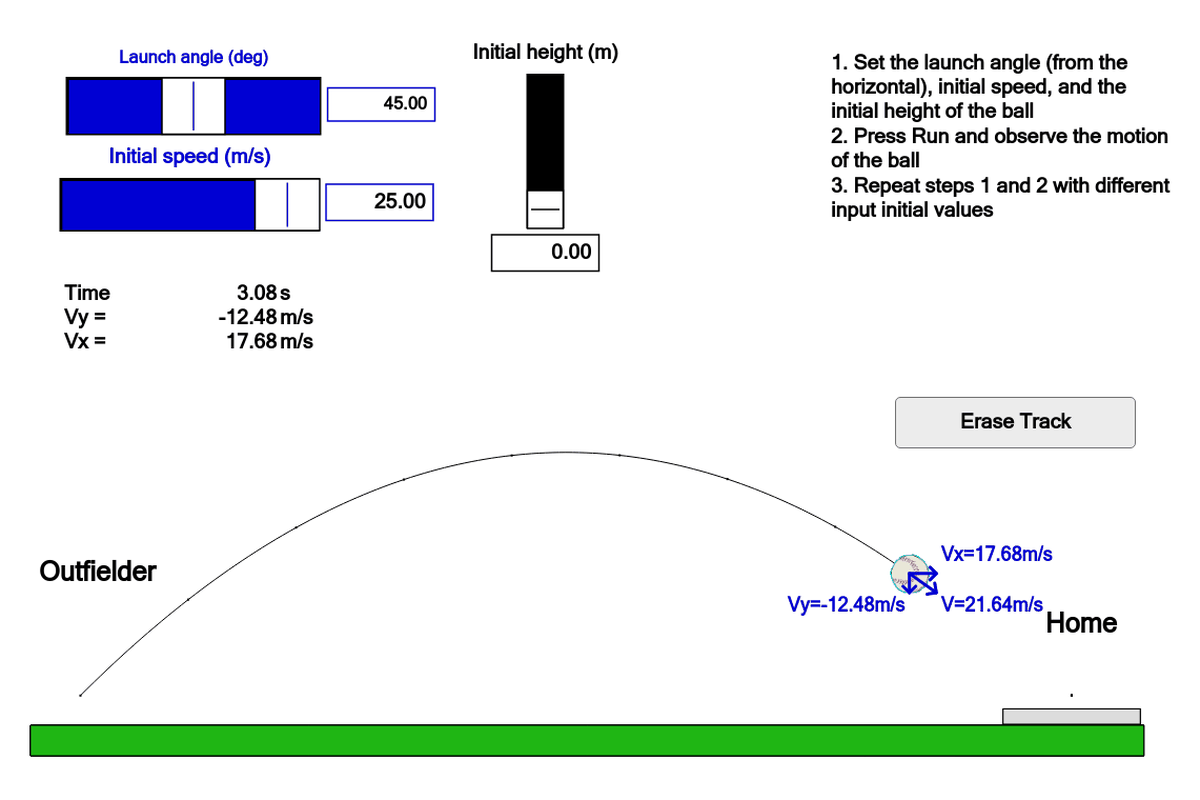
Catch a fly ball by solving projectile motion
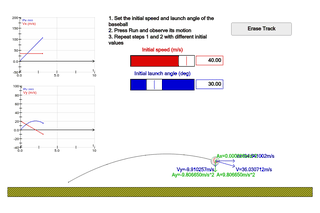
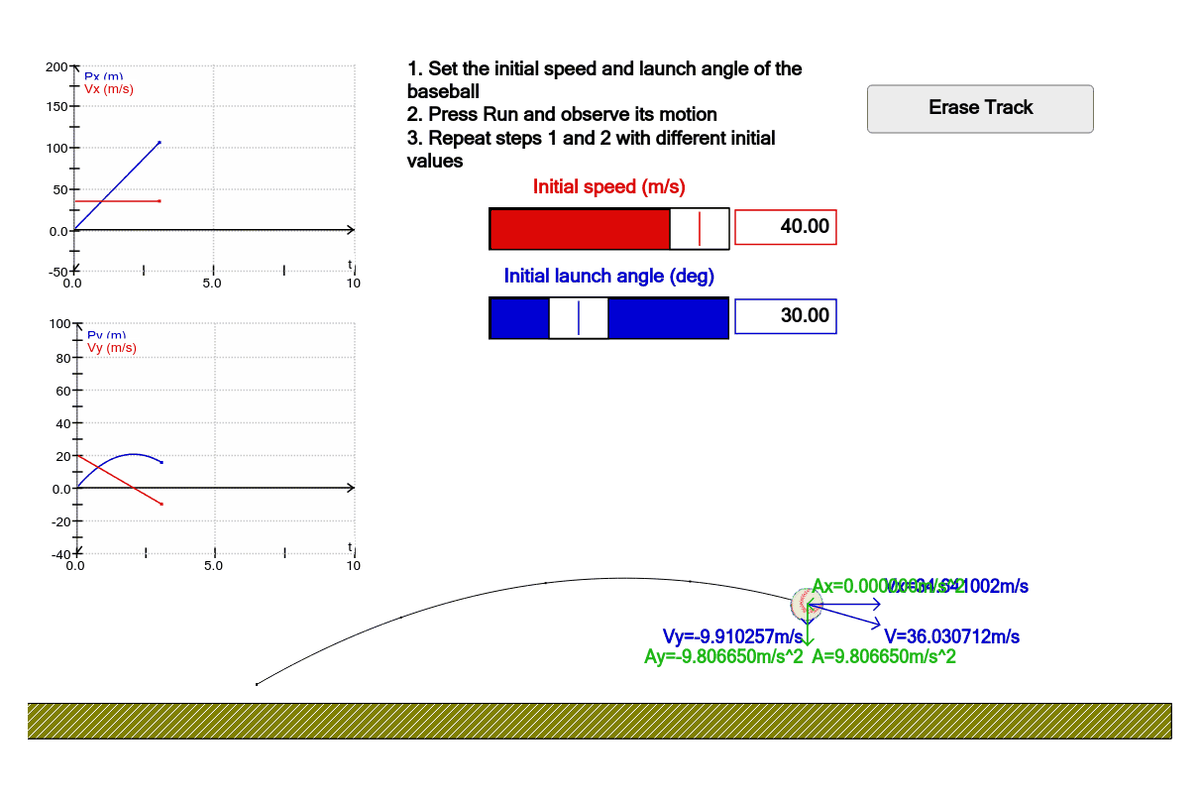
Projectile Motion
Classic projectile with launch angle and speed
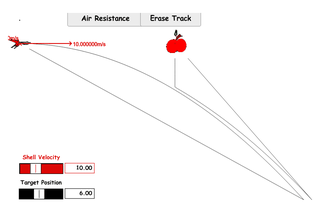
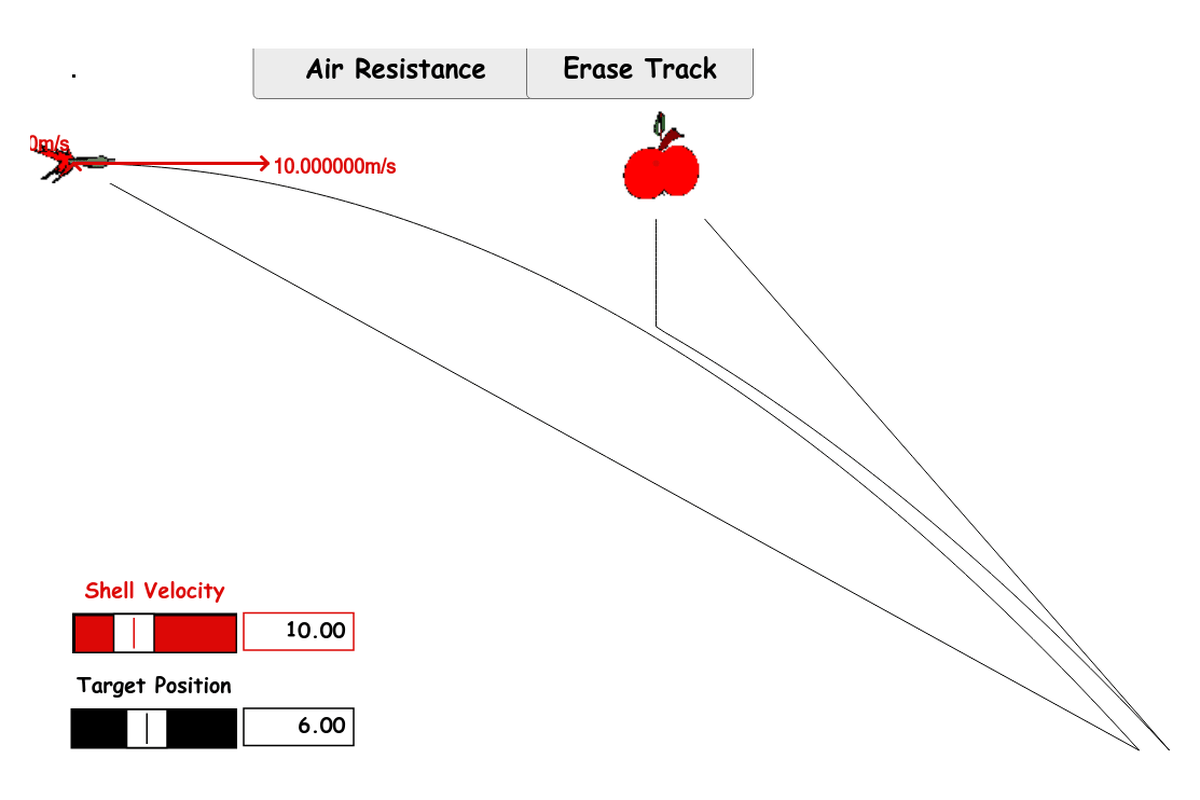
Shooting Apple
Projectile aimed at a falling apple
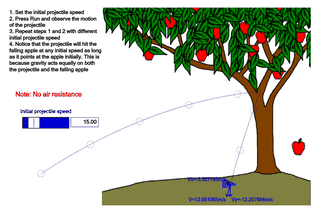
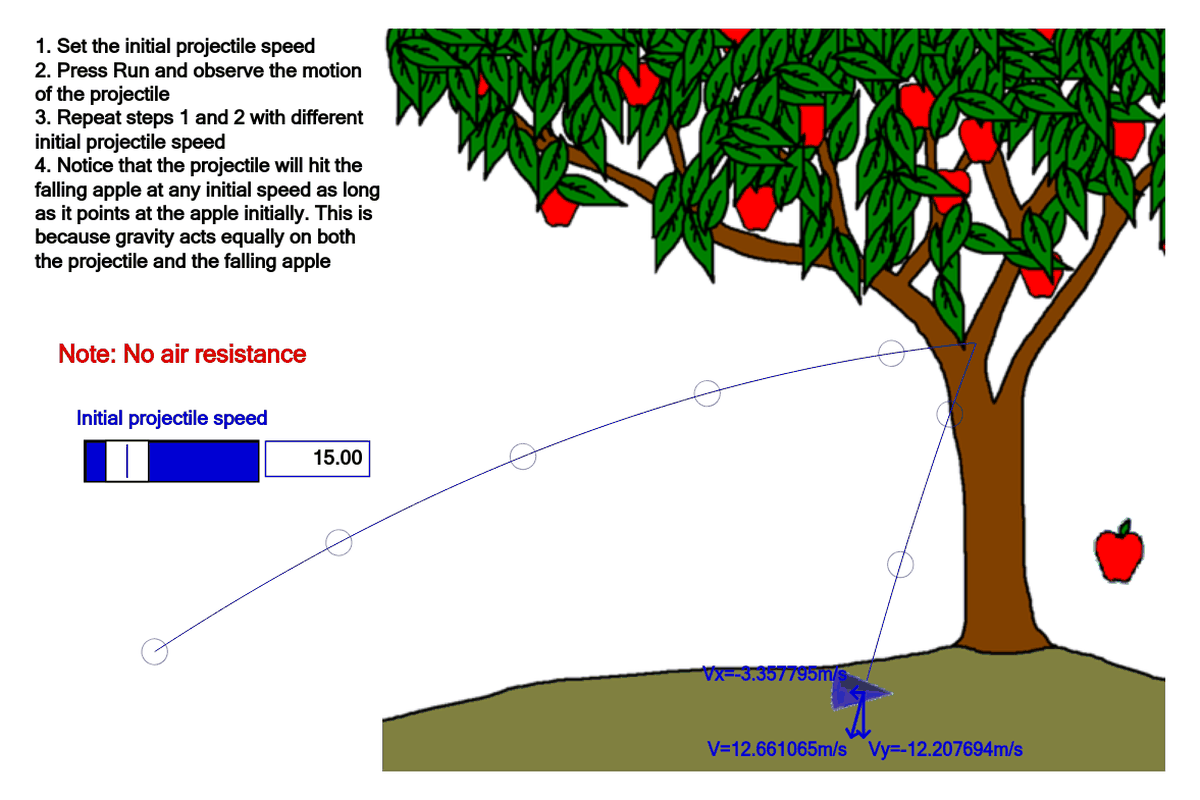
Shooting the Apple in the Tree
Monkey-and-hunter classic — both fall at the same rate
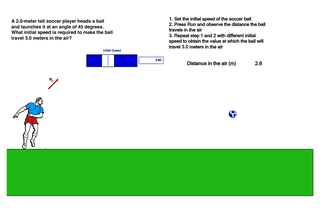
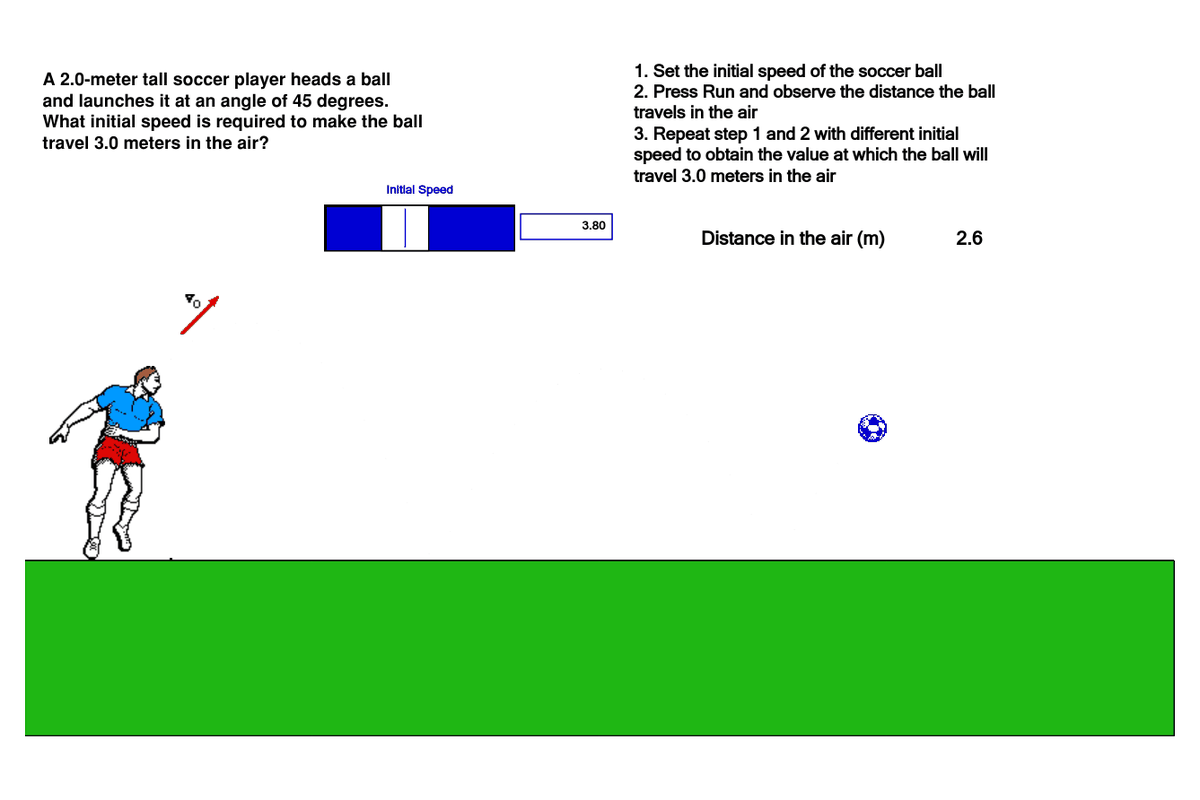
Soccer Player
Kick a soccer ball with angle and speed control
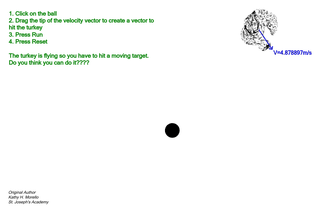
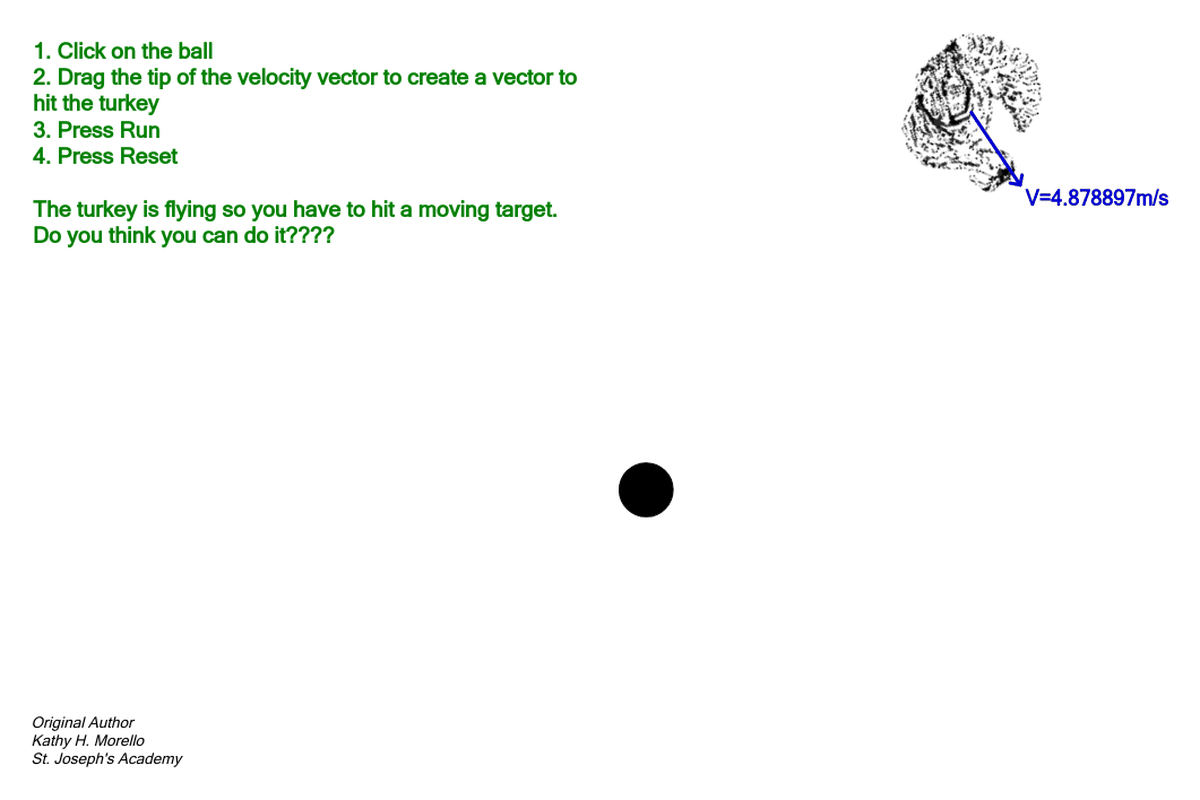
Turkey Shoot
Projectile shoot with target practice
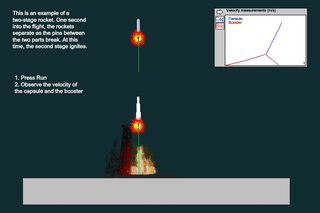
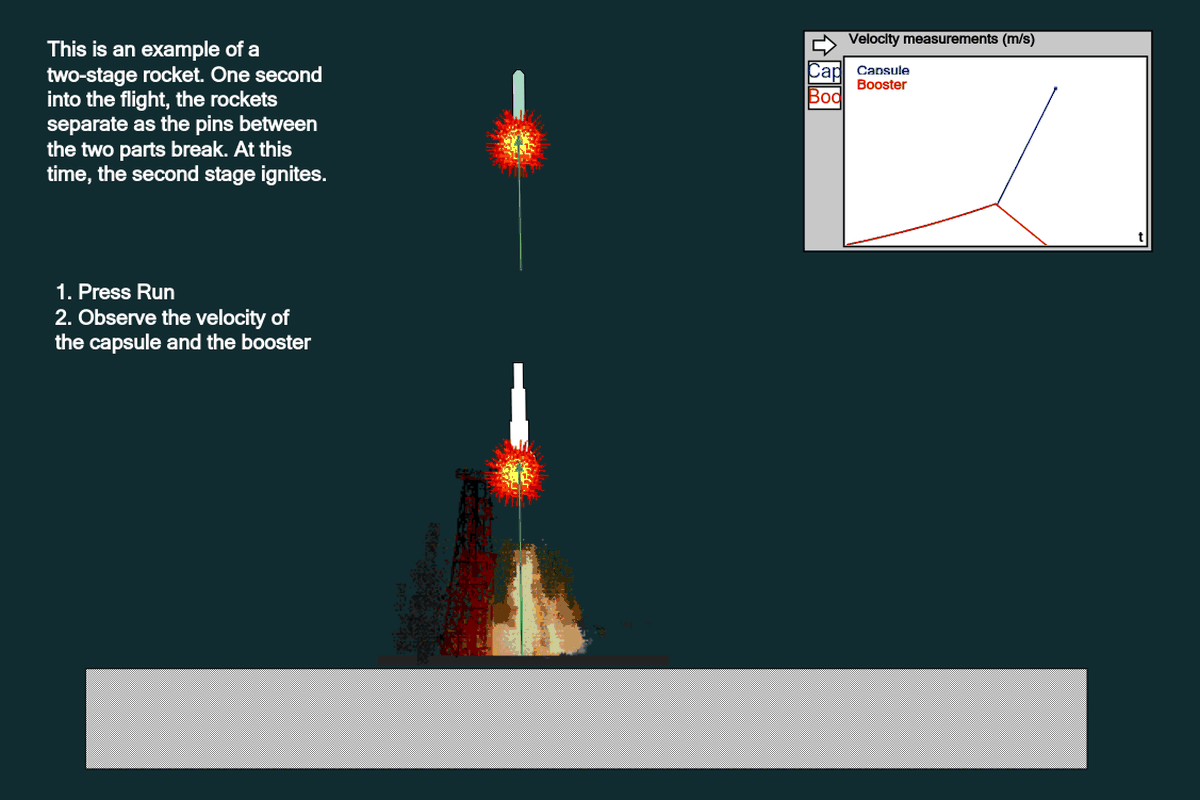
Two-Stage Rocket
Staged rocket releasing a second-stage booster
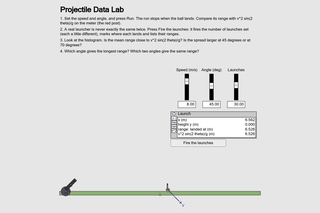
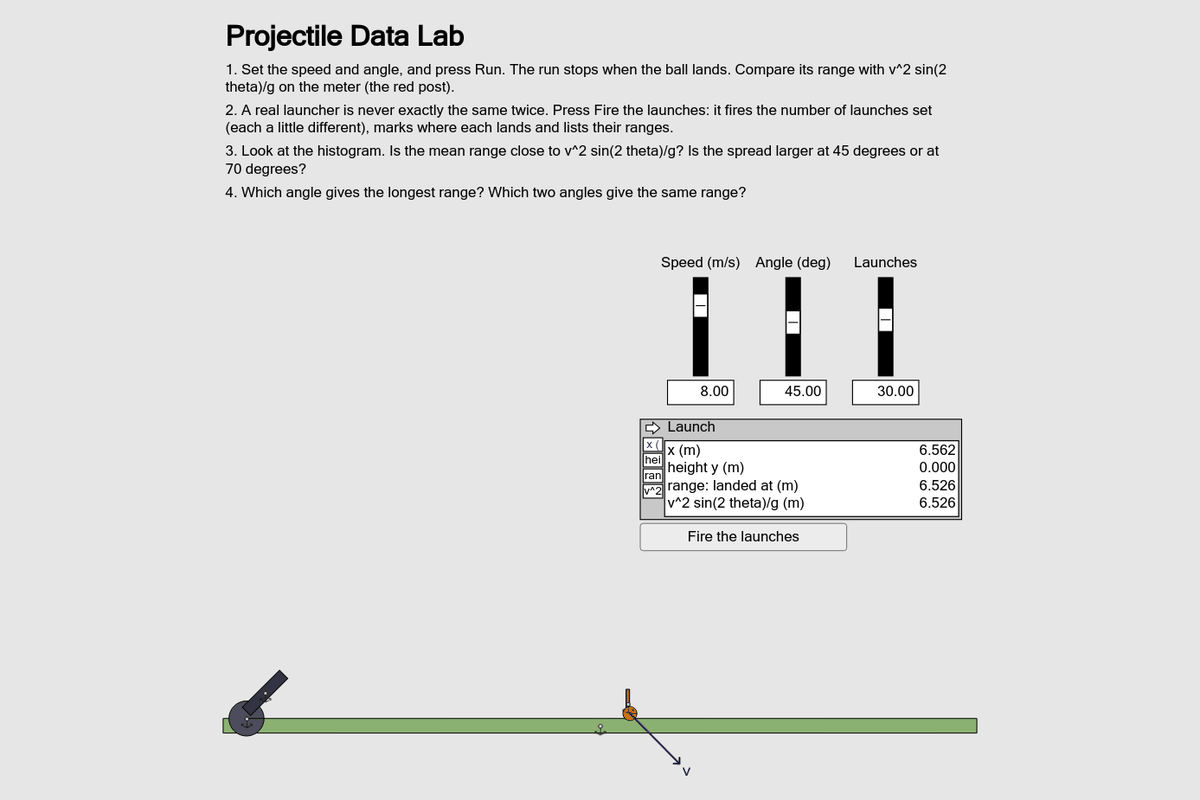
Projectile Data Lab
Fire many launches with a little scatter and compare the spread of ranges with v^2 sin 2 theta / g
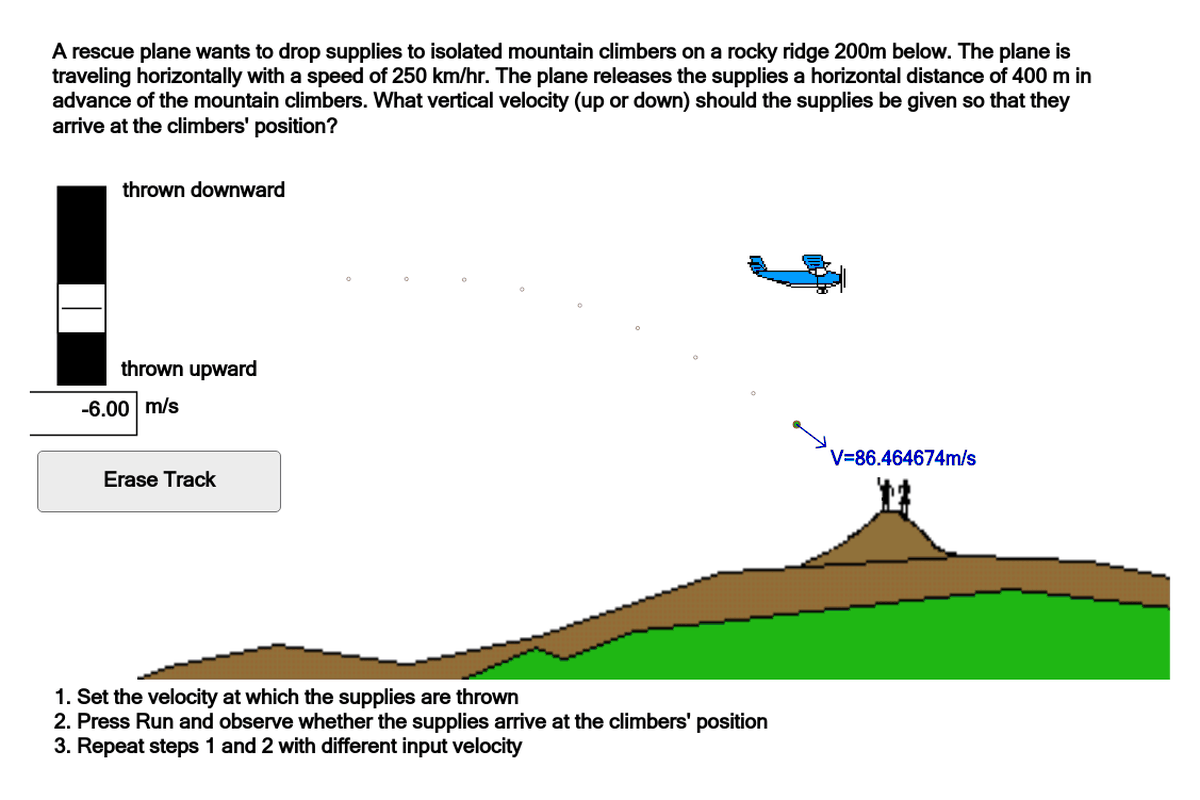
 Pulley Systems (4)
Analyze tension, mechanical advantage, and motion constraints in systems of ropes and pulleys. See how extra pulleys trade distance for force.
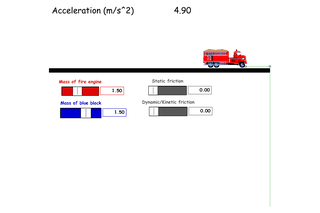
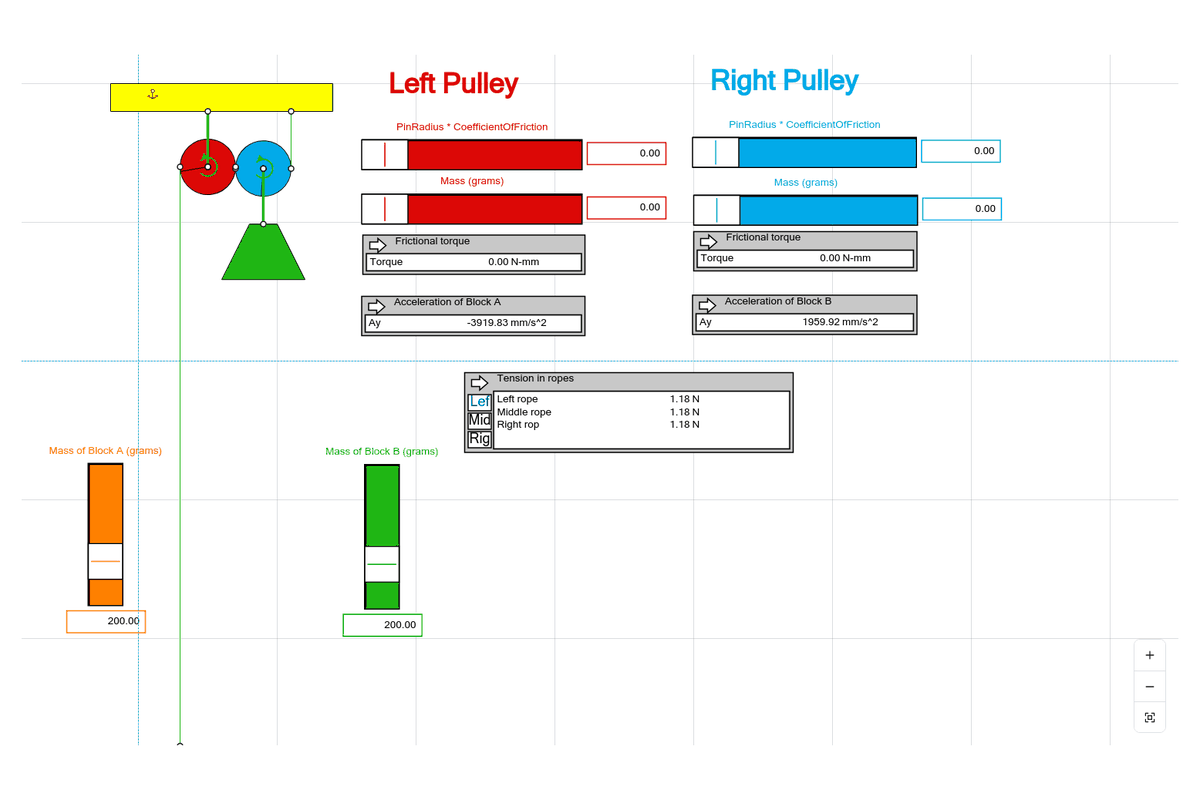
Pulley System
Compound pulley providing mechanical advantage
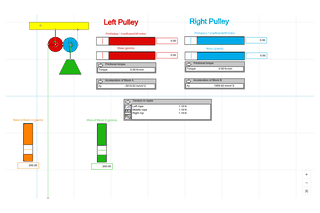
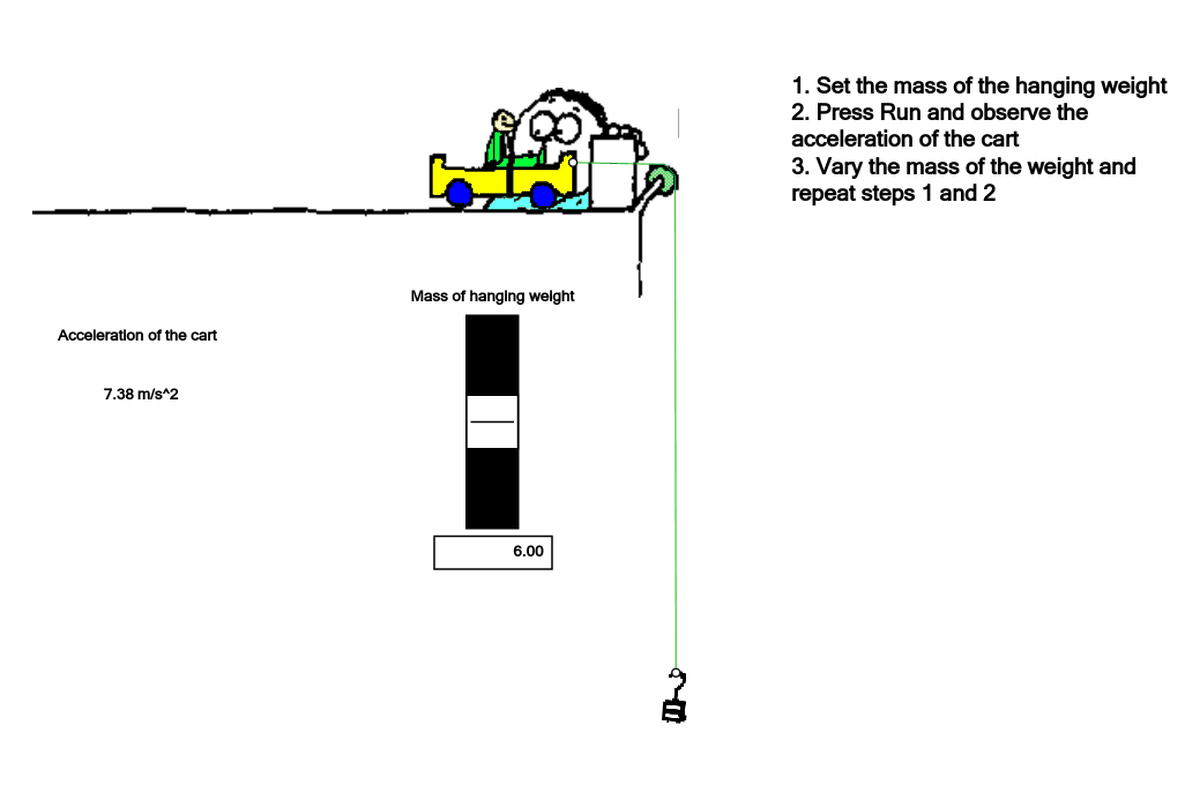
Pulley With Variable Friction
Effect of friction on a pulley-driven load
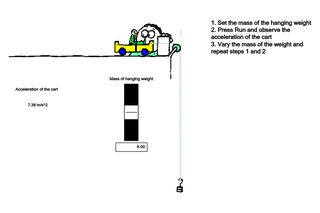
Pulleys With Mass and Friction
Pulley system accounting for pulley mass and friction
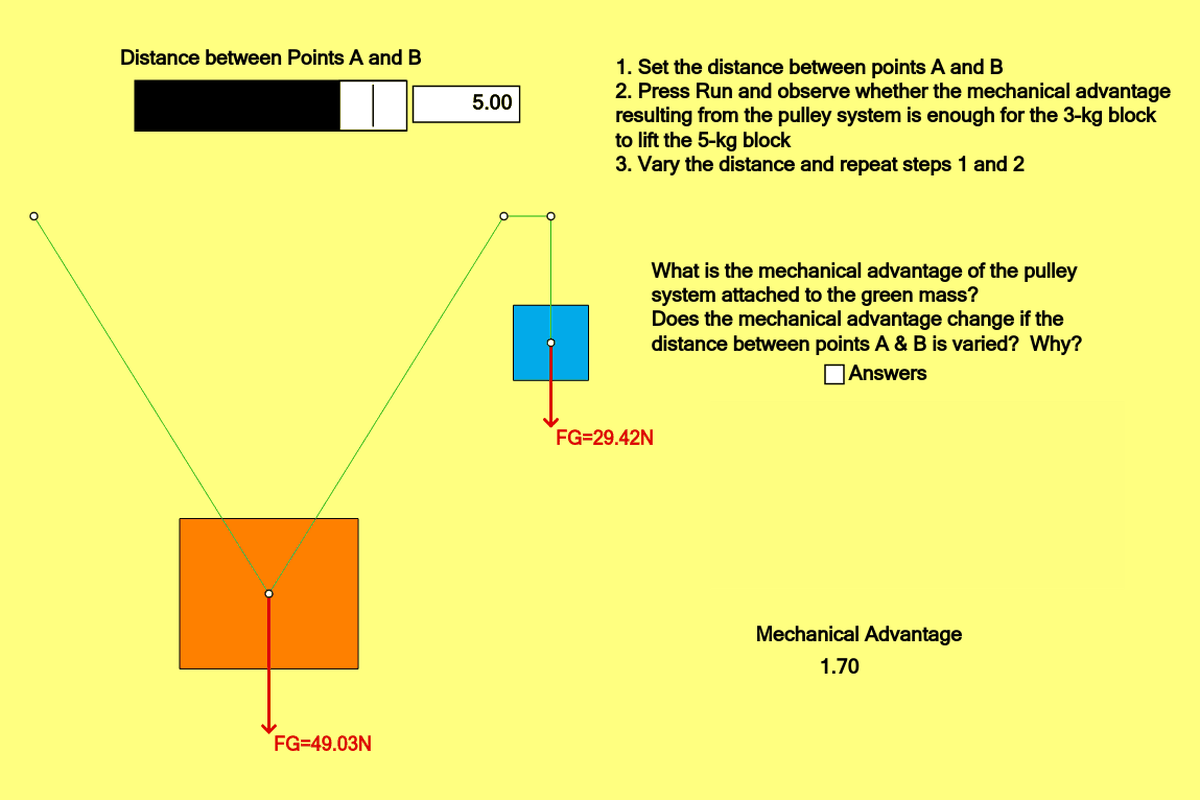
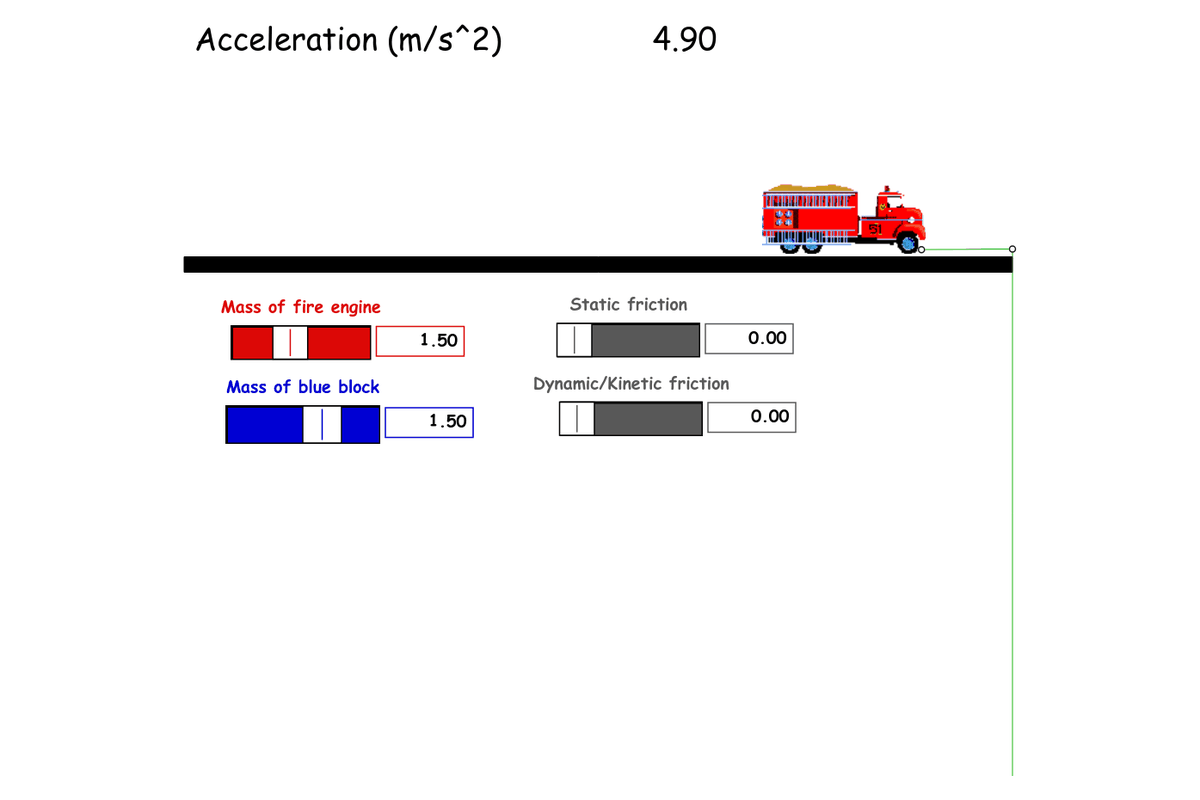
Young Children
Simple pulley scenario with small weights
 Rotational Dynamics (9)
Work with spinning bodies. Explore torque, moment of inertia, angular momentum, and the rotational analogues of linear motion.
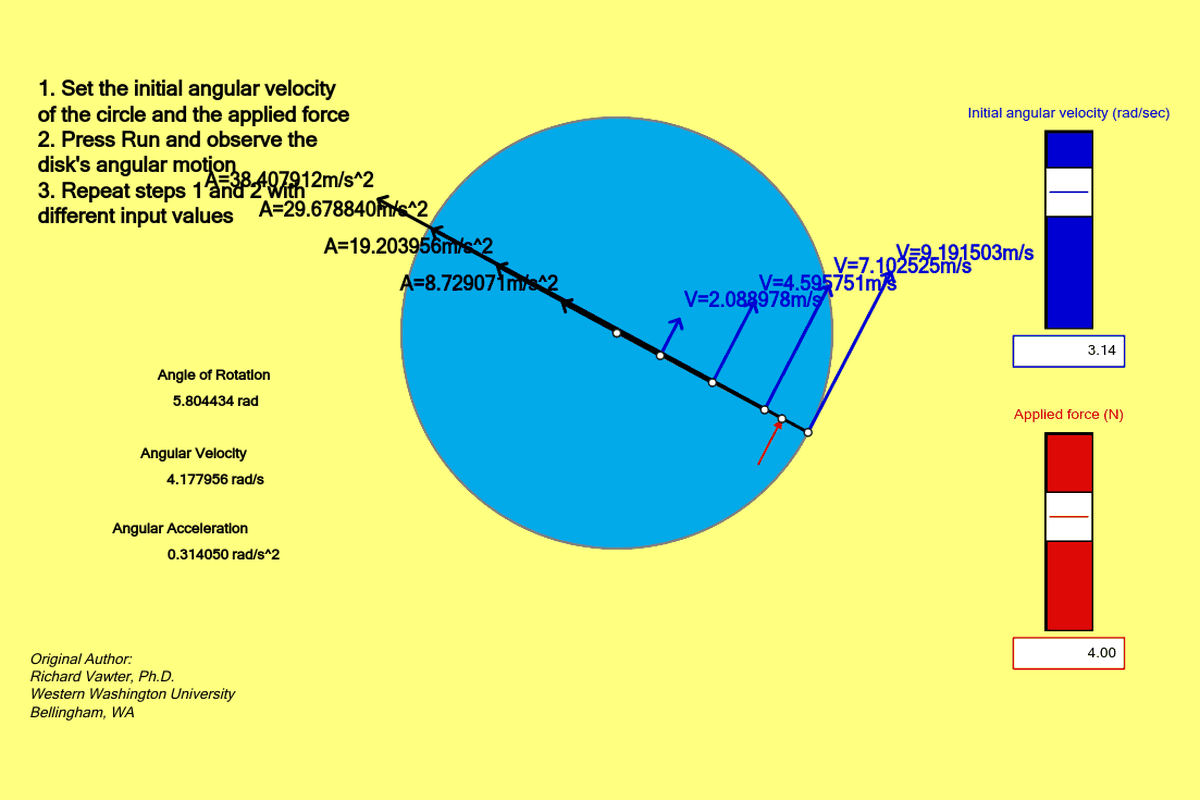
Angular Motion
Angular velocity, acceleration, and displacement
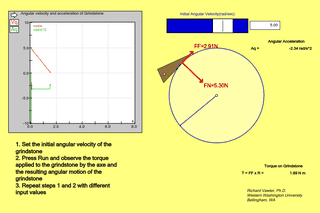
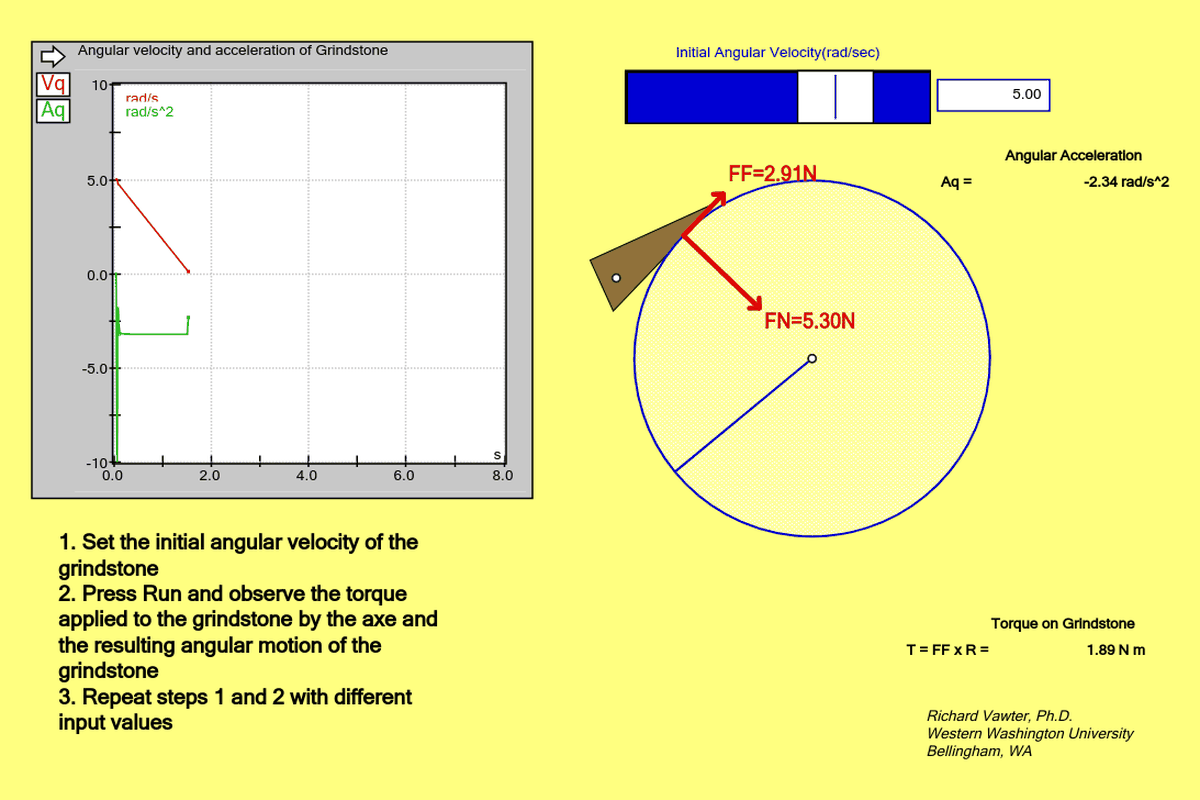
Axe and Grindstone
Axe held against a rotating grindstone
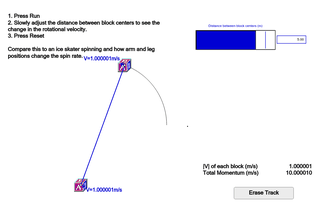
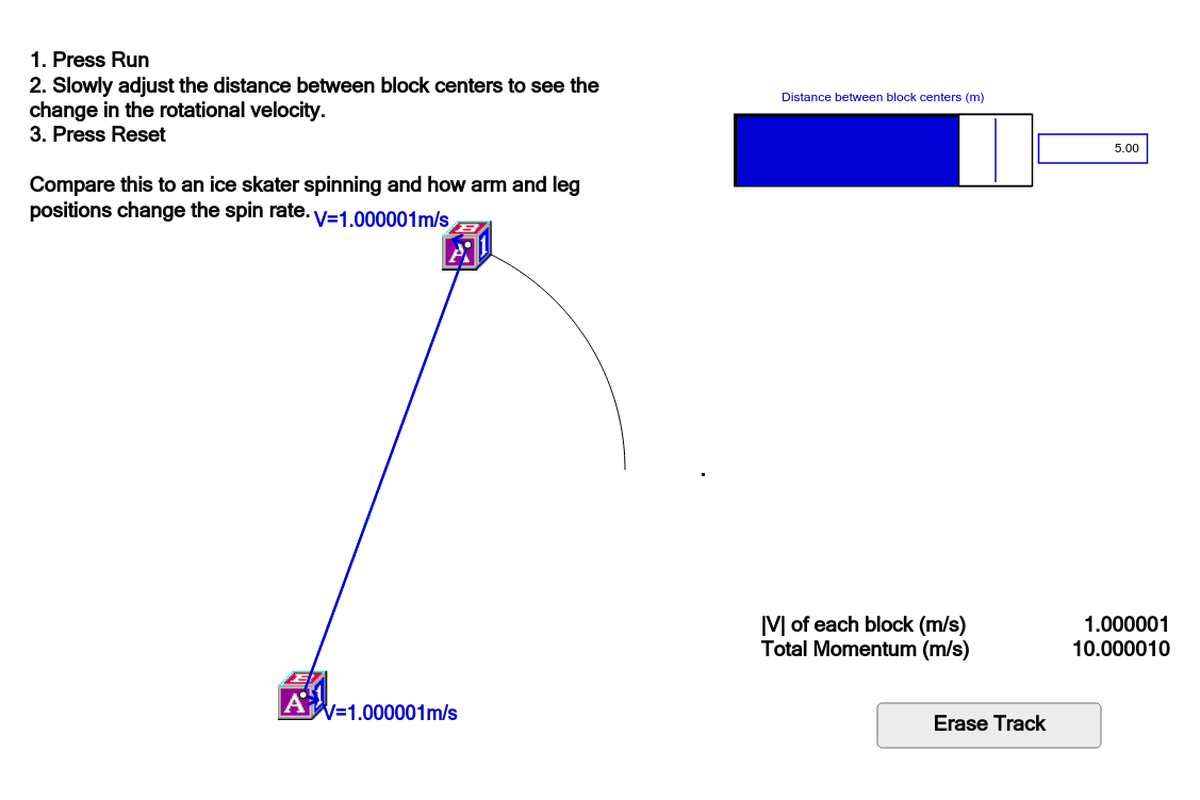
Conservation of Angular Momentum
Figure-skater effect — spin up by pulling arms in
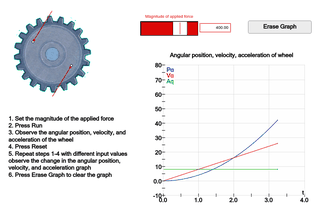
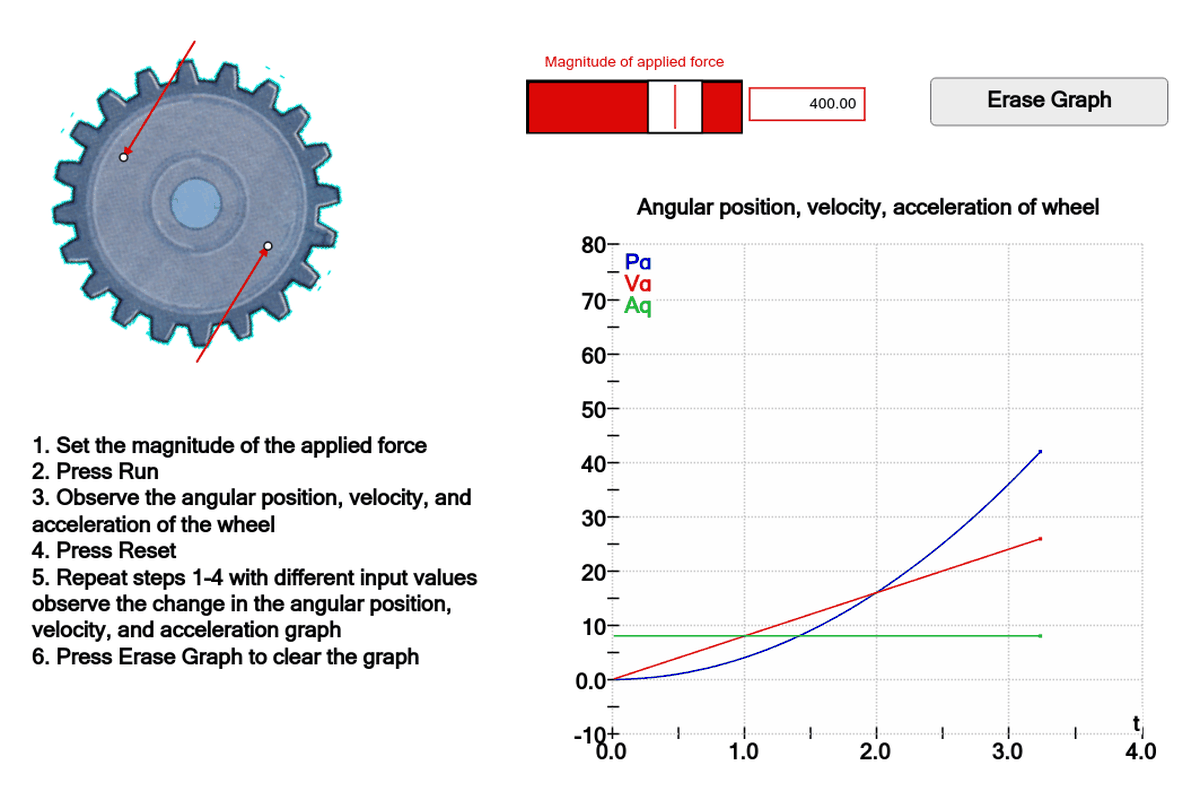
Constant Angular Acceleration
Uniform angular acceleration with applied torque
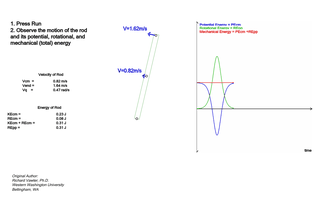
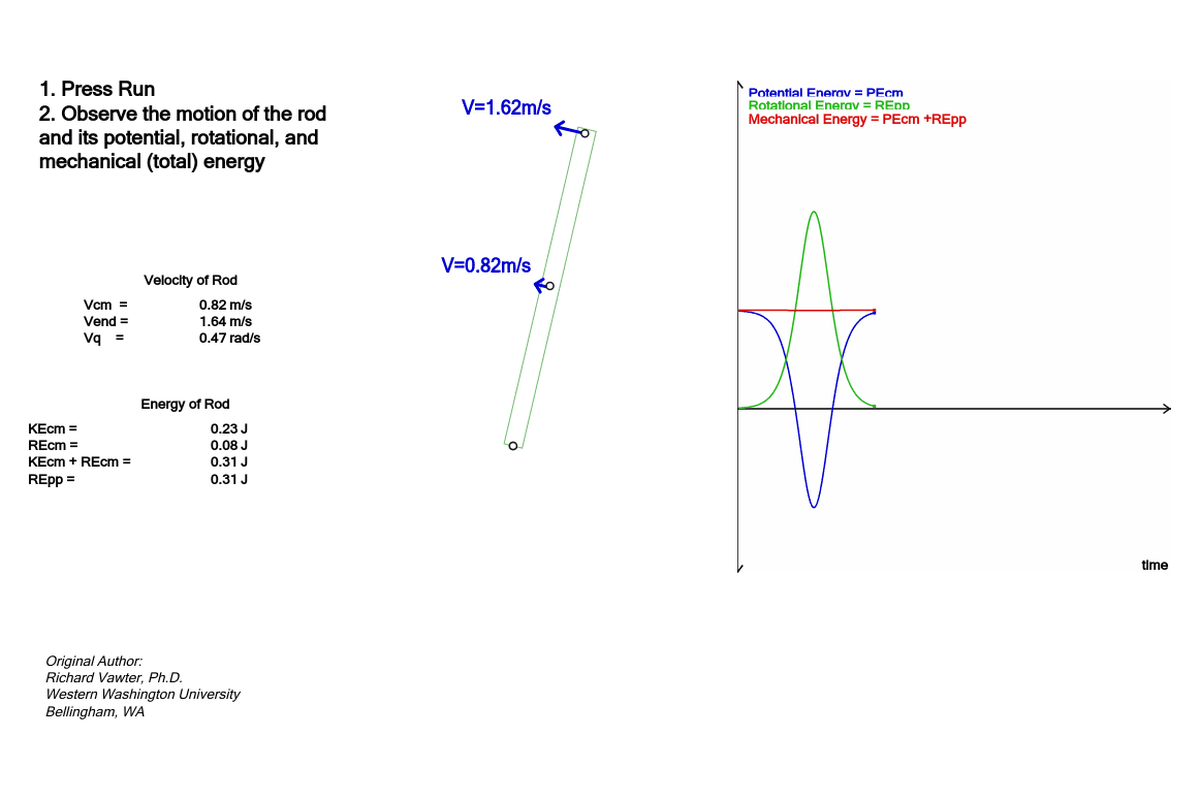
Energy of Rotating Rod
Kinetic energy of a rotating rigid rod
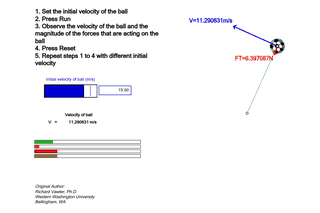
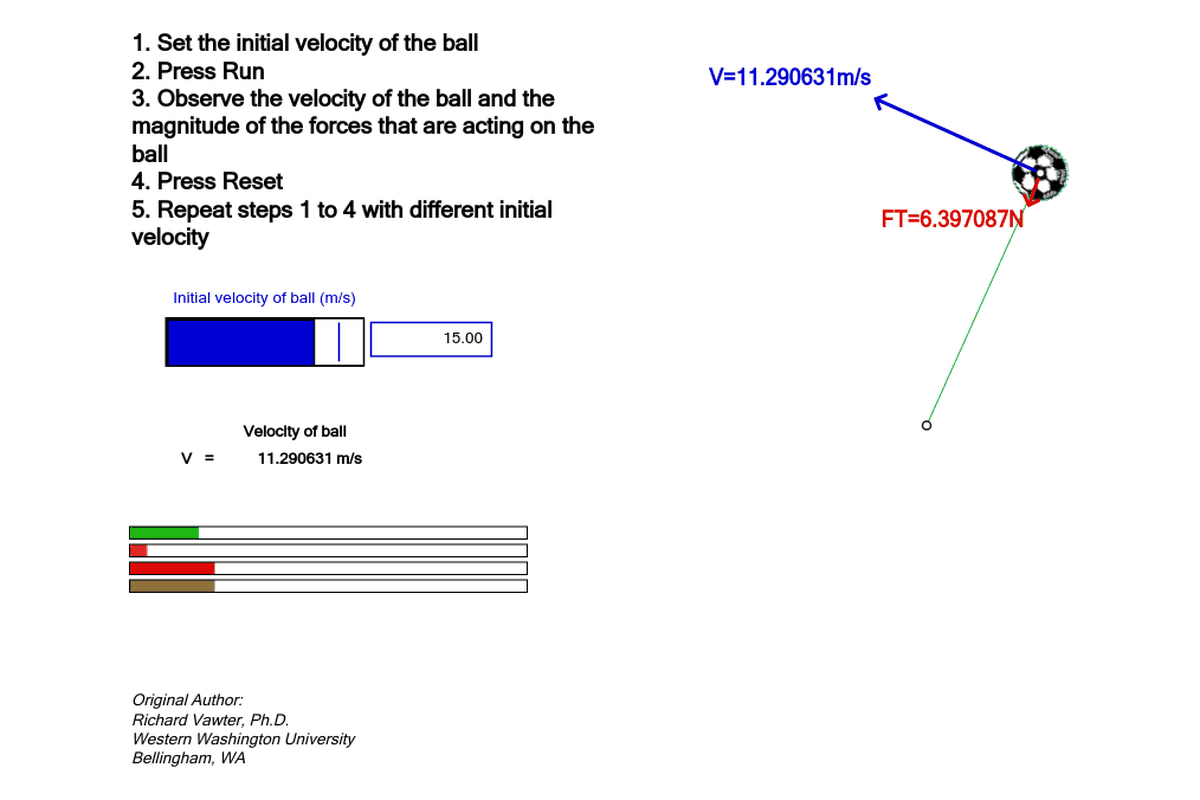
Revolving Ball on a String
Ball on a string providing centripetal force
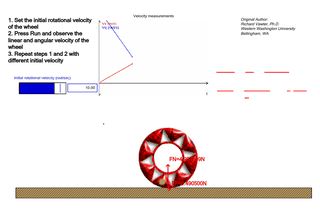
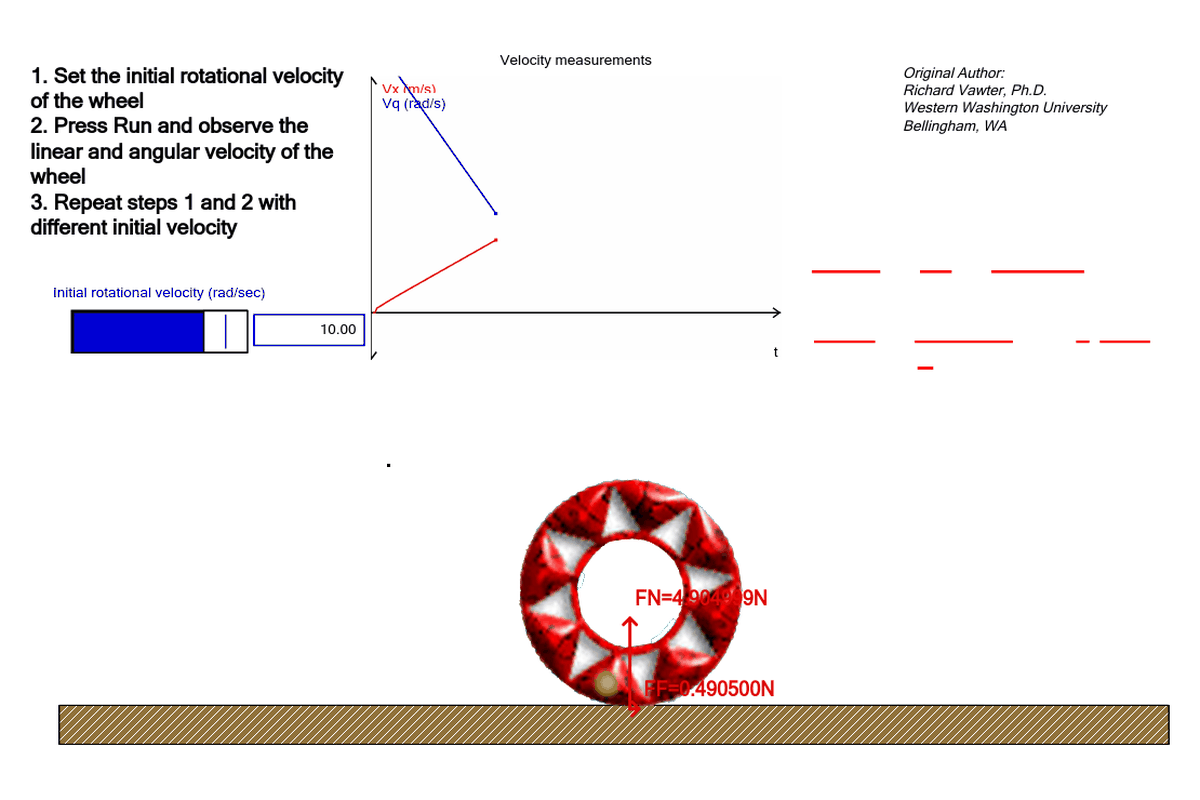
Slipping Disk
Rolling disk with slipping contact
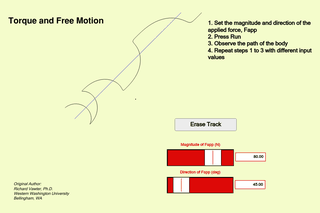
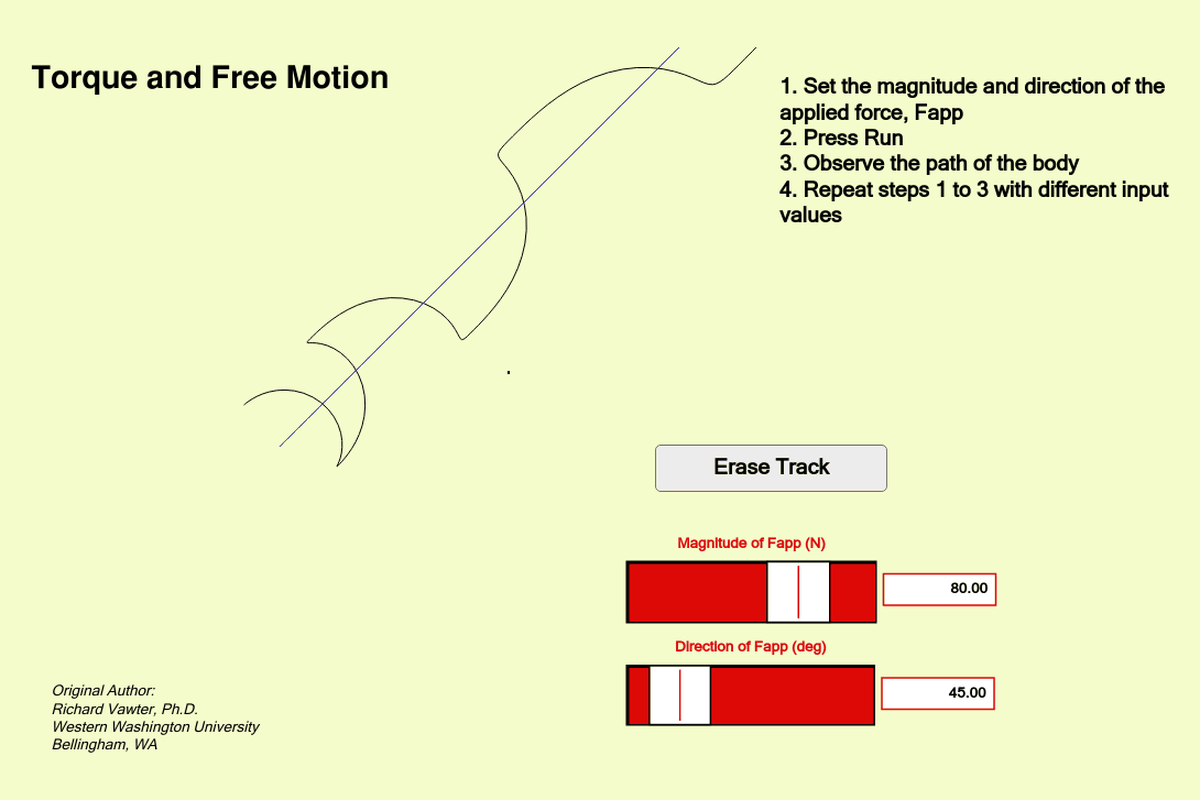
Torque and Motion
Angular acceleration = torque / moment of inertia
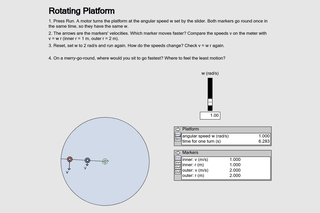
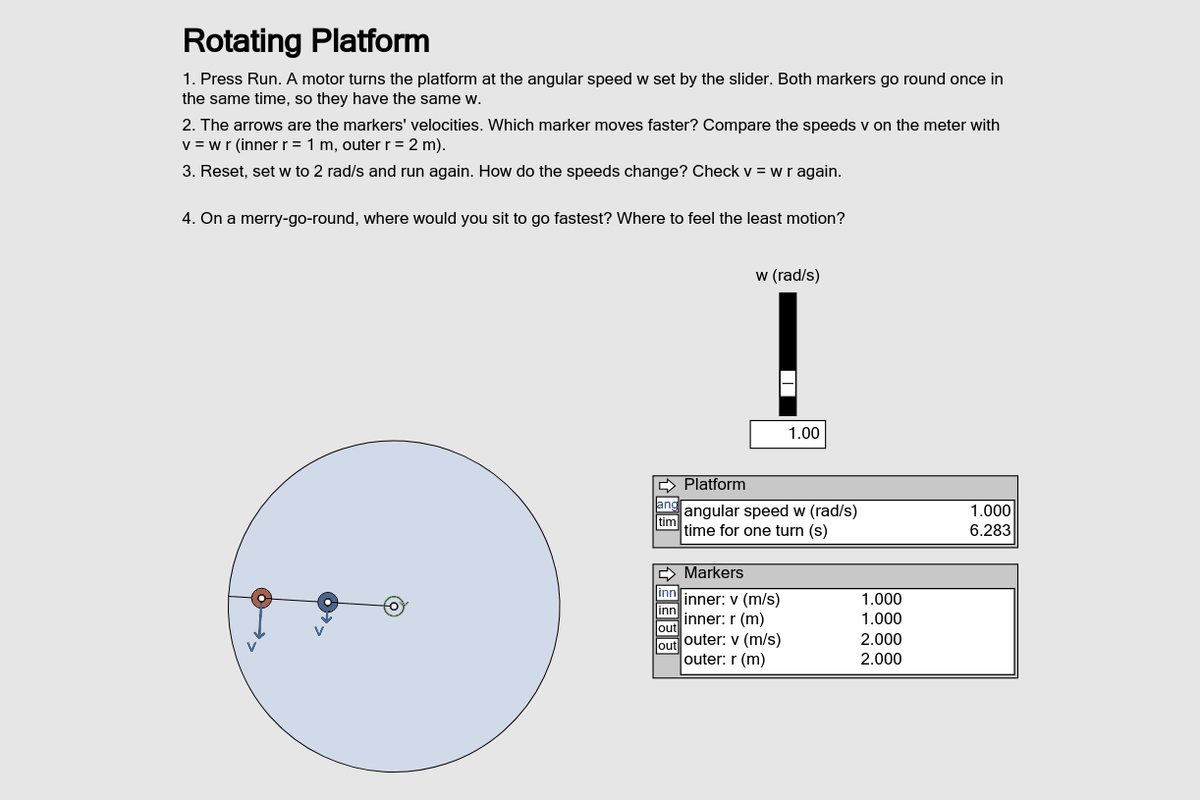
Rotating Platform
Two markers on a turntable go round together, but the outer one moves faster: v = omega r
 Sound Experiments (5)
Watch sound waves travel and interact. Explore propagation, reflection, resonance, and how sources create audible patterns.
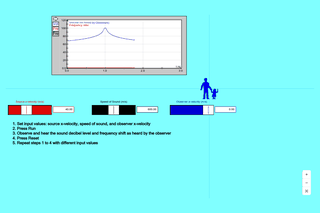
Doppler Effects Frequency
Frequency shift for a source moving toward/away
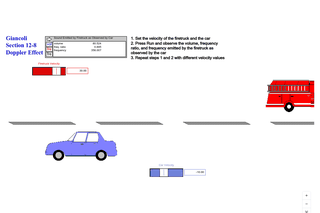
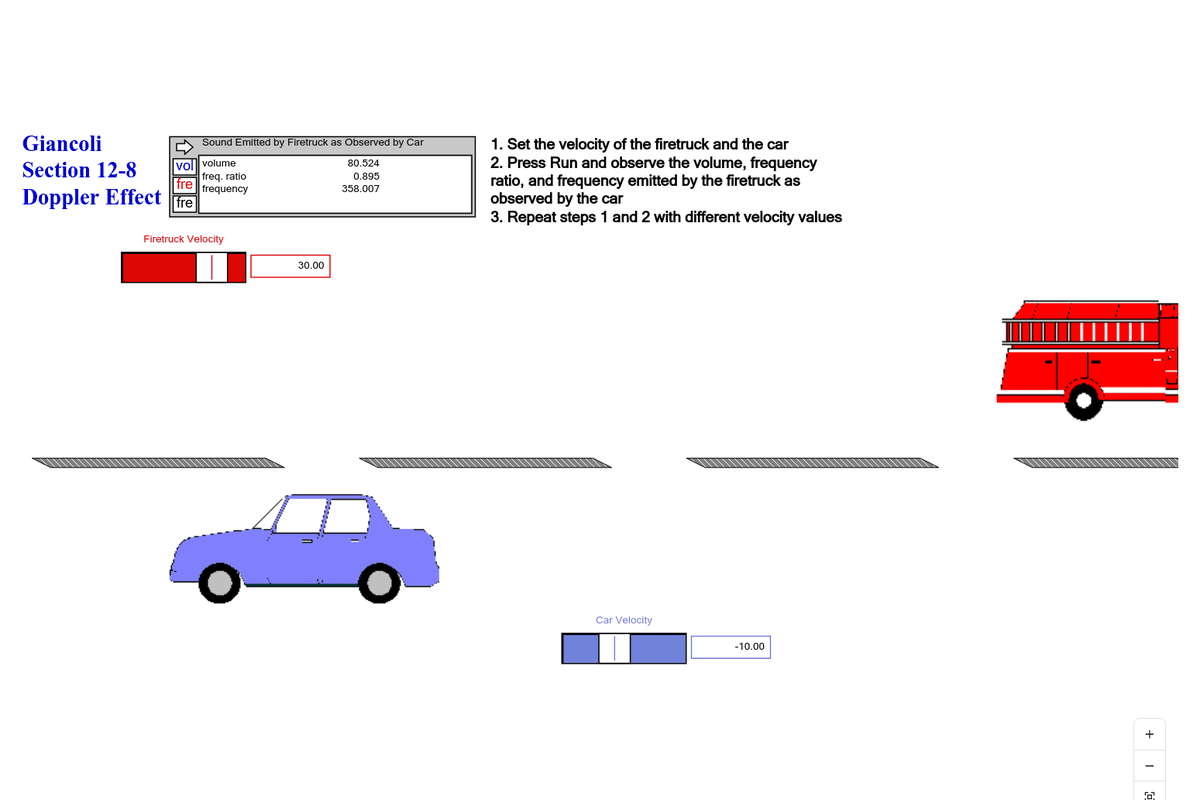
Fire Truck Doppler Effect
Pitch shift of a passing siren
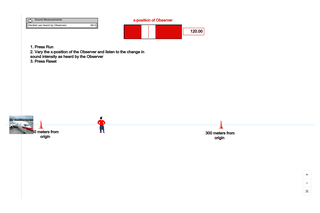
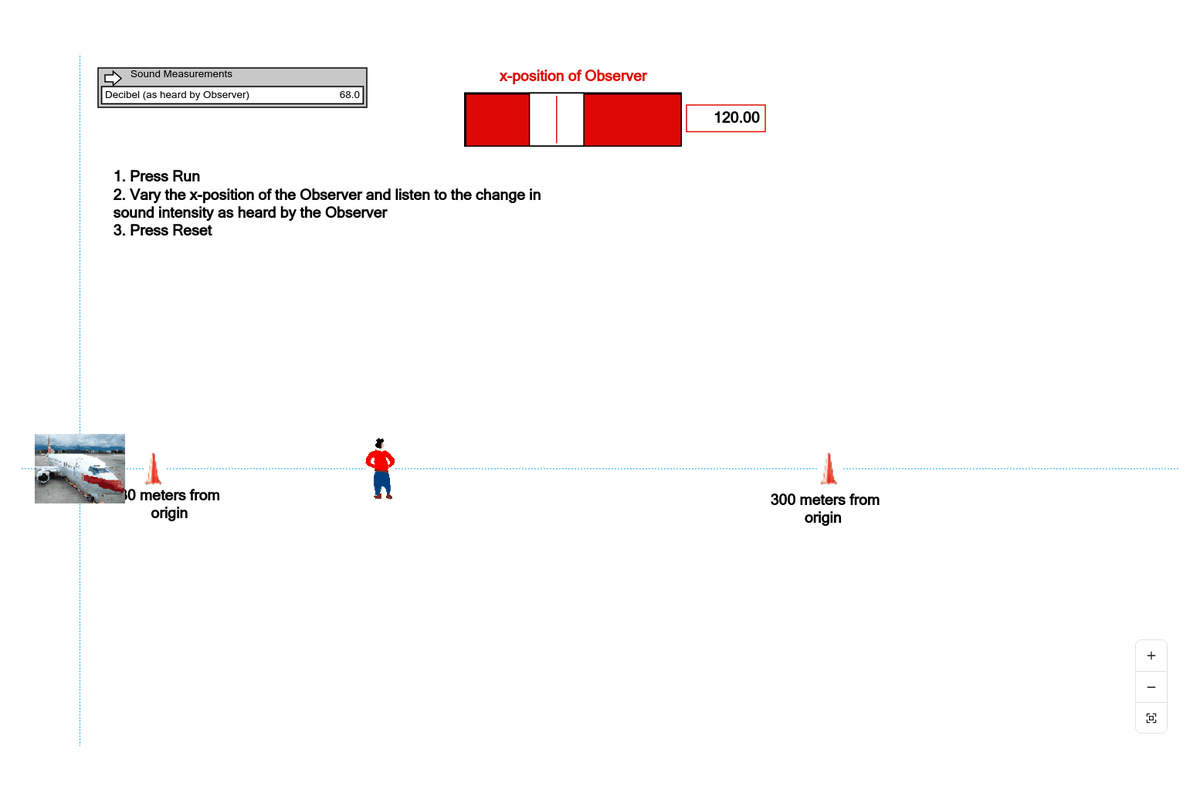
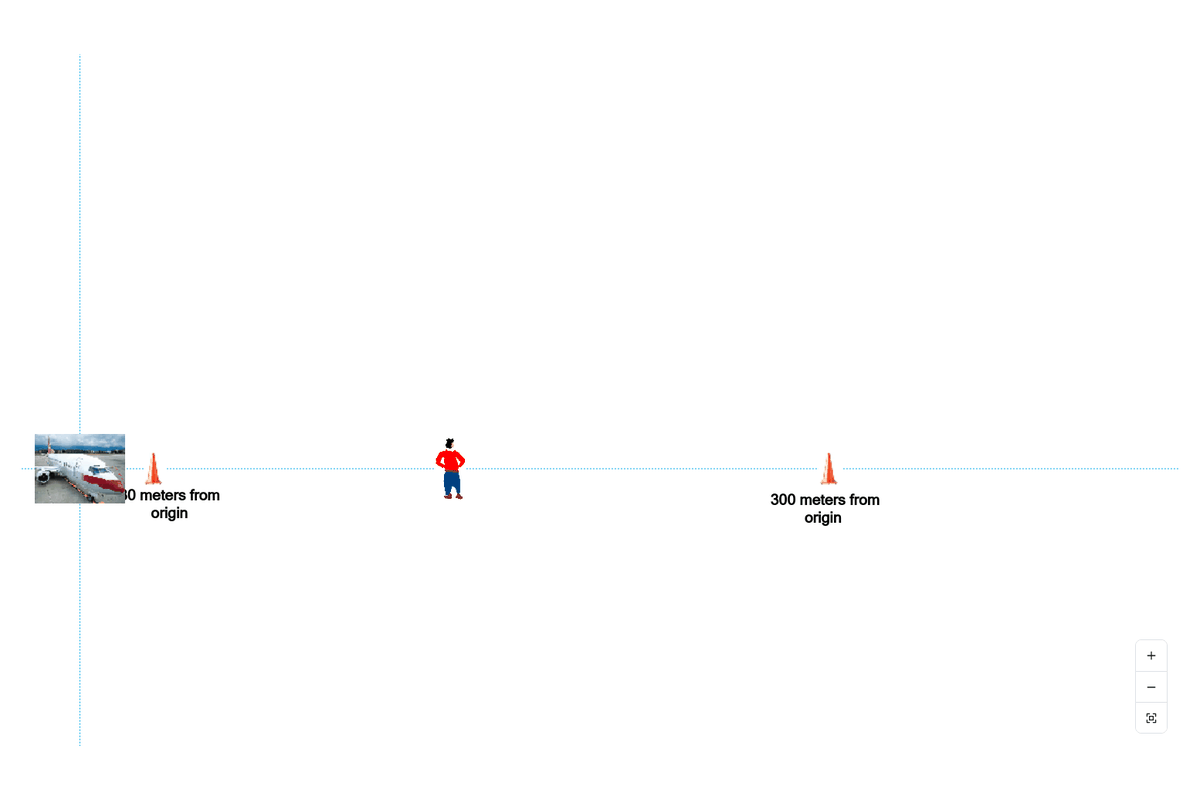
Jet Volume Complete
Full jet volume vs distance demonstration
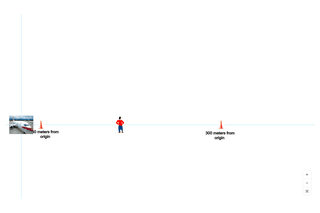
Jet Volume Distance
Sound intensity decreasing with distance
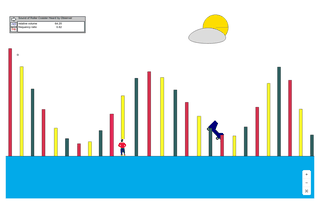
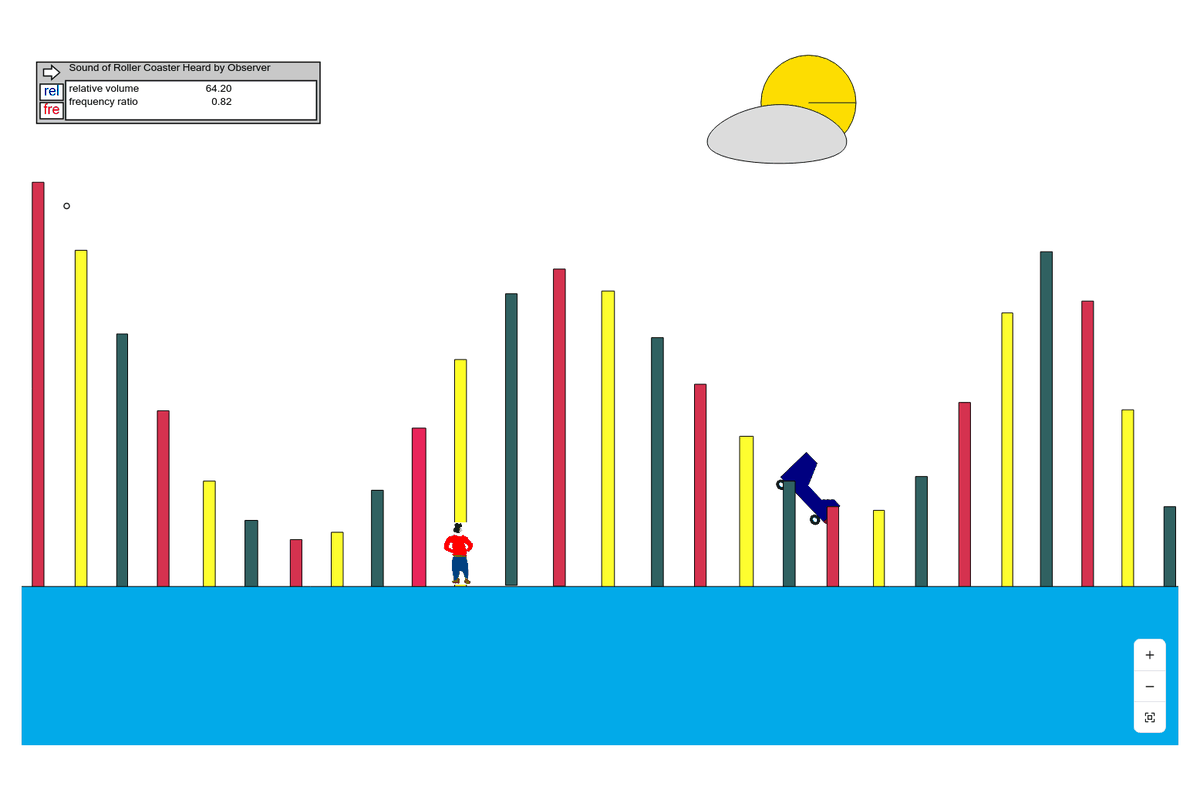
Roller Coaster
Rolling coaster with sound-effect feedback
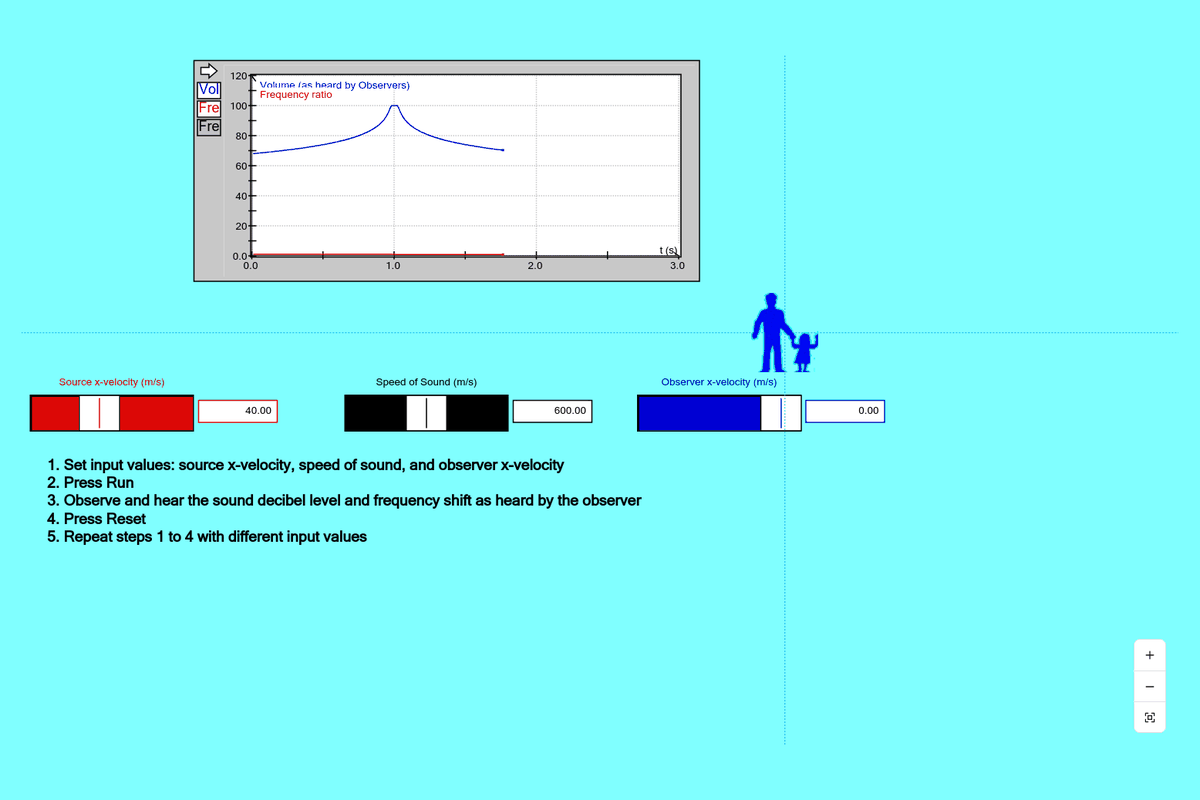
 Vectors (2)
Add, subtract, and decompose vectors visually. Great for building intuition before tackling equations of motion in two dimensions.
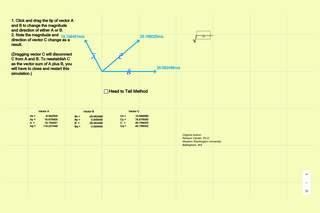
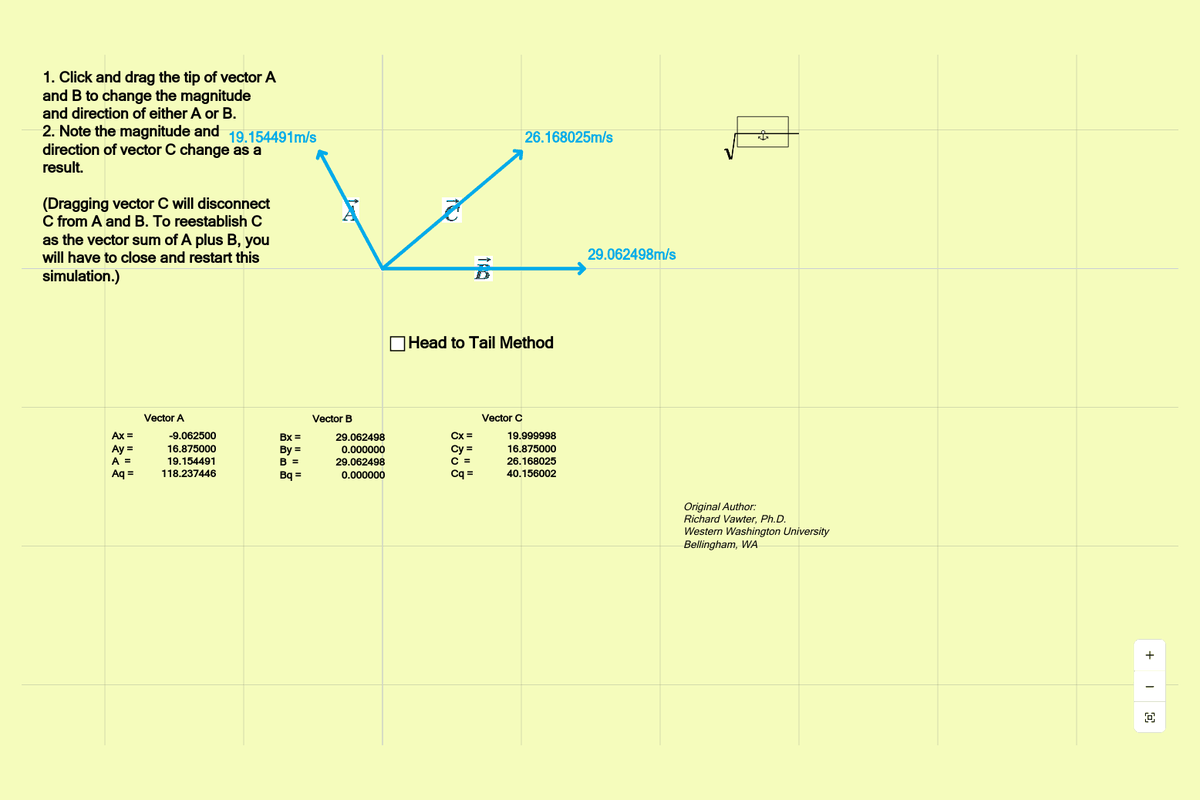
Adding Two Vectors
Tip-to-tail and parallelogram vector addition
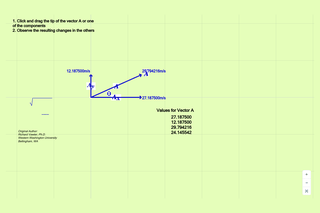
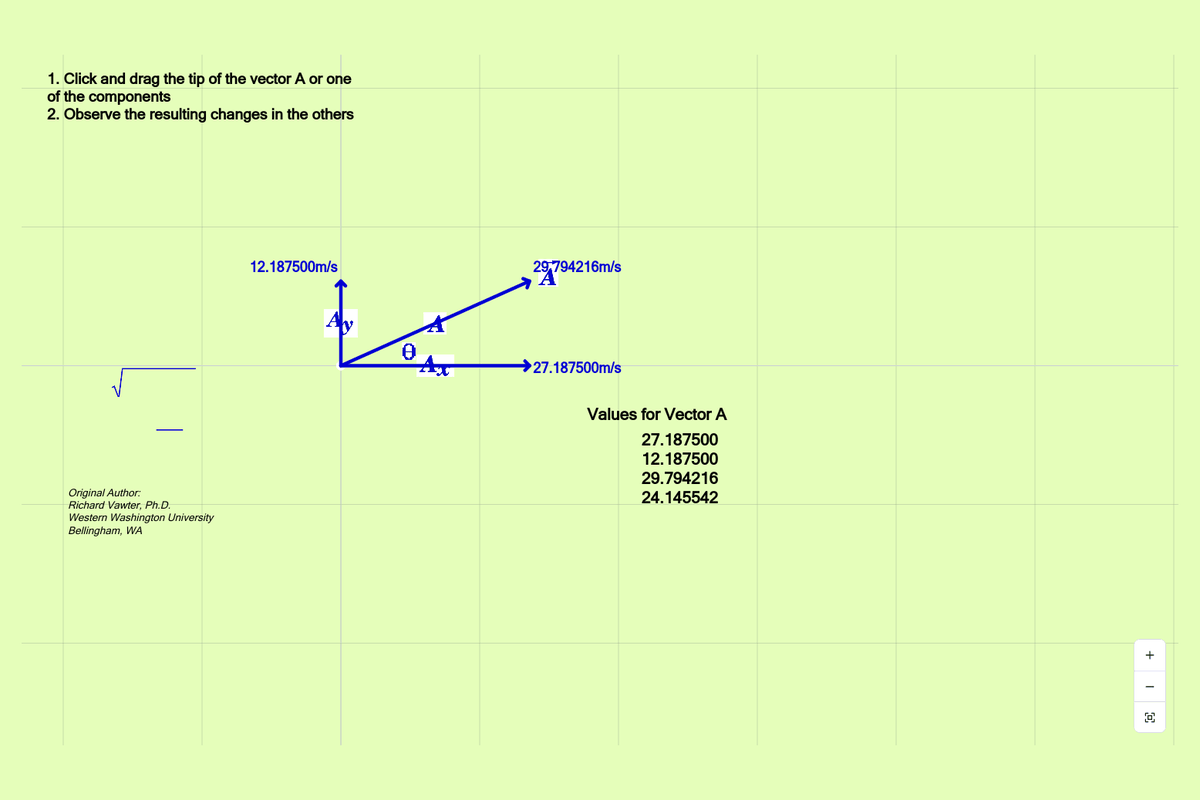
Vector Components
Decompose a vector into x and y components
 Waves (5)
Investigate transverse and longitudinal waves, superposition, interference, and how pulses travel and combine on springs or strings.
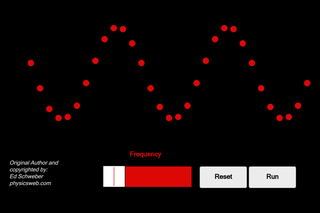
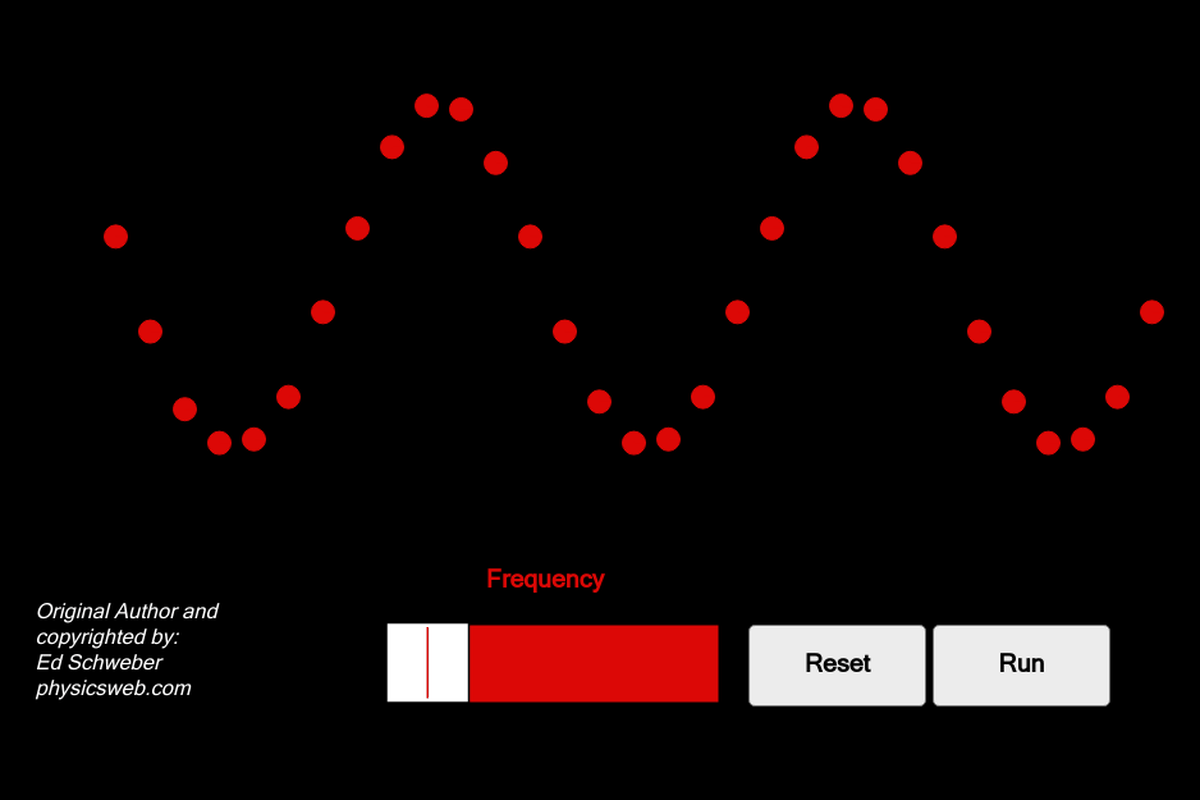
Harmonic Wave
Travelling sinusoidal wave on a string
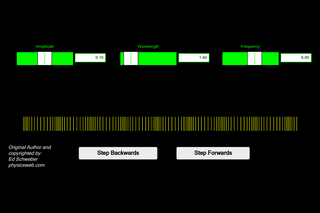
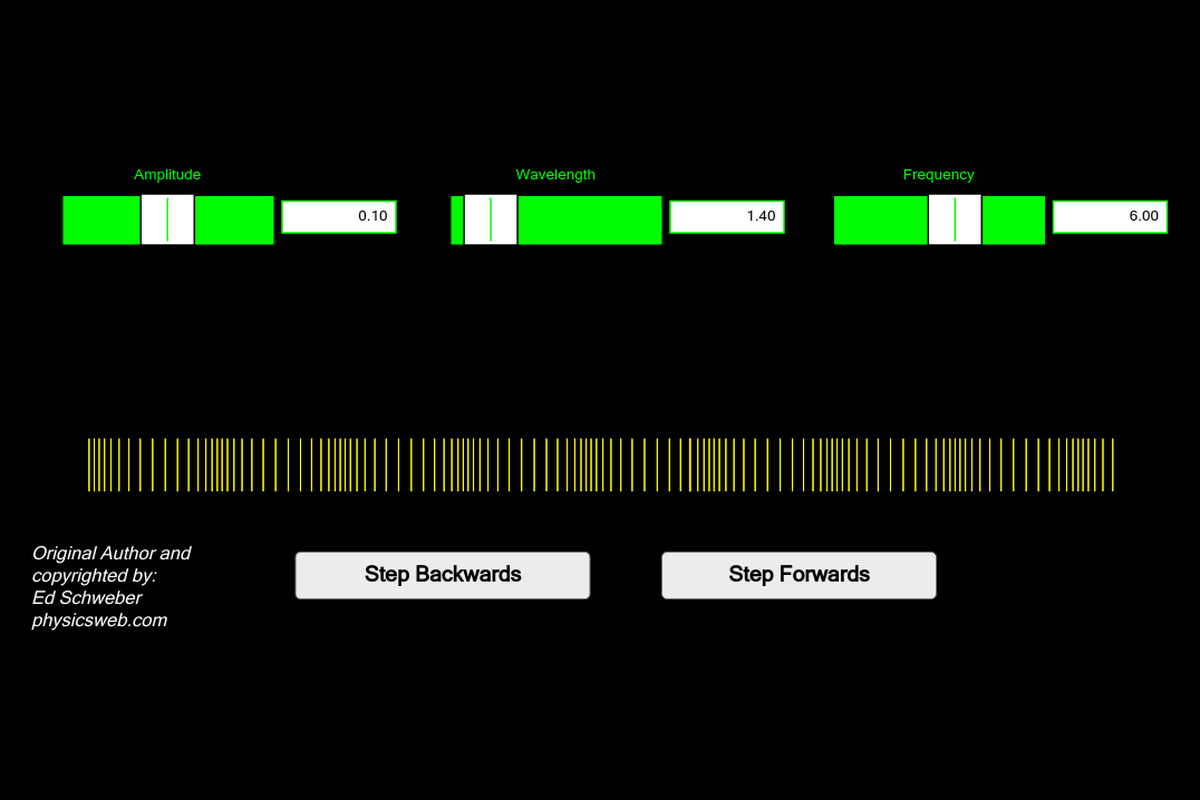
Longitudinal Wave
Compression wave propagating along a medium
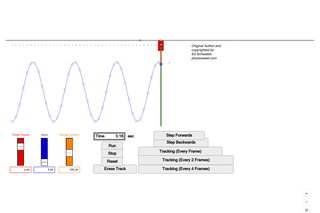
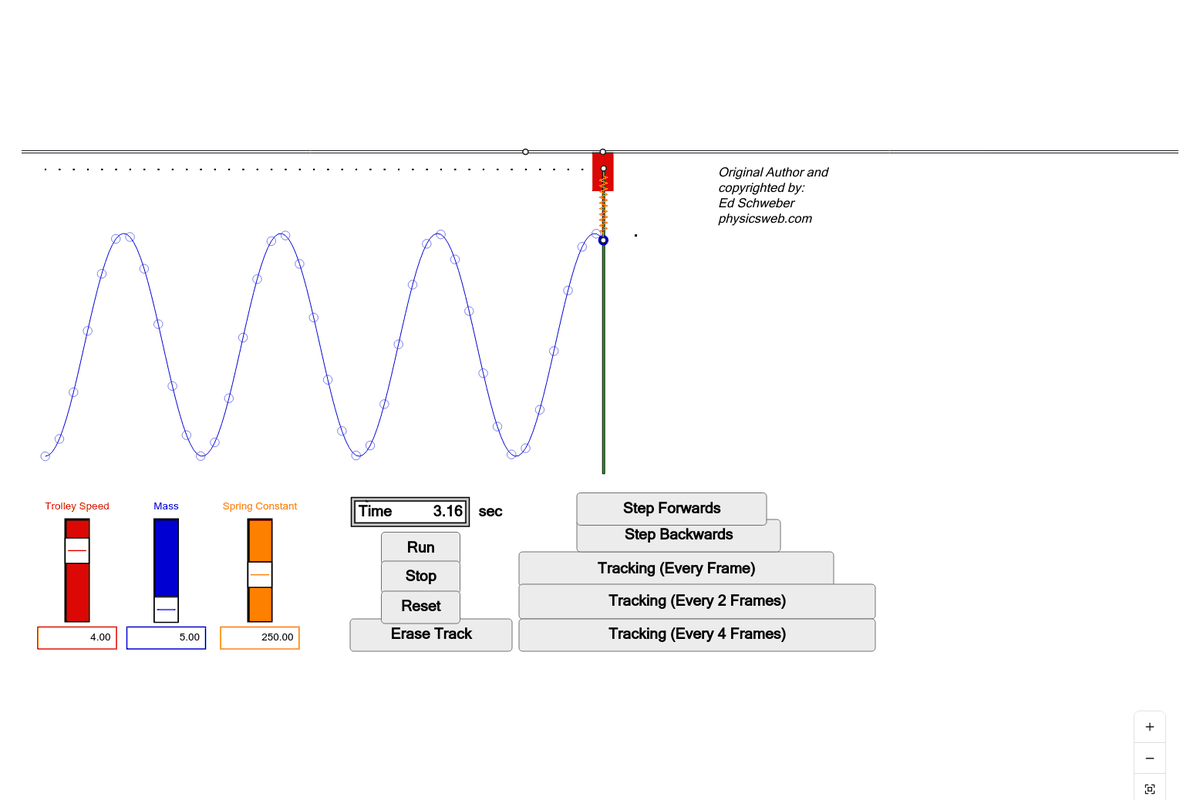
Sinusoidal Trolley
Trolley tracing a sine curve via coupled oscillators
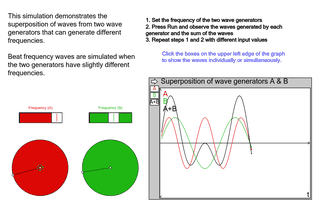
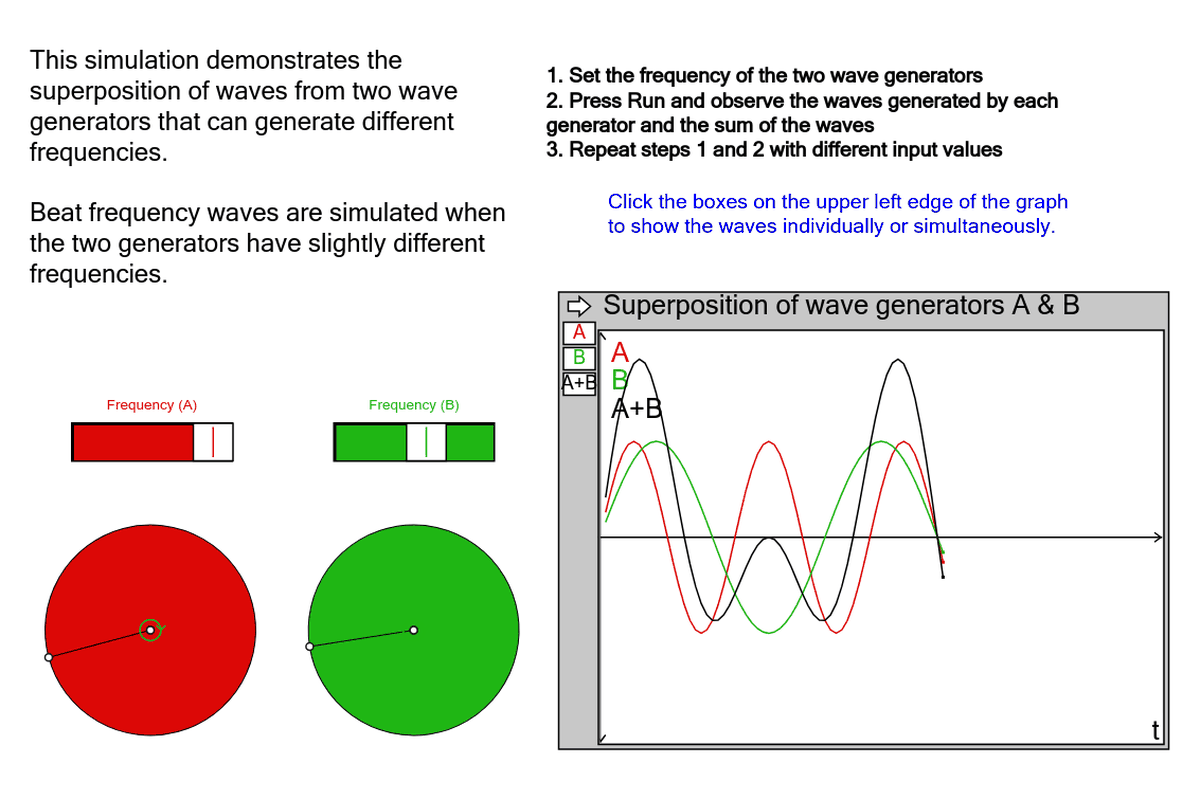
Wave Superposition
Two waves combining — constructive and destructive interference
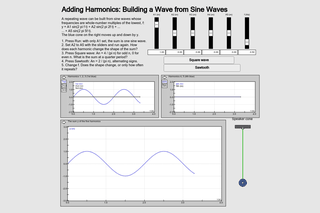
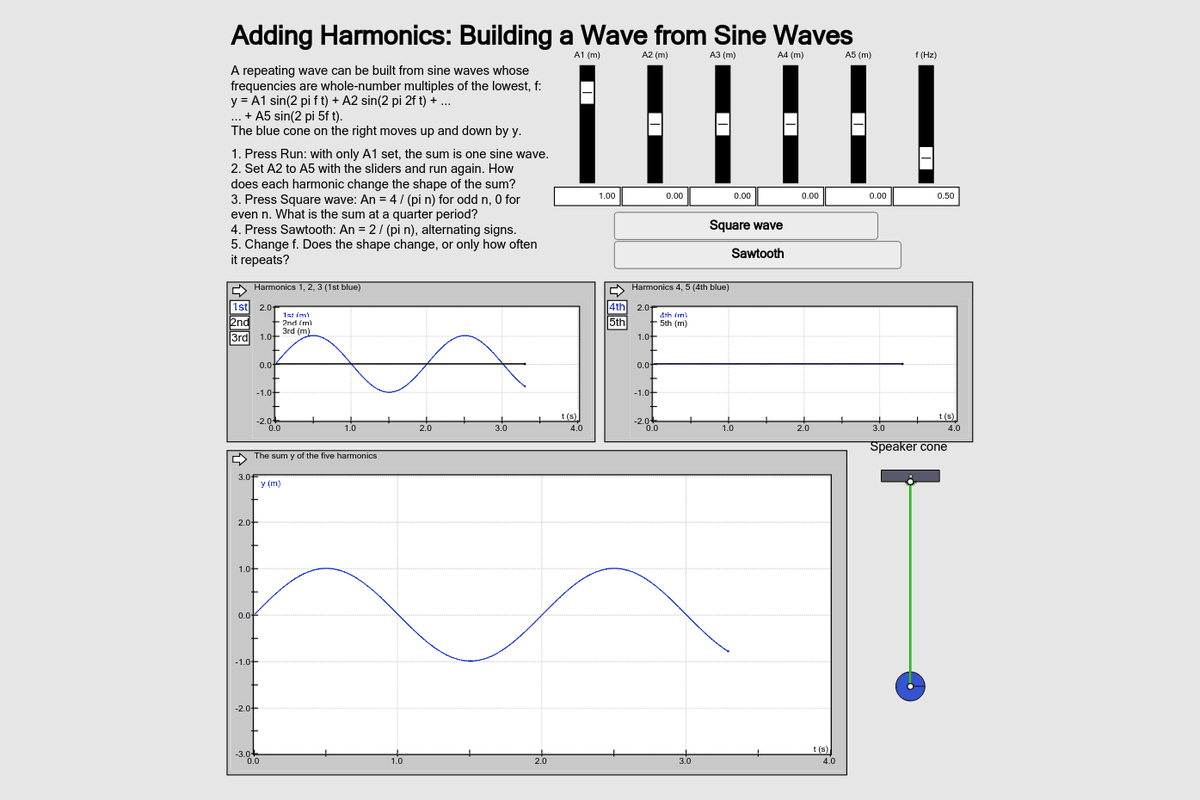
Adding Harmonics
Five harmonic sliders build a waveform; presets make a square wave and a sawtooth
 Work and Energy (5)
Trace how energy converts between kinetic and potential forms as forces do work. Investigate conservation of mechanical energy and the effect of non-conservative forces.
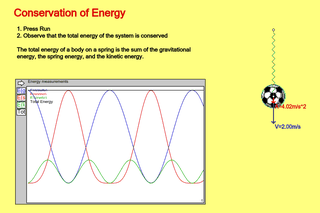
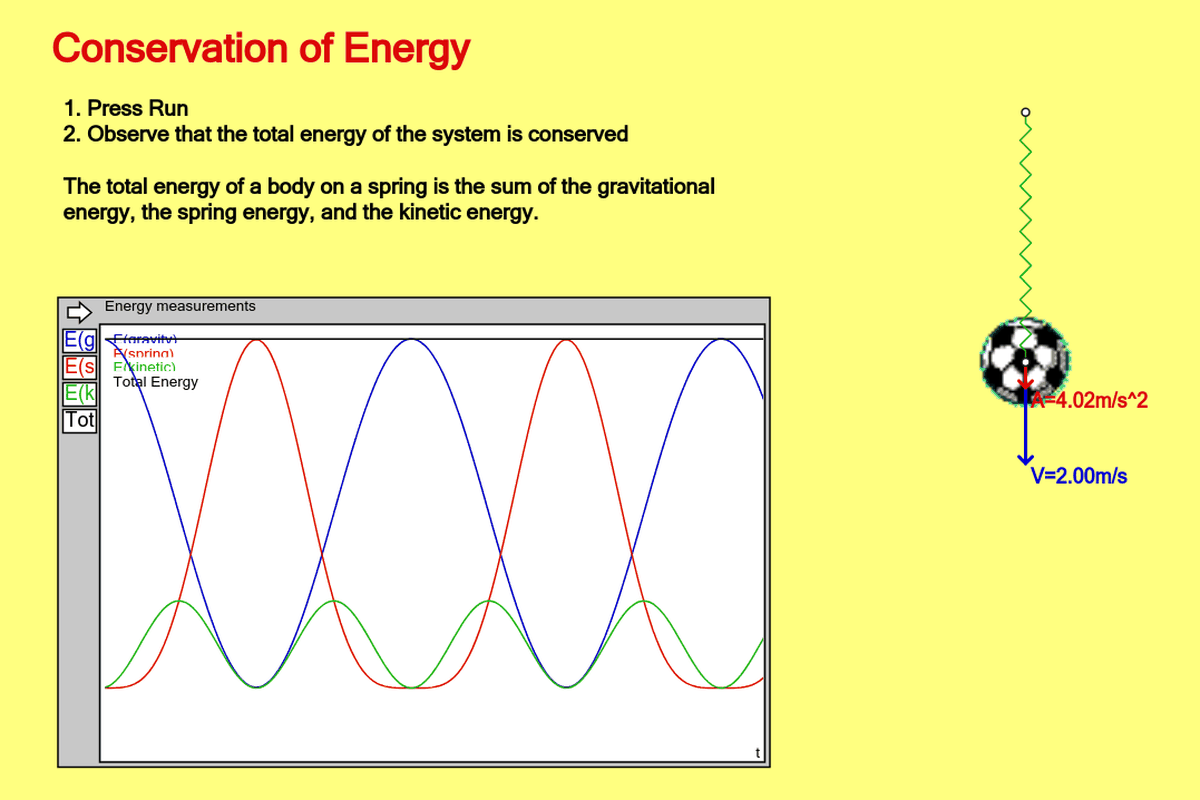
Conservation of Energy
Total mechanical energy conserved in a closed system
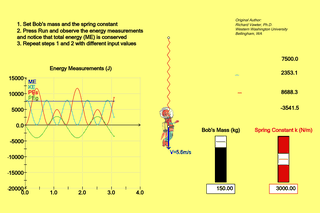
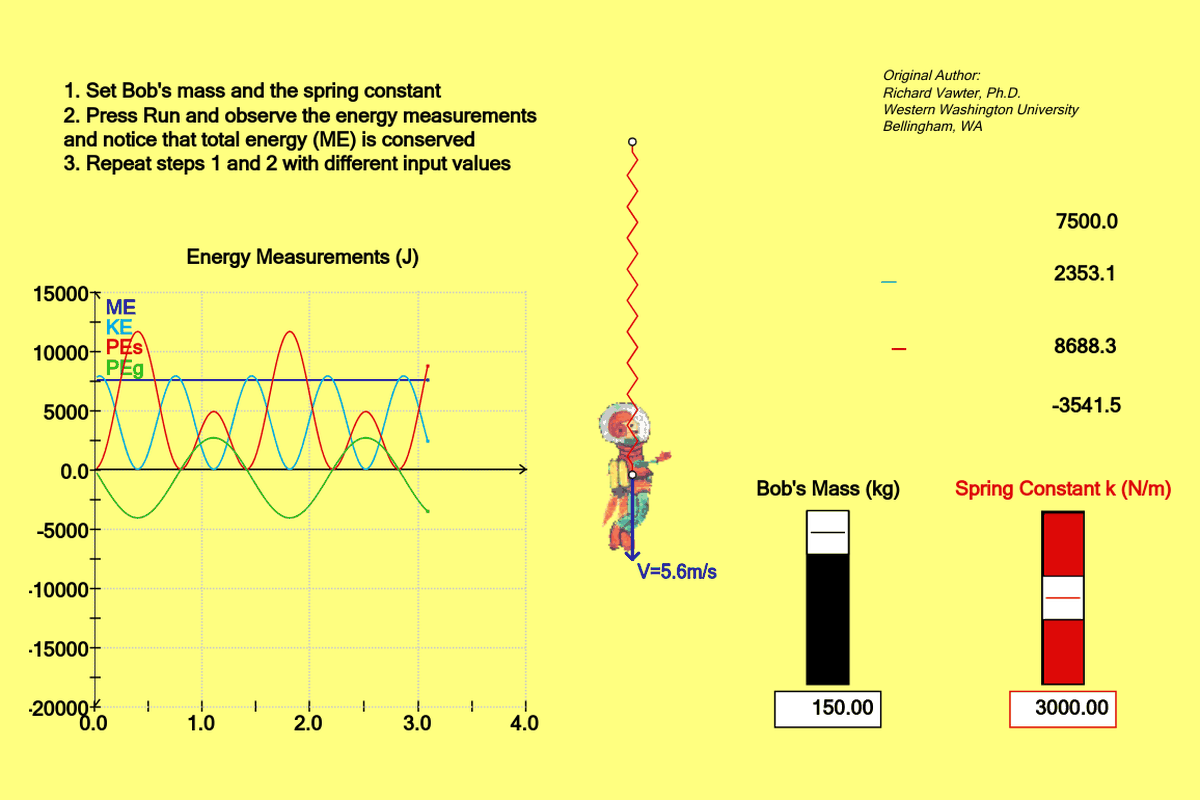
Energy of Oscillating Spring
Energy exchange between kinetic and spring potential
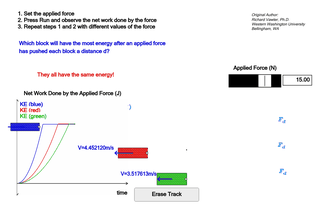
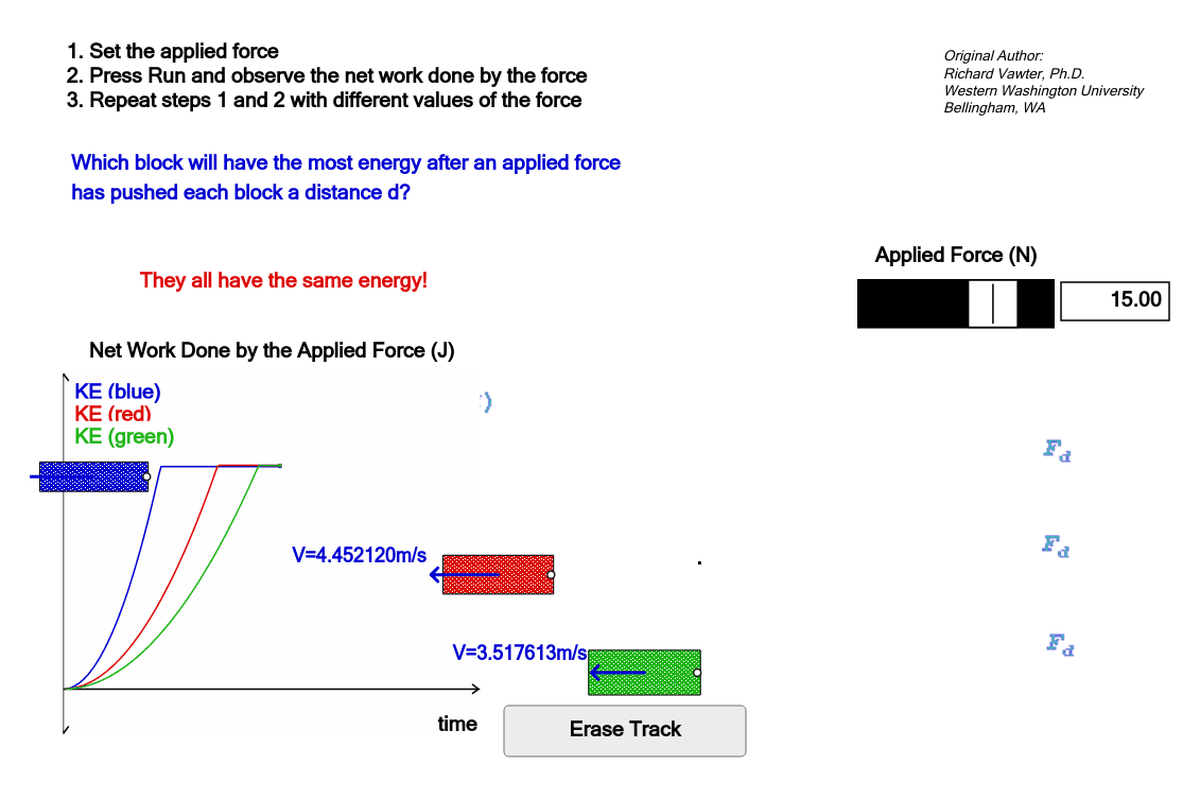
Work Comparison
Compare work done by different forces
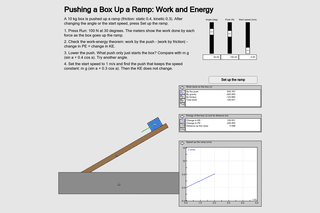
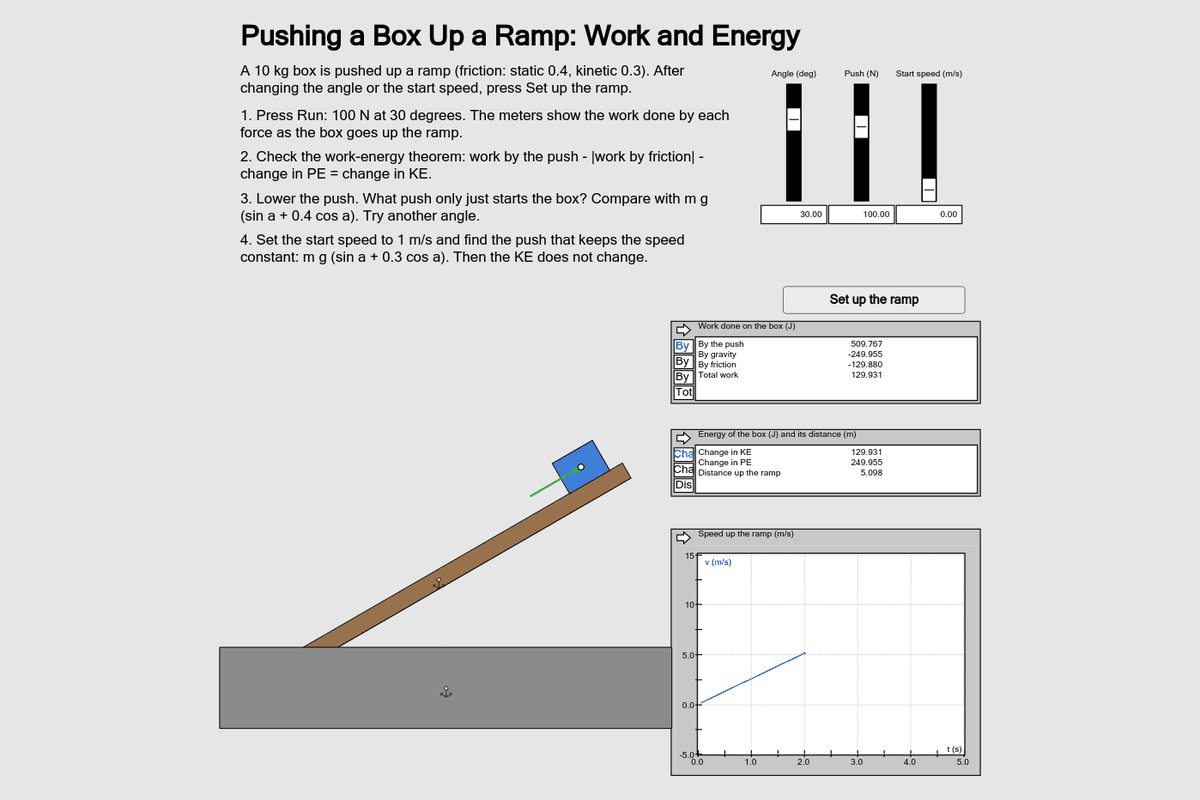
Pushing a Box Up a Ramp
Push a box up a rough ramp and check the work-energy theorem
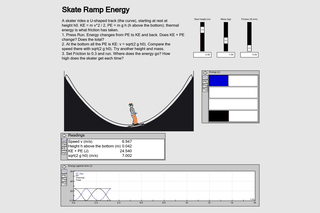
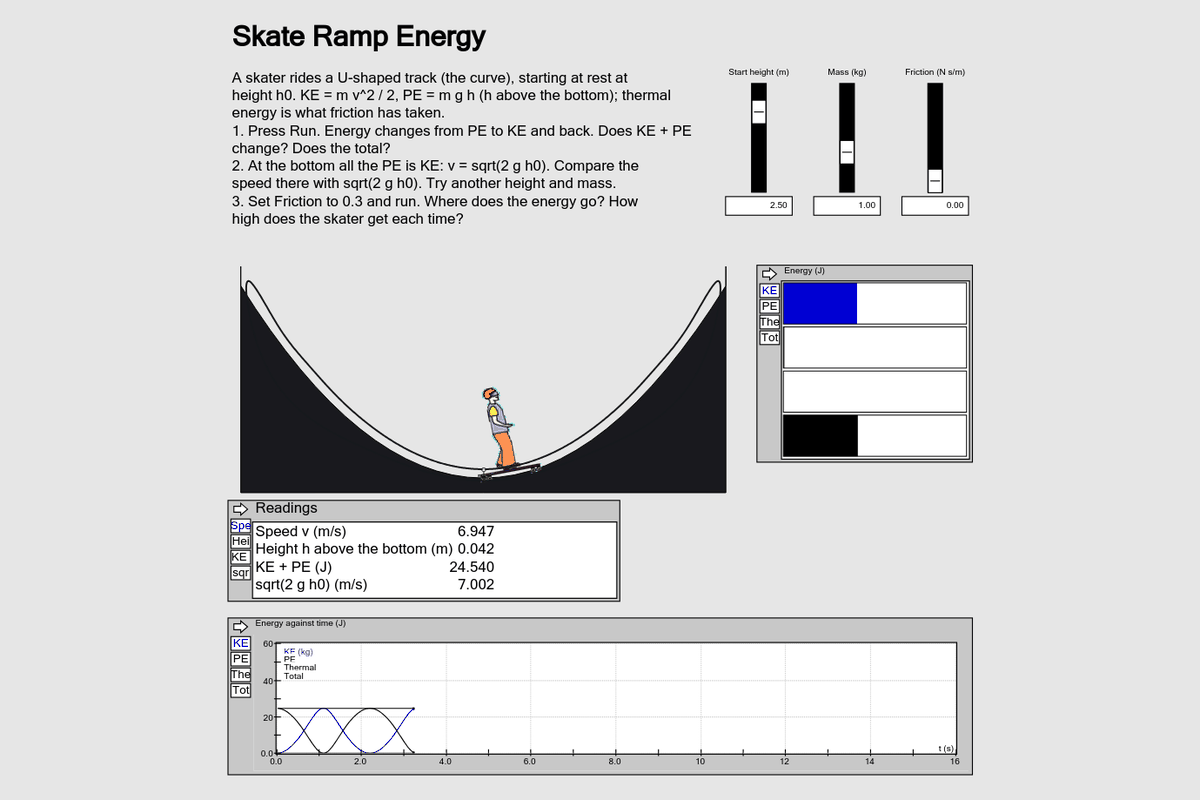
Skate Ramp Energy
A skater on a U-shaped ramp trades potential and kinetic energy; friction turns it into thermal energy
Looking for the experiment files to download? See the earlier experiment pages. To add your experiment to the library, call 1-800-766-6615 or email info@design-simulation.com.
Try Interactive Physics with your class
Free evaluations are available for teachers and schools.
- Home
- Capabilities
- Purchase
- Questions before Purchase
- Find a Reseller
- Curriculum
- Experiments
- Reviews
- Product Videos
- Support Videos
 Quote
 Evaluation


