
Interactive Physics
Physics Simulation Software for the Classroom
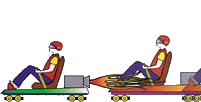
Curriculum
Ready-made models for middle and high school physics, from speed and acceleration to energy, heat, waves and molecules, each paired with a worksheet in the Interactive Physics Curriculum Workbook.
The Curriculum Workbook
Written by Stanford professor Dr. Paul Mitiguy and Michael Woo: step-by-step lessons that use simulation to teach essential physics. Each chapter of the workbook is a chapter of the Curriculum library, and each lesson a model. See examples »
Student and Instructor editions
The Student Edition has the worksheets; the Instructor Edition has the same worksheets with the answers.
Physics Experiments
Over 200 more ready-to-run experiments for in-class demonstrations, which you can change to suit your lesson. Browse the experiments »
Textbooks
Many textbooks include Interactive Physics simulations keyed to problems in the text.
Schwarz and Ertel workbook
Physics professors Cindy Schwarz (Vassar College) and John Ertel (U.S. Naval Academy) created 40 simulations with workbook exercises, published by Prentice Hall. Learn more »
Free tutorial
An introductory tutorial that works with any edition of Interactive Physics. Download the PDF (171 KB).
The Curriculum library
Every model in the workbook, by chapter. Open any of them from the Curriculum library in Interactive Physics.
63 models in 12 chapters. Click a chapter to show its models, and click a picture to see it larger.
 Chapter 1: Speed, Distance, and Time (6)
Explore the fundamental relationships between how fast an object moves, how far it travels, and how long the journey takes. These experiments build intuition for the equation: speed = distance / time.
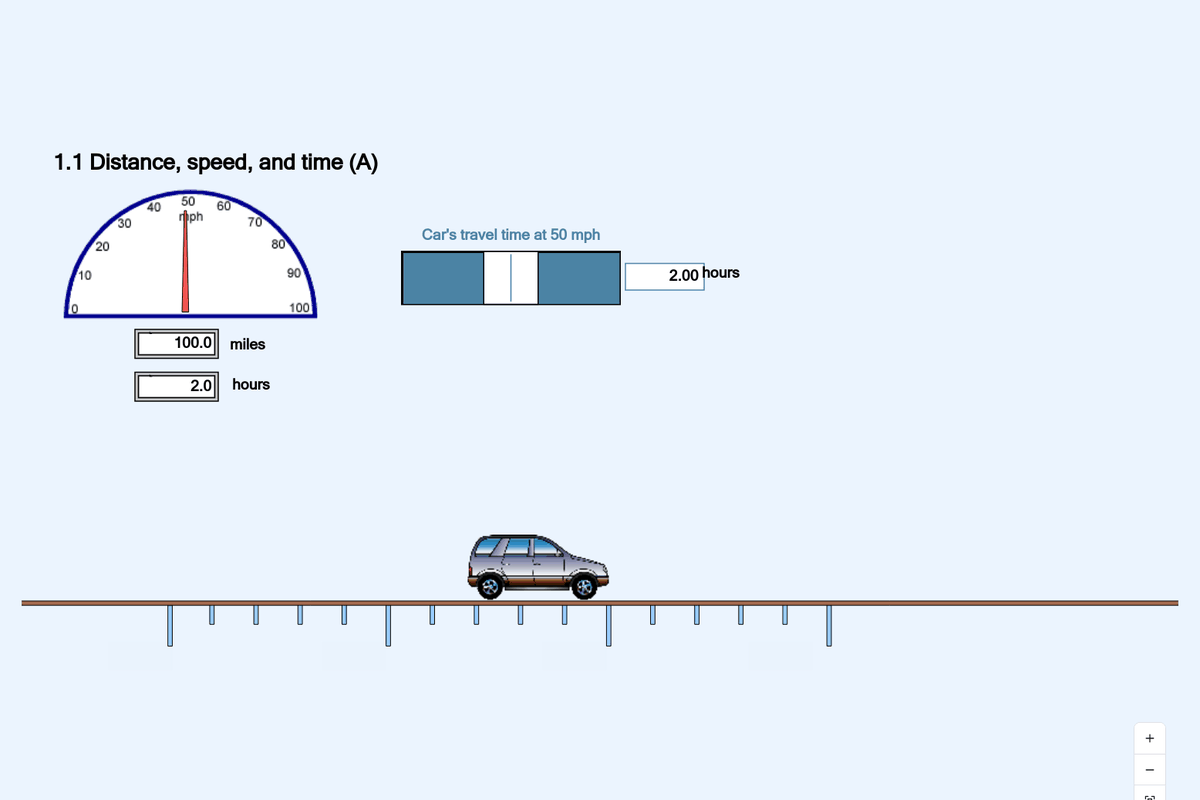
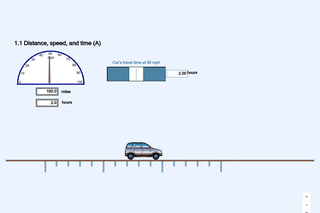 Lesson 1.1
Distance, speed, and time (A)
Explore the relationship between distance, speed, and time
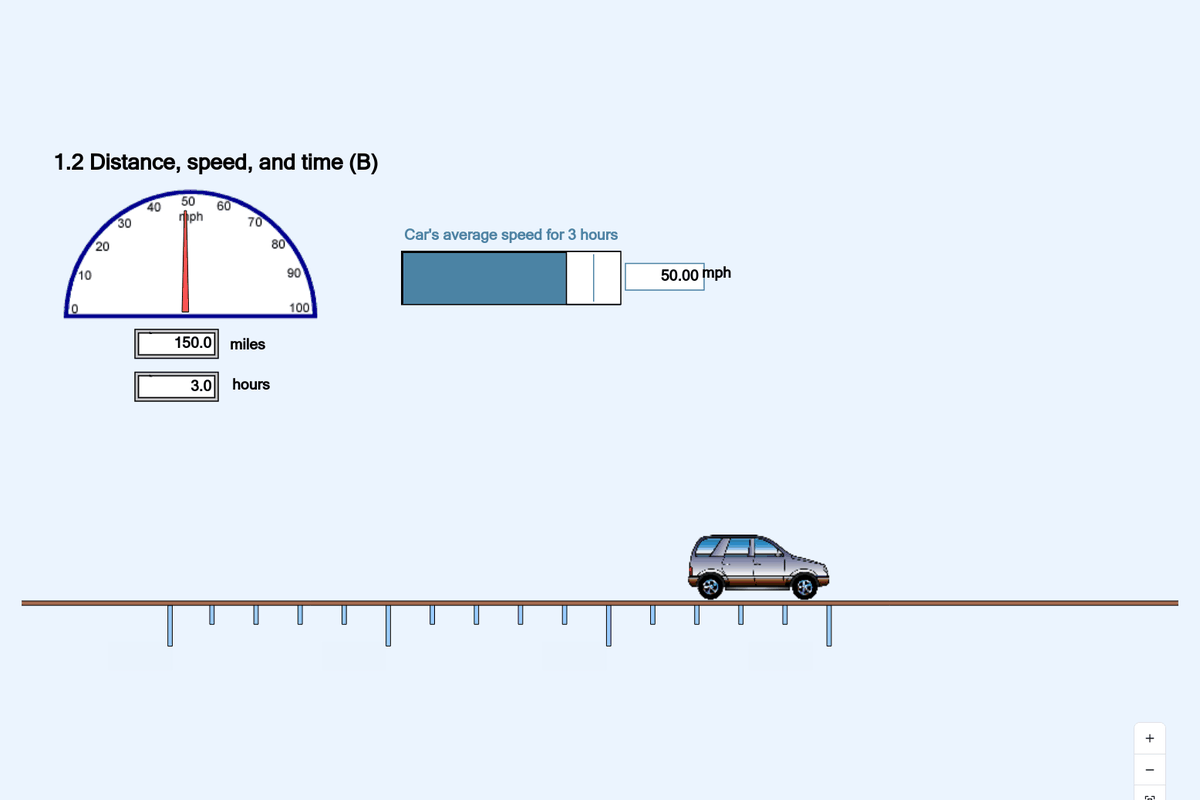
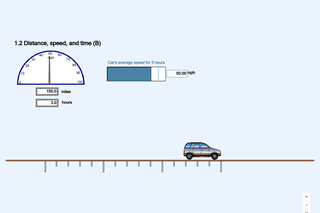 Lesson 1.2
Distance, speed, and time (B)
Further exploration of distance, speed, and time
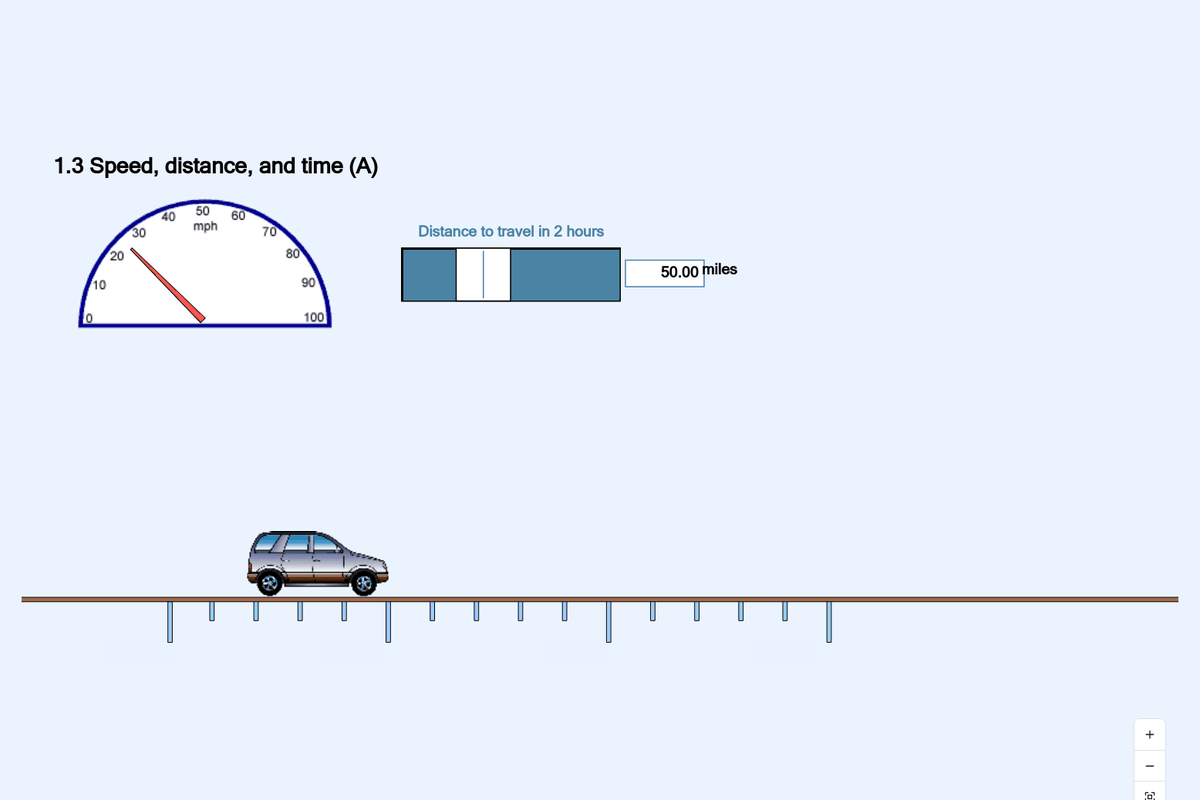
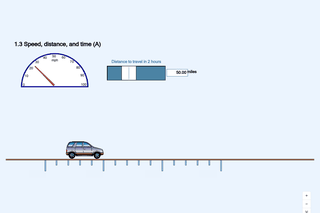 Lesson 1.3
Speed, distance, and time (A)
Investigate how speed relates to distance and time
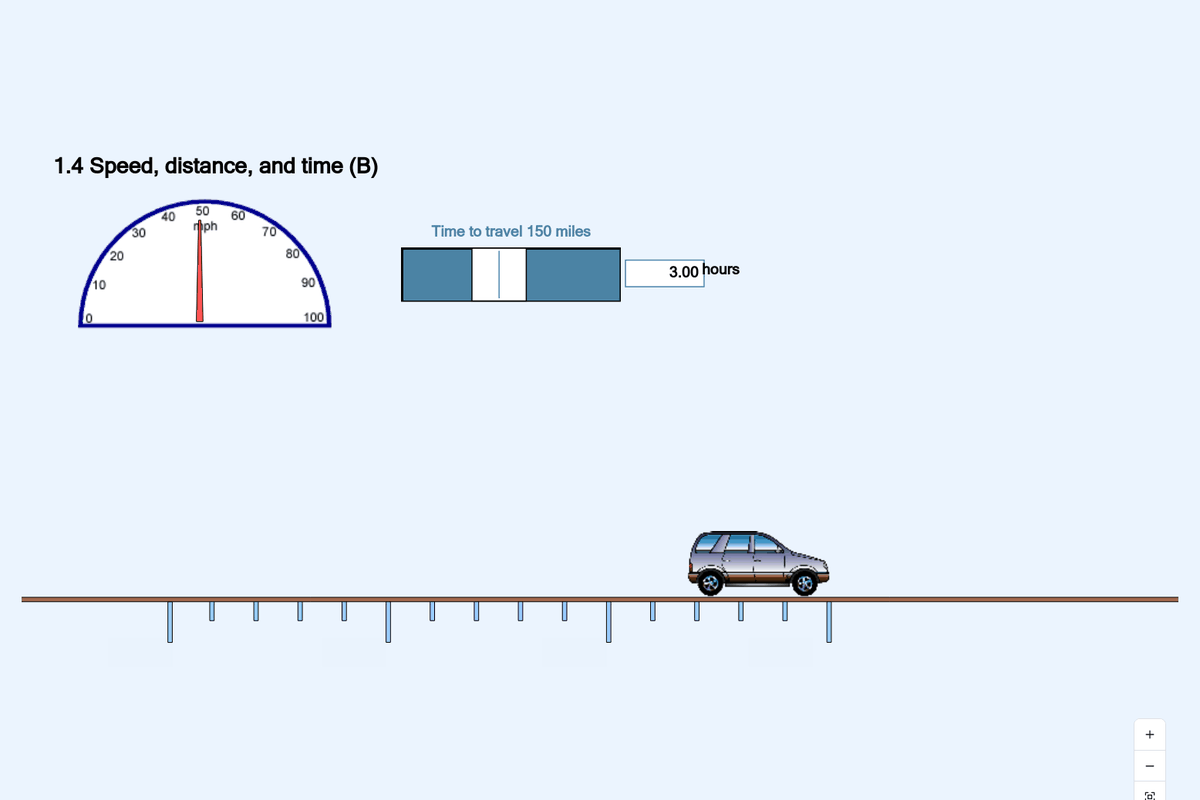
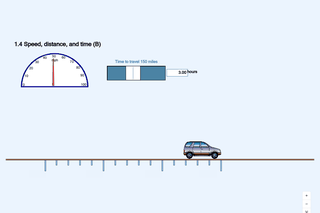 Lesson 1.4
Speed, distance, and time (B)
More investigations of speed, distance, and time
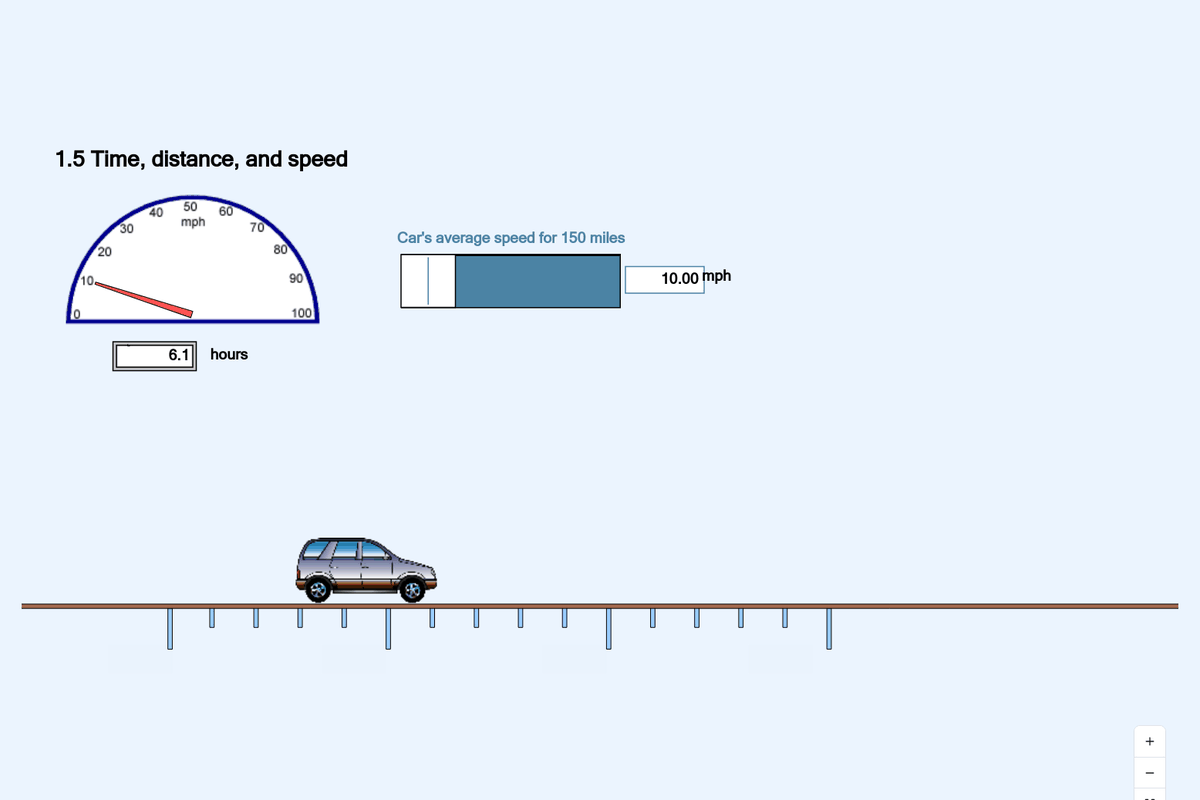
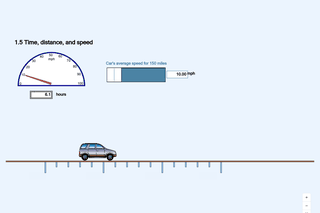 Lesson 1.5
Time, distance, and speed
Calculate time from distance and speed
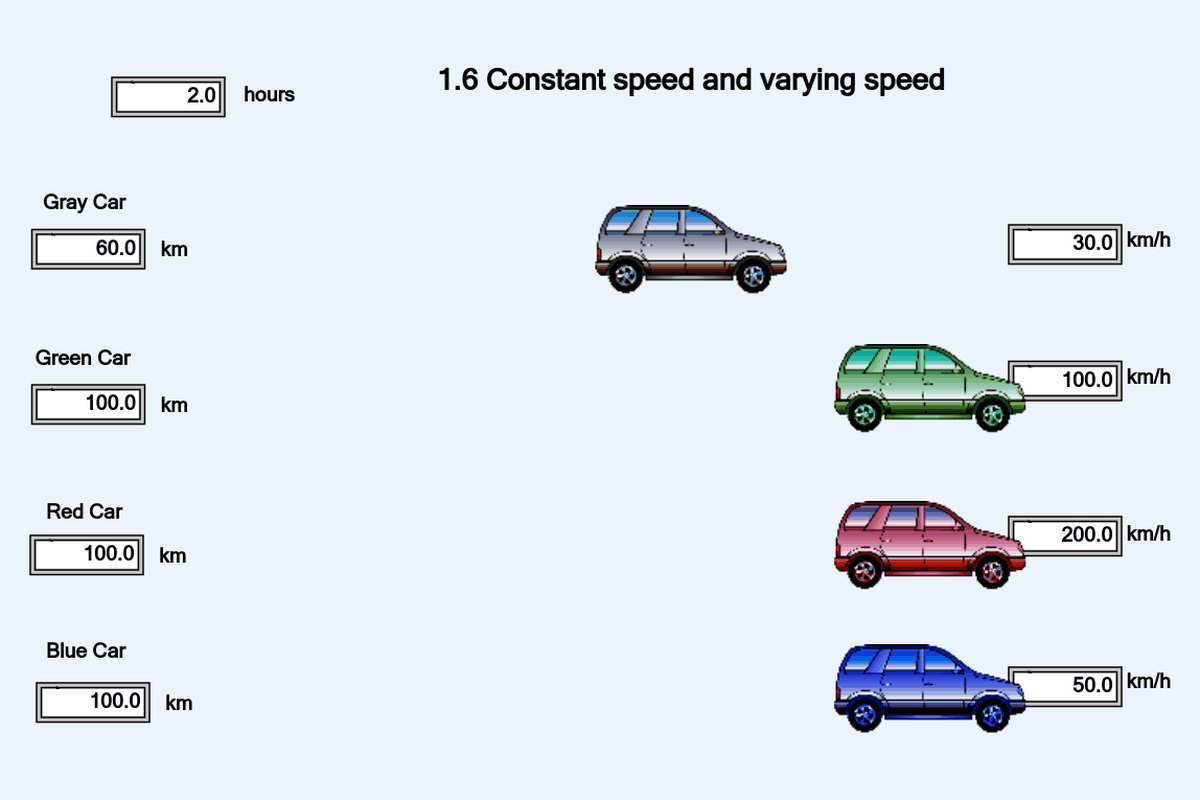
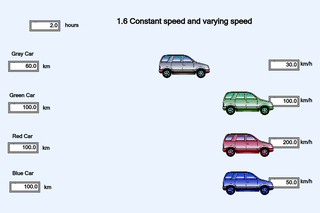 Lesson 1.6
Constant speed and varying speed
Compare constant and varying speed motion
 Chapter 2: Acceleration and Change in Speed (6)
Investigate what happens when an object's speed is not constant. Acceleration describes how quickly speed changes over time: acceleration = change in speed / time.
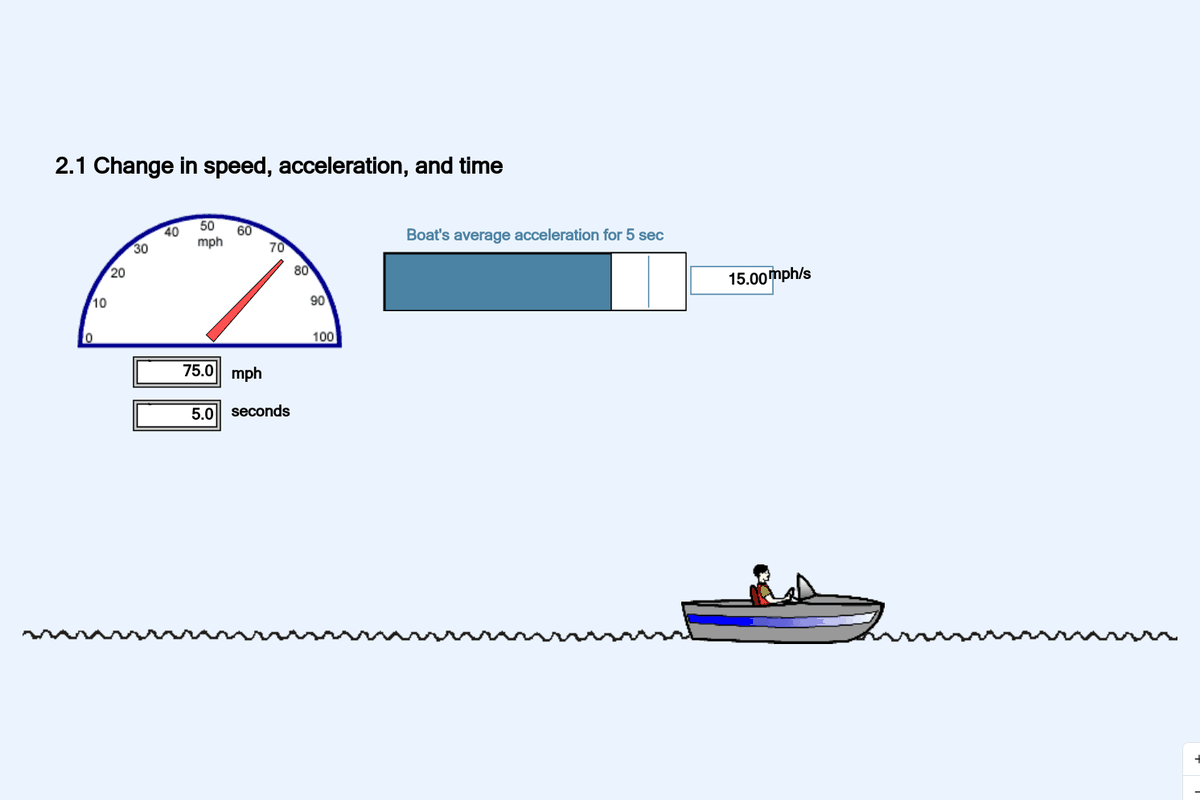
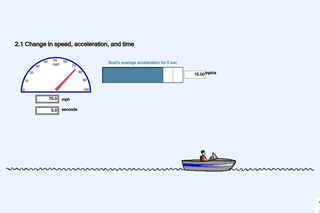 Lesson 2.1
Change in speed, acceleration, and time
Discover how change in speed depends on acceleration and time
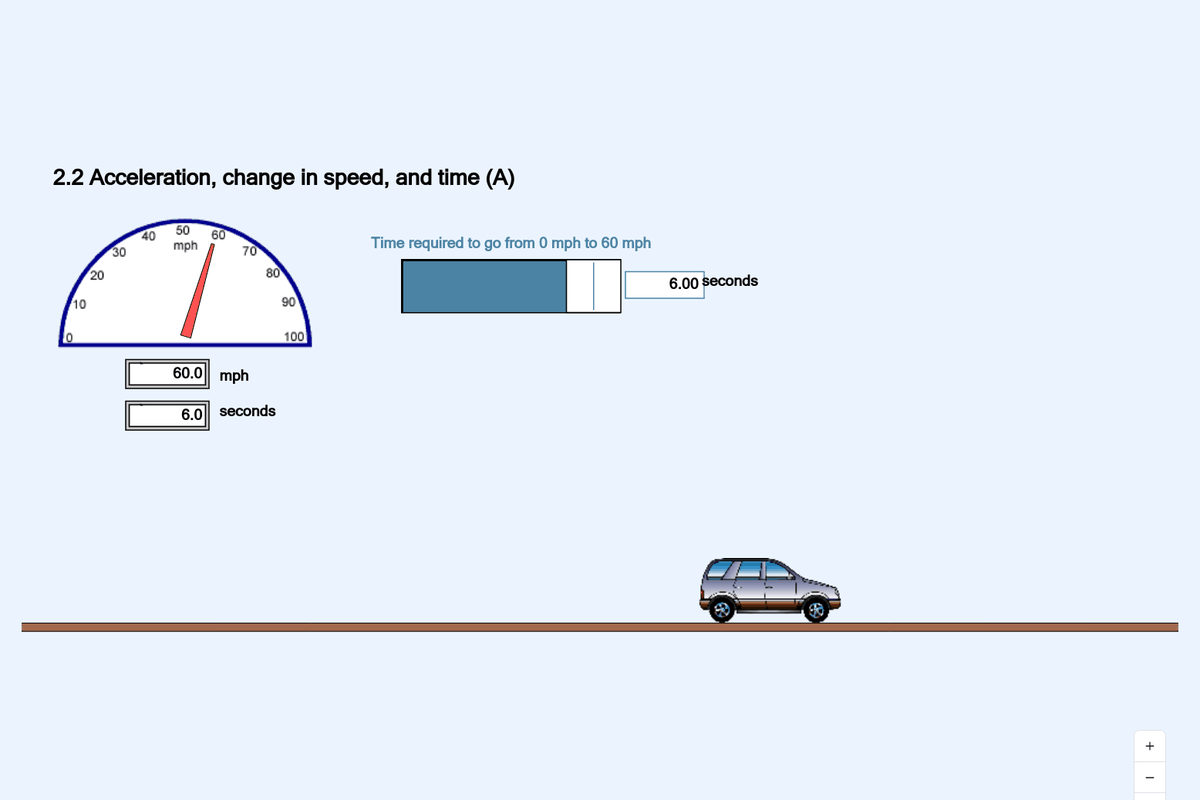
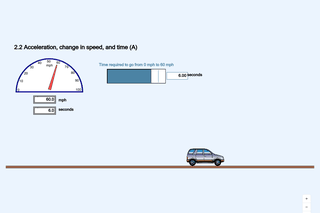 Lesson 2.2
Acceleration, change in speed, and time (A)
Calculate acceleration from change in speed and time
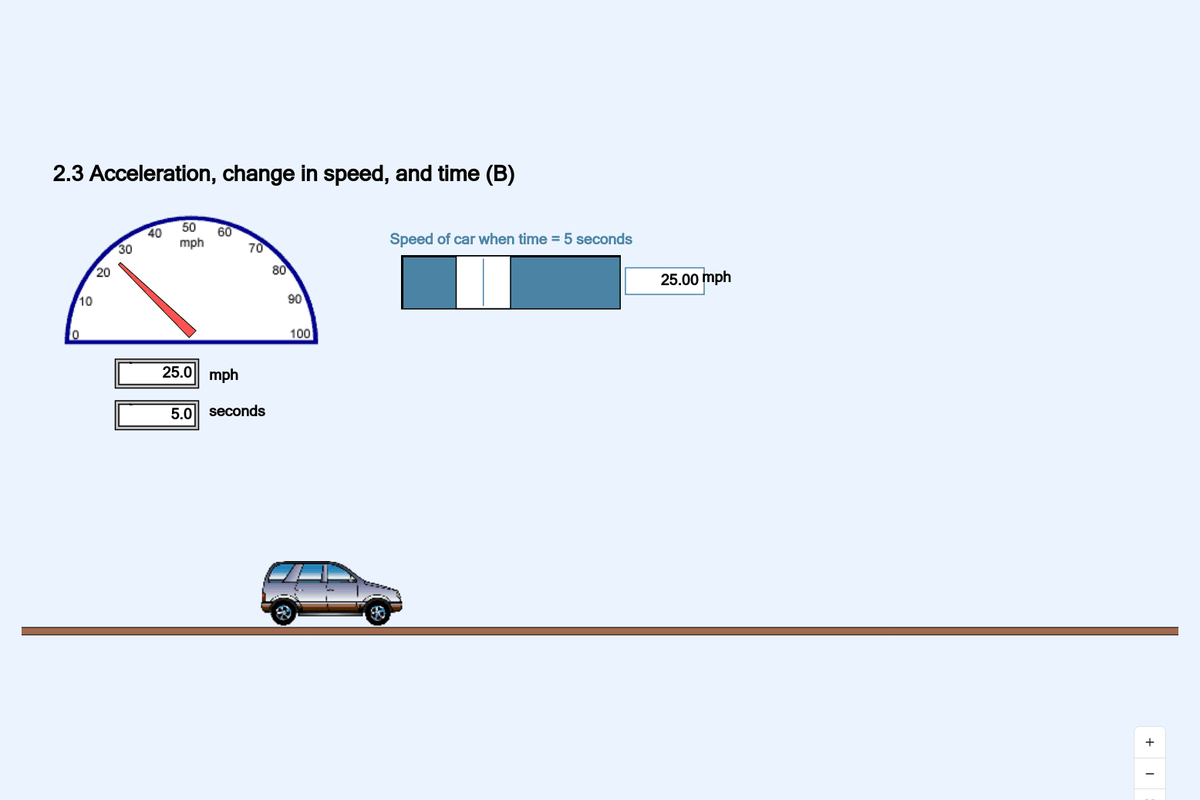
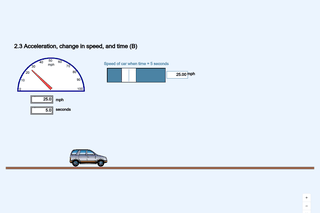 Lesson 2.3
Acceleration, change in speed, and time (B)
Further practice calculating acceleration
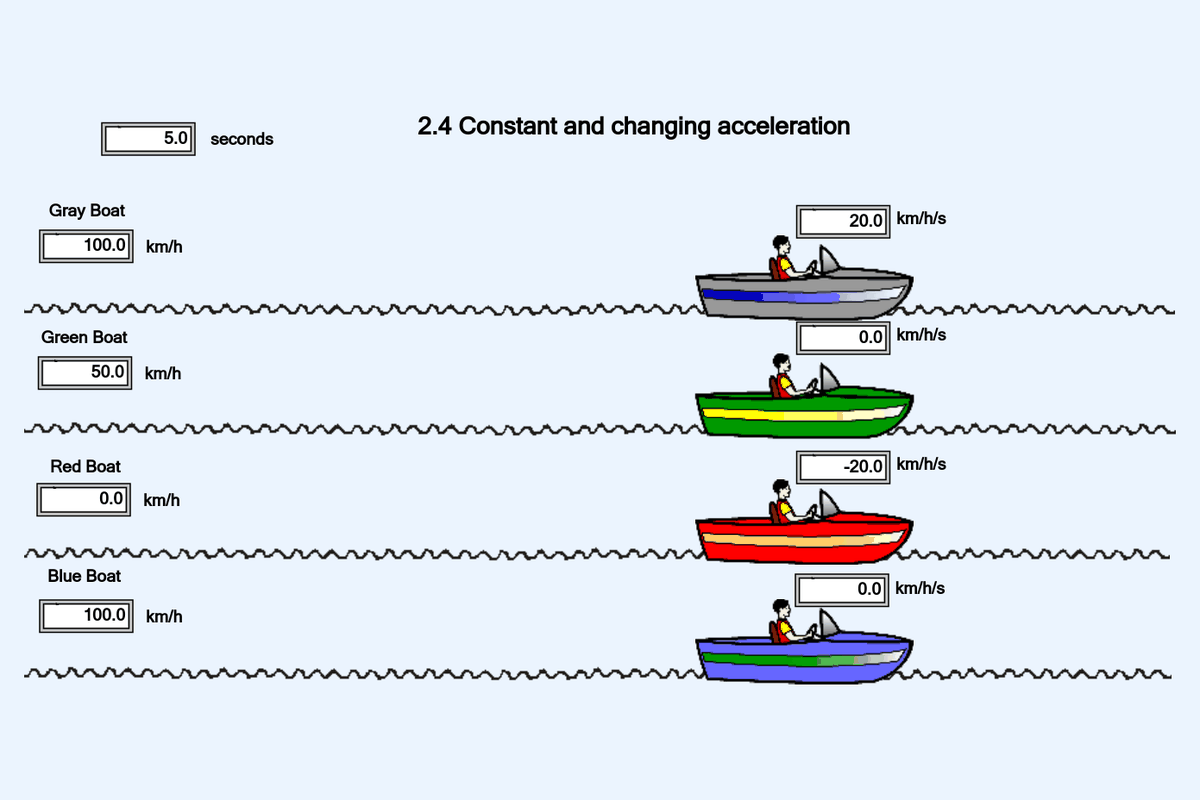
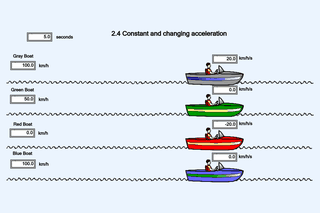 Lesson 2.4
Constant and changing acceleration
Compare motion with constant vs. changing acceleration
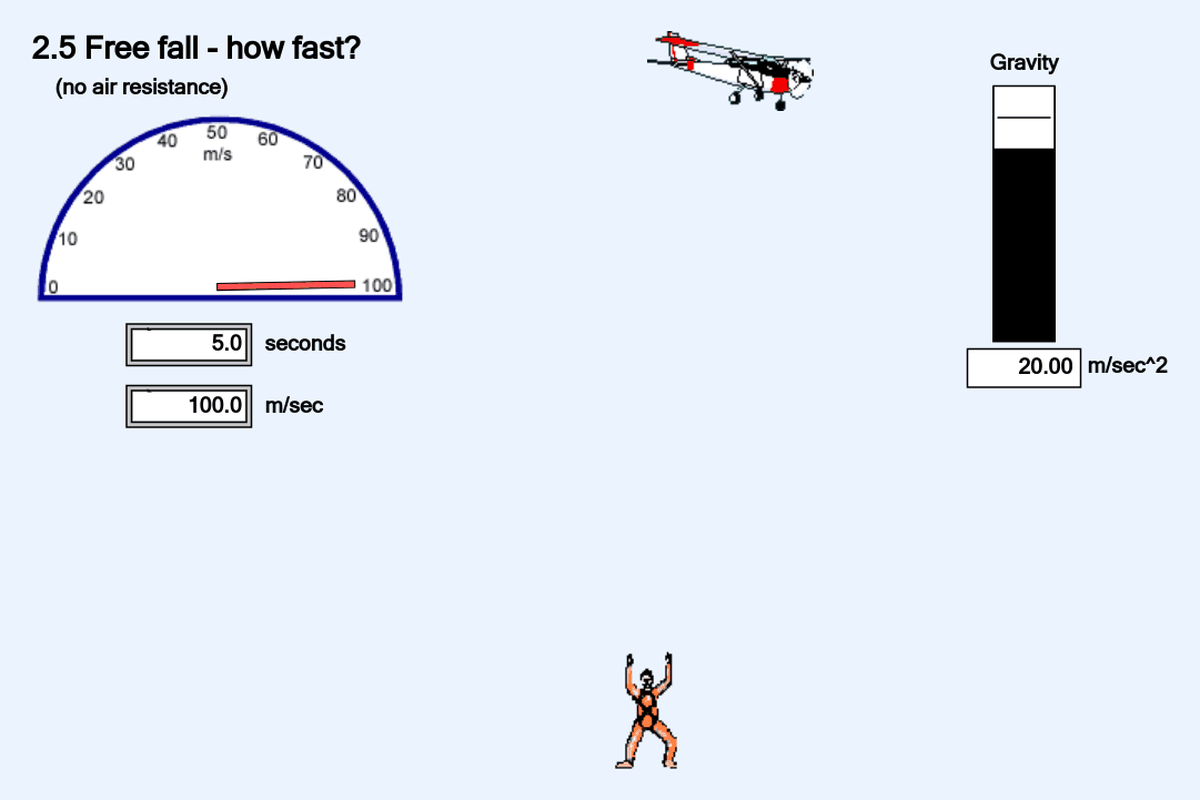
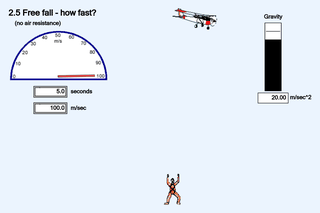 Lesson 2.5
Free fall - how fast?
Determine the speed of a freely falling object
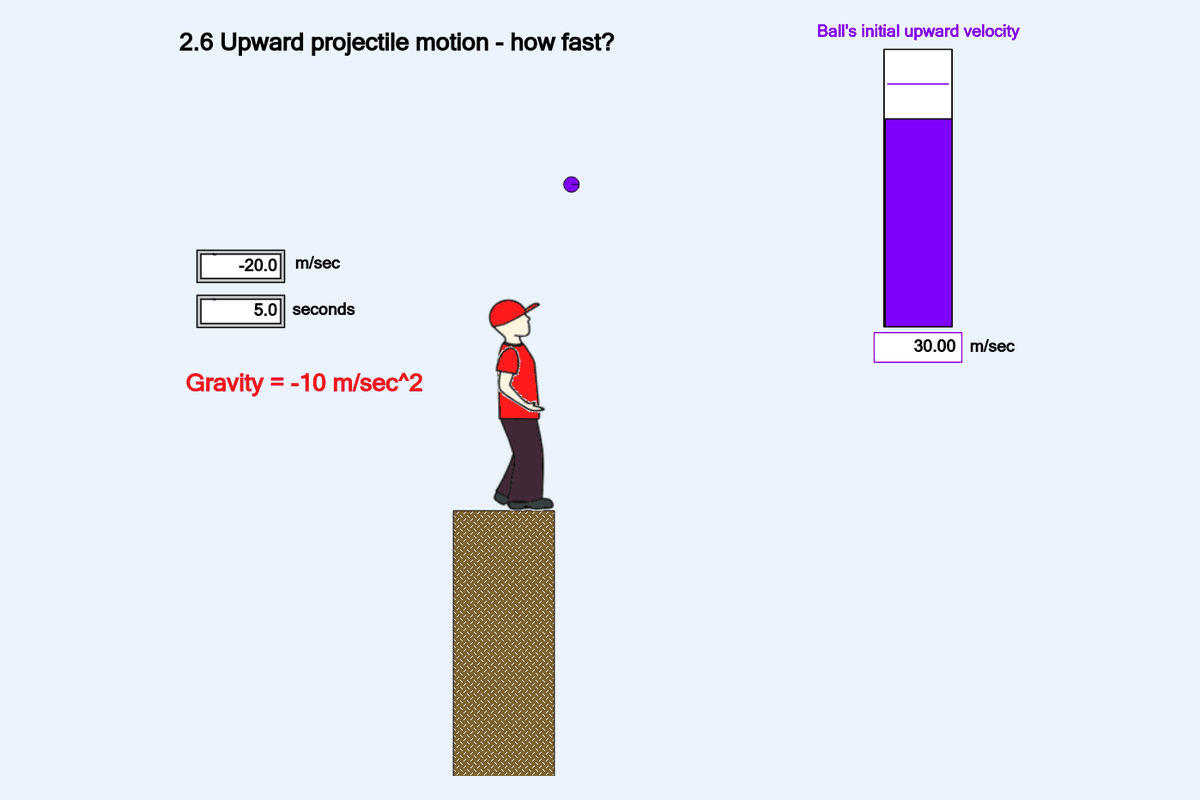
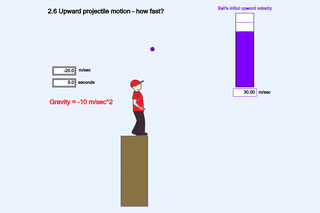 Lesson 2.6
Upward projectile motion - how fast?
Analyze the speed of an object thrown upward
 Chapter 3: Acceleration, Speed, and Distance (8)
Extend your understanding of acceleration to predict how far an object travels. When acceleration is constant, distance depends on both speed and acceleration: d = v · t + 1/2 · a · t².
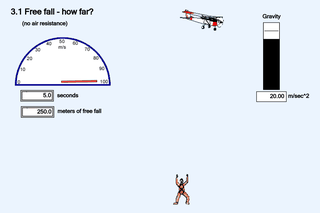 Lesson 3.1
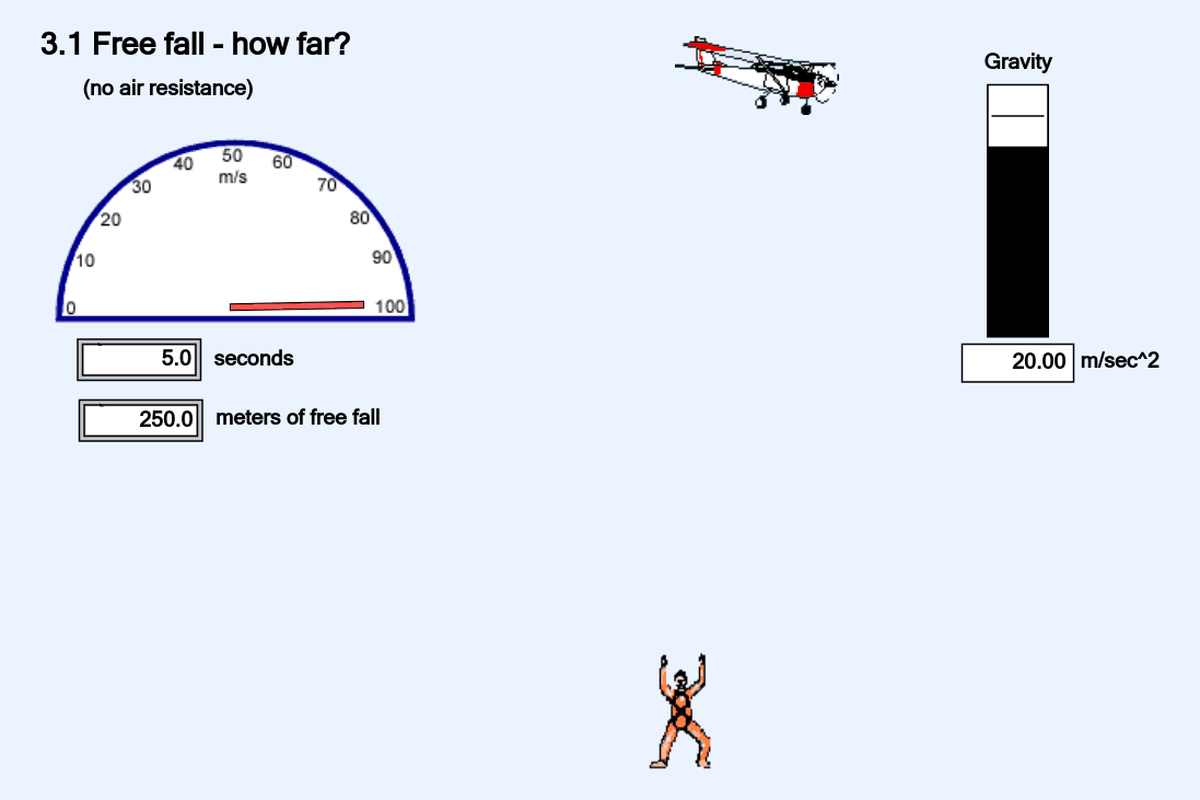
Free fall - how far?
Calculate the distance an object falls freely
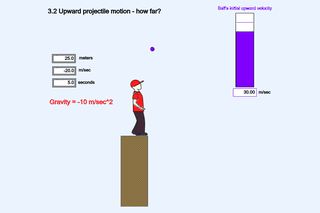 Lesson 3.2
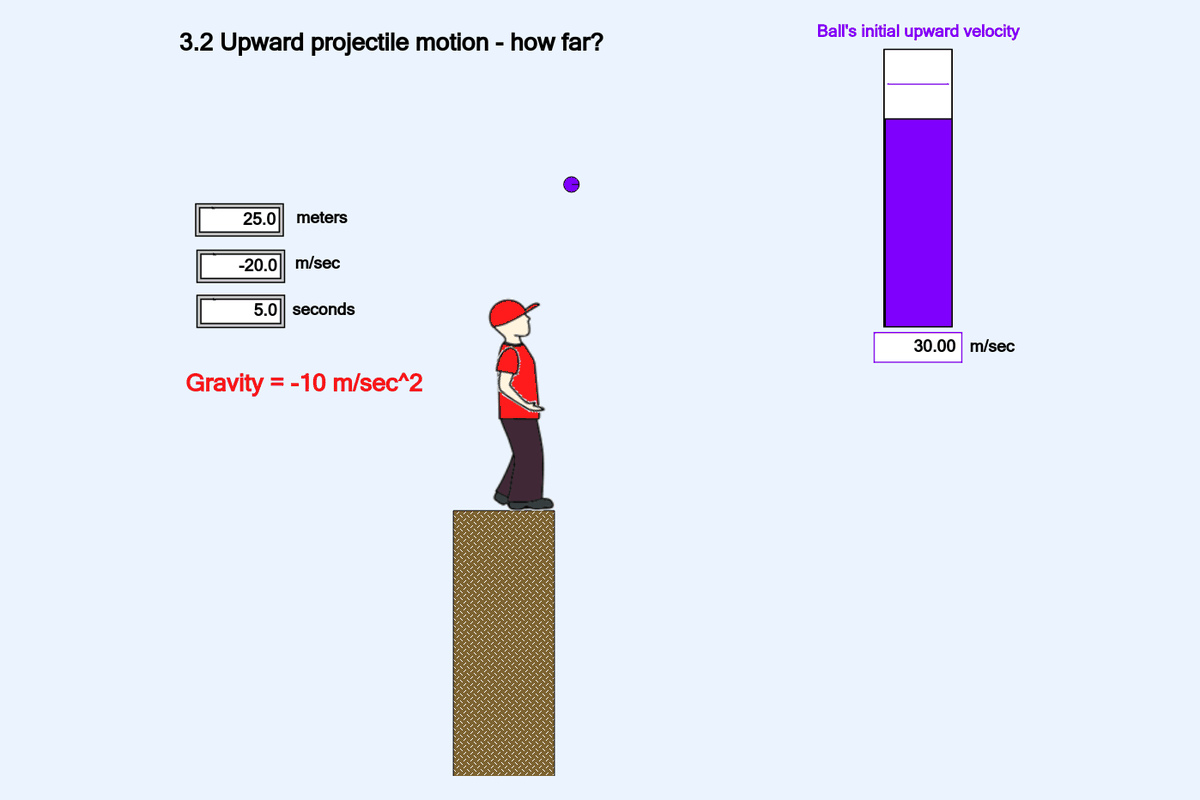
Upward projectile motion - how far?
Determine how far an upward projectile travels
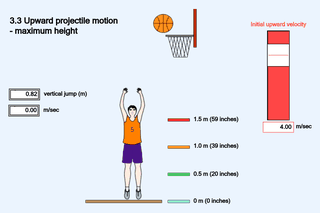 Lesson 3.3
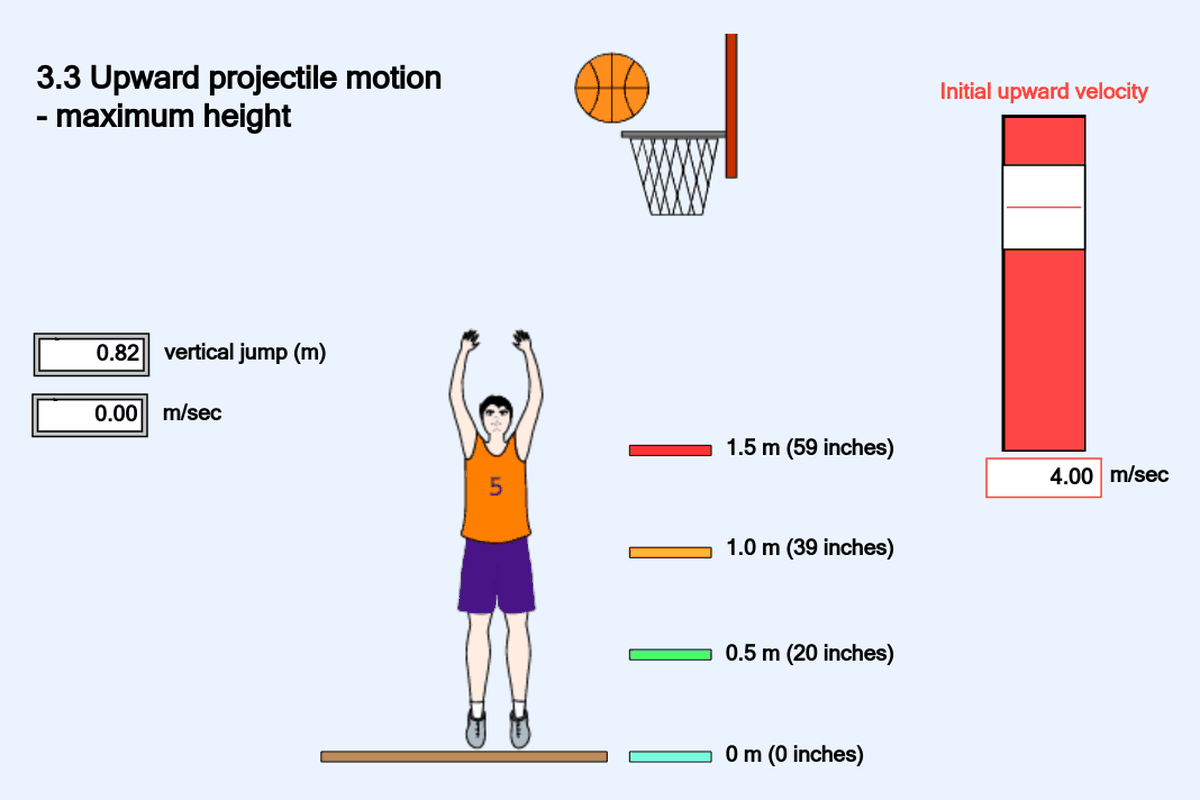
Upward projectile motion - maximum height
Find the maximum height of an upward projectile
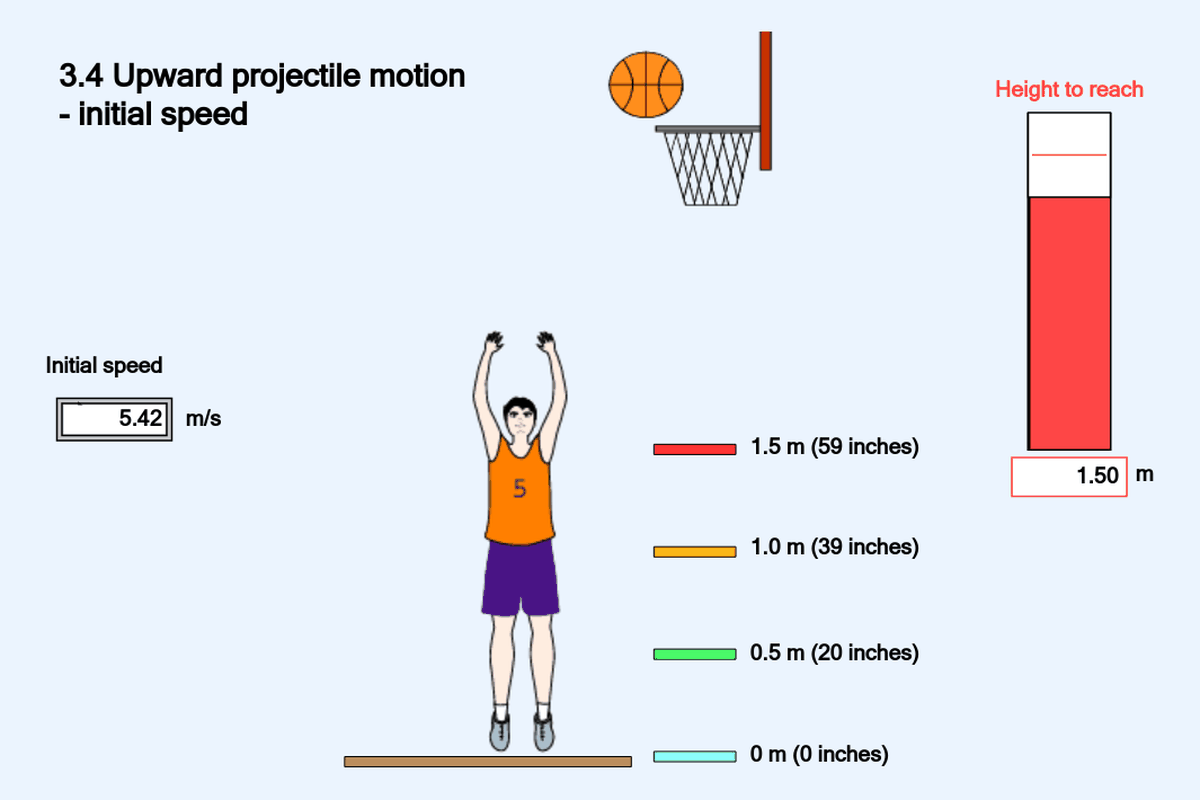
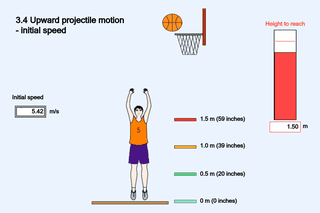 Lesson 3.4
Upward projectile motion - initial speed
Calculate the initial speed needed for a given height
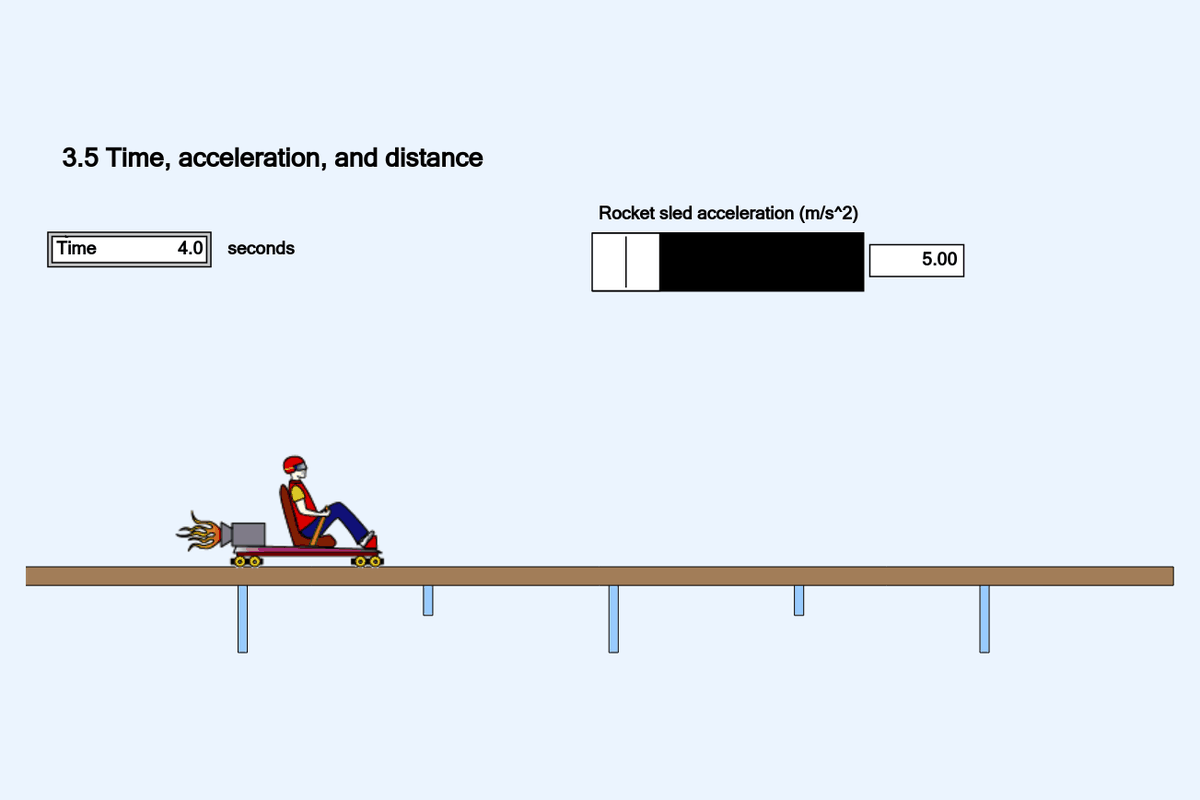
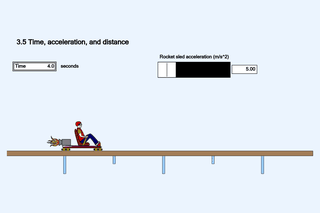 Lesson 3.5
Time, acceleration, and distance
Explore how time and acceleration determine distance
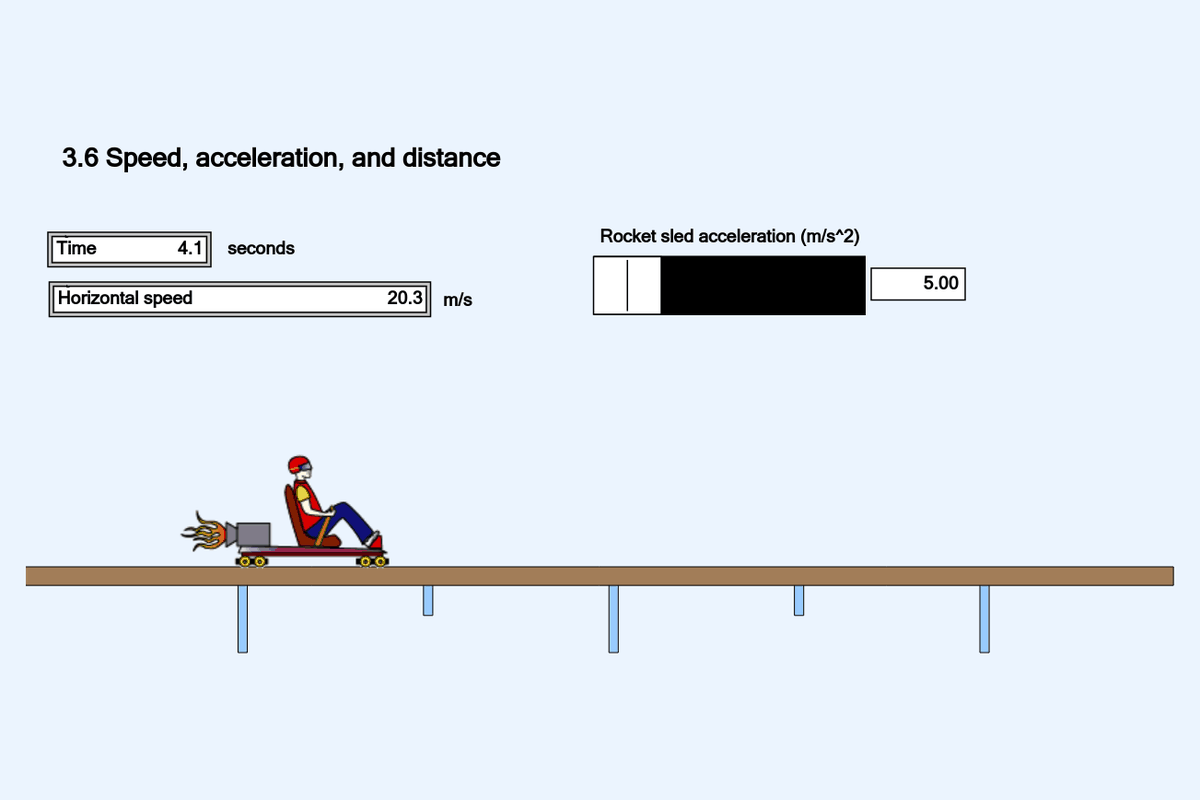
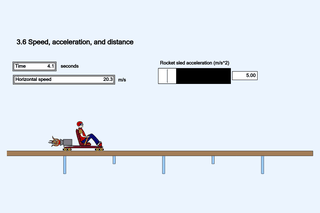 Lesson 3.6
Speed, acceleration, and distance
Relate speed, acceleration, and distance traveled
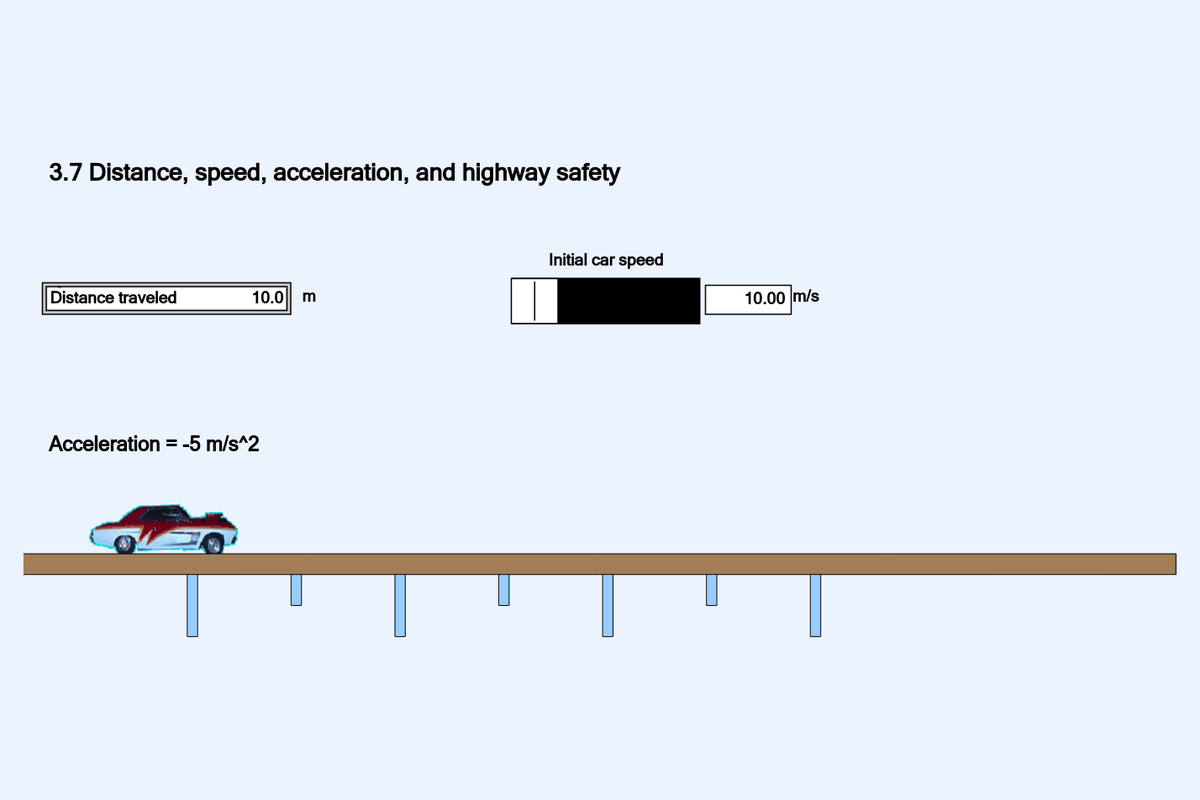
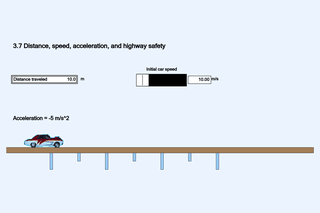 Lesson 3.7
Distance, speed, acceleration, and highway safety
Apply kinematics to highway stopping distances
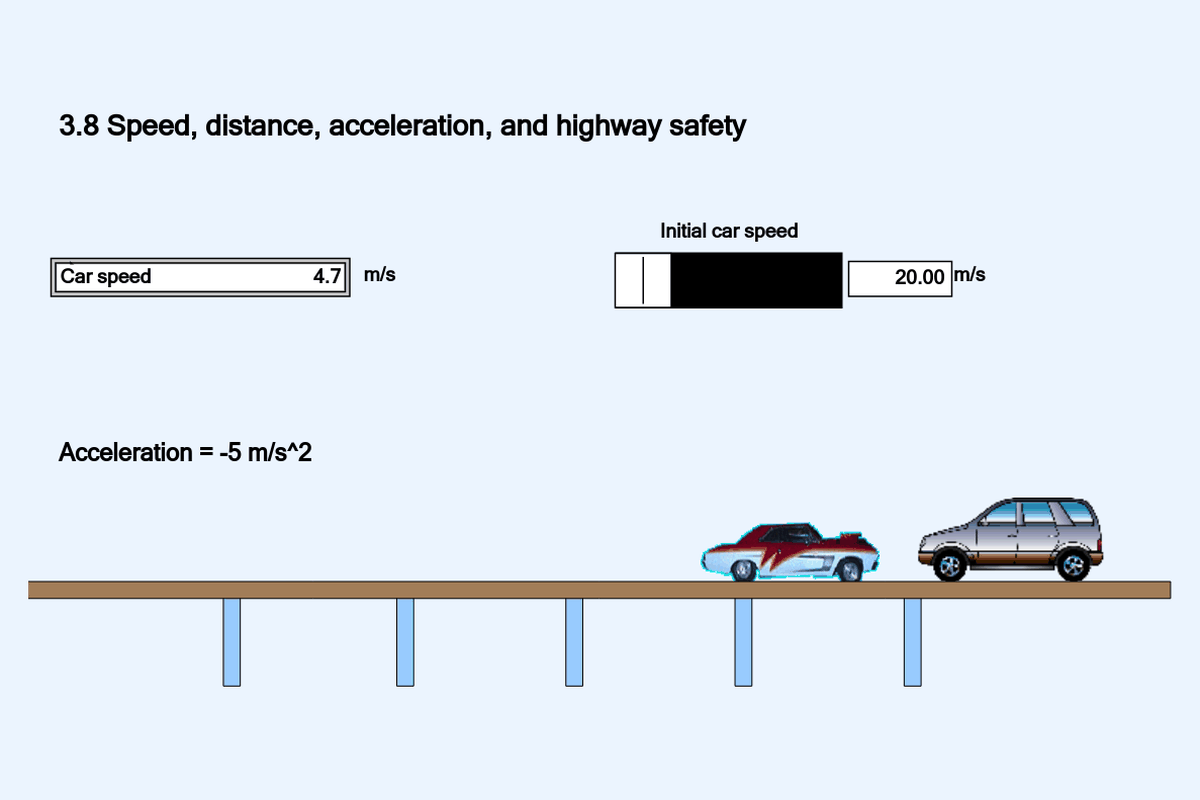
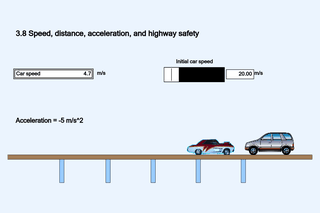 Lesson 3.8
Speed, distance, acceleration, and highway safety
Further exploration of highway safety physics
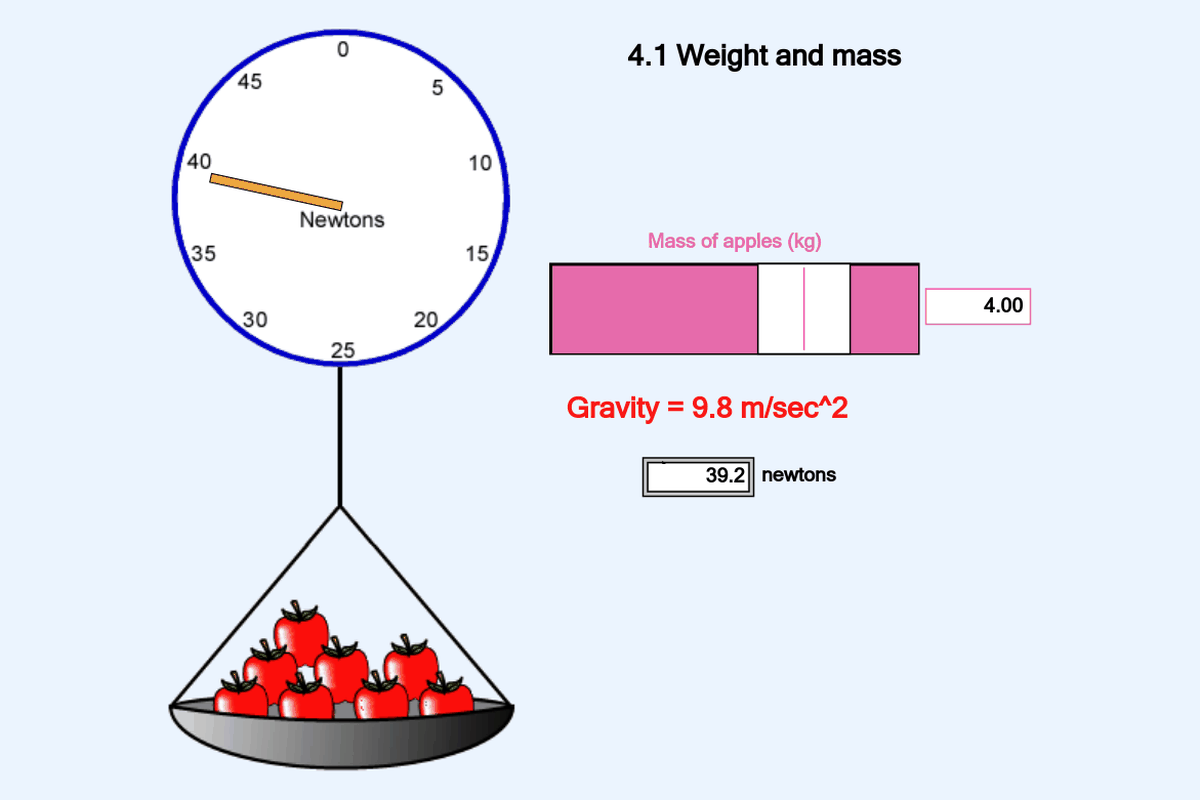
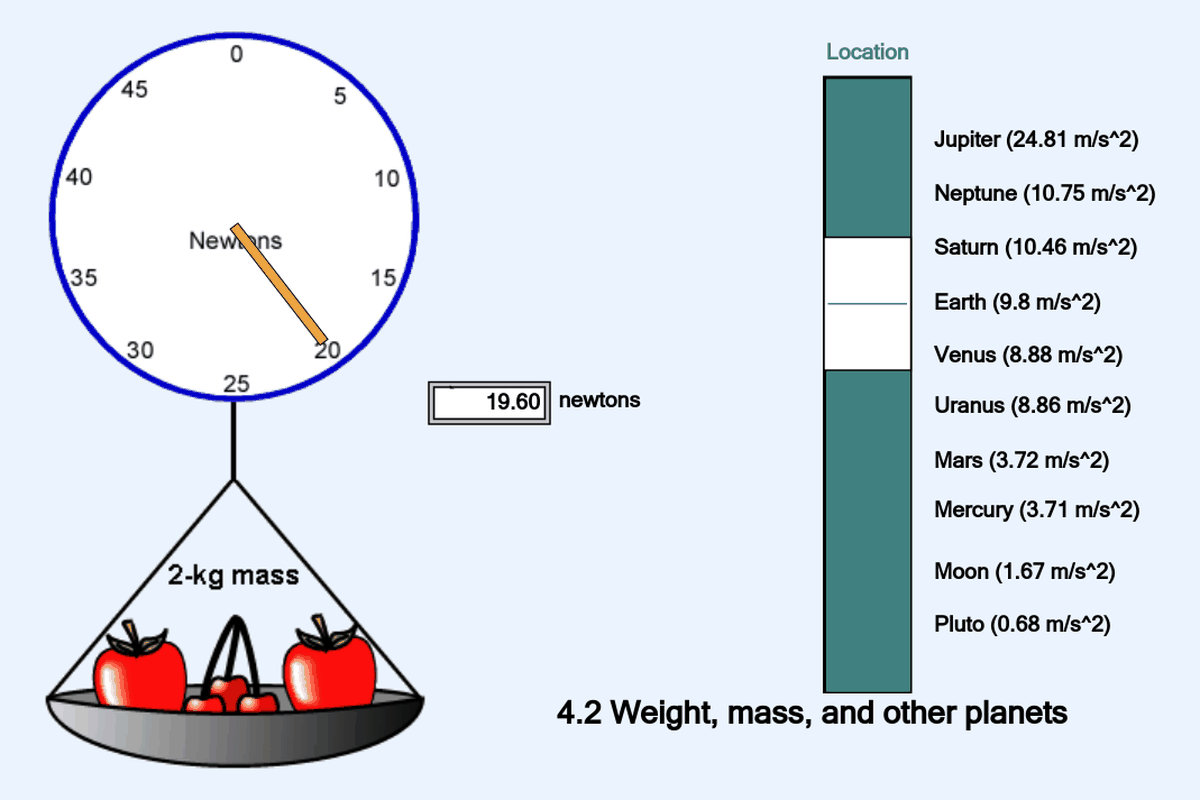
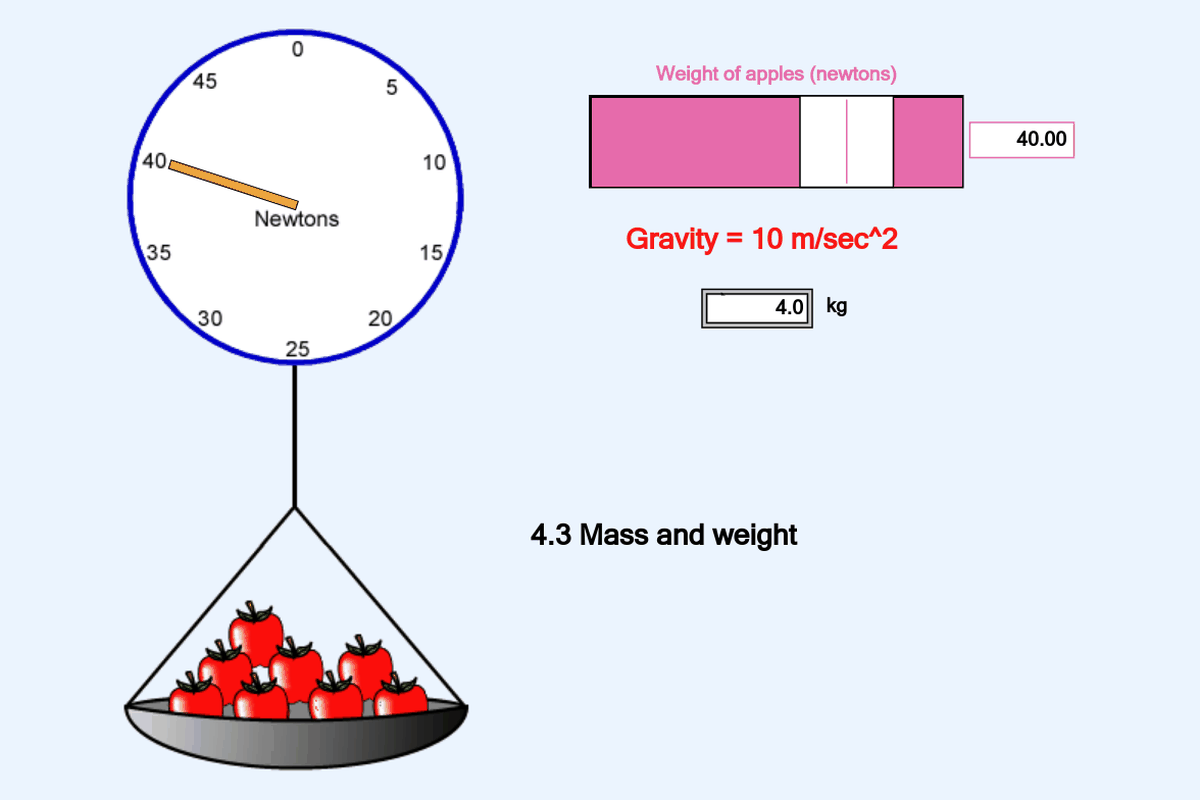
 Chapter 4: Weight, Mass, and Gravity (3)
Mass is the amount of matter in an object and stays the same everywhere. Weight is the gravitational force acting on that mass, and it changes depending on where you are: weight = mass × g.
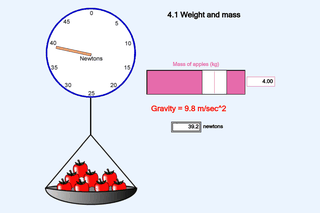 Lesson 4.1
Weight and mass
Understand the difference between weight and mass
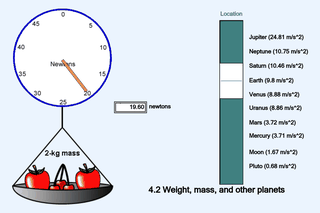 Lesson 4.2
Weight on other planets
Compare your weight on different planets
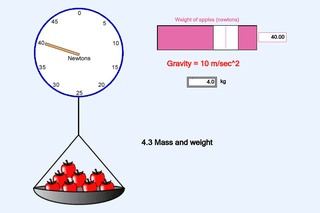 Lesson 4.3
Gravity on other planets
Explore how gravitational acceleration varies by planet
 Chapter 5: Air Resistance (4)
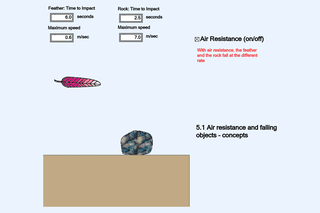
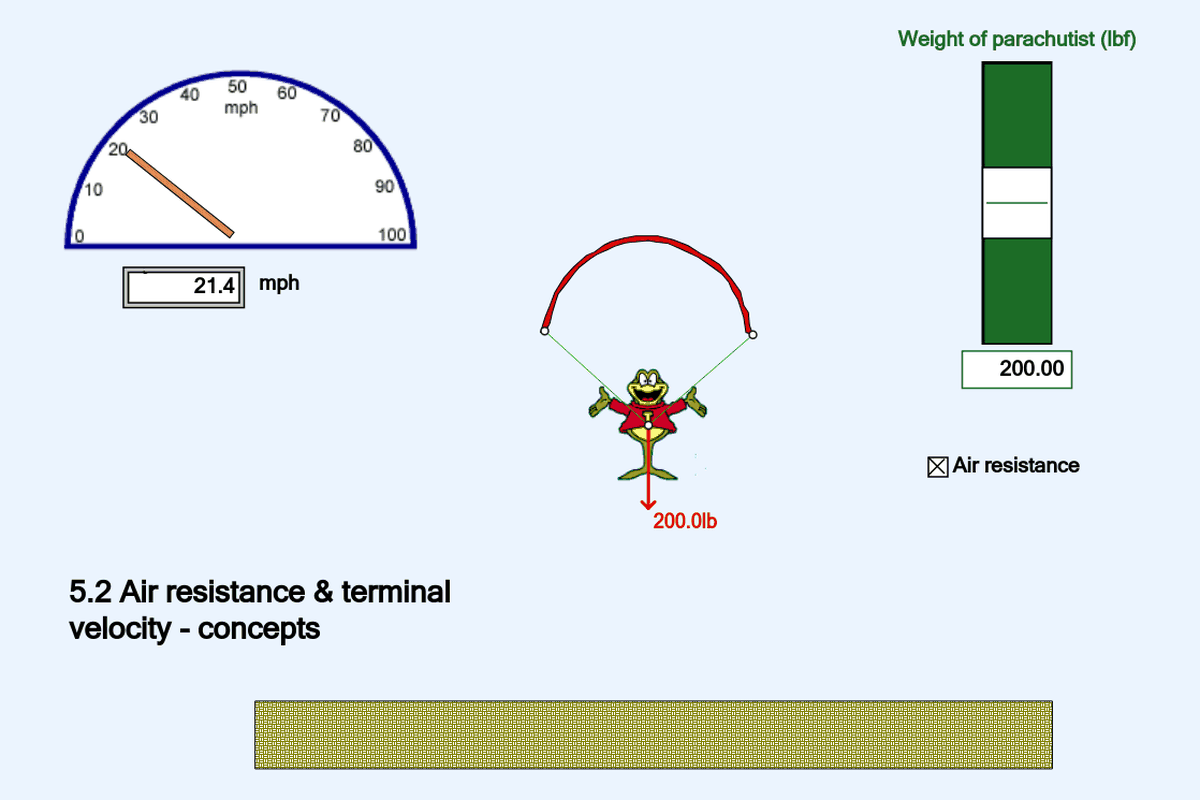
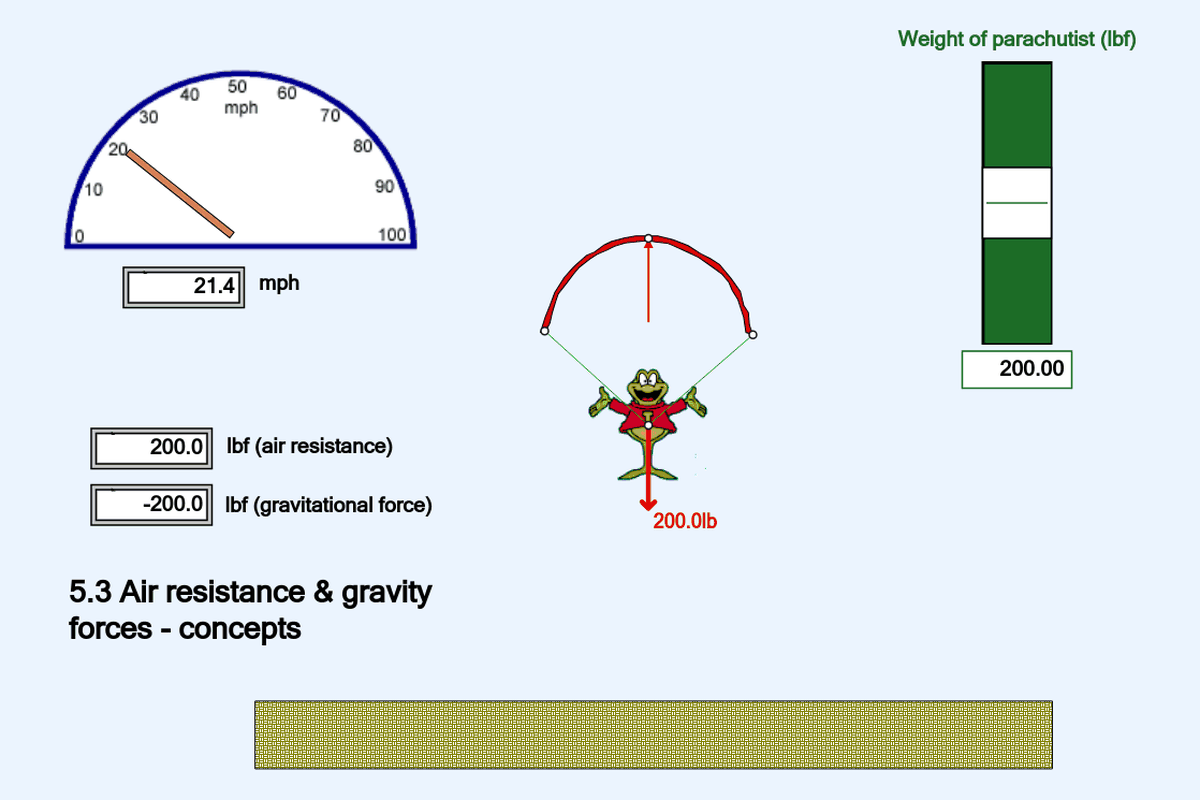
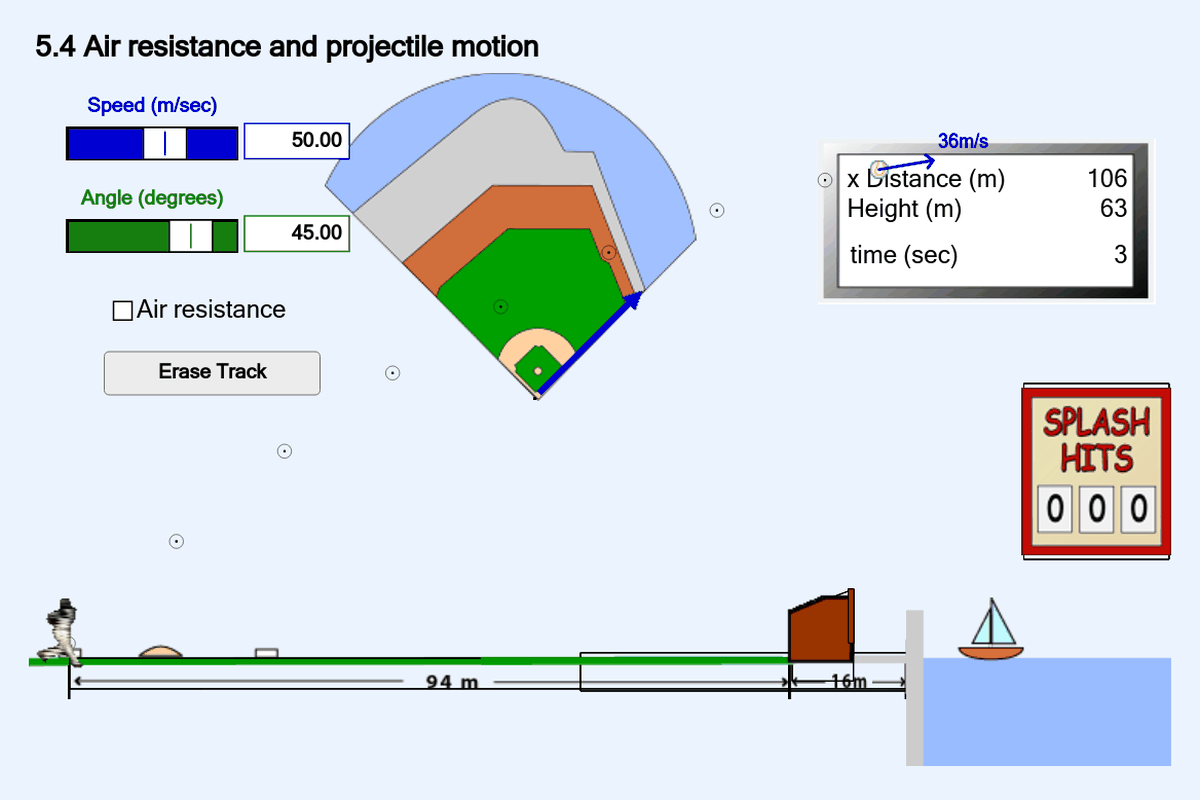
In a vacuum, all objects fall at the same rate regardless of mass or shape. In the real world, air pushes back on moving objects. This drag force depends on speed, surface area, and shape.
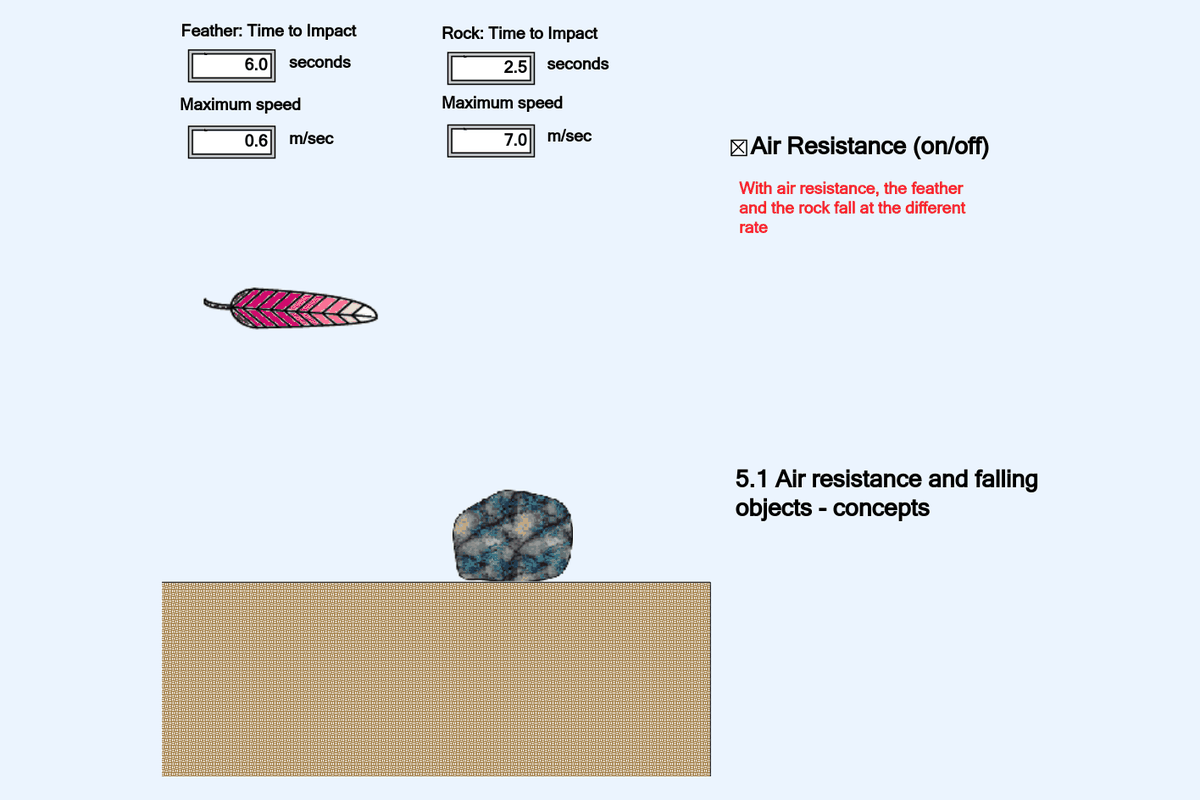
 Lesson 5.1
Air resistance and falling objects
Observe how air resistance slows falling objects
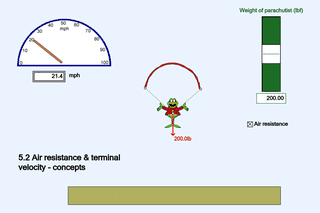 Lesson 5.2
Air resistance and surface area
Discover how surface area affects air resistance
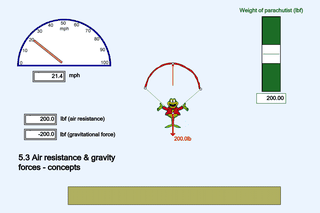 Lesson 5.3
Air resistance and speed
Investigate the relationship between speed and air resistance
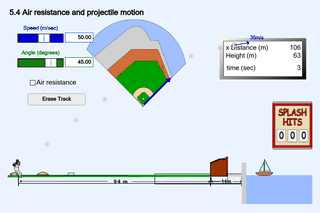 Lesson 5.4
Terminal velocity
Explore the concept of terminal velocity
 Chapter 6: Newton's Law for Motion Along a Line (8)
Newton's Second Law is one of the most important equations in all of physics. It connects the net force on an object to its mass and acceleration: F = m · a.
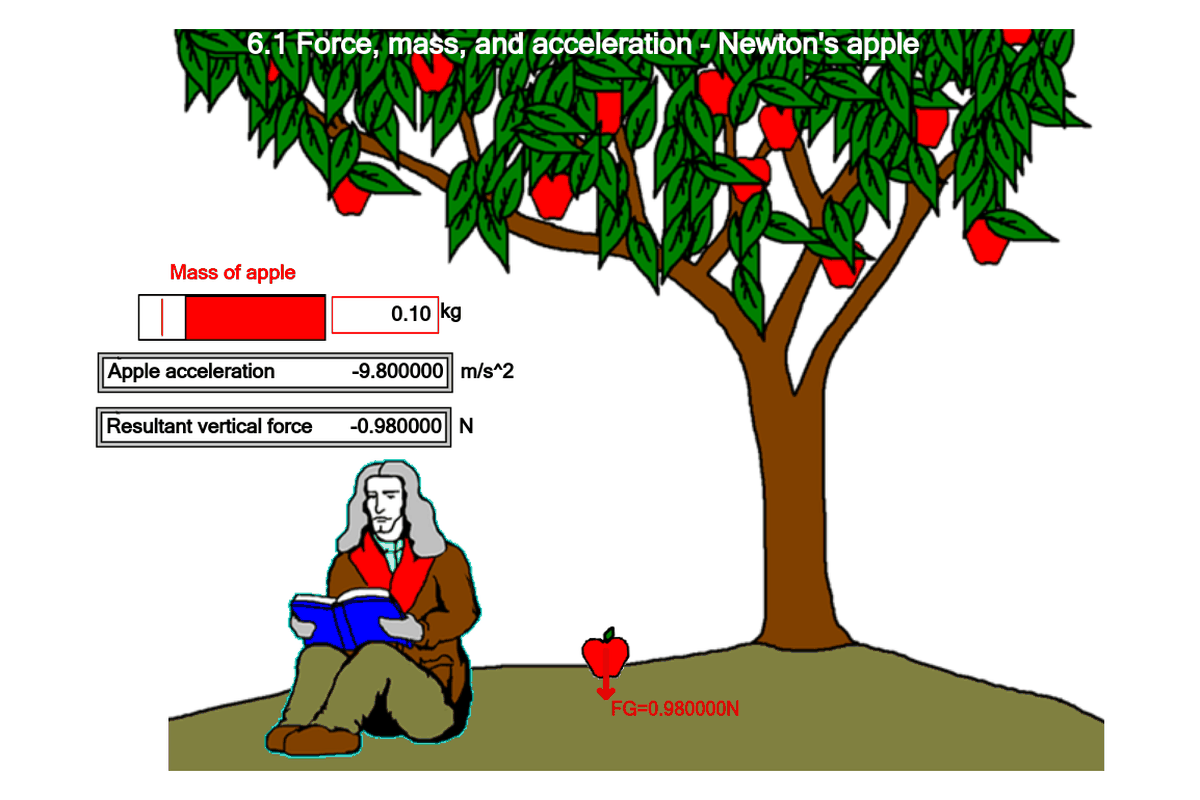
 Lesson 6.1
Force, mass, and acceleration - Newton's apple
Explore F=ma using Newton's famous apple
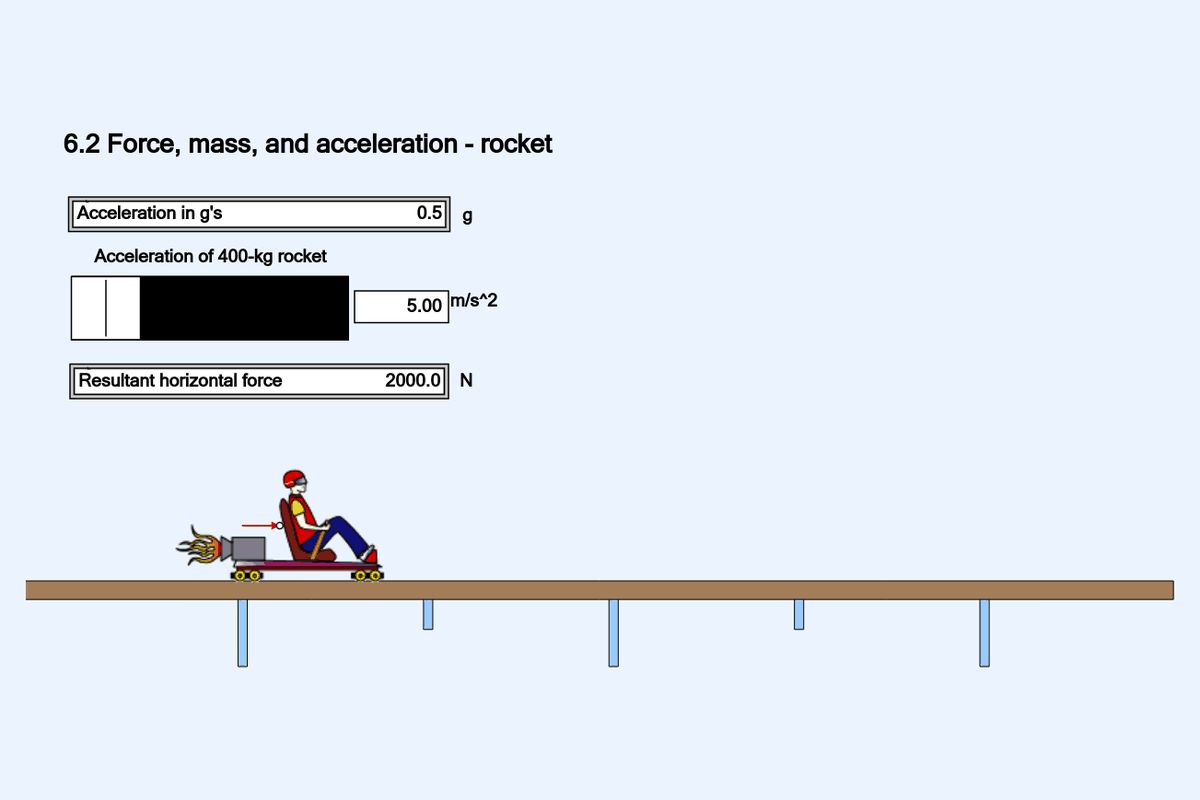
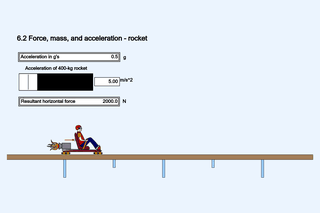 Lesson 6.2
Force, mass, and acceleration - rocket
Apply F=ma to rocket propulsion
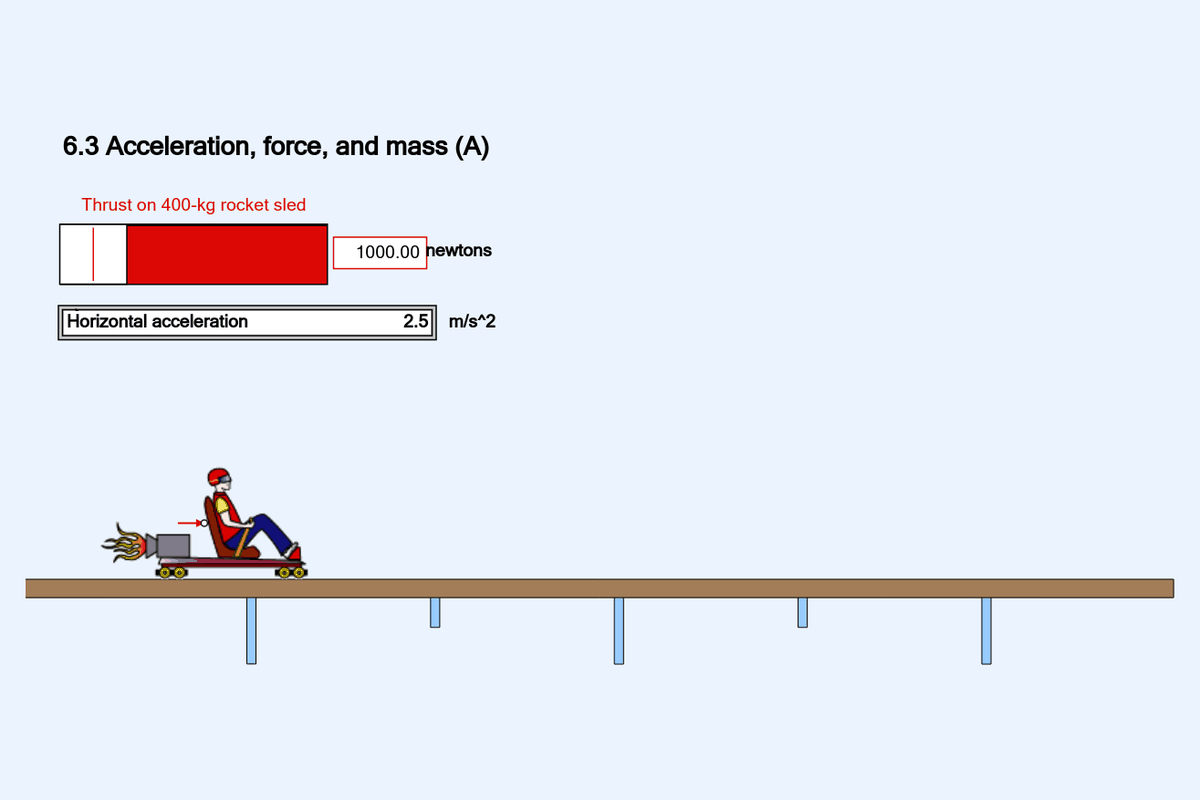
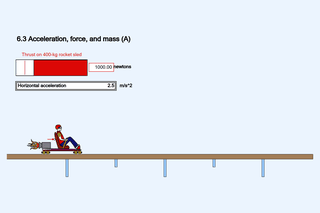 Lesson 6.3
Acceleration, force, and mass (A)
Calculate acceleration from force and mass
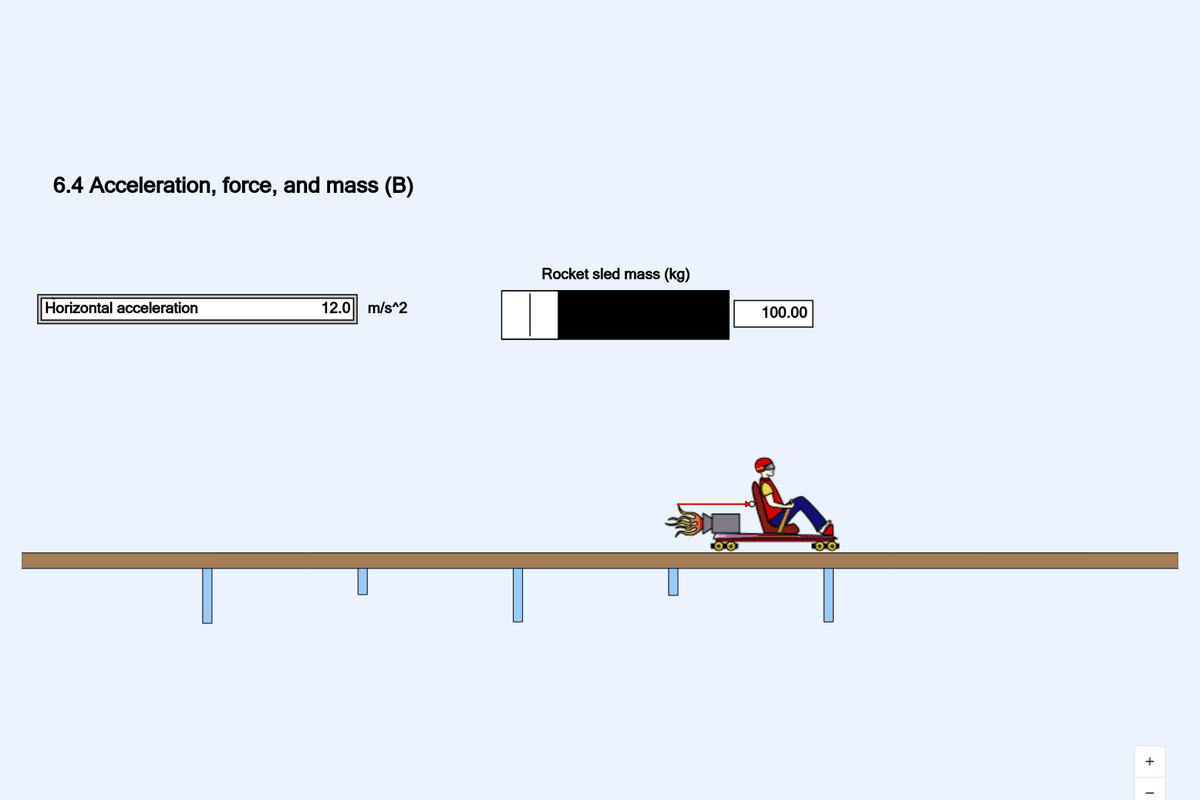
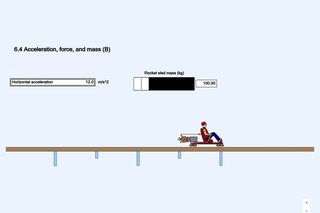 Lesson 6.4
Acceleration, force, and mass (B)
Further practice with Newton's second law
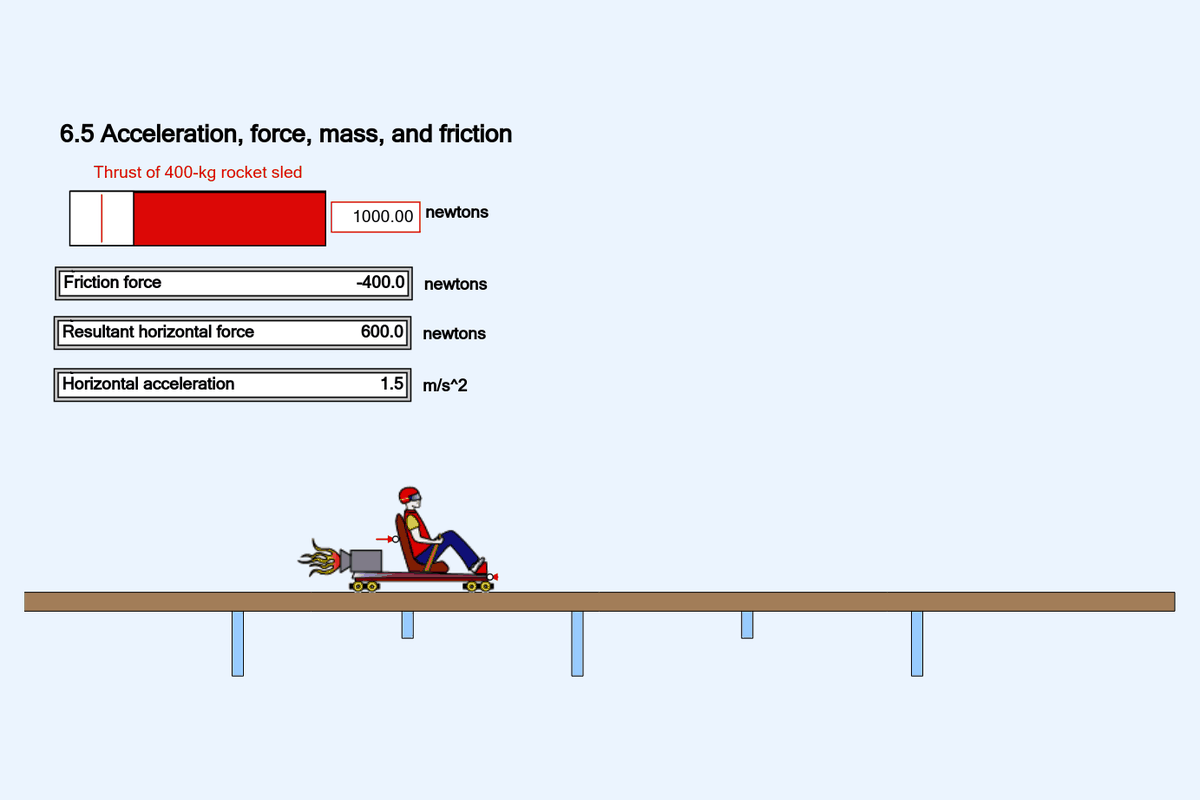
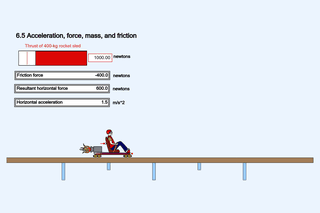 Lesson 6.5
Acceleration, force, mass, and friction
Study how friction affects acceleration
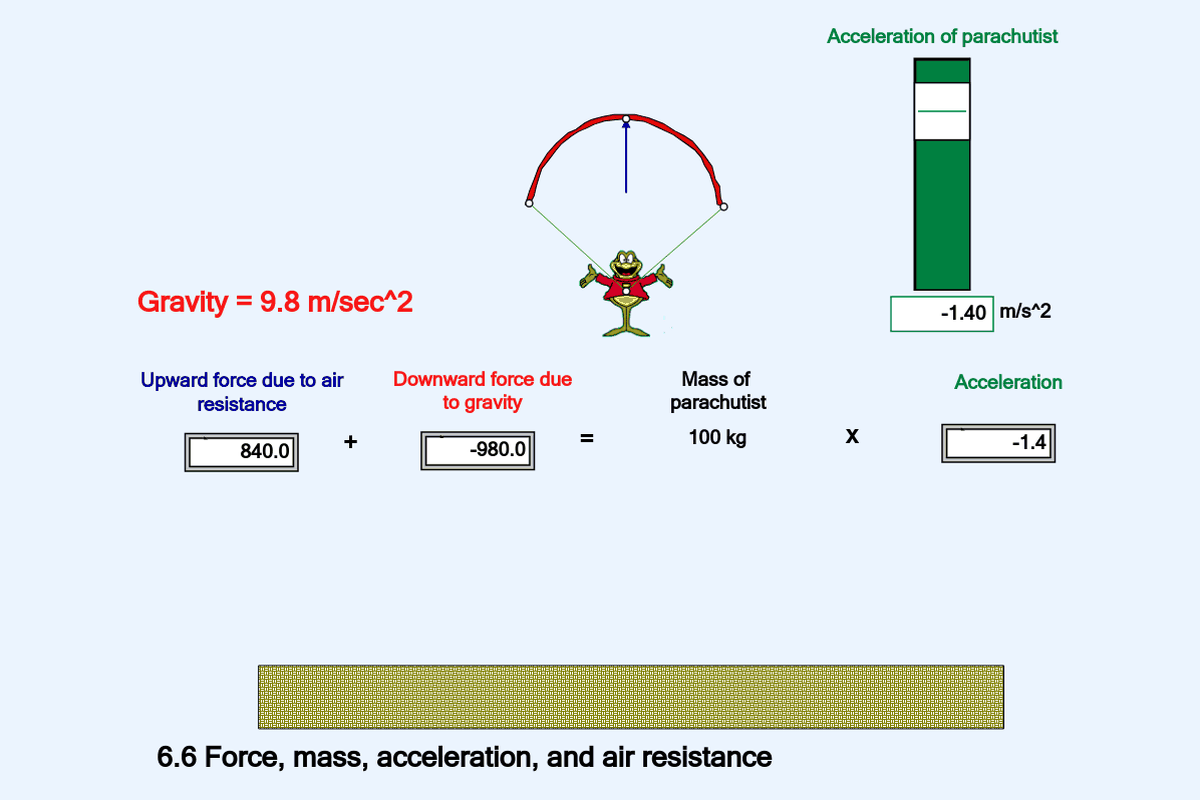
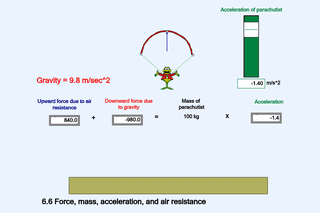 Lesson 6.6
Force, mass, acceleration, and air resistance
Combine Newton's law with air resistance
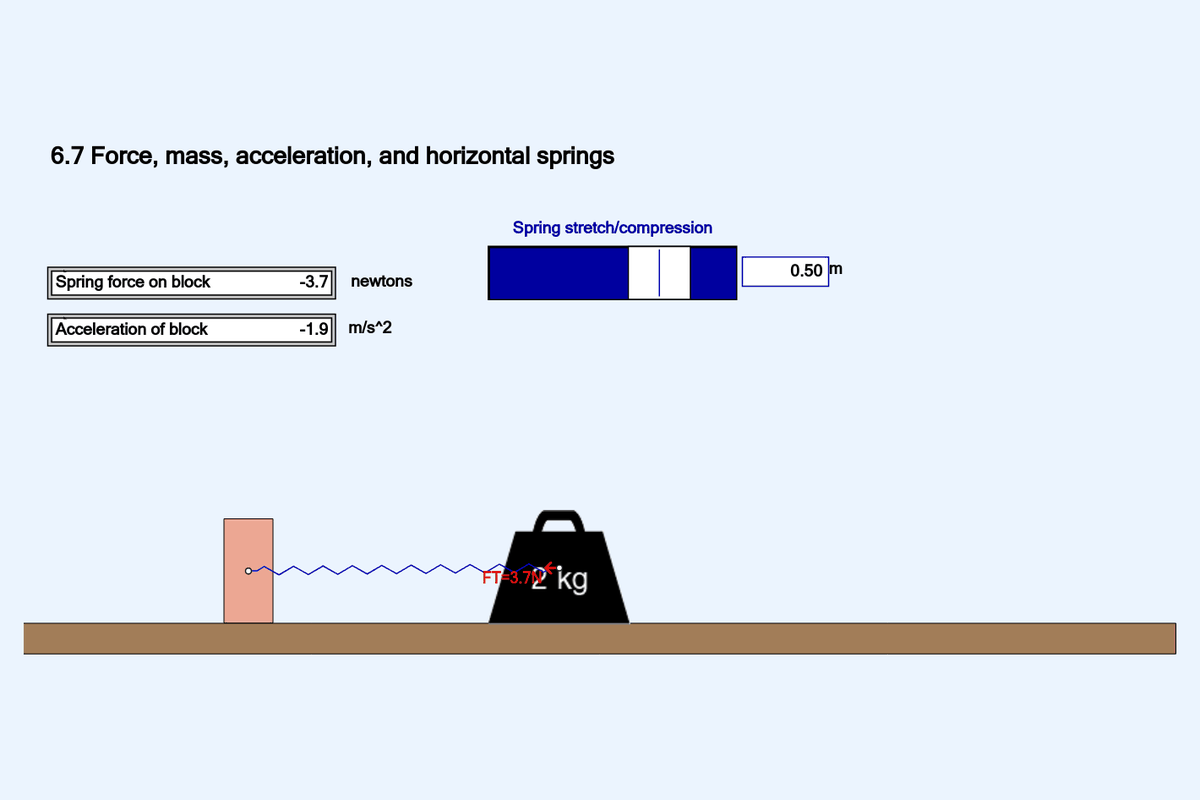
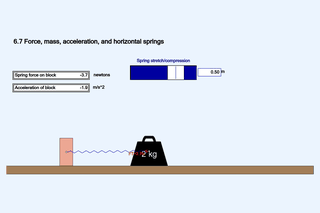 Lesson 6.7
Force, mass, acceleration, and horizontal springs
Analyze spring forces using Newton's second law
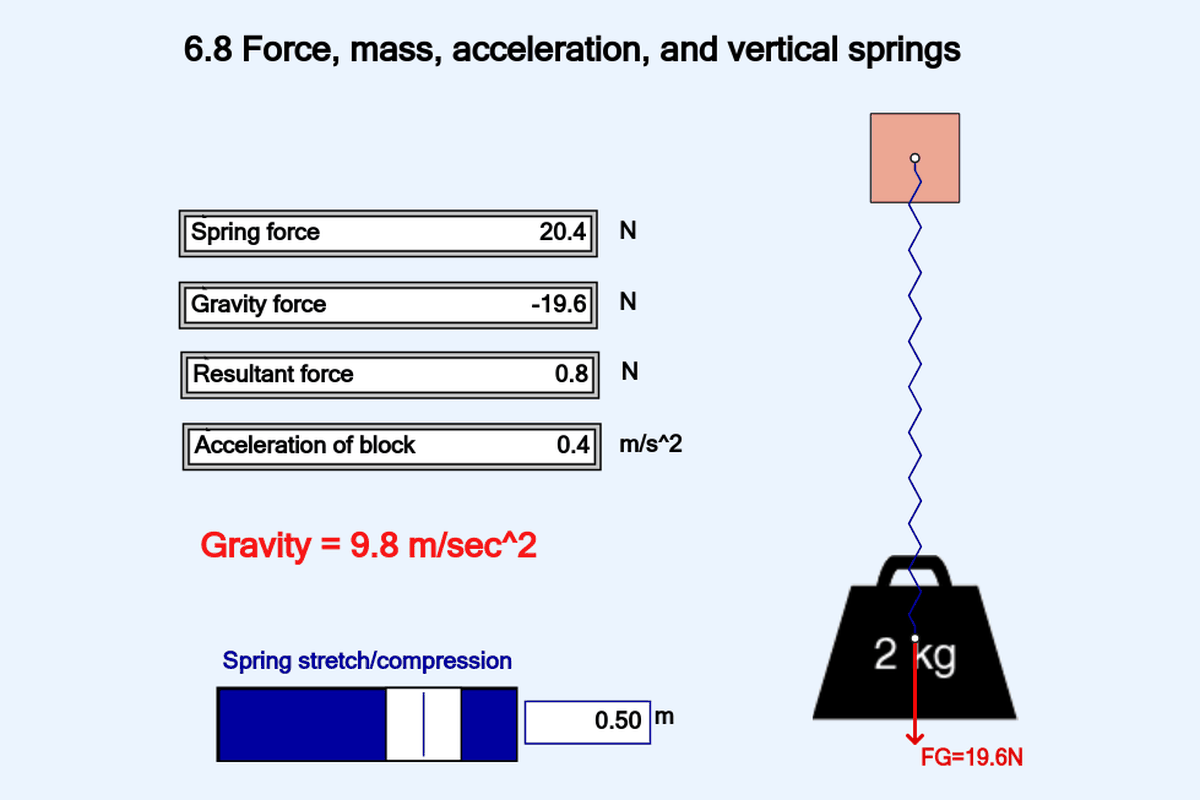
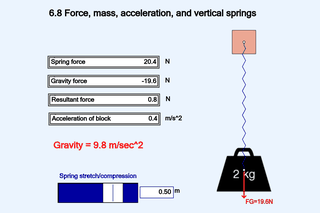 Lesson 6.8
Force, mass, acceleration, and vertical springs
Study vertical spring motion with Newton's law
 Chapter 7: Potential and Kinetic Energy (4)
Energy is the ability to do work. Objects can store energy due to their position (potential energy) or their motion (kinetic energy).
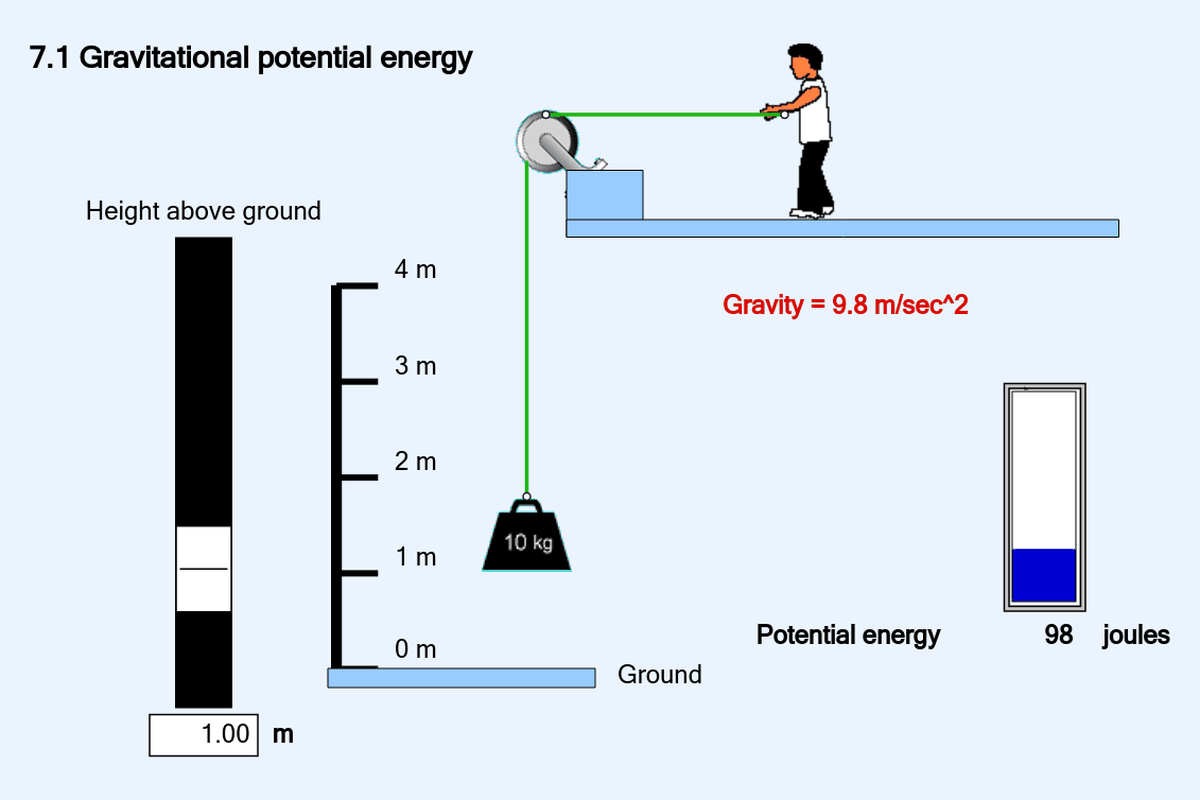
 Lesson 7.1
Gravitational potential energy
Explore how height determines gravitational potential energy
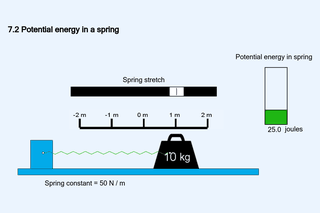 Lesson 7.2
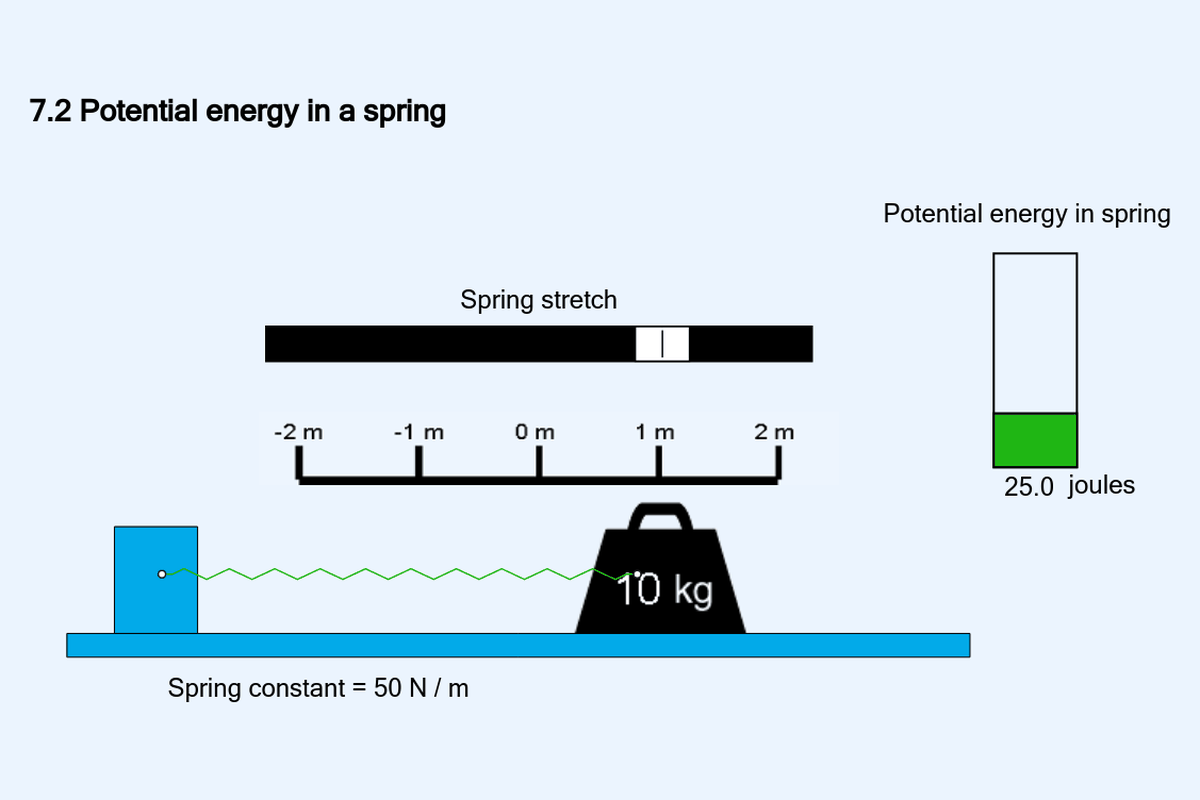
Potential energy in a spring
Investigate elastic potential energy stored in springs
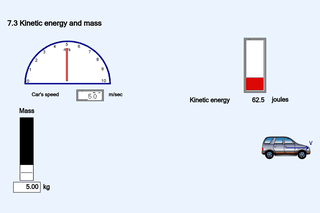 Lesson 7.3
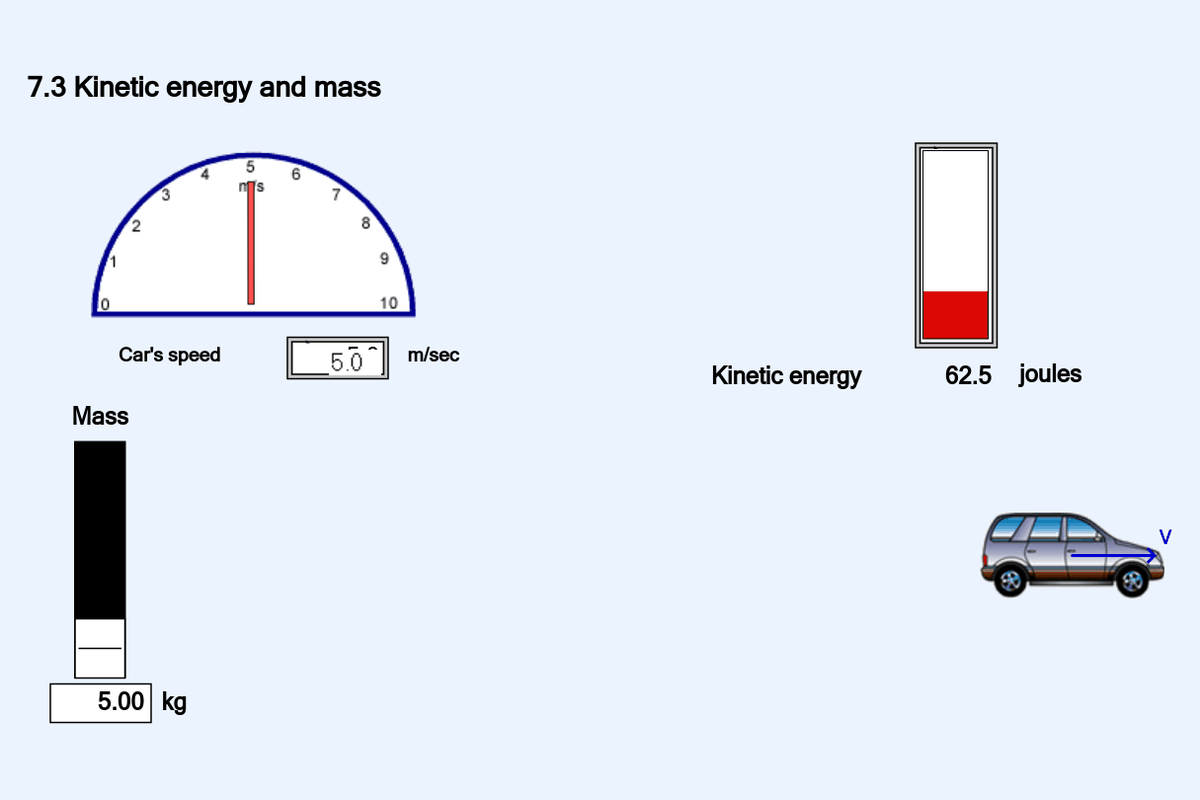
Kinetic energy and mass
Discover how mass affects kinetic energy
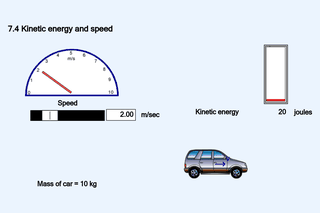 Lesson 7.4
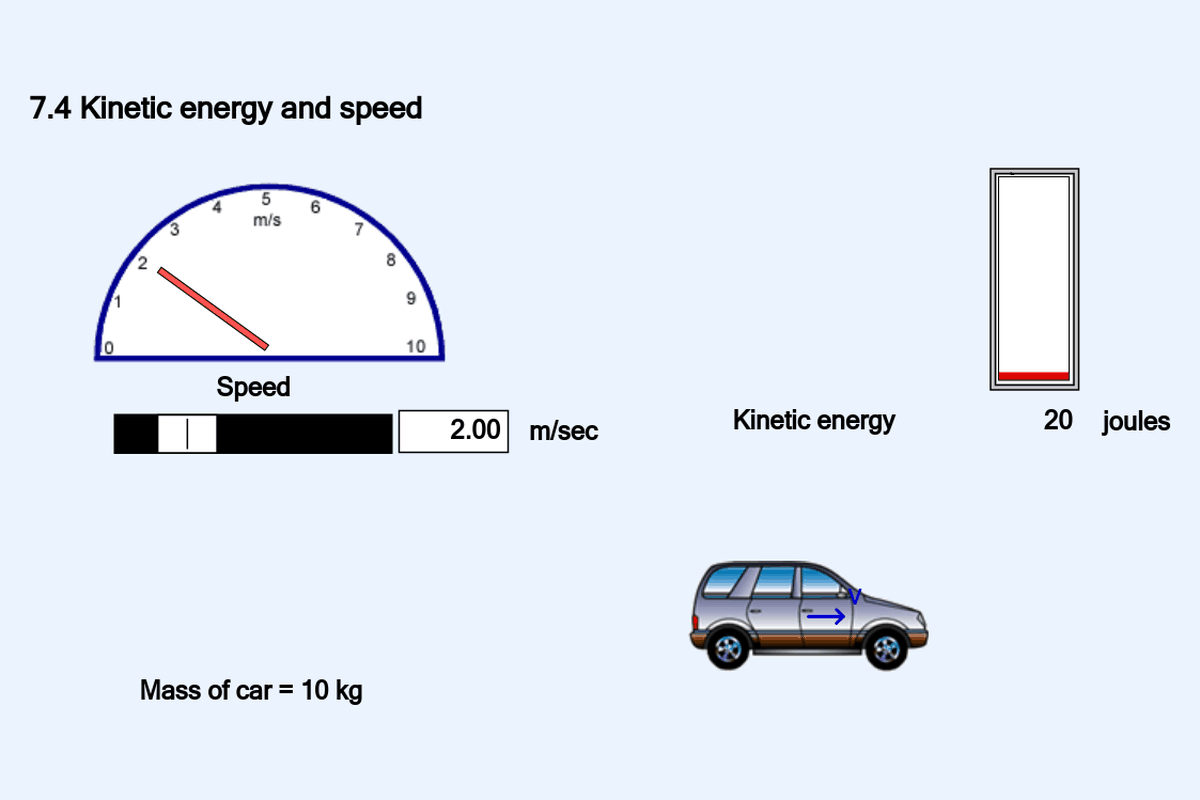
Kinetic energy and speed
See how speed affects kinetic energy
 Chapter 8: Conservation of Energy (6)
One of the most powerful principles in physics: energy cannot be created or destroyed, only transformed from one form to another. The total energy in a closed system remains constant.
 Lesson 8.1
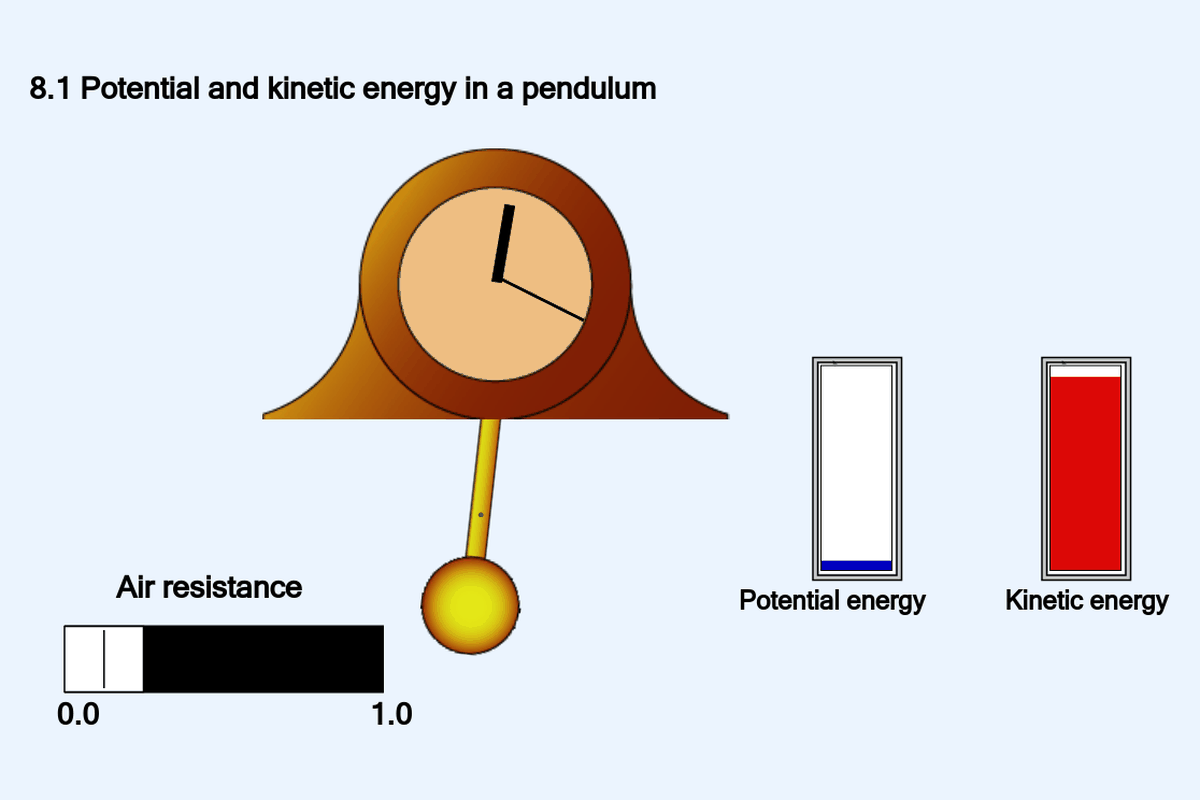
Potential and kinetic energy in a pendulum
Watch energy transform between potential and kinetic in a pendulum
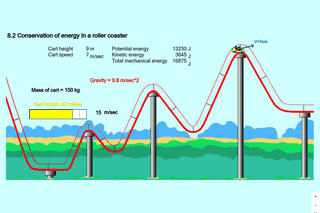 Lesson 8.2
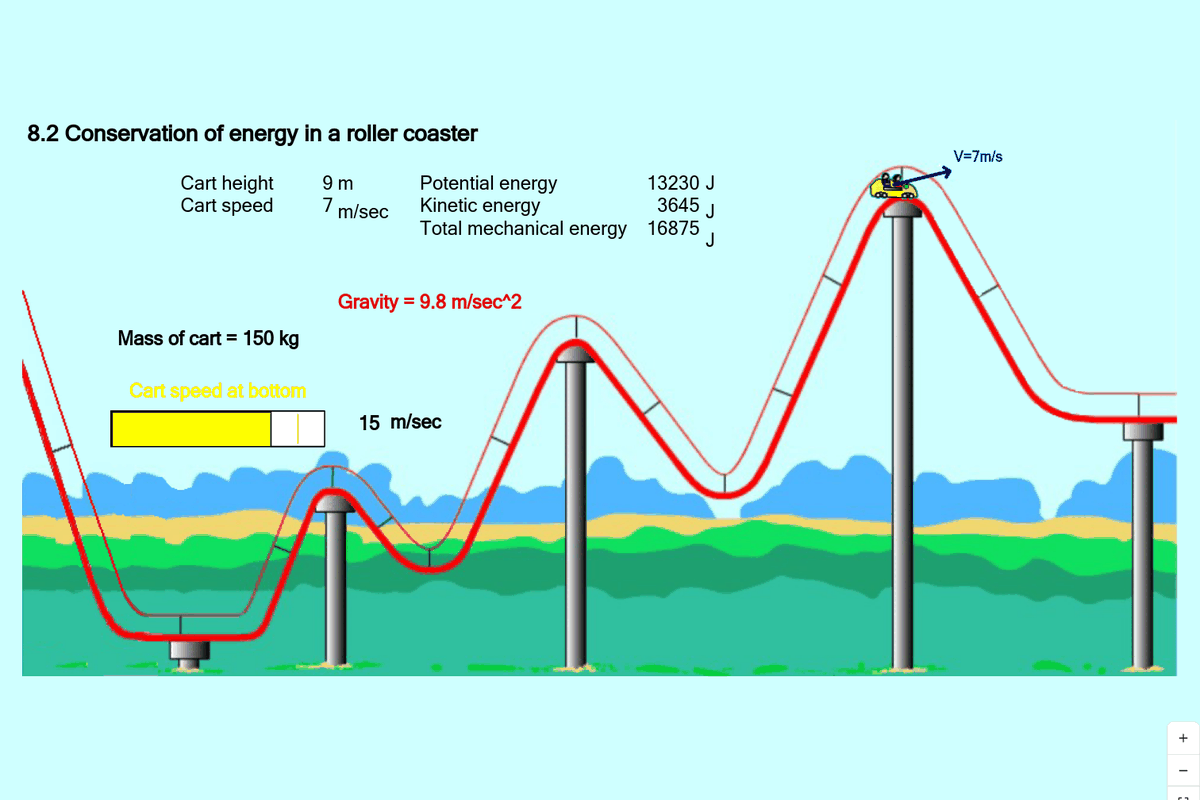
Conservation of energy in a roller coaster
Track energy conservation along a roller coaster track
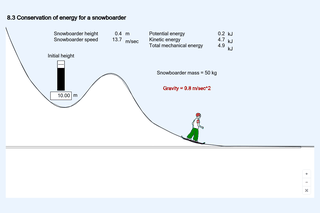 Lesson 8.3
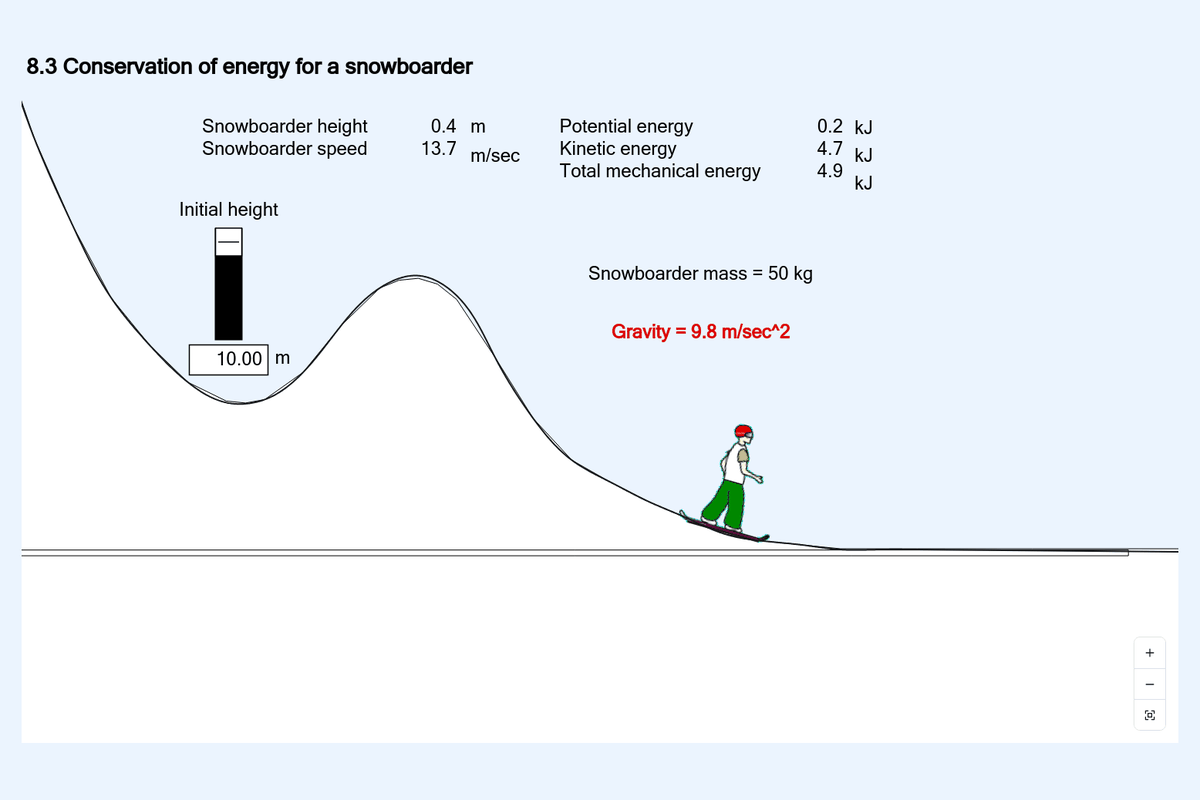
Conservation of energy for a snowboarder
Apply energy conservation to a snowboarder on a slope
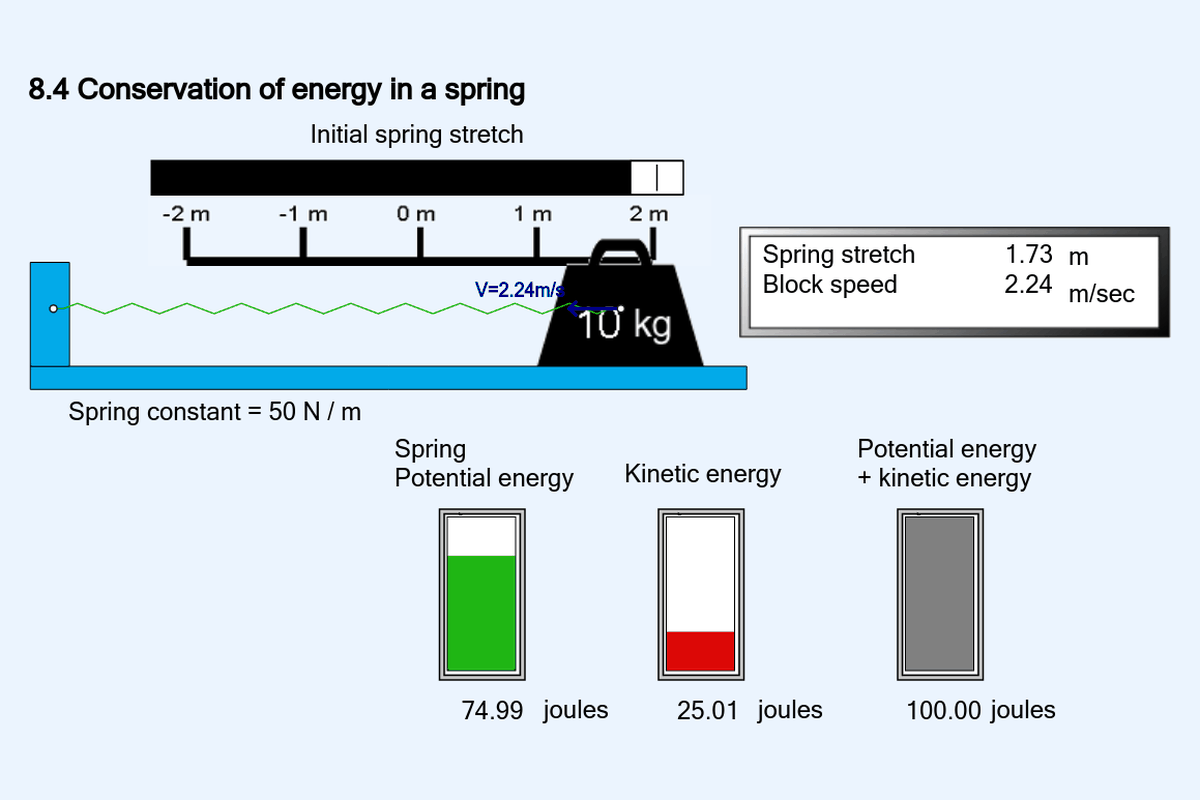
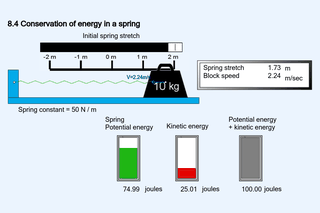 Lesson 8.4
Conservation of energy in a spring
Observe energy conversion between spring and kinetic energy
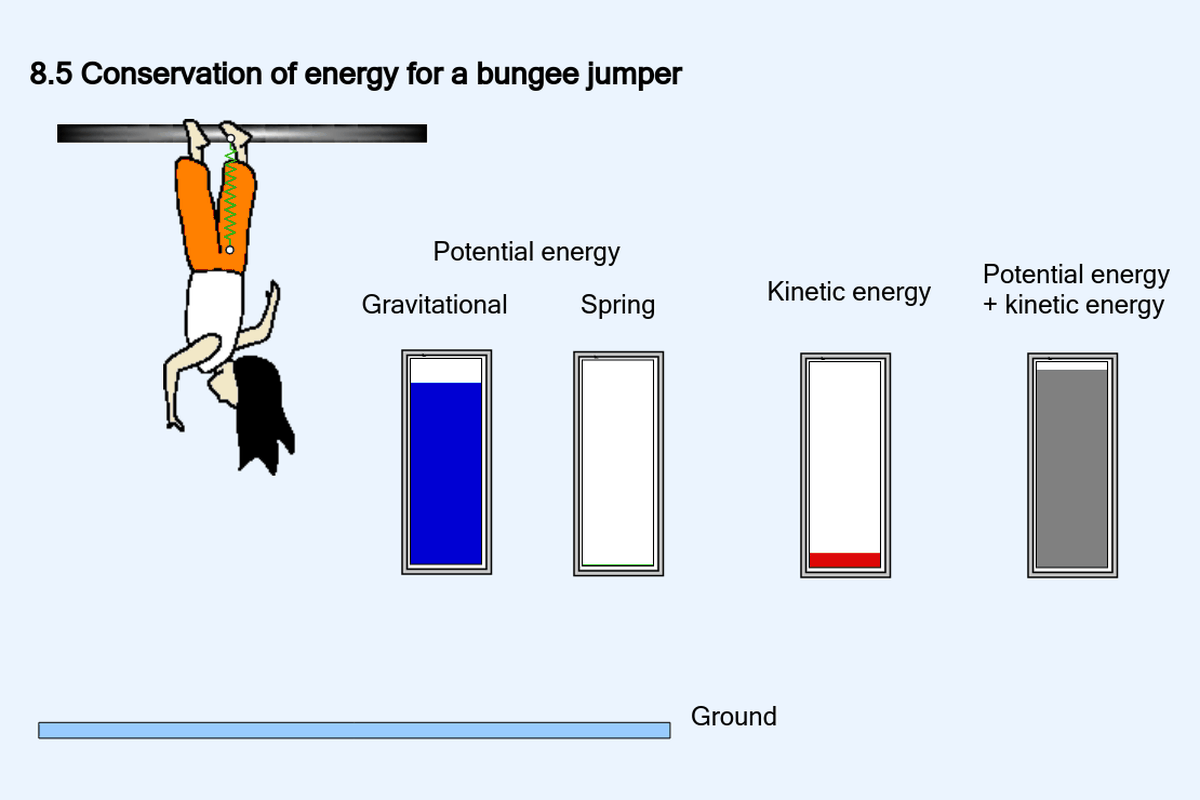
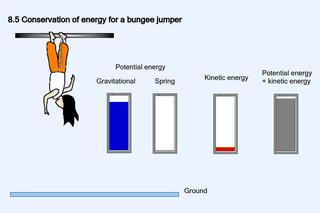 Lesson 8.5
Conservation of energy for a bungee jumper
Analyze energy transformations during a bungee jump
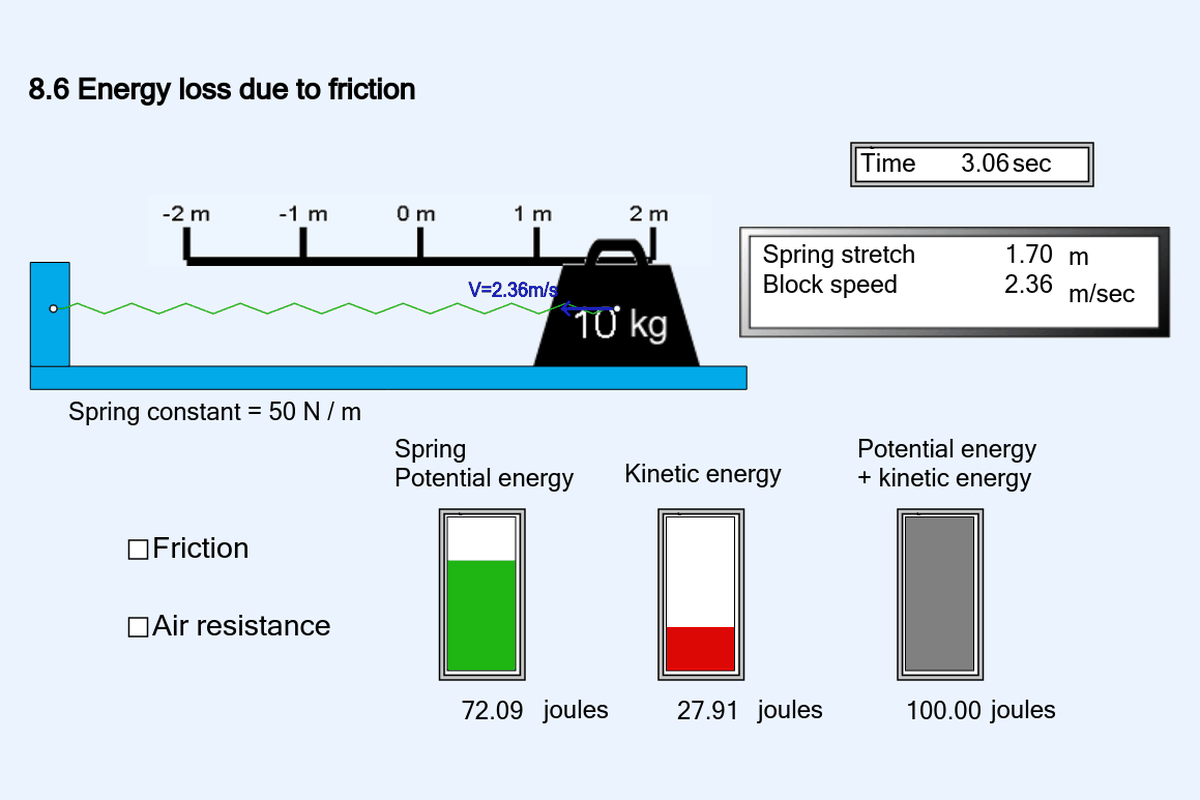
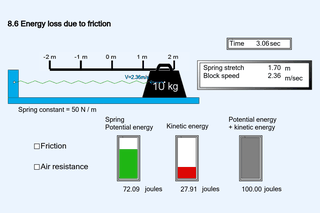 Lesson 8.6
Energy loss due to friction
Investigate how friction converts mechanical energy to heat
 Chapter 9: Temperature and Heat (4)
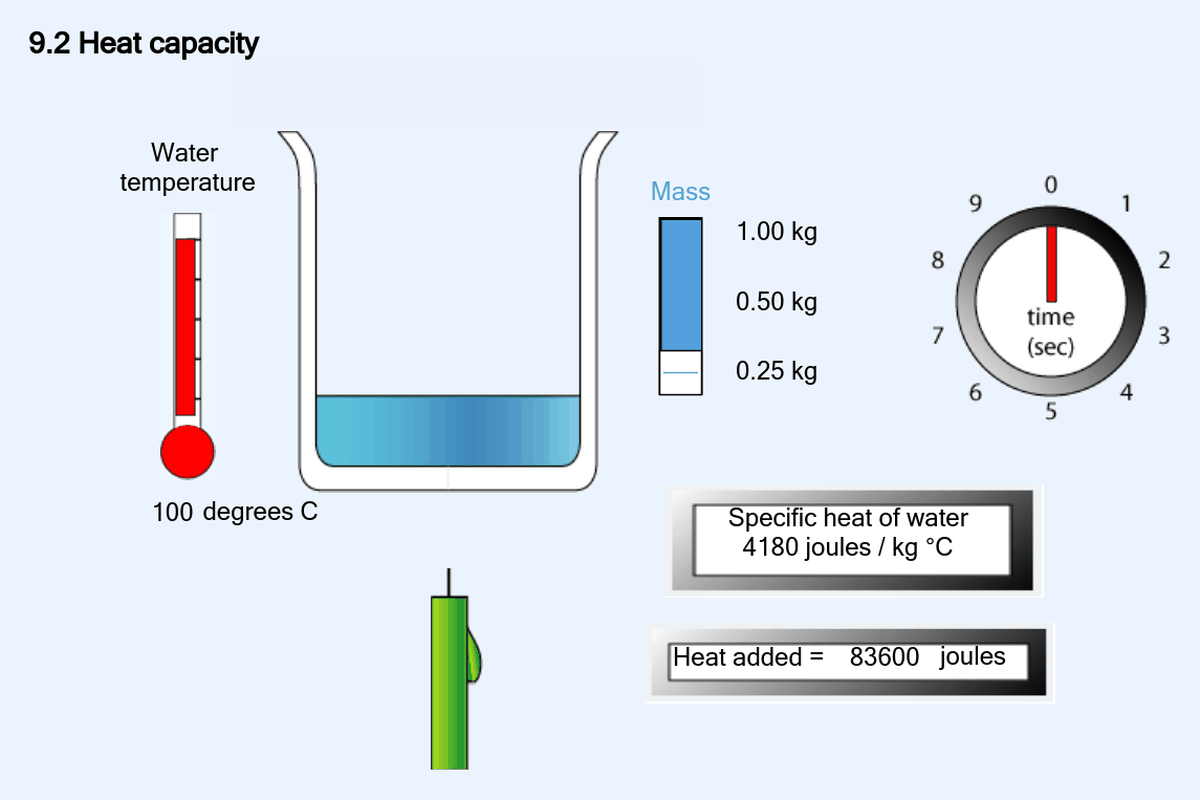
Temperature measures the average kinetic energy of particles in a substance. Heat is the transfer of thermal energy between objects at different temperatures: Q = m · c · ΔT.
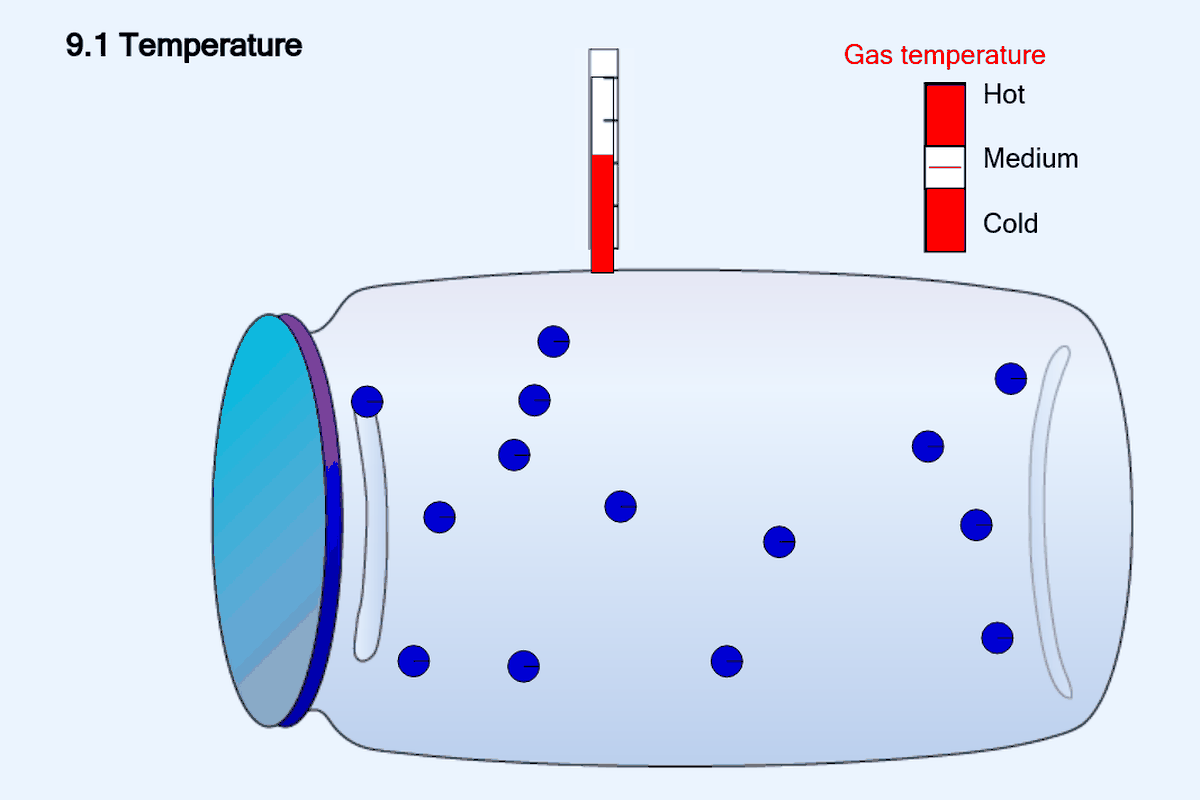
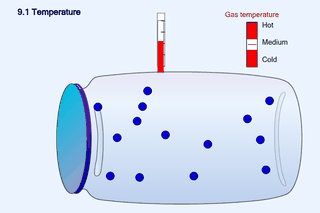 Lesson 9.1
Temperature
Understand temperature and how it is measured
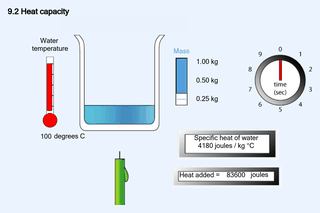 Lesson 9.2
Heat capacity
Explore how different materials store heat energy
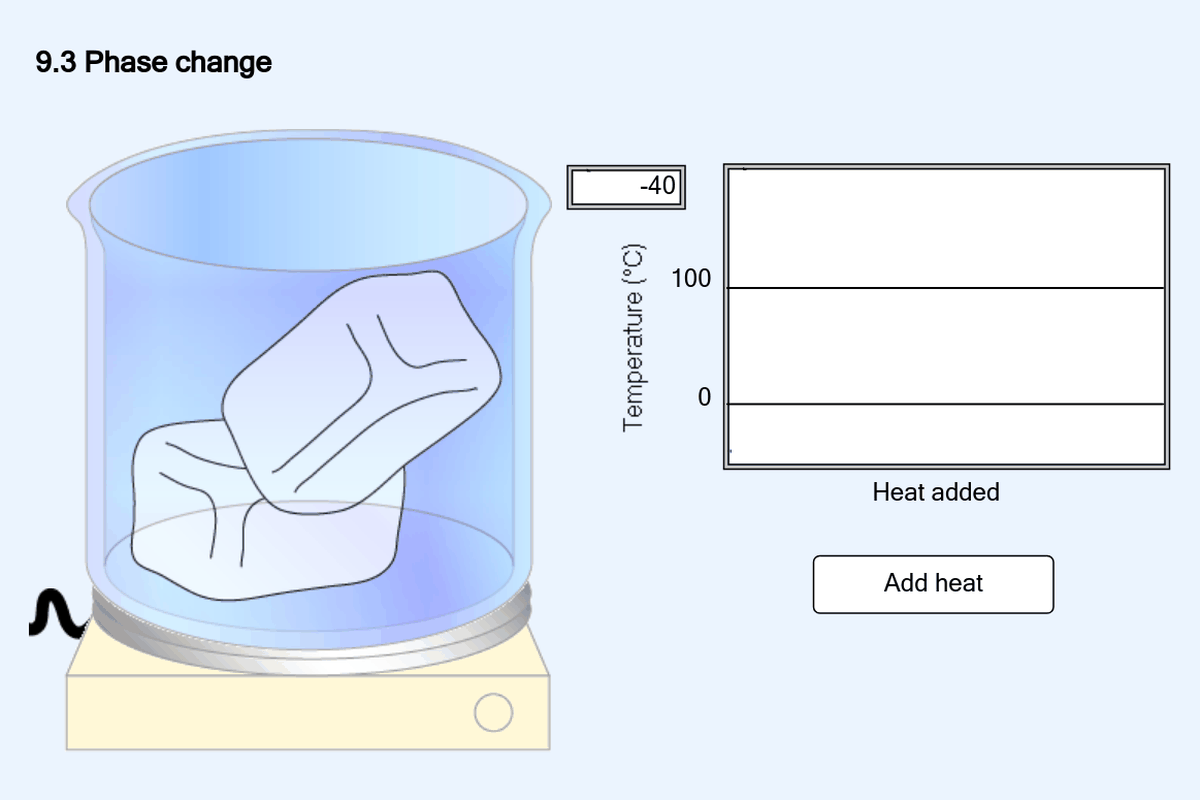
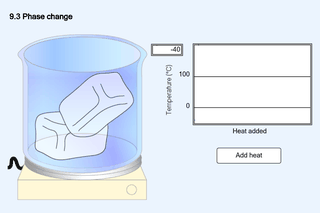 Lesson 9.3
Phase change
Observe phase changes between solid, liquid, and gas
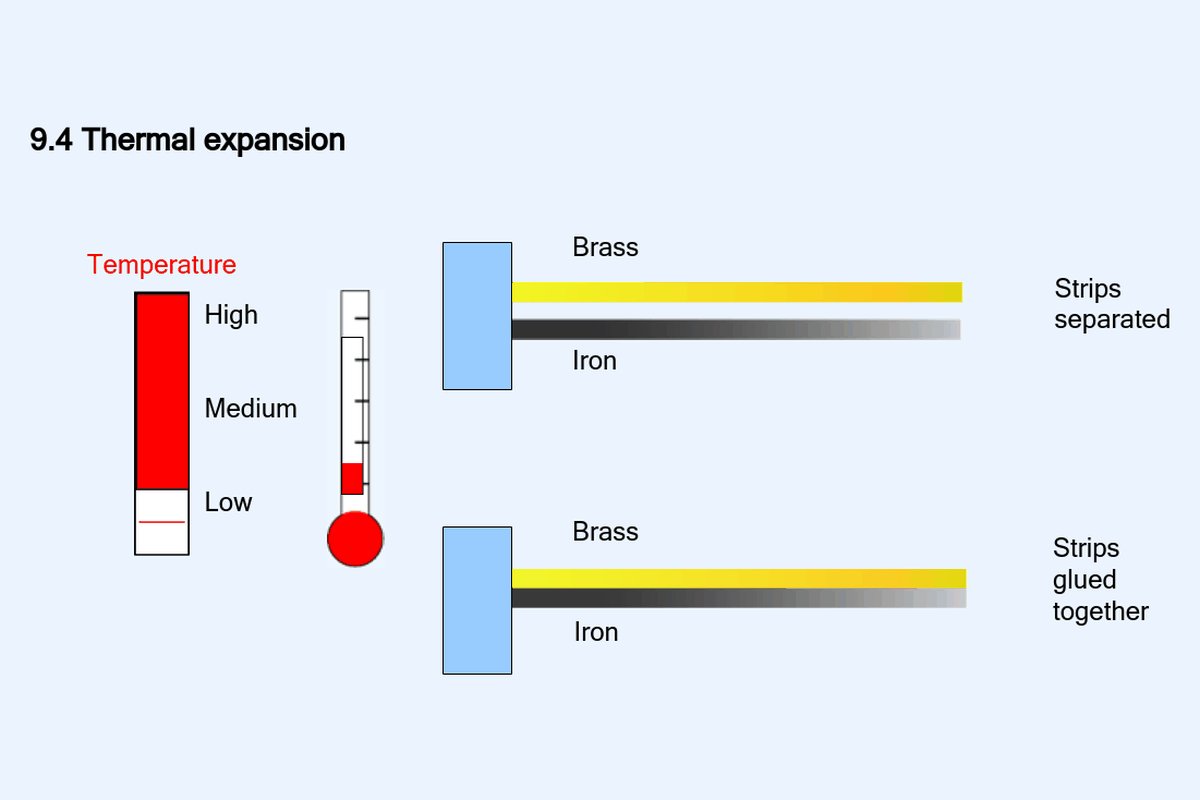
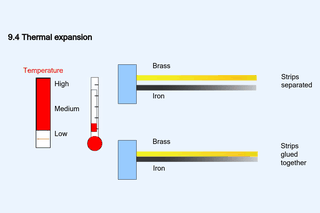 Lesson 9.4
Thermal expansion
Investigate how materials expand when heated
 Chapter 10: Heat Transfer (4)
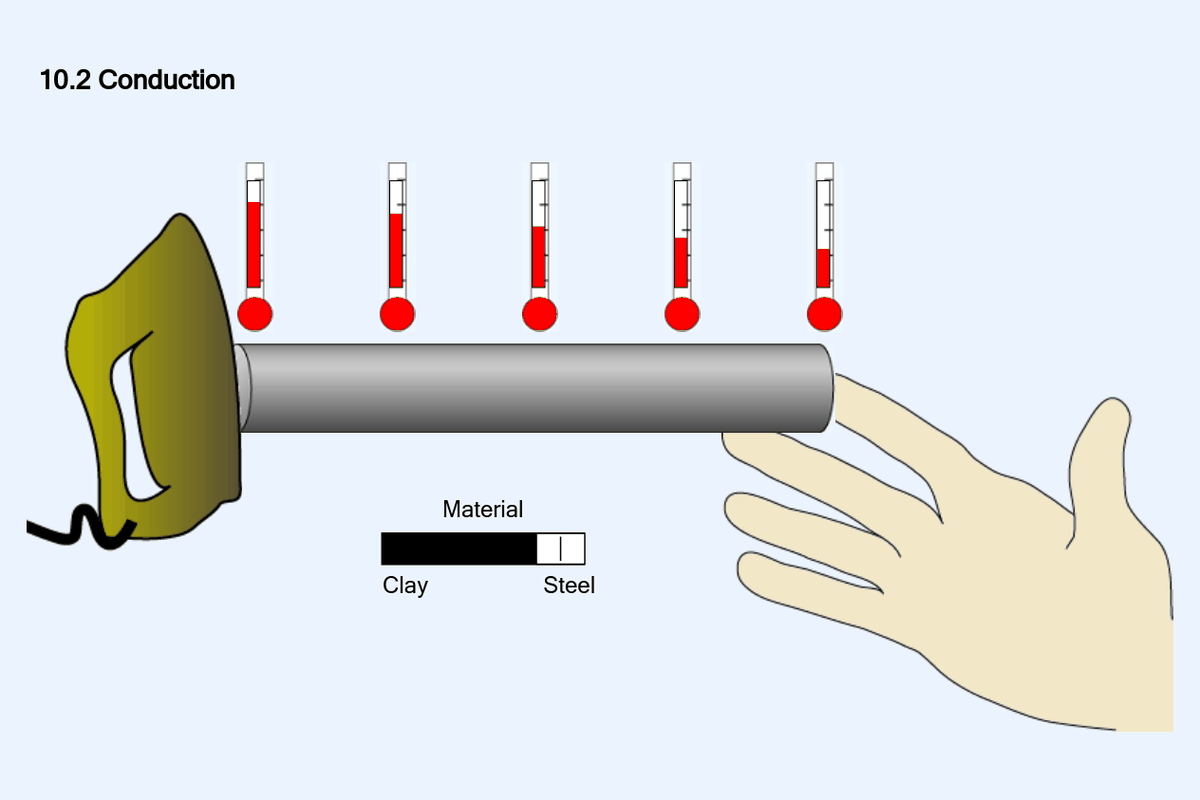
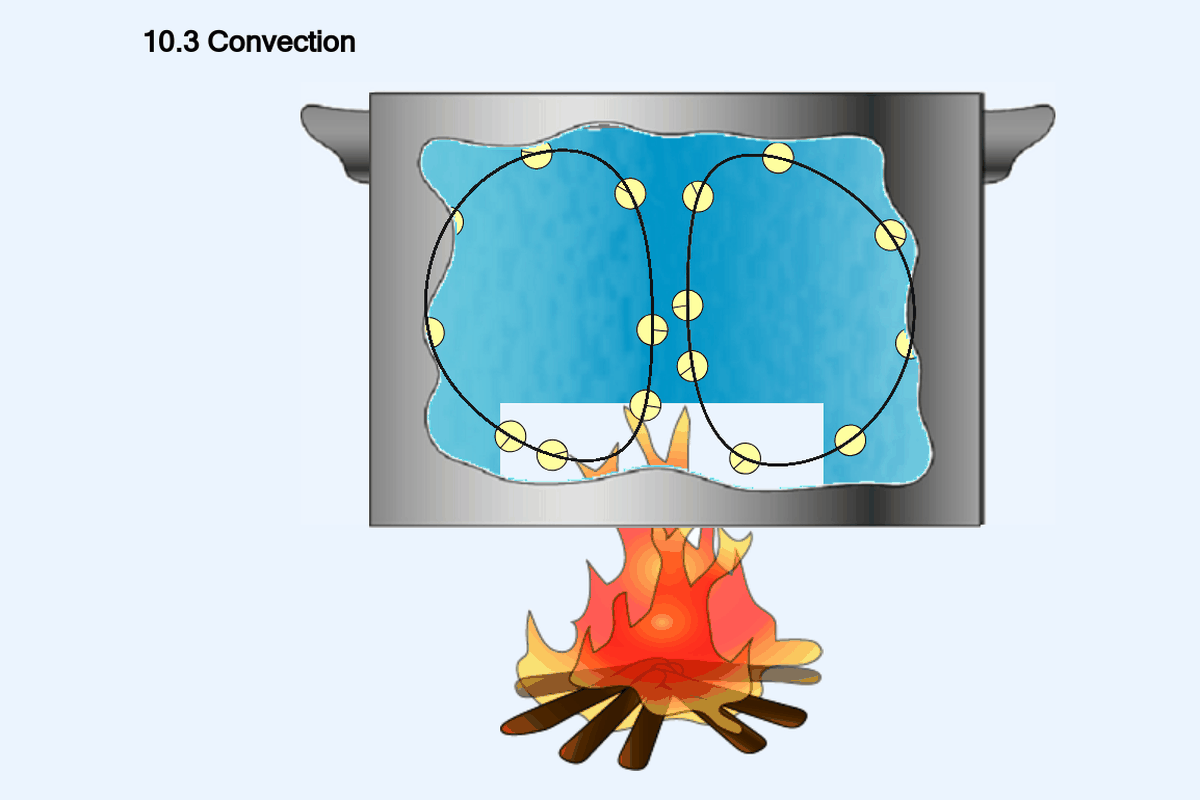
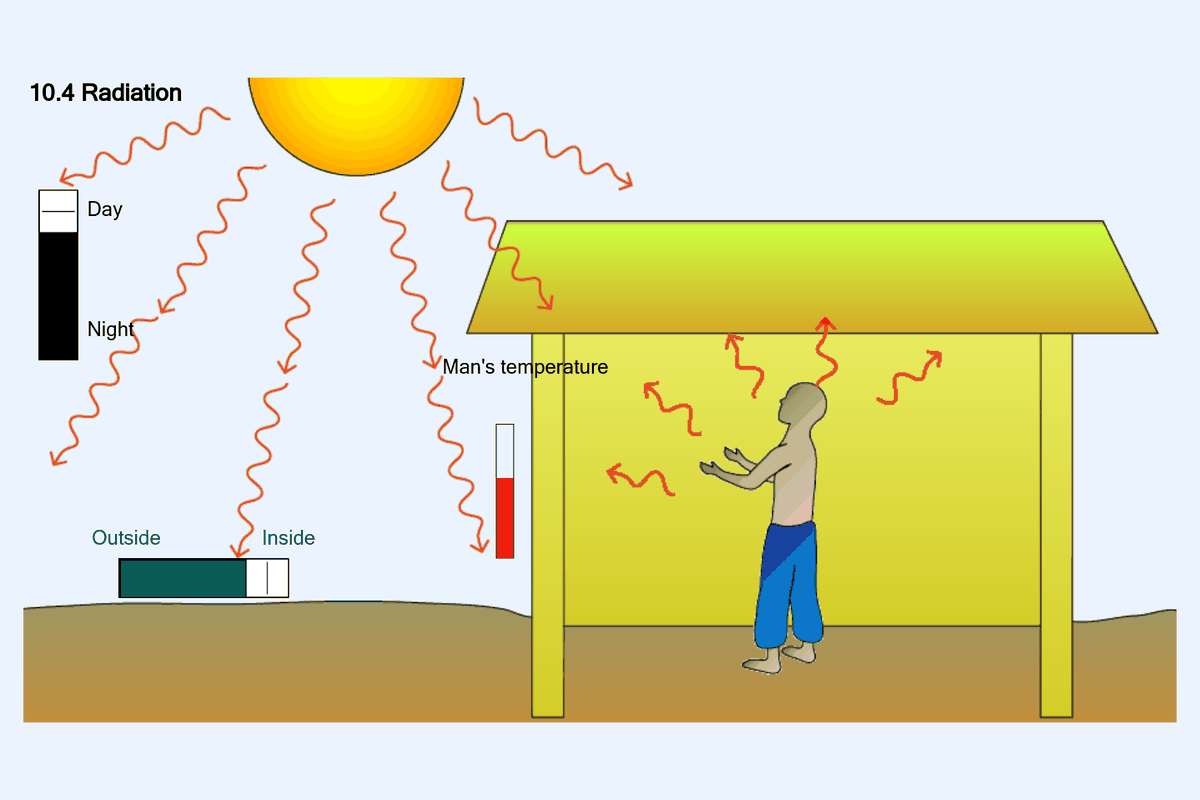
Heat always flows from hotter objects to cooler ones. There are three fundamentally different mechanisms by which this transfer occurs: Conduction, Convection and Radiation.
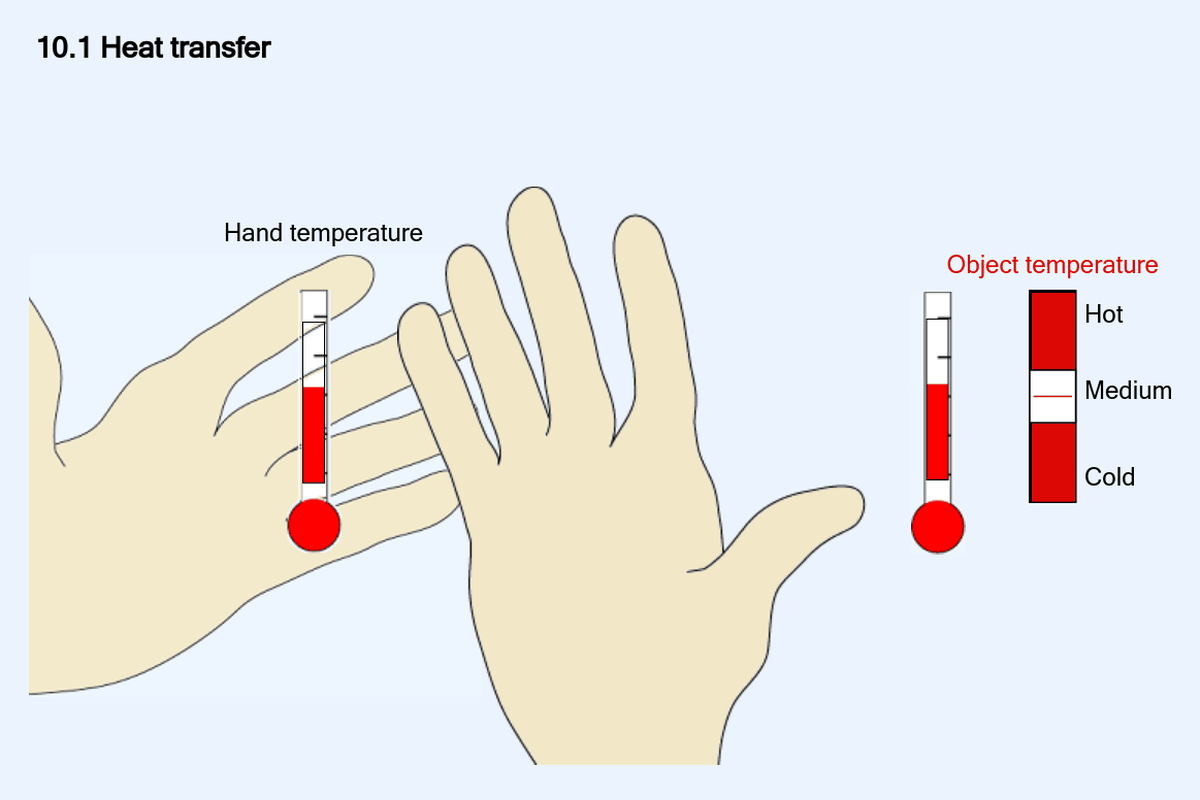
 Lesson 10.1
Heat transfer
Introduction to the mechanisms of heat transfer
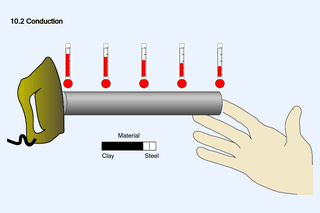 Lesson 10.2
Conduction
Explore heat transfer through direct contact
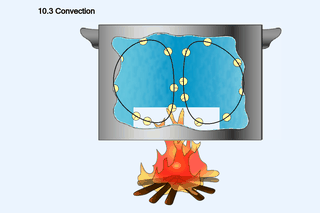 Lesson 10.3
Convection
Observe heat transfer through fluid motion
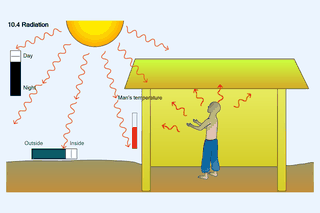 Lesson 10.4
Radiation
Investigate heat transfer through electromagnetic radiation
 Chapter 11: Waves and Sound (5)
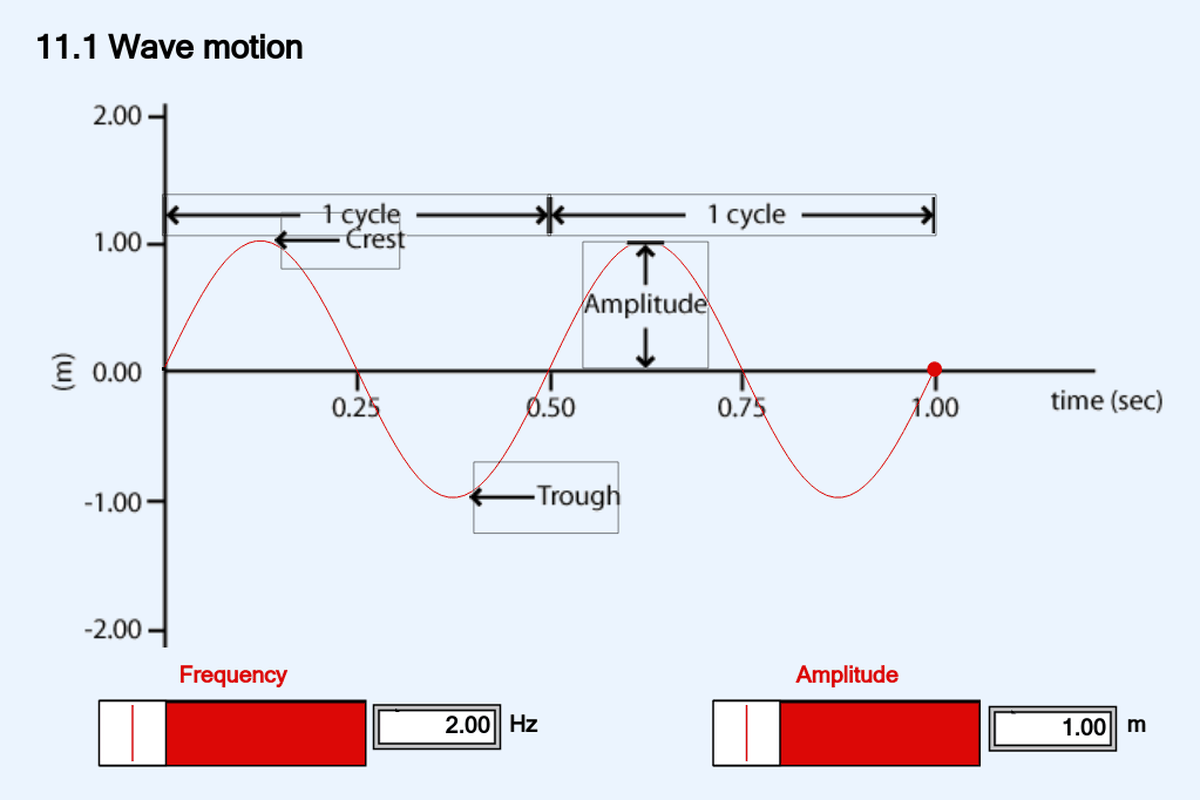
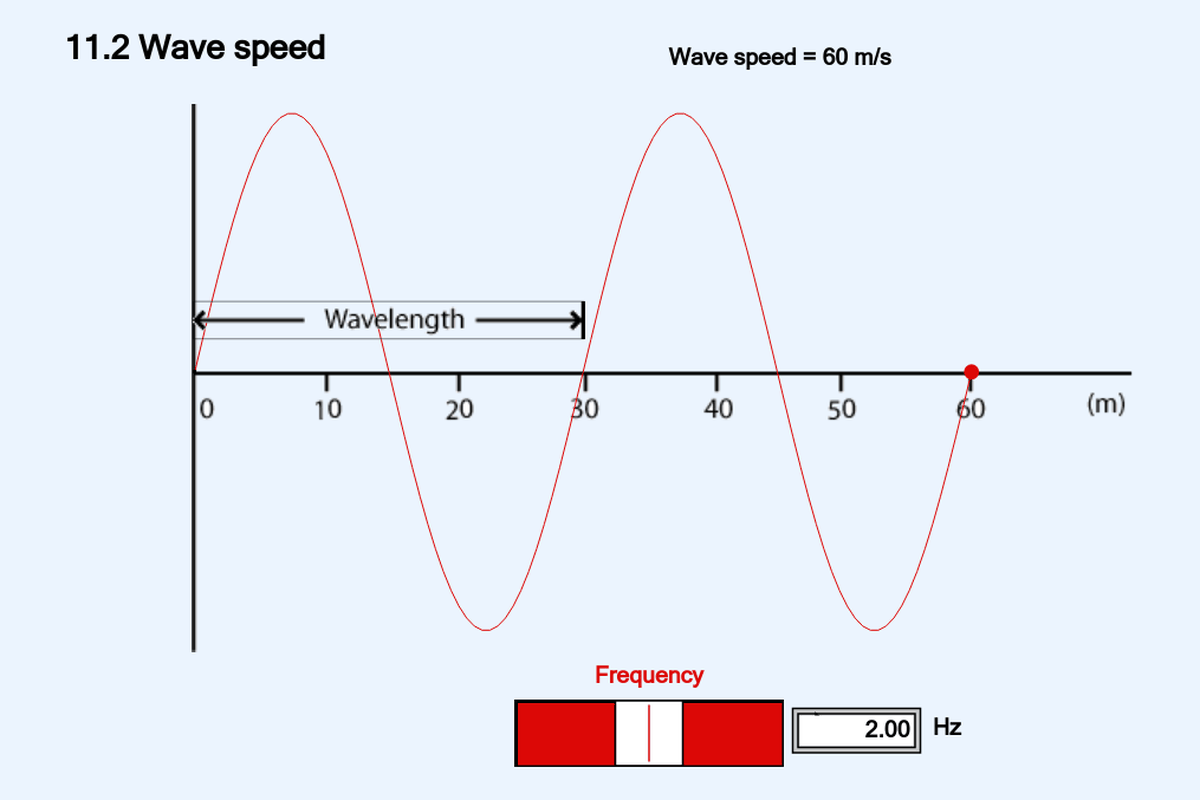
Waves transfer energy from one place to another without transferring matter. The three fundamental properties of any wave are connected by a simple equation: v = λ · f (wave speed = wavelength × frequency).
 Lesson 11.1
Wave properties
Learn the fundamental properties of waves
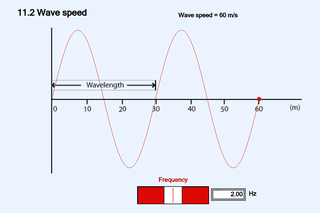 Lesson 11.2
Wavelength
Measure and understand wavelength
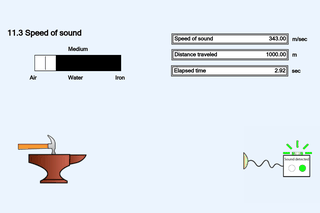 Lesson 11.3
Frequency
Explore wave frequency and its effects
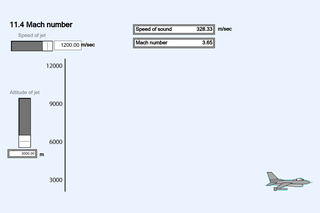 Lesson 11.4
Wave speed
Calculate wave speed from wavelength and frequency
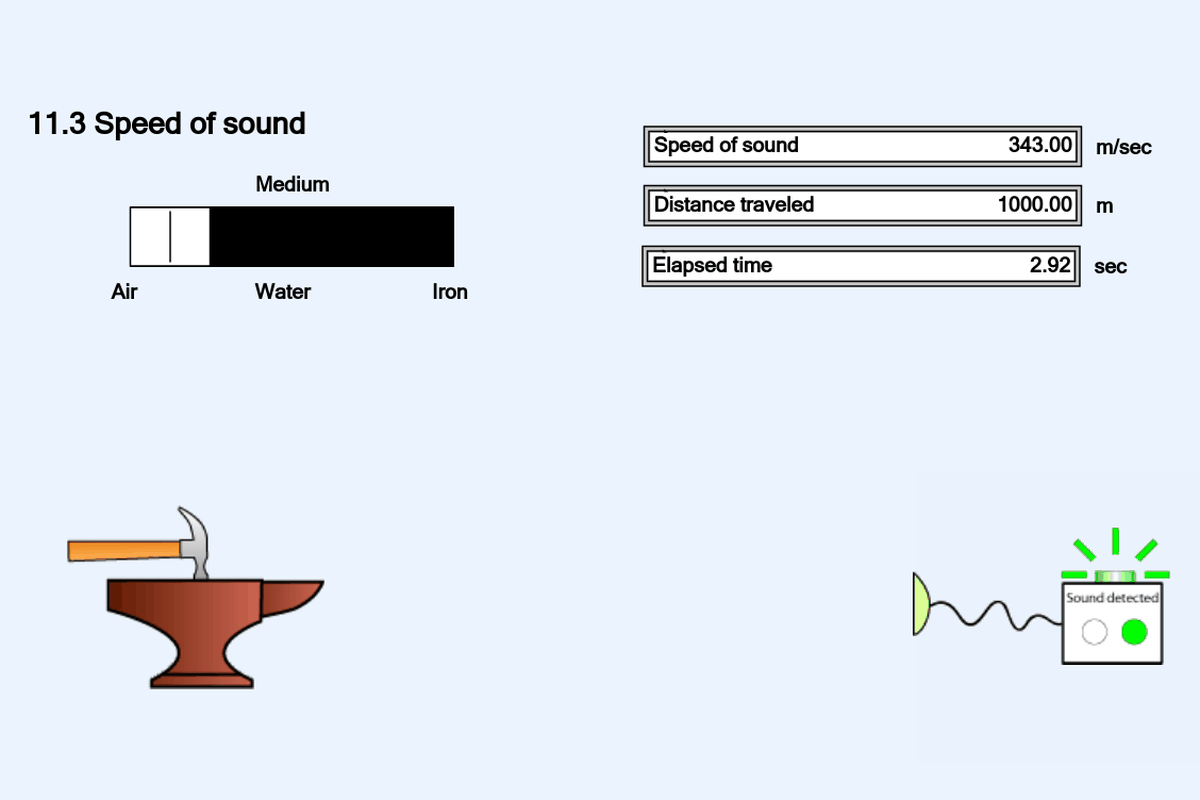
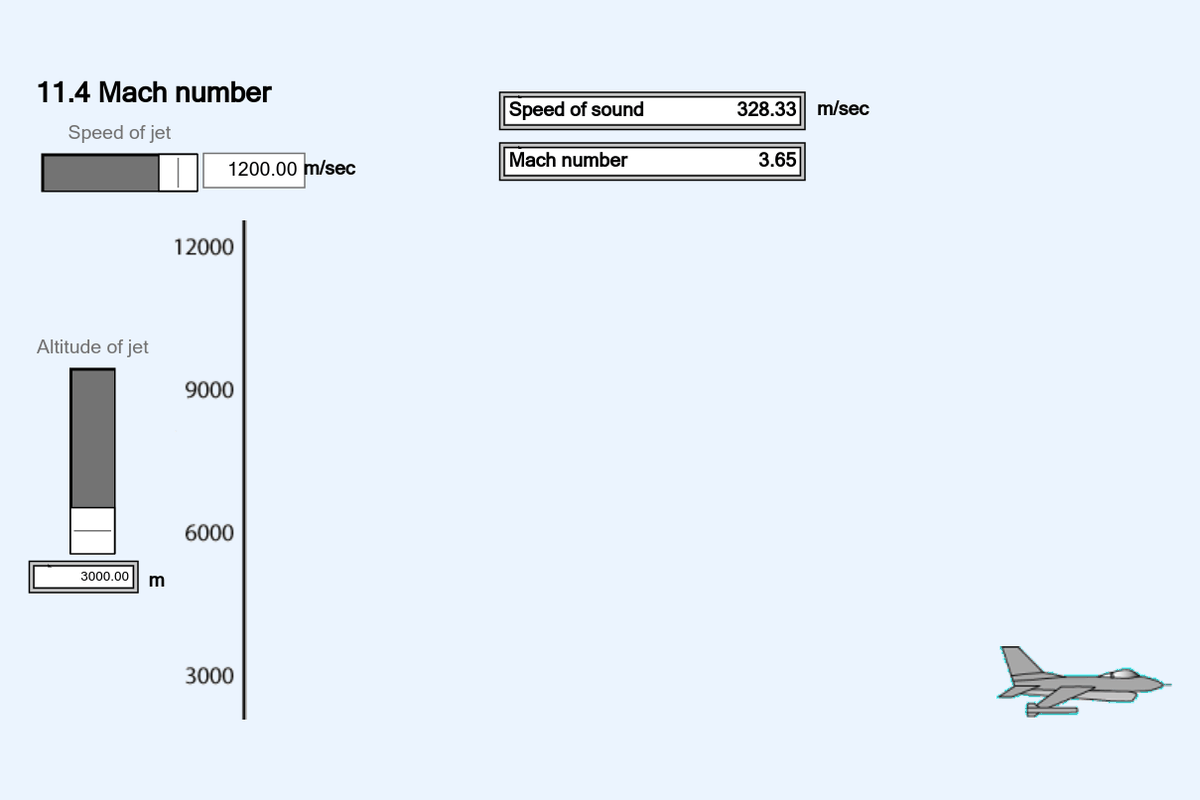
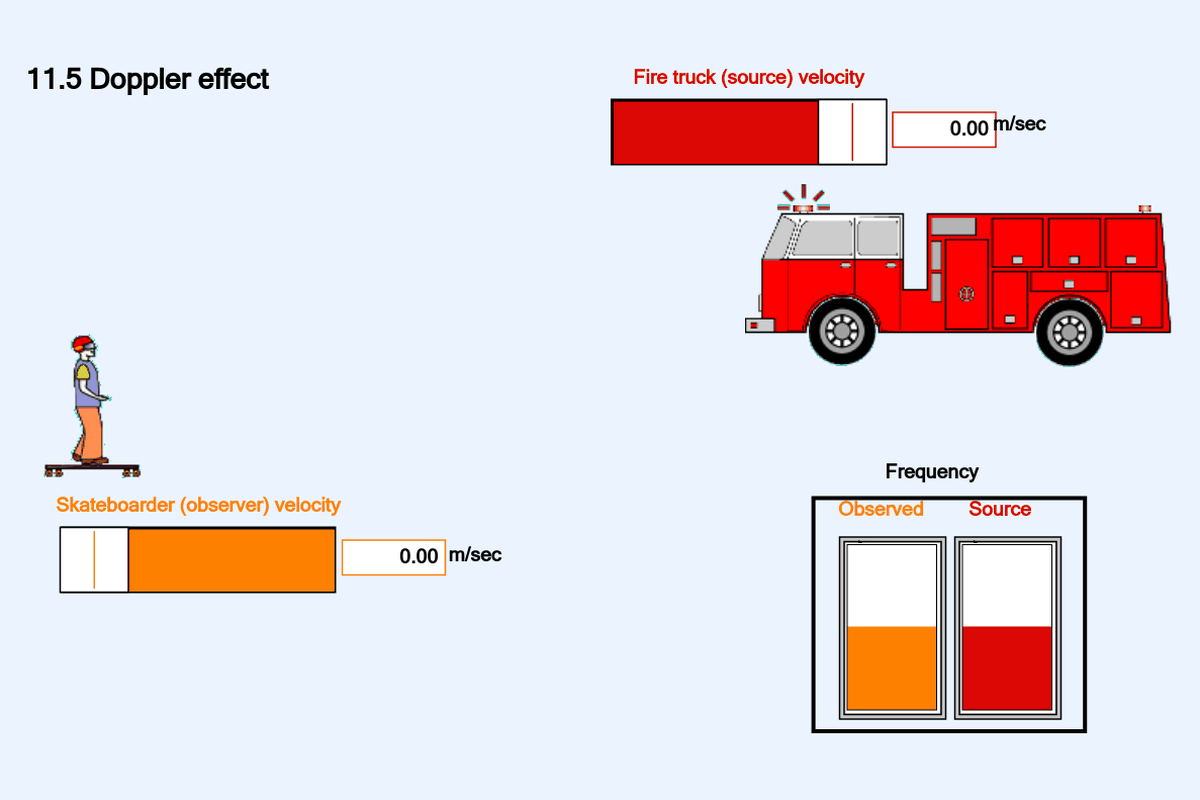
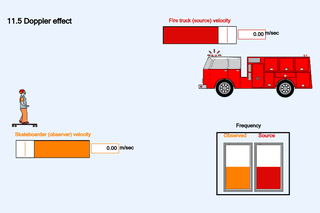 Lesson 11.5
Sound waves
Investigate the properties of sound waves
 Chapter 12: Intermolecular Attractions (5)
The forces between molecules -- much weaker than the bonds within molecules -- determine whether a substance is a solid, liquid, or gas at a given temperature. These experiments visualize forces that are normally invisible at the molecular scale.
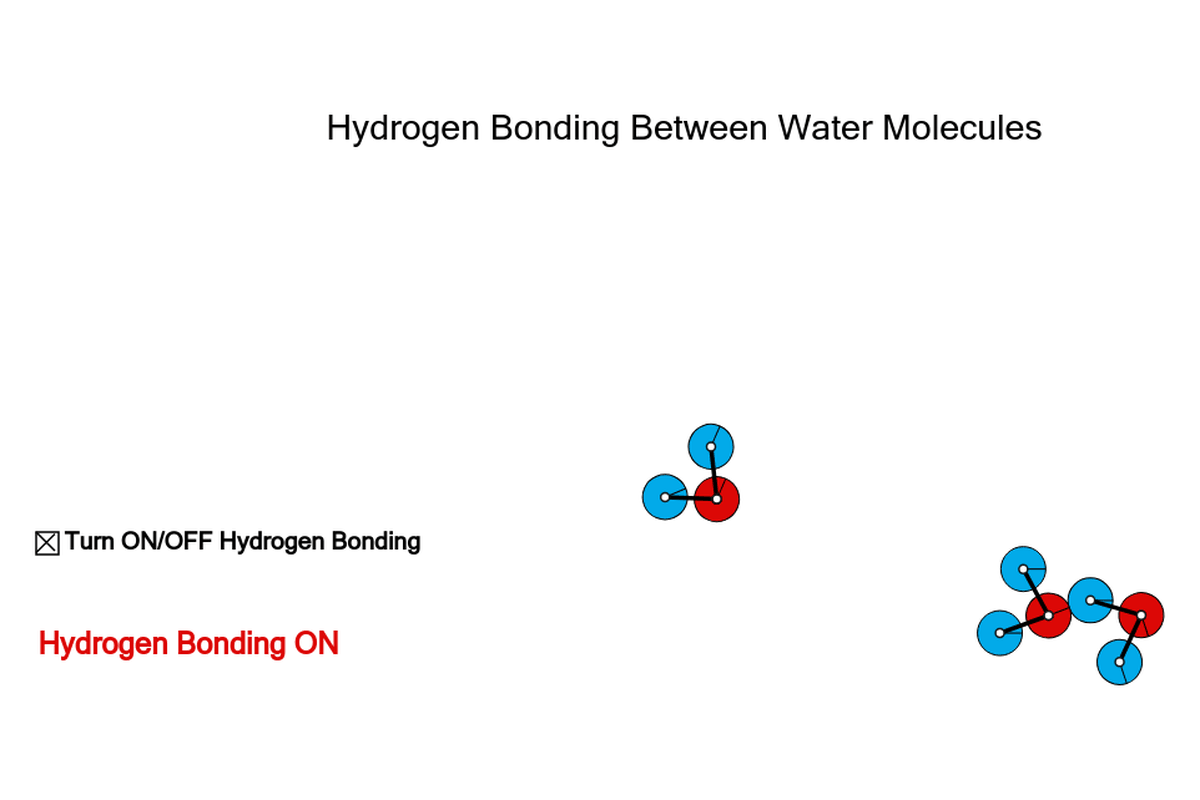
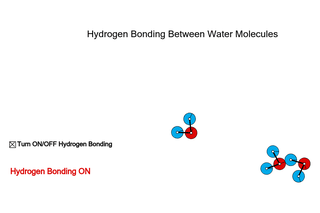 Lesson 12.1
Hydrogen bonding between water molecules
Observe hydrogen bonds forming between water molecules
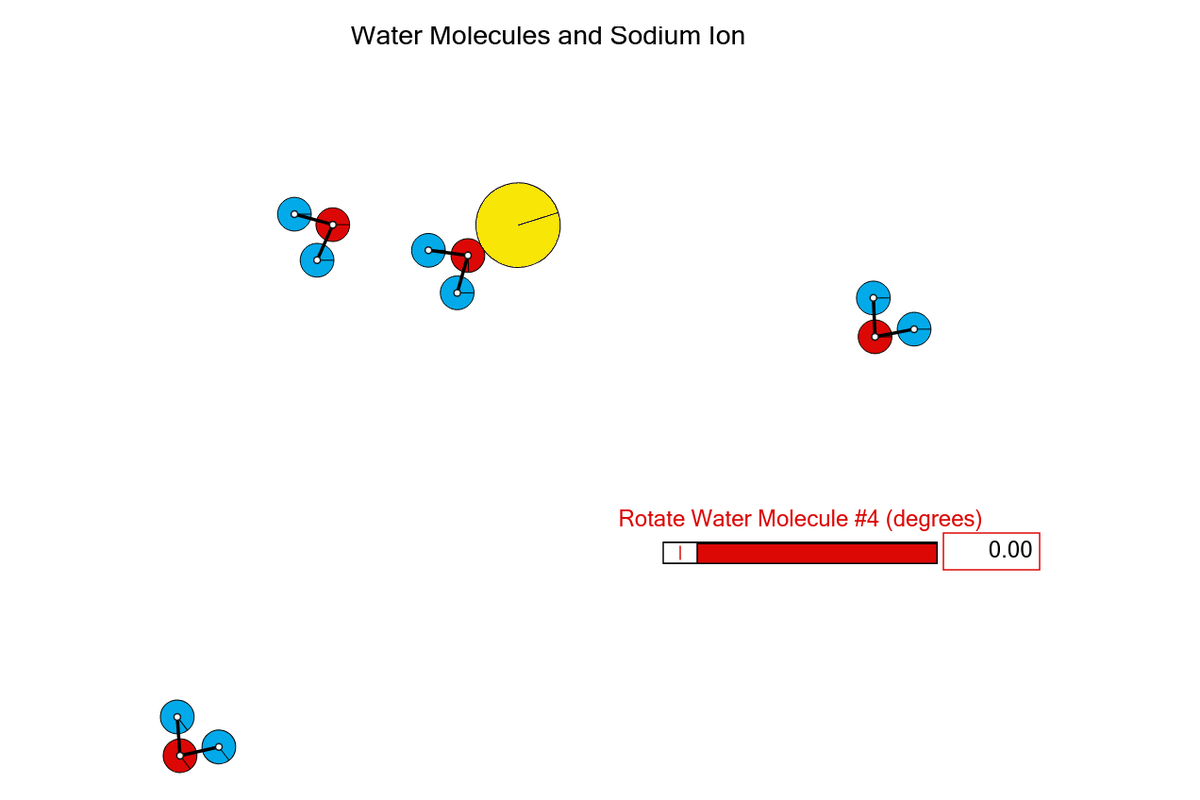
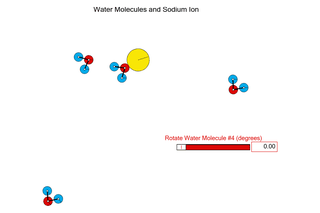 Lesson 12.2
Interaction of water molecules and a sodium ion
Watch water molecules surround a sodium ion
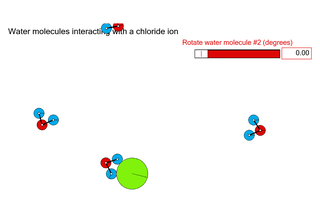 Lesson 12.3
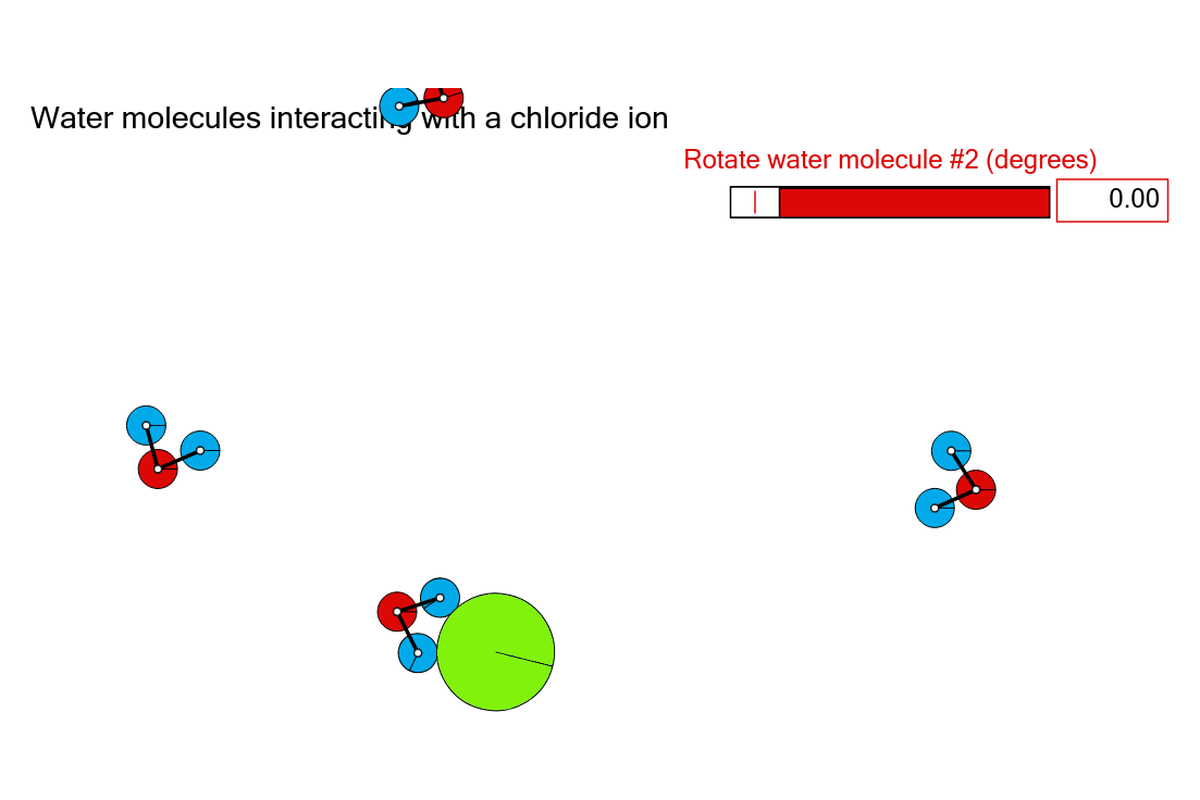
Interaction of water molecules and a chloride ion
Watch water molecules surround a chloride ion
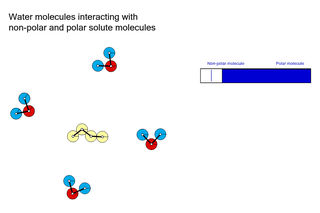 Lesson 12.4
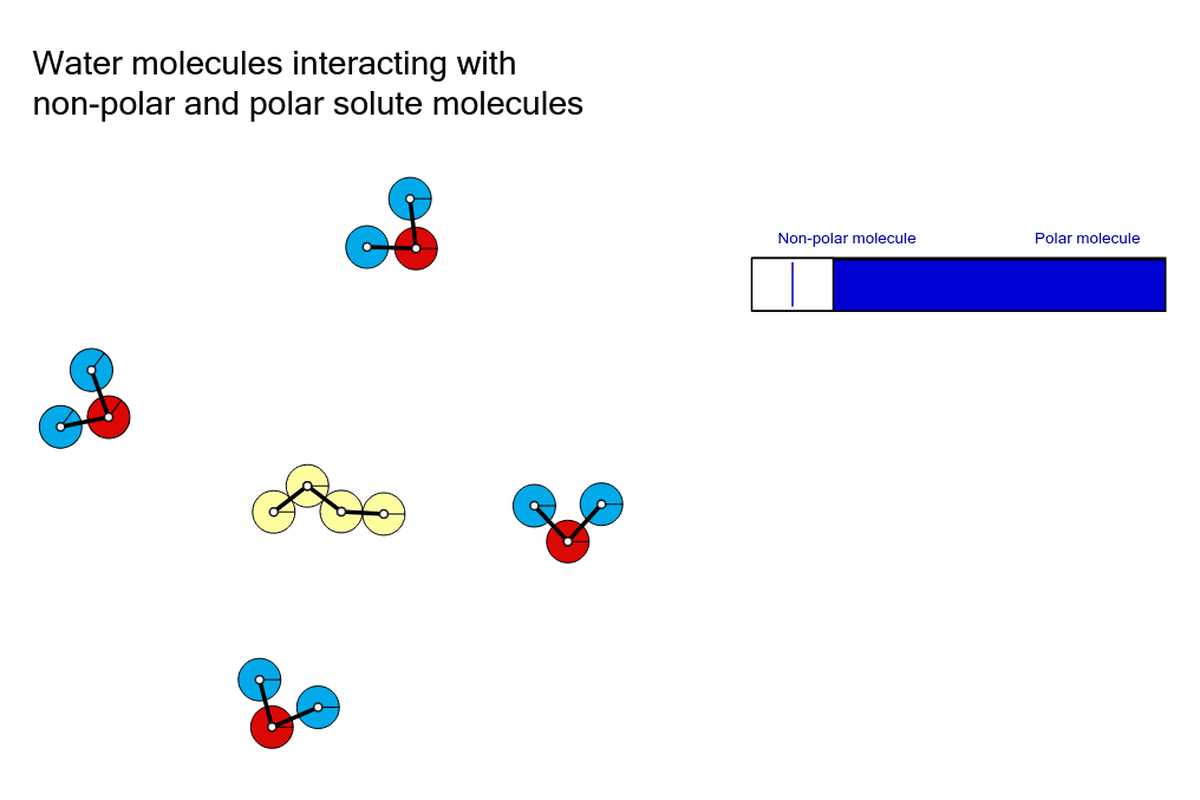
Interaction of water molecules with nonpolar and polar molecules
Compare how water interacts with polar vs. nonpolar molecules
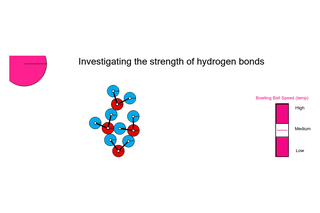 Lesson 12.5
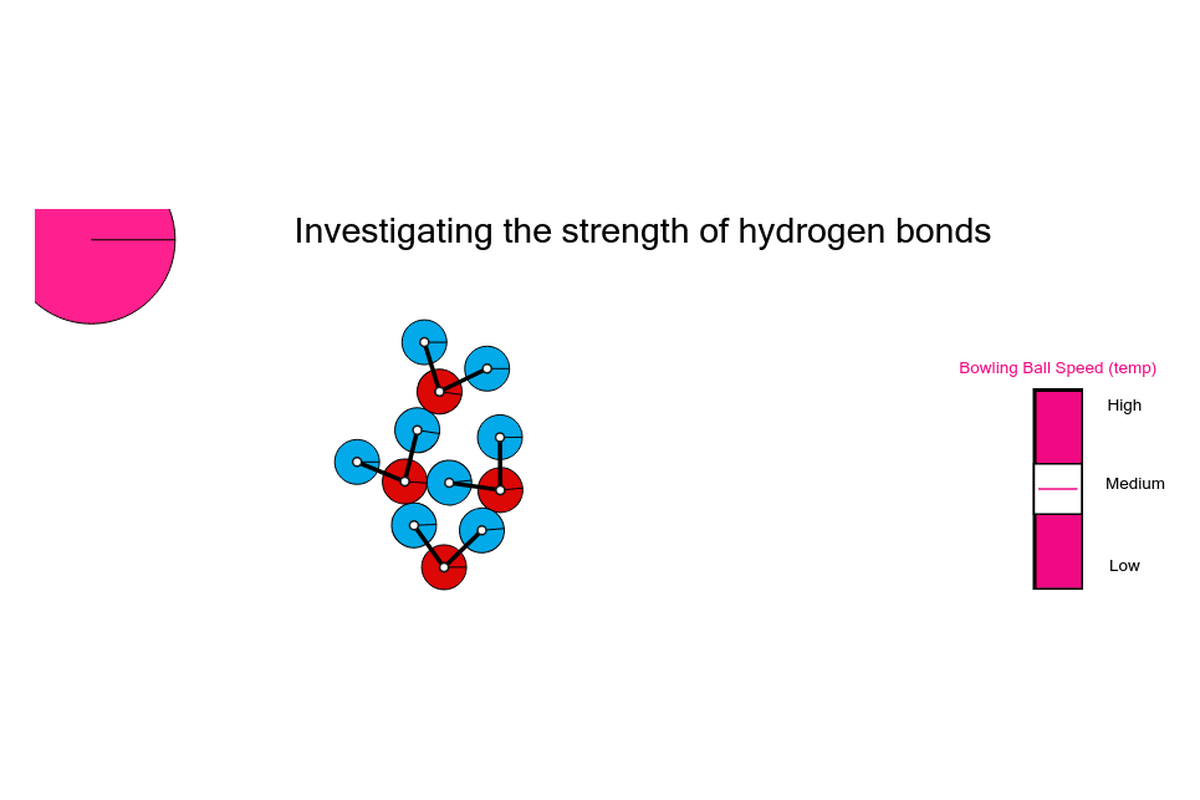
Investigating strength of hydrogen bonds
Measure and compare the strength of hydrogen bonds
Teach with the Curriculum models
Free evaluations are available for teachers and schools.
- Home
- Capabilities
- Purchase
- Questions before Purchase
- Find a Reseller
- Curriculum
- Experiments
- Reviews
- Product Videos
- Support Videos
 Quote
 Evaluation


